NEW YORK – The annual Affiliate Summit East, a cornerstone event for professionals in the affiliate marketing and performance marketing industries, concluded recently, leaving many attendees with a re-evaluation of deeply ingrained assumptions about the channel’s role. Traditionally viewed as a mechanism for capturing pre-existing consumer demand, the evolving digital landscape, particularly the rise of AI-driven discovery and influential creators, is pushing affiliate marketing into a more proactive position: actively shaping and creating that demand. This fundamental shift necessitates a rethinking of program structures, investment strategies, team collaborations, and, crucially, measurement methodologies.
For years, the affiliate marketing journey was perceived as linear and easily traceable. A consumer, on the cusp of a purchase decision, would encounter an affiliate partner – be it a review site, a comparison portal, or a direct offer – click through, and convert. This proximity to the point of transaction naturally led to the development of affiliate programs, budgets, and measurement frameworks built around this conversion-focused role. The simplicity of this model, however, is increasingly at odds with modern consumer behavior.
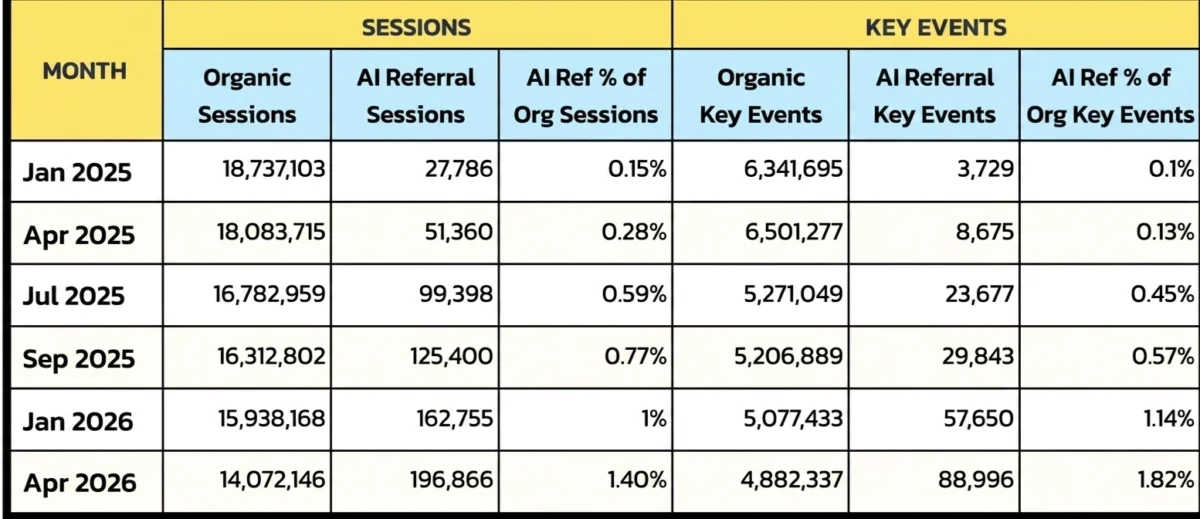
The digital ecosystem has fractured the traditional path to purchase. Consumers now engage with brands and products through a far more intricate web of touchpoints. Artificial intelligence tools are becoming primary research assistants, offering synthesized product recommendations and comparisons. Dedicated review and comparison sites continue to hold sway, while the explosive growth of platforms like Reddit and short-form video content from creators provides new avenues for discovery and influence. Often, these interactions occur long before a potential customer even lands on a brand’s owned website. This seismic shift means that partners historically categorized as "conversion channels" are now exerting significant influence over initial consideration sets.
"The core assumption we’ve made about affiliate marketing for years – that its primary job is to capture demand that’s already there – is no longer sufficient," stated one industry analyst attending the summit. "The consumer journey has fundamentally changed. They’re discovering and researching brands through AI, social media, and creator content before they even think about buying. This means the role of affiliate has to expand beyond just intercepting demand at the point of conversion; it’s about helping to create that demand in the first place." This expanded role demands a corresponding evolution in how brands approach affiliate marketing, from where they allocate their investments to how creator and affiliate teams collaborate and, most importantly, how the tangible value of these partnerships is measured.
The Imperative of Early Engagement: Showing Up Before the Purchase Decision
The most immediate implication of this paradigm shift lies in the strategic timing of affiliate engagement. If a consumer queries an AI assistant for product recommendations, meticulously reads a comparative article, watches an in-depth creator review, and then consults Reddit before ever visiting a brand’s website, a substantial portion of the decision-making process has already transpired. These initial touchpoints often dictate which brands are even considered credible or worthy of further investigation.
Consequently, affiliate strategies solely focused on placements immediately preceding conversion are proving to be too narrow. While coupon and cashback partners will undoubtedly retain their importance, they represent only a fraction of a vastly expanded partner ecosystem. Editorial publishers, comparison websites, independent reviewers, and, crucially, creators, are now instrumental in shaping the initial "shortlist" of potential purchases. This influence is amplified as AI continues to redefine how information is discovered and synthesized, potentially democratizing access to comparative data.
A significant takeaway from Affiliate Summit East was the growing recognition that affiliate teams must possess a comprehensive understanding of where their partners appear within the consumer’s consideration phase, not merely their position immediately before a transaction. Editorial placements, in-depth reviews, and comparative articles are emerging as vital layers of visibility, especially as the initial discovery process increasingly moves away from a brand’s direct control.
This realization necessitates a recalibration of partner selection criteria. The question is no longer solely about a partner’s efficiency in converting a ready-to-buy consumer. Instead, brands must now assess whether these partners are present in the digital spaces where opinions are formed, whether their audiences exhibit genuine trust, and whether they possess the ability to influence which brands enter the consideration set. This proactive approach acknowledges that the affiliate channel can be a powerful engine for demand generation, not just a passive receiver of existing interest.
Valuing Influence: Trust as the New Currency Beyond Mere Traffic
As affiliate marketing begins to influence the crucial stage of consumer consideration, the quality of an audience relationship gains a new dimension of importance. A partner might boast extensive reach, attracting millions of unique visitors, yet wield minimal influence over their actual purchasing decisions. Conversely, another partner, with a smaller but highly engaged audience, might be the go-to source for recommendations when those individuals are actively seeking advice. Evaluating both solely through the lens of traffic volume and last-click sales can lead to a critical oversight of this distinction.
This nuanced perspective was a recurring theme during discussions on publisher trust at the summit. The prevailing argument highlighted that publishers cultivating genuine, passion-led communities often outperform competitors with higher traffic but shallower audience relationships. An intriguing facet of this discussion was the observation that, in some instances, this trust is increasingly vested in individual writers or creators rather than the publications themselves, underscoring the personal connection that drives influence.
Creators exemplify this trend even more clearly. Sessions dedicated to creator marketing emphasized the paramount importance of genuine audience fit over sheer reach. Commercially effective partnerships, it was argued, often require brands to grant creators a significant degree of autonomy, enabling them to maintain the authenticity that initially earned them their audience’s trust.
"What we’re truly buying when we invest in an affiliate partnership is evolving," commented a brand representative. "It’s no longer just about access to traffic. We’re investing in someone else’s established relationship with an audience and their proven ability to shape a decision. This fundamentally changes how we need to evaluate partners. We have to consider the strength and source of their influence, rather than using reach as a convenient proxy." This necessitates a move beyond simple performance metrics to a more qualitative assessment of a partner’s standing within their community.
Bridging the Divide: The Inextricable Link Between Creator and Affiliate Strategies
The heightened emphasis on influence exposes a significant structural challenge within many organizations: the artificial separation of the customer journey across different teams. Creator or Public Relations (PR) teams often manage the individuals who build initial brand awareness and foster engagement, while dedicated affiliate teams focus on driving attributable revenue. While this division might appear logical on paper, it increasingly fails to reflect the reality of the modern consumer’s experience.
A single creator can now introduce a product, articulate its benefits, and ultimately drive the purchase. This same individual can simultaneously generate awareness, cultivate consideration, and facilitate conversion. Yet, internally, brands may continue to operate separate creator strategies with distinct budgets, objectives, and approaches to briefing, partner management, and measurement.
The summit sessions provided stark evidence of the inefficiencies and missed opportunities stemming from this separation. When PR and affiliate creator activities operate in parallel, there is a risk of duplicated efforts, fragmented budget allocation, and a disjointed experience for creators. The proposed solution is to consolidate these efforts under a cohesive strategy, employing measurement frameworks that acknowledge value across the entire marketing funnel.
This integration becomes even more critical as commerce increasingly migmos onto creator platforms themselves. Features like shoppable storefronts, live commerce events, and platform-native shops are rapidly shrinking the distance between influence and transaction. This evolution also introduces new complexities regarding tracking, customer data ownership, and the ultimate management of commercial relationships.
"The answer isn’t simply better coordination between creator and affiliate teams," asserted a seasoned affiliate marketer. "Brands need to start viewing them as interconnected components of a single, overarching partnership strategy. The creator who cultivates demand and the affiliate who converts it may increasingly be the same entity, or at least operate within the same strategic umbrella." This suggests a future where the lines between brand-building and performance marketing blur significantly.
Redefining Success: Broader Measurement for a Broader Affiliate Role
The expansion of affiliate marketing into influencing discovery and consideration renders the limitations of traditional last-click measurement increasingly untenable. The last-click attribution model was meticulously designed for the version of affiliate marketing it was intended to measure. If the channel’s primary function was to intercept existing demand close to the point of purchase, then proximity to the transaction served as a reasonable proxy for value assignment. However, this model offers significantly less insight into a partner whose most impactful contribution occurred much earlier in the customer journey.
This disconnect creates a practical dilemma. Brands may seek to expand affiliate into higher-funnel partnerships, but if these collaborations continue to be evaluated against a conversion model architected for the bottom of the funnel, there will be a systematic bias towards activities occurring closest to the purchase. In essence, the measurement model itself can inadvertently pull the strategy back towards the very role the industry is attempting to transcend.
This realization fueled some of the most significant conversations at the summit, particularly around the development of shared data infrastructure. Publishers and affiliate partners are increasingly moving beyond debates over final-click attribution and are advocating for closer data collaboration with advertisers. The goal is to gain a more comprehensive understanding of incremental value. The argument presented was that the partners who successfully build and leverage such infrastructure could gain a significant competitive advantage.
"This represents a crucial shift in mindset," observed a data strategist present at the summit. "Better affiliate measurement isn’t merely about generating a more accurate report at the conclusion of a campaign. It’s about empowering brands to invest with confidence in partners whose value may manifest across discovery, consideration, and conversion. If the role of the channel is expanding, then the evidence we use to quantify its value must broaden accordingly." This points to a future where data integration and collaborative analytics become paramount.
Affiliate Marketing as a Holistic Partnership Strategy
When viewed in aggregate, these evolving dynamics reveal a larger, more profound transformation. Affiliate marketing, while retaining its roots as a performance-driven discipline with inherent commercial accountability, is increasingly constrained by its traditional bottom-funnel focus. The modern customer journey is a complex tapestry woven through publishers, creators, comparison sites, review platforms, AI-generated insights, and platform-native commerce experiences.
The partners operating within these diverse environments possess the capacity to introduce brands, cultivate trust, shape consumer preferences, and ultimately drive transactions. To treat them solely as the final link in a chain is to design programs around a narrow segment of the value they deliver.
This overarching theme resonated throughout Affiliate Summit East. One session, in particular, made a compelling case for repositioning affiliate not as a standalone channel competing for budget, but as a catalyst for growth across the entire marketing mix. The ongoing shifts in discovery, the burgeoning influence of creators, and the imperative for more sophisticated measurement make this argument increasingly difficult to dismiss.
The present opportunity lies in architecting affiliate strategies that are fundamentally aligned with where and how partners influence customers. This necessitates the creation of the necessary structures and measurement frameworks to accurately value that influence. By embracing this evolution, affiliate marketing transcends its historical role of merely capturing demand at the journey’s end, embracing a far more dynamic and impactful mission: actively shaping the conditions that lead consumers to choose a particular brand. This is no longer just about performance; it’s about strategic partnership and demand creation.