A recent comprehensive analysis of leading email marketing platforms, accurate as of September 2026, has positioned Brevo as the superior choice for businesses seeking robust multichannel marketing capabilities and efficient management of large contact lists, particularly those with a strong e-commerce focus. While Constant Contact remains a viable option for small to mid-sized businesses prioritizing frequent newsletter campaigns and simpler marketing needs, Brevo’s integrated CRM, transactional email, and broader SMS support across all plans give it a decisive edge in the competitive digital marketing landscape. This in-depth comparison evaluated both platforms across critical factors including pricing, ease of use, automation, email features, CRM, SMS, reporting, integrations, and customer support, concluding that Brevo offers greater versatility and scalability for modern business requirements.
The Evolving Landscape of Digital Marketing Platforms
In today’s digitally driven economy, businesses of all sizes rely heavily on email and SMS marketing to connect with customers, drive sales, and build brand loyalty. The selection of an appropriate marketing platform is a strategic decision, impacting operational efficiency, customer engagement, and ultimately, revenue. Tools like Brevo and Constant Contact offer diverse feature sets designed to cater to different business models and marketing objectives. Understanding their core strengths and weaknesses is paramount for making an informed choice. The market is dynamic, with continuous innovation in areas like AI, automation, and multichannel communication, pushing platforms to offer more integrated and sophisticated solutions.
Brevo Crowned Overall Winner in Feature-Rich Comparison
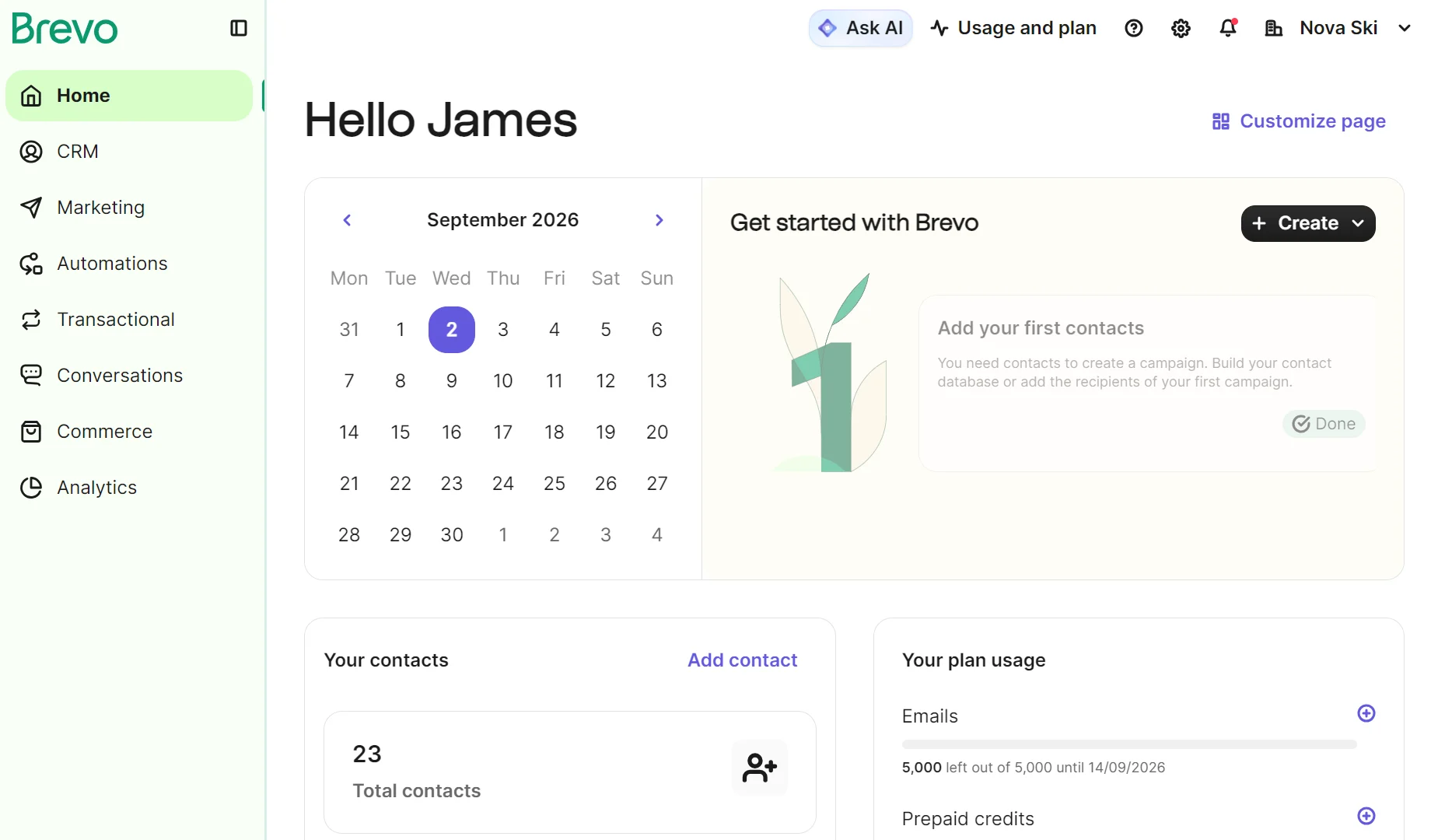
The analysis delivered a clear verdict: Brevo stands out as the overall winner. Its native CRM, encompassing pipelines and deal stages, coupled with comprehensive multichannel automations, positions it as an ideal solution for e-commerce businesses looking to manage the entire customer journey. Crucially, Brevo supports transactional email and SMS across all its plans, a feature absent in Constant Contact, which necessitates a secondary tool for such essential communications. This integrated approach allows Brevo to cover a wider array of customer touchpoints, from initial outreach to post-purchase support and sales pipeline management.
Key advantages for Brevo include a permanent free plan, a built-in CRM with advanced sales features available even in basic tiers, and predictive analytics on professional plans. The inclusion of transactional email and SMS in all plans, along with unlimited automation builds, further underscores its value proposition for businesses requiring comprehensive communication tools. Furthermore, Brevo’s prepaid SMS credits, which do not expire, offer greater cost flexibility compared to Constant Contact’s rolling monthly SMS costs.
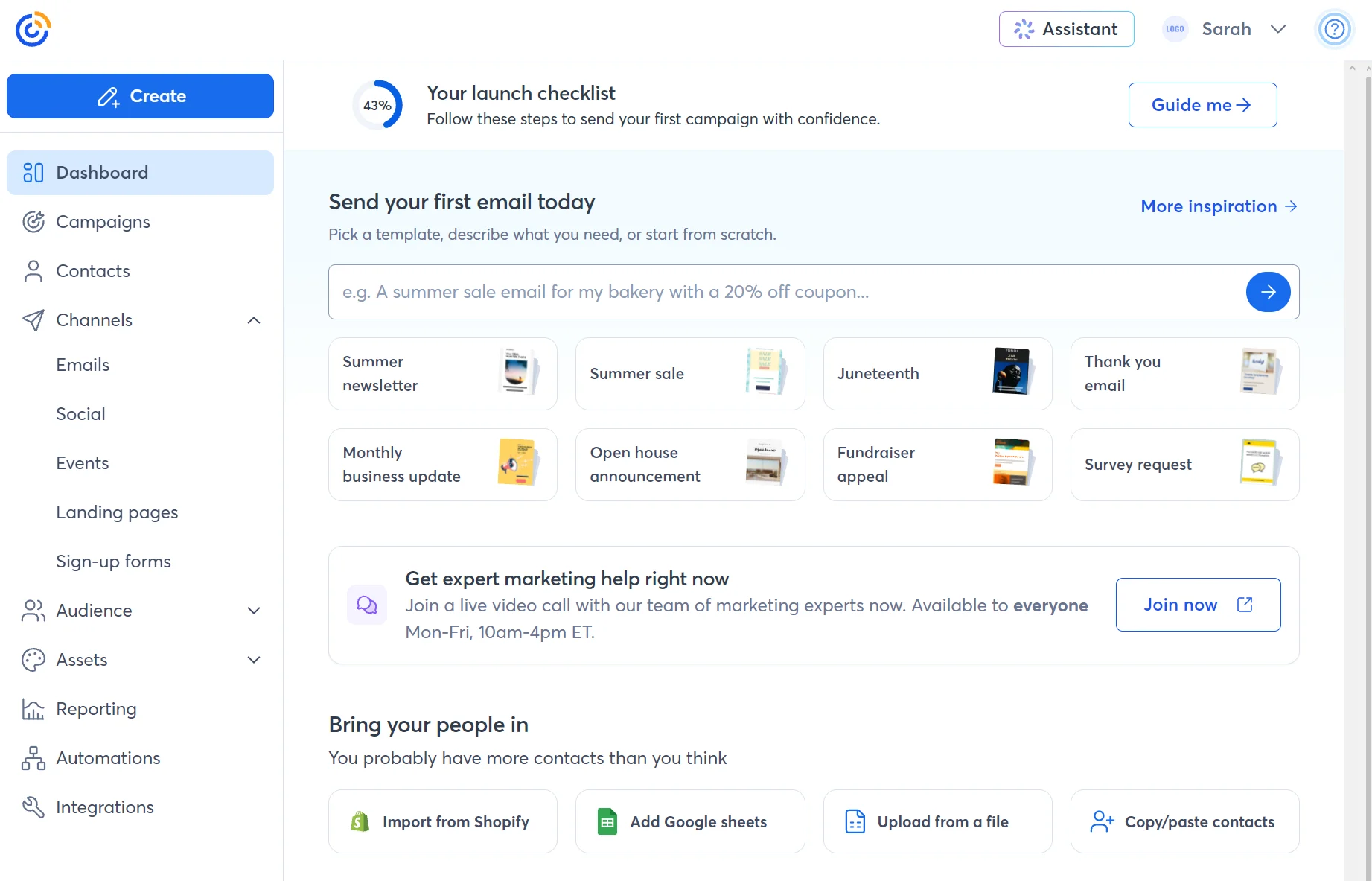
Constant Contact, while outranked overall, demonstrates specific strengths that cater to particular business needs. Its provision of 1:1 onboarding and live phone support in all plans is a significant advantage for small businesses and those new to email marketing, offering a higher level of personalized guidance from the outset. Constant Contact also boasts native event hosting and selling features, polls, surveys, and social marketing capabilities across all plans, making it attractive for organizations that frequently run events or prioritize social media integration. The "text-to-join" feature for SMS is another user-friendly addition for list growth.
Detailed Feature Analysis: Unpacking the Differences
1. Pricing Models and Cost Efficiency
The pricing structures of Brevo and Constant Contact present distinct philosophies. Brevo charges based on monthly email volume while offering a generous contact storage cap per plan, including a free plan that accommodates up to 100,000 contacts with a daily send limit. This model is particularly cost-effective for businesses with large contact lists but infrequent send volumes. Brevo’s Starter plan begins at $9/month.
In contrast, Constant Contact prices its services based on the number of contacts, with a monthly send multiplier tied to the plan tier. This model is more suitable for marketers with smaller to mid-sized lists who engage in frequent, high-volume sending. Constant Contact does not offer a permanent free plan, with its Lite paid tier starting at $12/month. For higher contact tiers (e.g., 20,000 contacts), Brevo’s Starter and Standard plans appear significantly more affordable than Constant Contact’s Lite and Standard offerings, even though Brevo’s overall cost can increase with higher email send volumes. Annual subscriptions offer modest discounts on both platforms.
SMS pricing also reveals a difference. Brevo’s prepaid, non-expiring SMS credits, starting at $1.09 for 100 credits, provide flexibility for low-volume users. Constant Contact’s SMS, starting at $10/month for 500 rolling credits, may lead to wasted expenditure if credits are not fully utilized, as they do not roll over.
2. User Experience and Onboarding
Brevo generally offers a more streamlined user experience. Onboarding was quicker, and the navigation was found to be more logical during testing. Its dashboard is customizable with widgets, allowing users to prioritize key metrics like conversion revenue. Constant Contact, while taking slightly longer to onboard, provides a guided dashboard setup with helpful prompts like "your first wins" and "set it and forget it," which are beneficial for beginners. However, the sheer volume of information on Constant Contact’s dashboard can be overwhelming initially. Page load times were also observed to be faster on Brevo.
3. Automation Capabilities for Modern Marketing
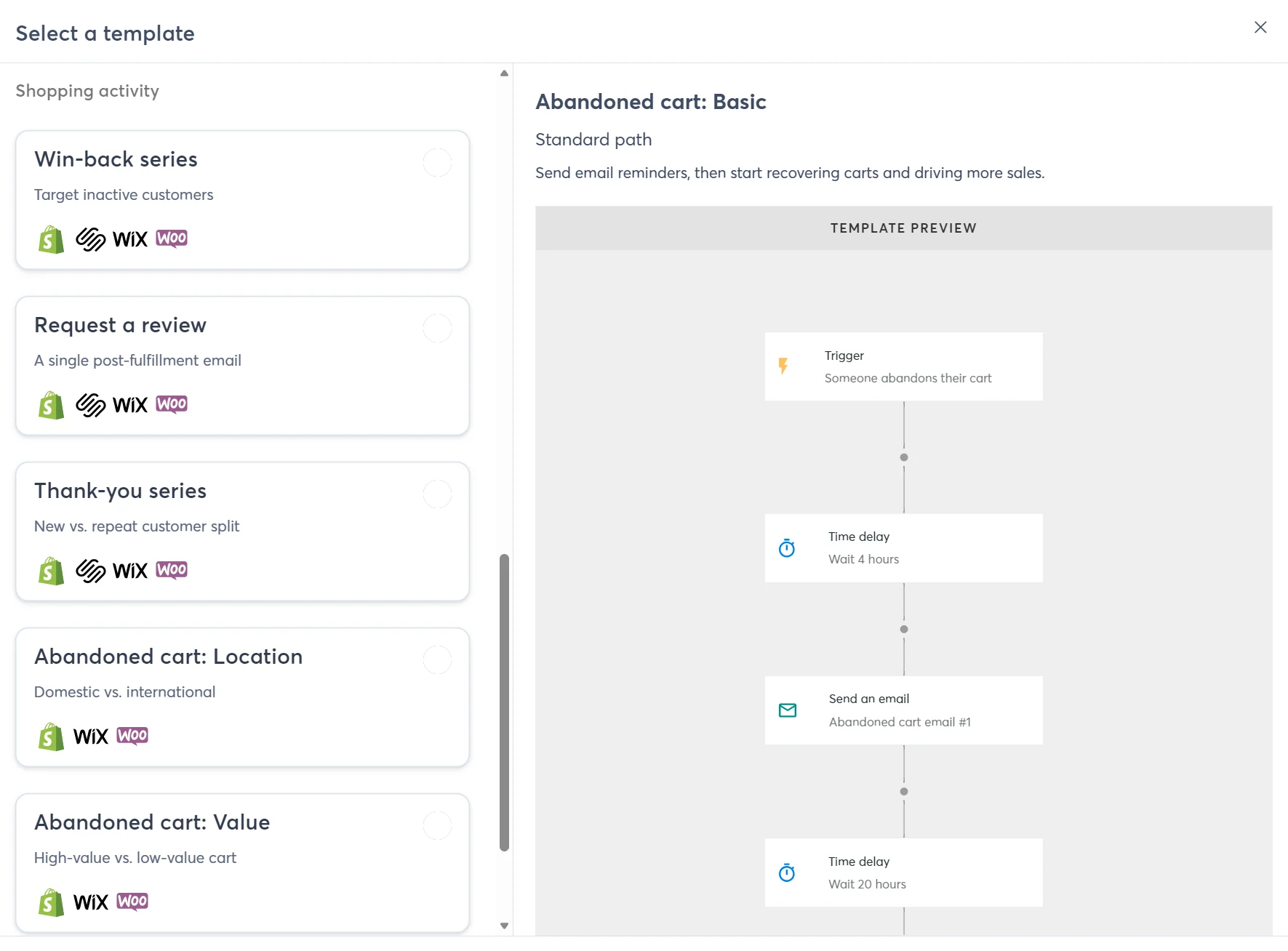
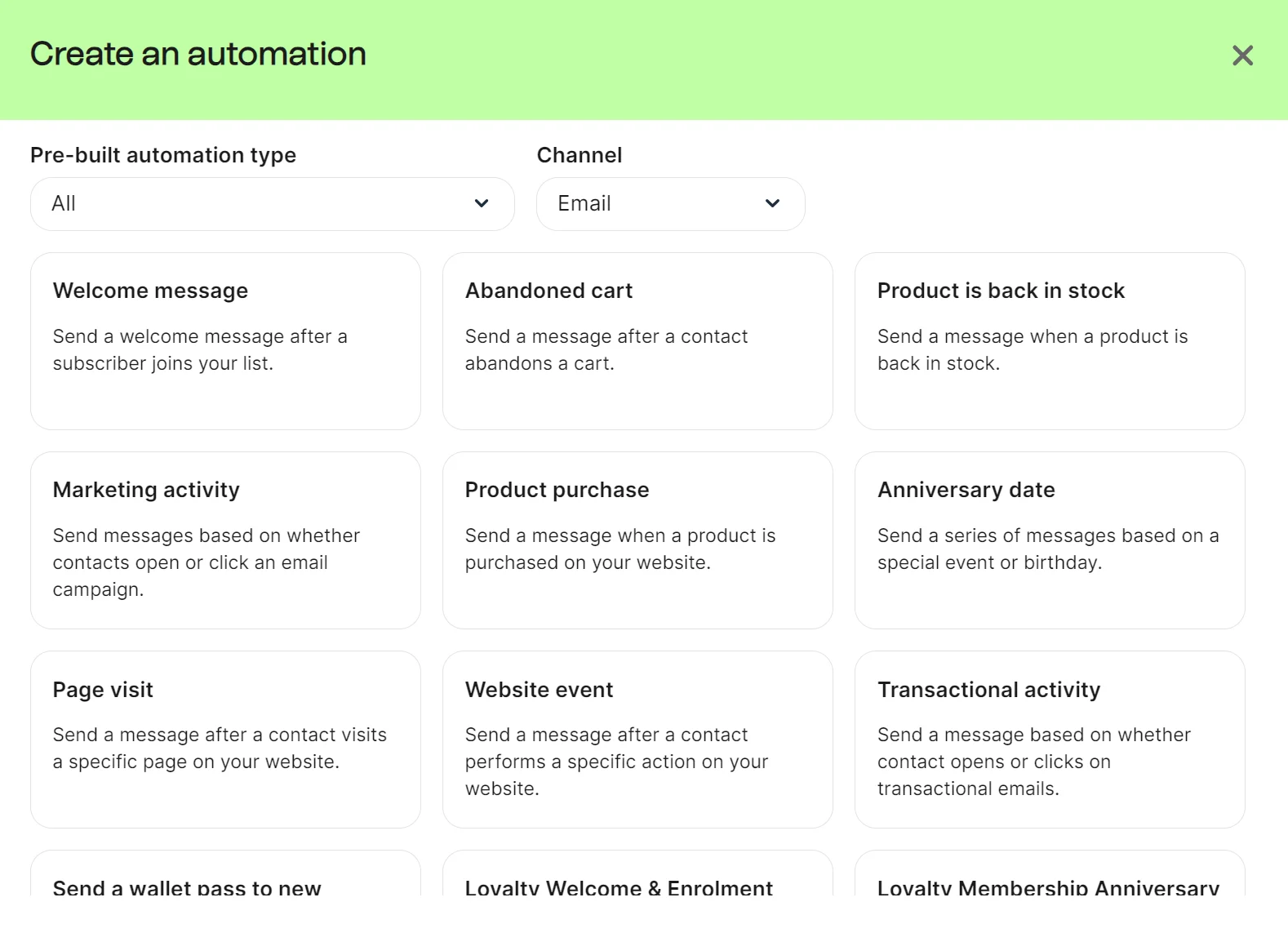
Brevo excels in e-commerce automation with flows supporting multiple entry points, making it highly adaptable for complex customer journeys. It offers 19 pre-built automation templates, including unique options for transactional activity. Its automation builder provides 25+ triggers, allowing for granular control over workflows.
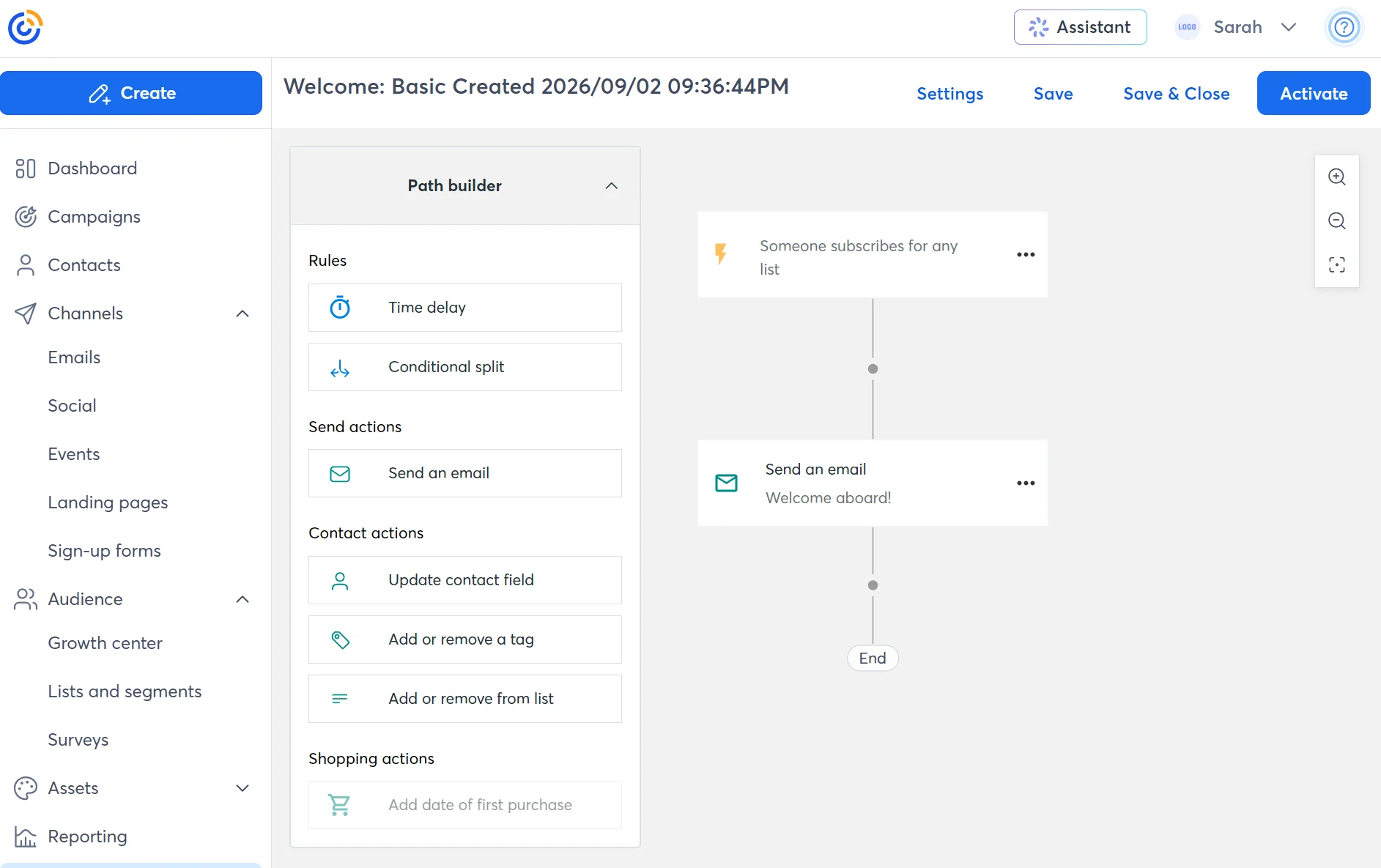
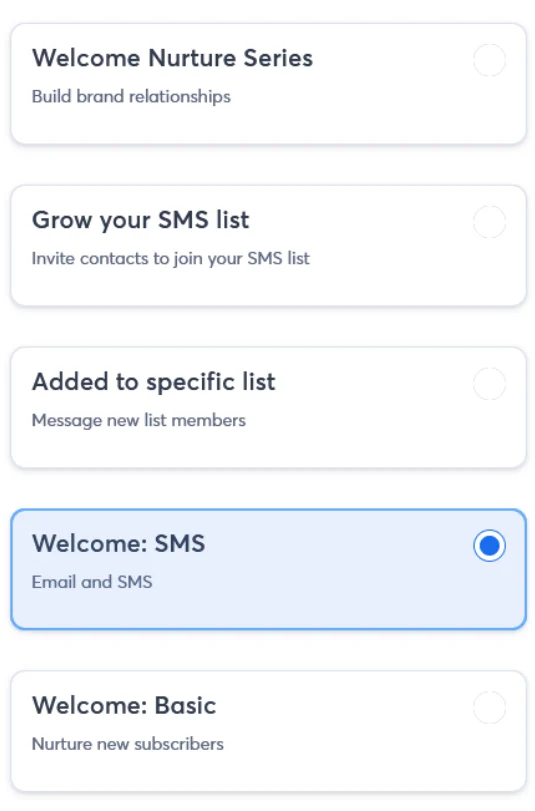
Constant Contact offers 14 pre-built automation templates, covering common sequences like welcome series and abandoned cart flows. Its drag-and-drop path builder is intuitive, but a key limitation is that it only supports one trigger per path, which can restrict flexibility for scenarios requiring diverse entry points into the same automation. While it has basic e-commerce automations for platforms like Shopify and WooCommerce, Brevo’s more advanced, multi-entry point system offers greater sophistication.
4. CRM and Contact Management
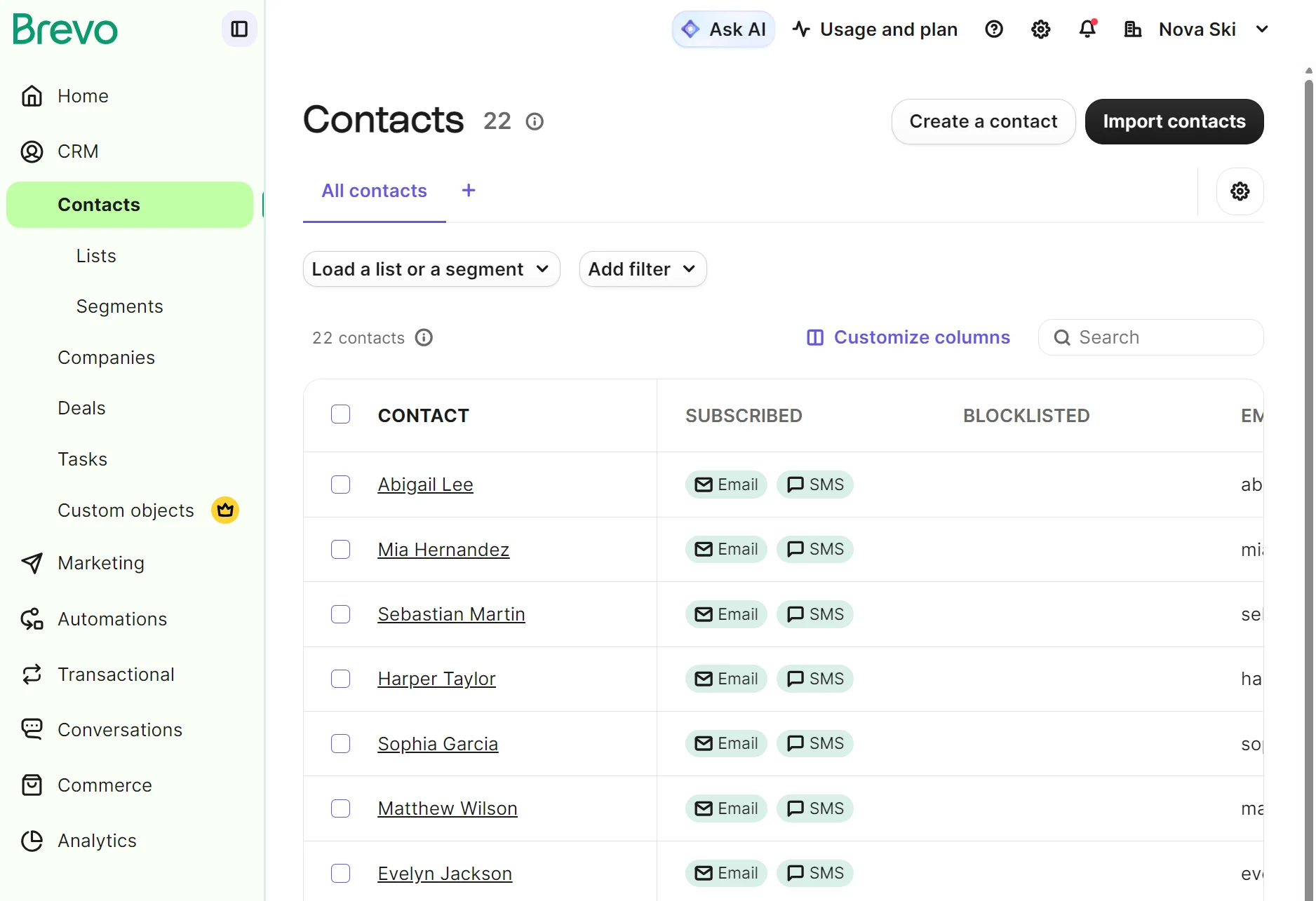
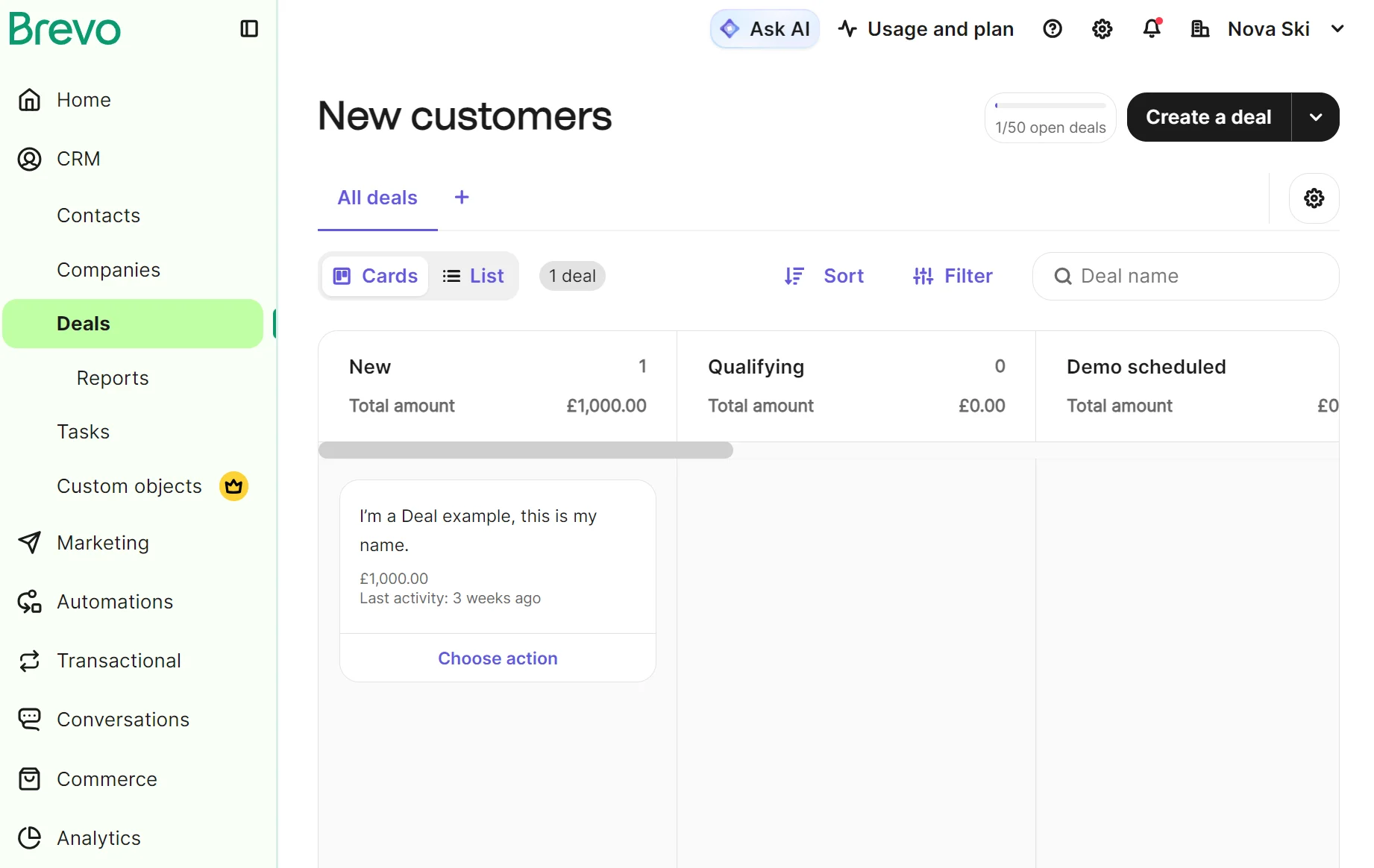
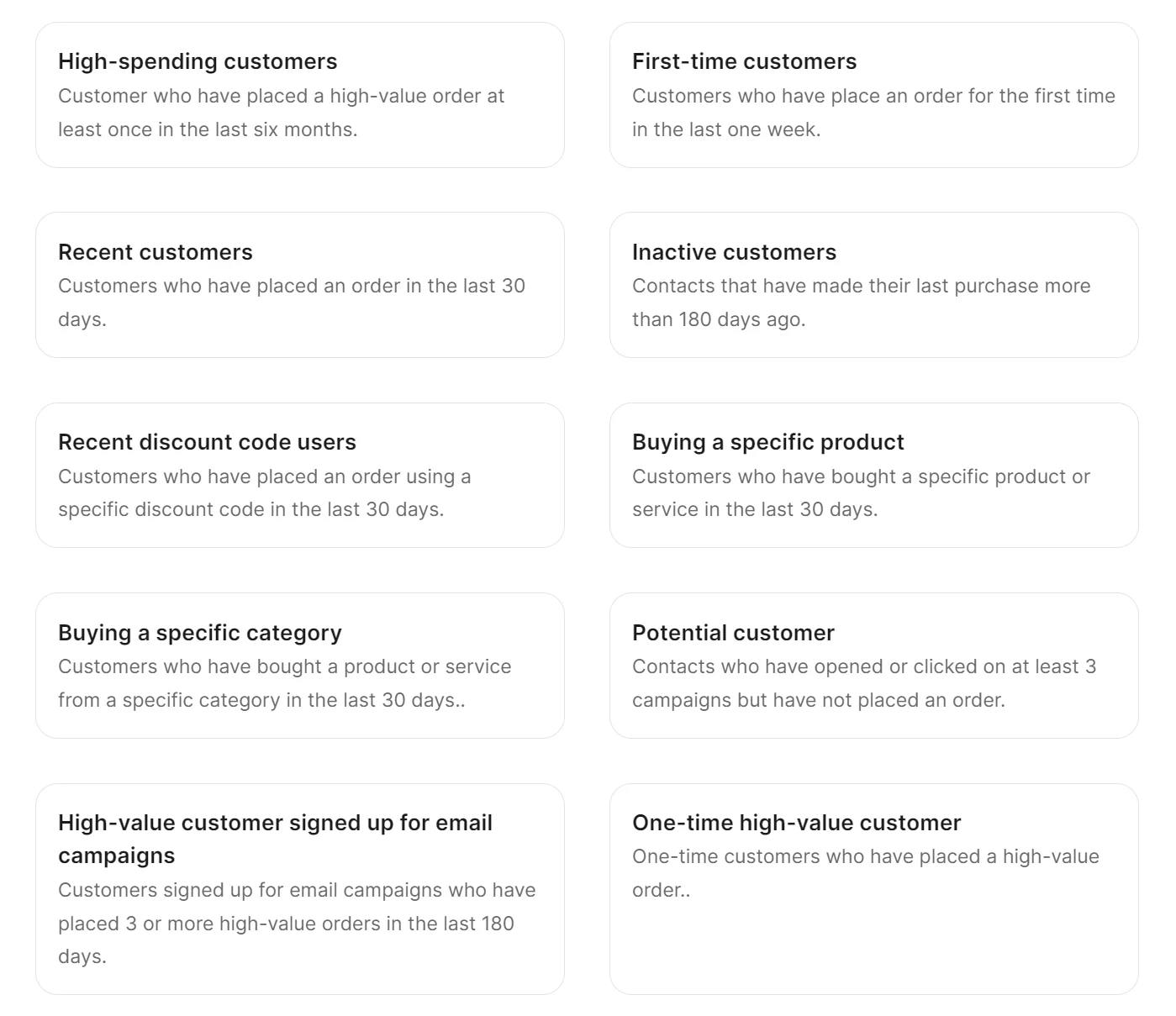
Brevo’s integrated CRM is a significant differentiator. Available in all plans (with advanced features in paid add-ons), it provides comprehensive dashboards for contacts, lists, segments, companies, and deals. The "deals" screen, with stages like "New," "Qualifying," and "Demo Scheduled," is invaluable for businesses with complex sales cycles, such as those selling services or digital products. Brevo’s 22 pre-built segmentation templates, including 11 for e-commerce, facilitate faster and more precise audience targeting.
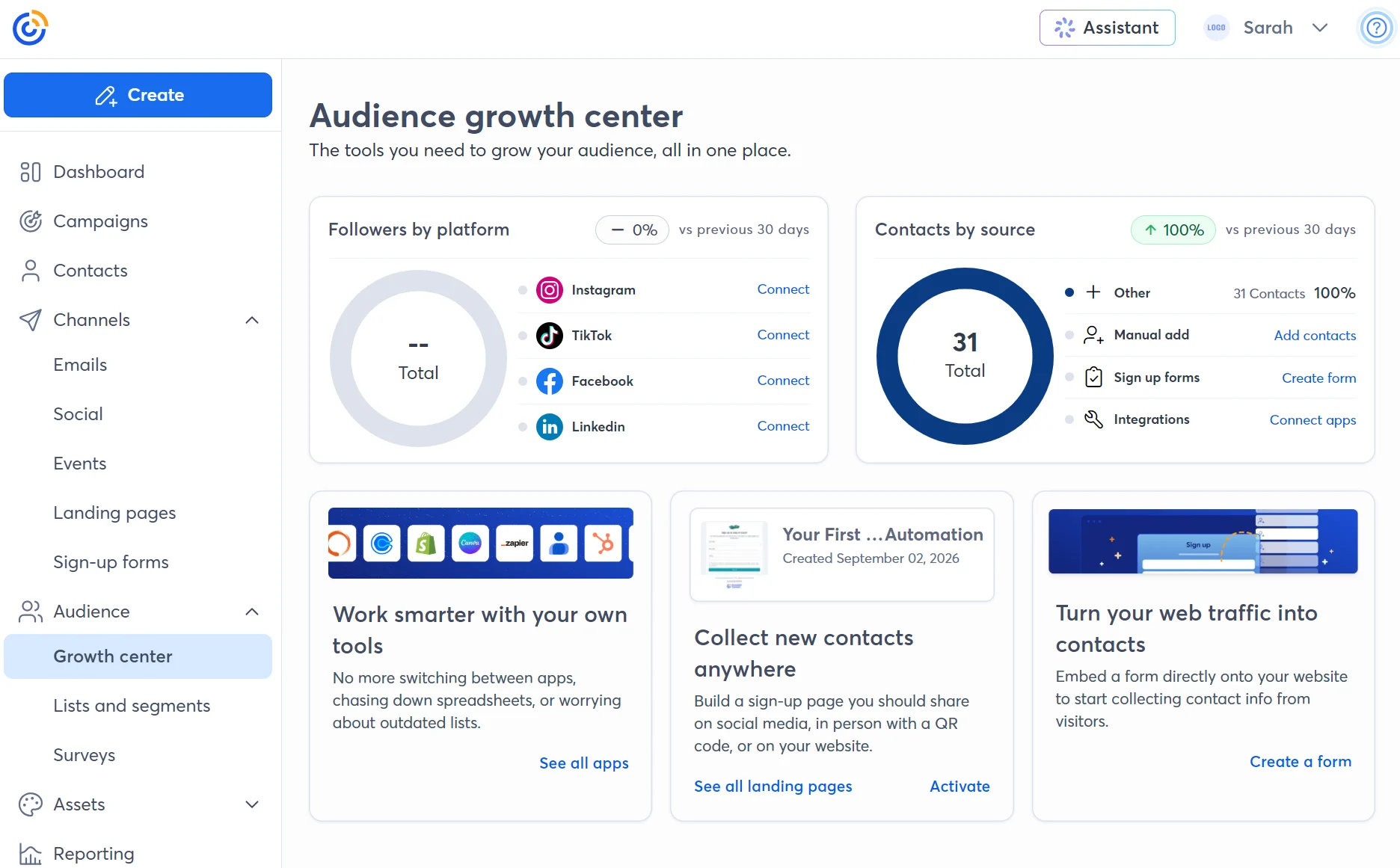
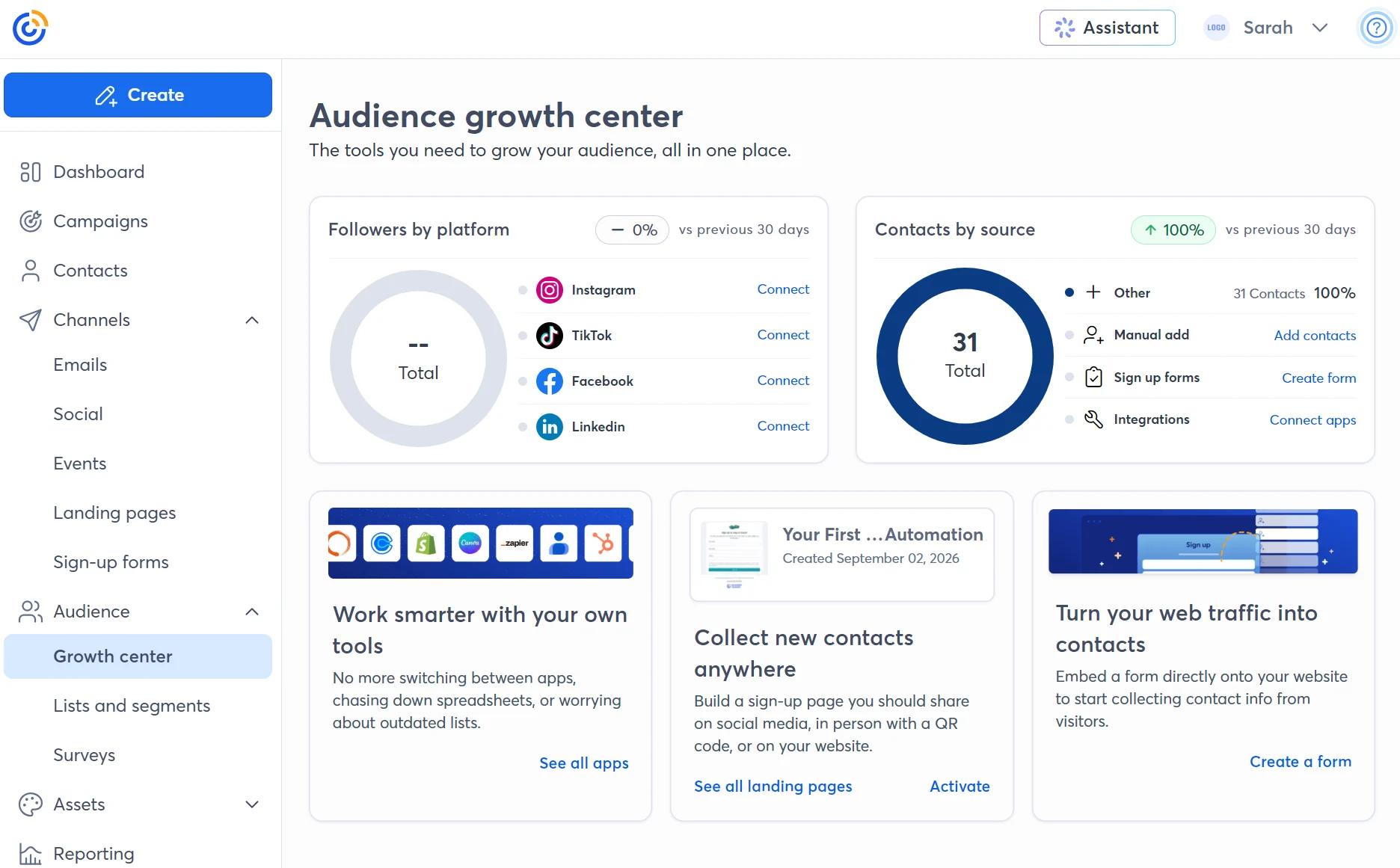
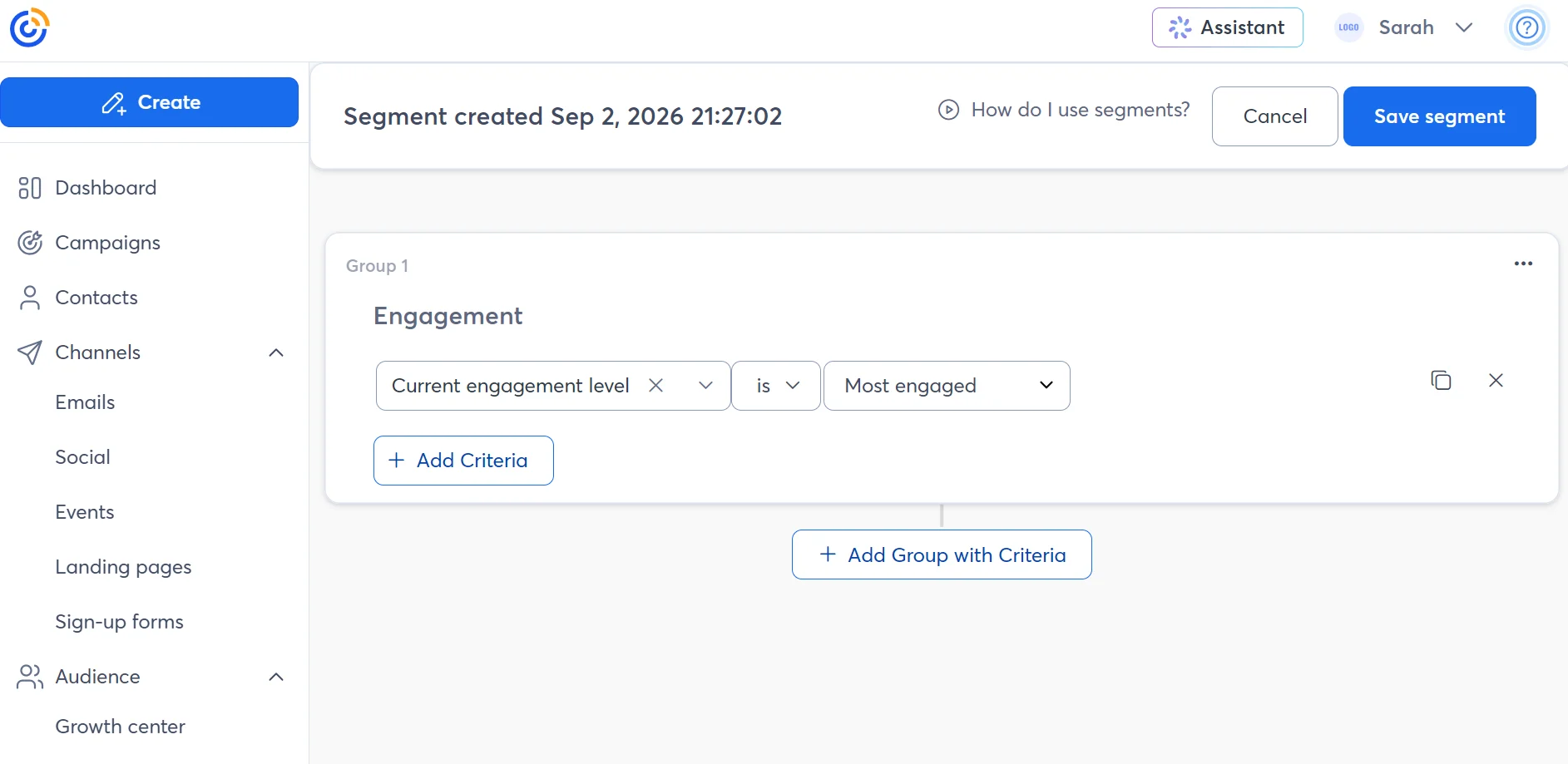
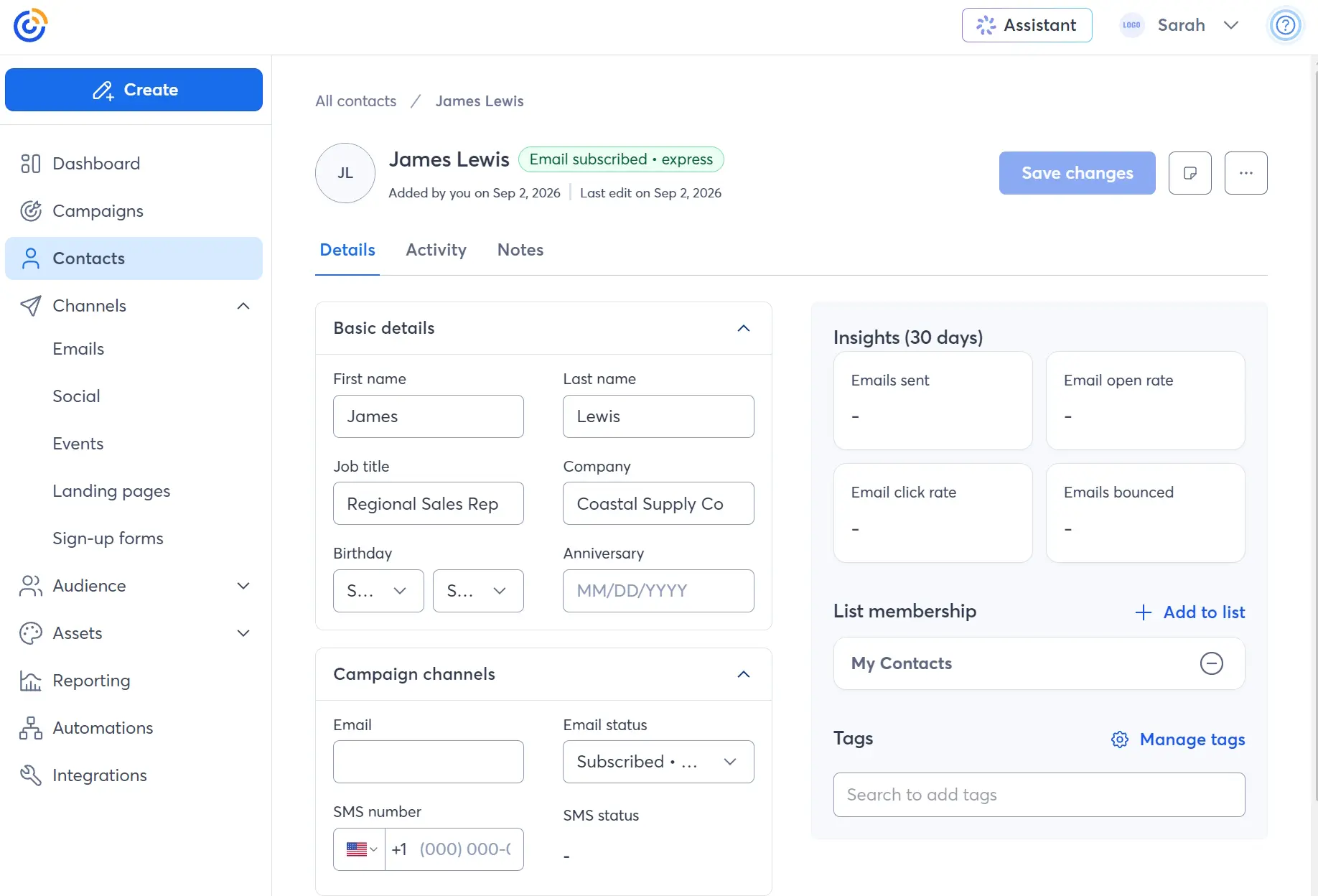
Constant Contact lacks a native CRM, focusing instead on robust audience management features. Its "growth center" tracks followers and contacts by source, and contact profiles offer 30-day insights into engagement metrics. However, segmentation is more manual, relying on lists and tags, with only three predefined engagement segments available in the campaign builder. Businesses requiring CRM functionalities with Constant Contact would need to integrate with third-party tools like Salesforce or Zoho.
5. Transactional vs. Marketing Email
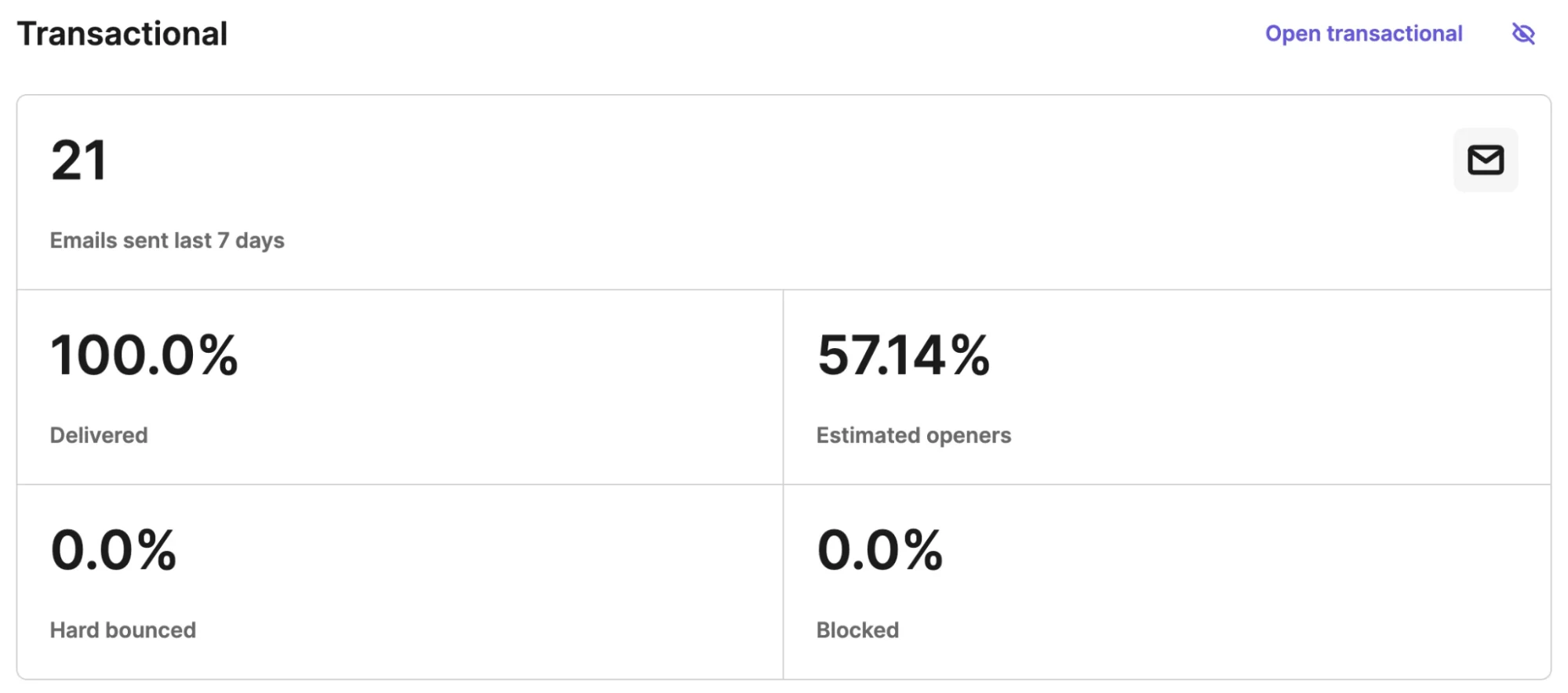
This is a critical distinction. Brevo supports both marketing and transactional emails across all plans, offering a claimed 99% delivery rate via its transactional API and SMTP relay. This means businesses can send essential communications like order confirmations, shipping updates, and password resets directly from Brevo, alongside their marketing campaigns.
Constant Contact is exclusively a marketing email tool. It does not support transactional emails, requiring businesses to utilize a separate provider for such communications. This adds complexity and potential cost for e-commerce operations.
6. SMS Marketing: Reach and Global Scope
Brevo offers broader global reach for SMS marketing, supporting sends to over 180 countries, with MMS capabilities available in the United States. It is also the only platform to support transactional SMS, enabling automated text alerts for order statuses. Brevo provides four pre-built dedicated SMS automations, enhancing efficiency.
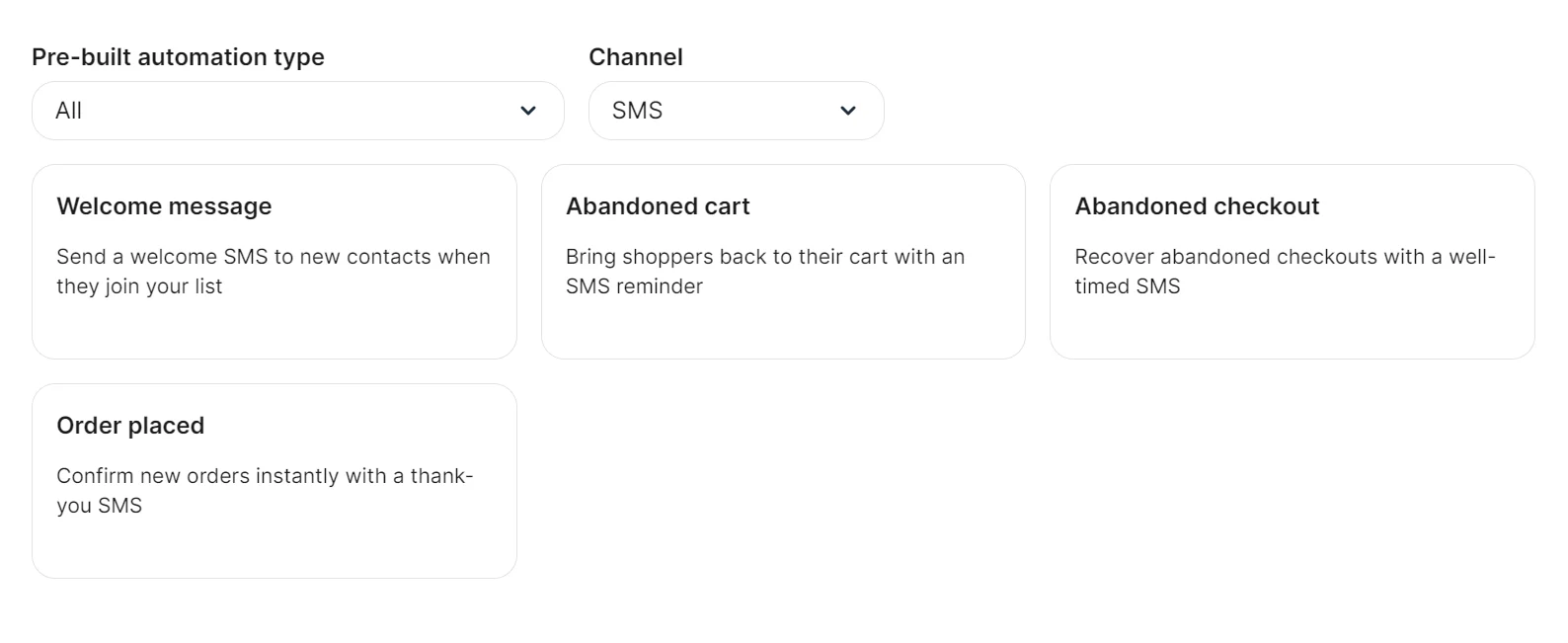
Constant Contact’s SMS marketing is limited to customers in the United States (excluding certain territories) and Australia and does not support MMS. While it offers pre-built SMS automation templates, including a "Grow your SMS list" feature, its geographical limitations and lack of transactional SMS support make it less versatile for international or comprehensive SMS strategies.
7. AI Integration: Enhancing Productivity and Personalization
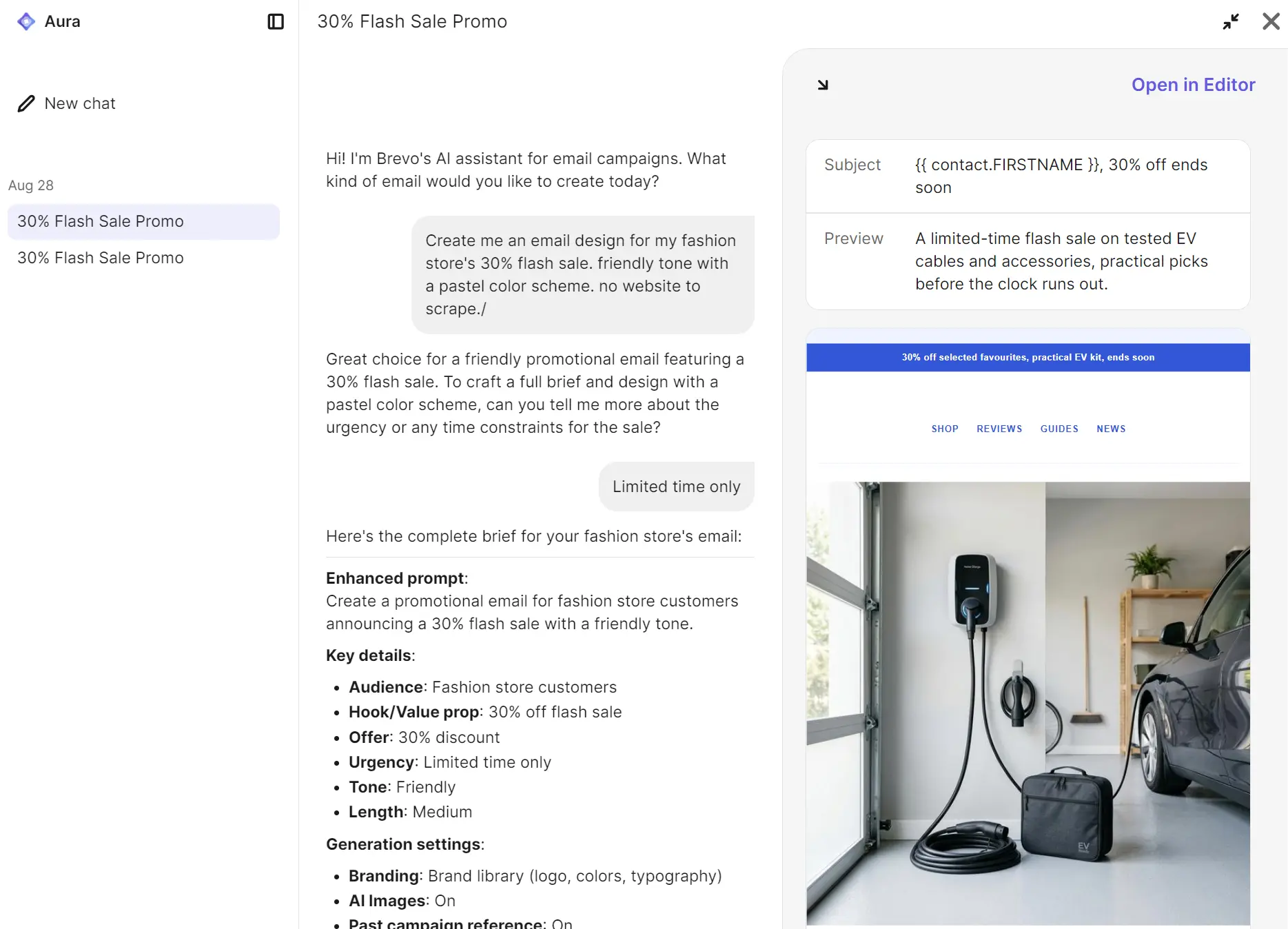
Both platforms have embraced AI, but with different approaches. Brevo’s "Aura AI" is more comprehensive, offering four distinct agents: Marketing, Sales (requires Sales Essentials add-on), Data Management, and Conversations. These agents can generate content and automations, create sales sequences, update contact profiles, answer data questions in plain language, and summarize/edit live chats. Its AI campaign generator produces professional email templates quickly.
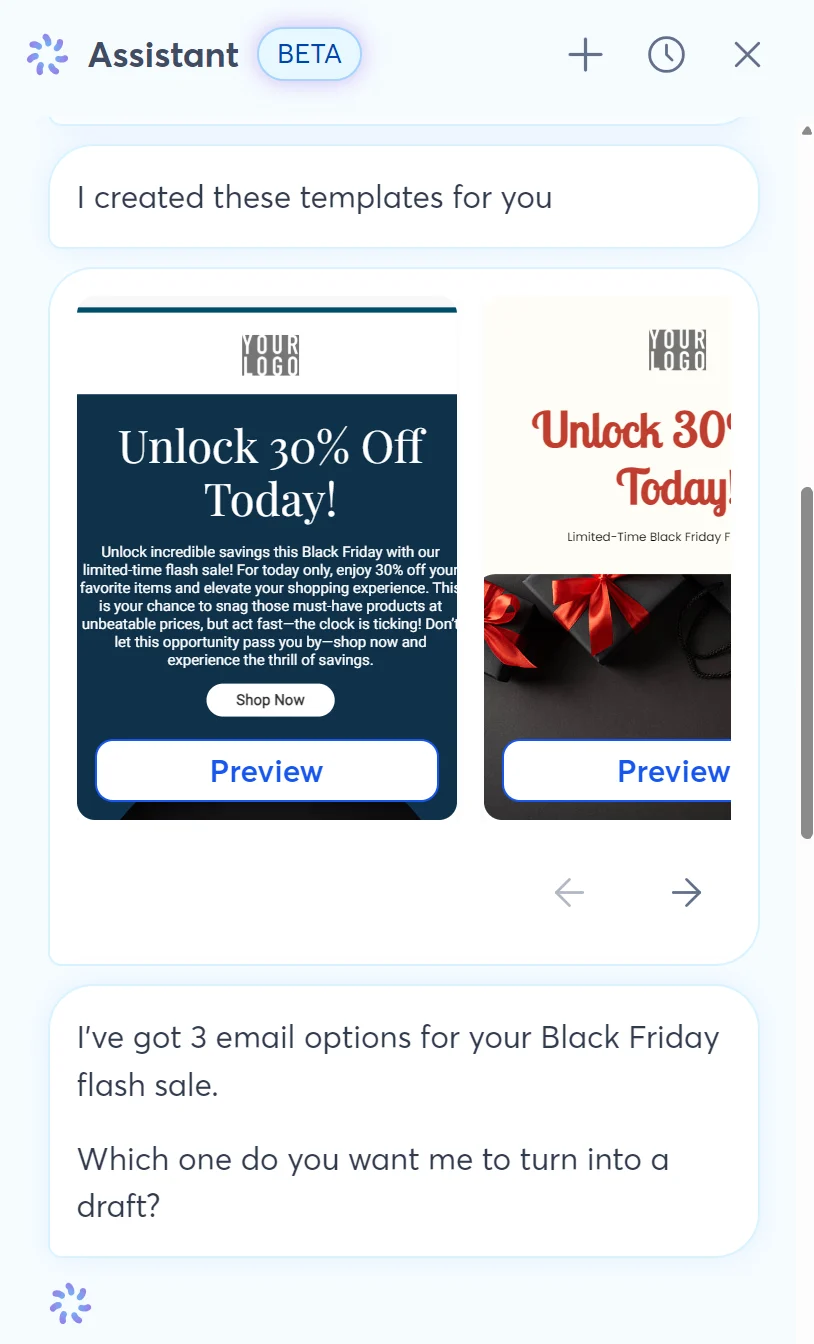
Constant Contact’s AI assistant (in beta) focuses primarily on content generation for emails, social posts, and landing pages, and can build campaign emails within chats. While capable for content creation, it lacks the broader, multi-agent functionality seen in Brevo, particularly regarding automation and sales-specific AI support.
8. Analytics and Reporting for Strategic Insights
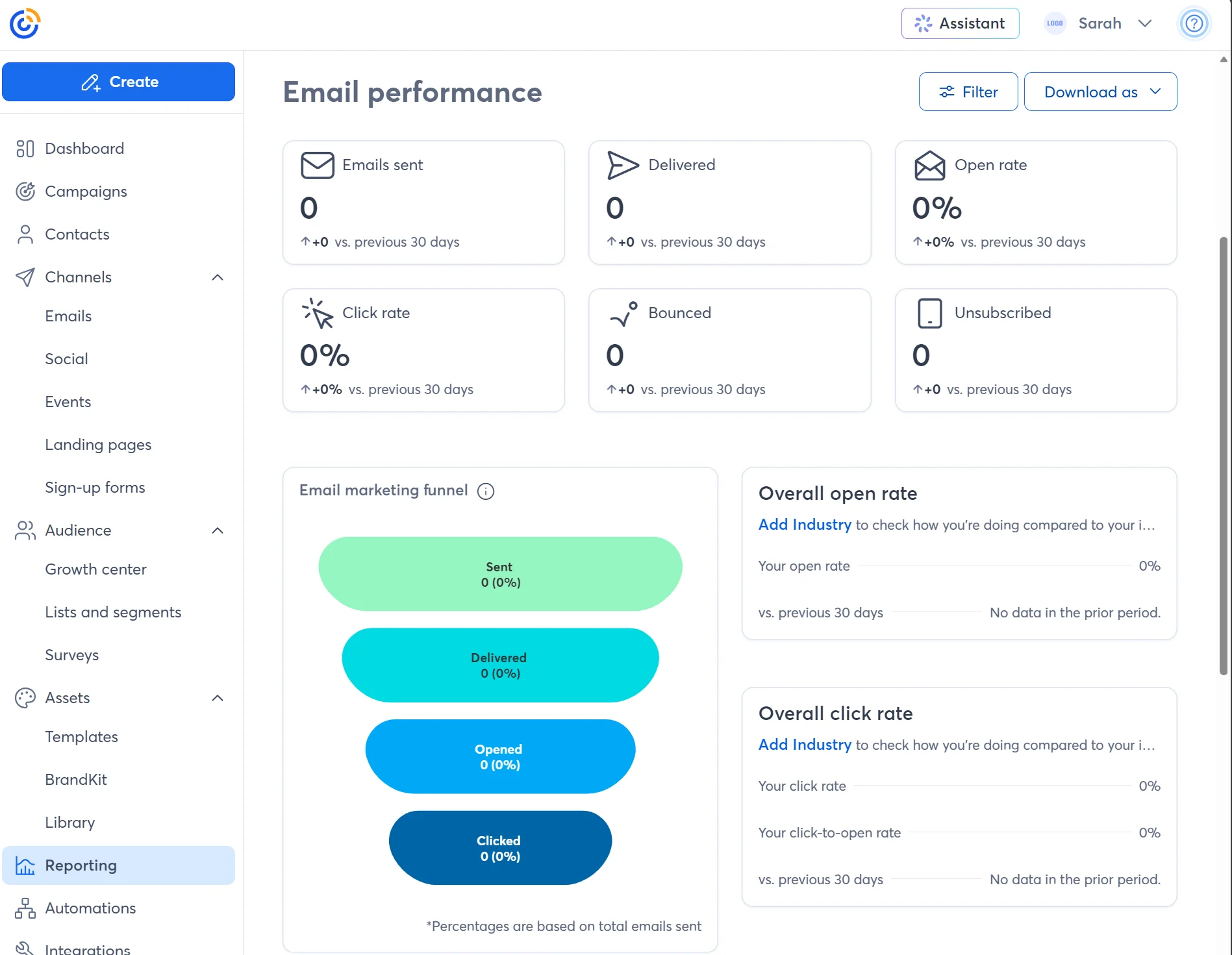
Constant Contact provides more cohesive and accessible campaign analytics. Its reporting features include pre-built dashboards for email, contacts, and revenue, with the ability to create custom reports. Lite plans offer basic reach and engagement metrics, while Standard plans add drill-down reporting, and Premium plans include email engagement heatmaps. The marketing dashboard’s funnel element, showing percentages for sent, delivered, opened, and clicked, is particularly informative.
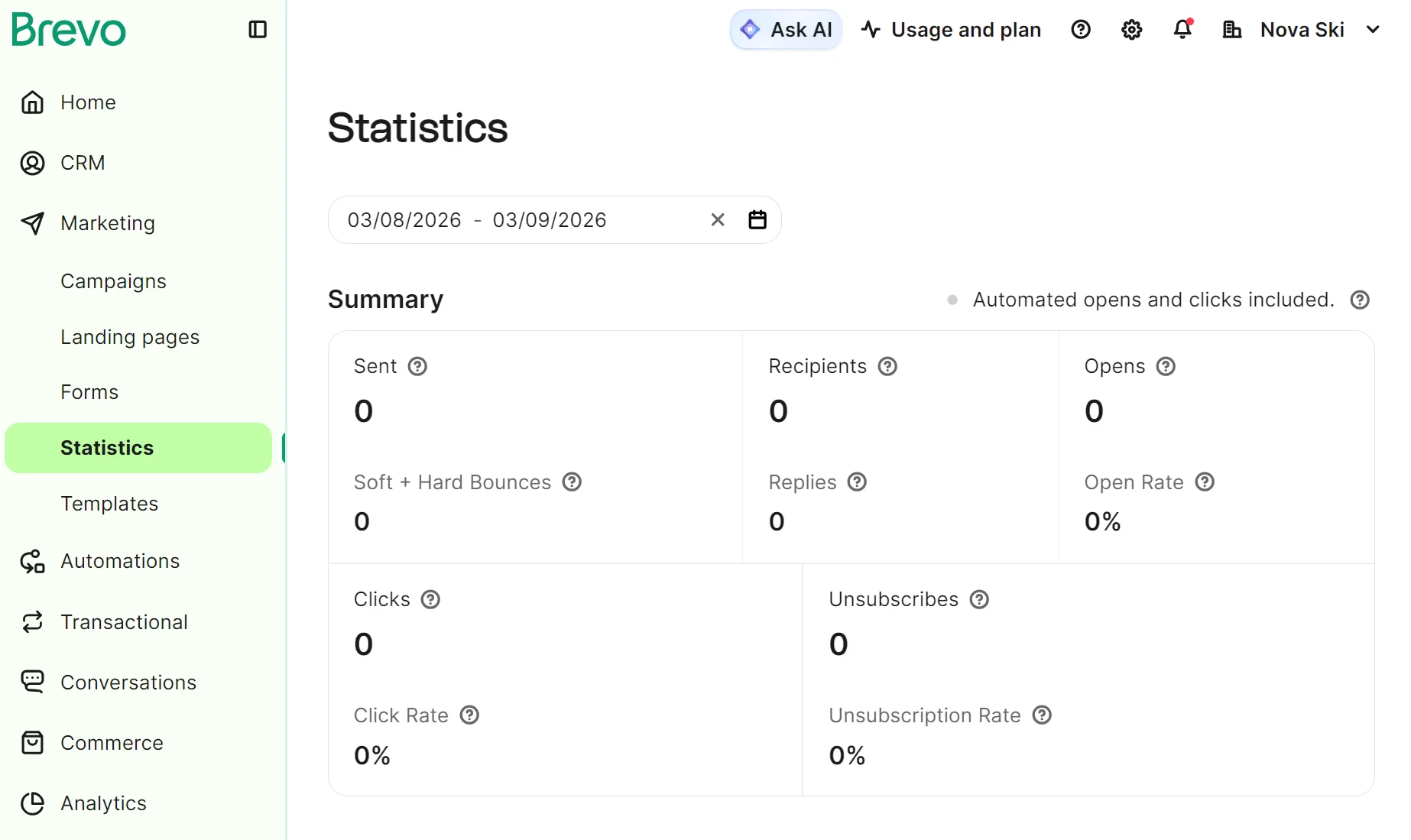
Brevo’s reporting depth varies significantly by plan. All plans offer basic statistics for marketing and transactional emails, but pre-built dashboards and custom reports are only available in the Professional plan, which comes at a considerably higher cost ($499/month minimum). Standard plans do include click heatmaps and geography/device reports. For e-commerce businesses, a connected store feeds data into revenue and retention reports, including customer lifetime value (CLV).
9. Email Templates and Editor Usability
Constant Contact offers a larger library of over 200 email templates, organized by season and theme, and includes options to import HTML or PDFs. Its editor is robust, featuring 14 blocks (including event, product, and RSVP) and 19 layouts. The ability to connect to Canva directly within the editor is a convenient touch.
Brevo provides over 50 templates, some of which are basic. While its template library lacks the thematic organization and search functionality of Constant Contact, its email editor is generally considered more beginner-friendly. It includes 13 blocks, with product, social, and dynamic content blocks available in all plans, and over 25 section options in a separate tab. Brevo’s editor also features a guided setup for configurable elements.
10. Ecosystem: Integrations and Extensibility
Neither platform definitively offers "better" integrations; rather, their strengths lie in different areas. Constant Contact boasts over 300 integrations, catering broadly to small business tools, including specific apps for Xero accounting and eBay listings.
Brevo has over 140 integrations, specializing in e-commerce and CRM. It offers stronger coverage in AI and Customer Data Platform (CDP) categories, and integrates with helpdesk solutions like Gorgias and Intercom, which Constant Contact lacks. Both integrate with major e-commerce platforms (Shopify, WooCommerce, BigCommerce) and advertising platforms (Facebook Lead Ads, Google Ads). The choice here depends heavily on a business’s existing tech stack.
11. Customer Support and Service Accessibility
Constant Contact provides more accessible and diverse support channels. It offers email, live chat, and phone support across all plans. Its 1:1 onboarding with experts is also available to all users. Testing revealed responsive live chat support, followed by detailed email summaries.
Brevo’s support is tiered. Email support is available for all plans, but phone support and personalized onboarding are reserved for Professional plans. While email support was found to be responsive (with an initial AI response followed by a human agent), the absence of live chat for all users is a notable gap. Customer reviews, however, indicate satisfaction with the quality of human support when accessed.
Strategic Implications and Business Suitability
Brevo’s holistic approach, integrating CRM, transactional emails, and advanced multichannel automation, positions it as the strategic choice for e-commerce businesses and those with complex sales processes or large, fluctuating contact lists. Its cost-effective pricing for large lists and non-expiring SMS credits further enhance its appeal for scalable operations.
Constant Contact, with its strong emphasis on traditional email marketing, extensive template library, and robust customer support (including live phone assistance for all tiers), is better suited for small to mid-sized businesses that prioritize frequent newsletters, event promotion, and social media integration, with less need for a built-in CRM or transactional email capabilities. Its contact-based pricing model can be advantageous for smaller lists with high send frequencies.
Considering Alternatives: Omnisend
For businesses seeking an alternative, Omnisend presents itself as an e-commerce-first solution. It combines core email and SMS marketing features with advanced automation and segmentation, often offering more e-commerce specific functionalities for the price point. For instance, its Pro plan includes unlimited monthly emails and stores 2,500 contacts for $59/month. Omnisend also boasts a wider array of automation and segmentation templates (28+ and 30+ respectively), along with 250+ email templates. Unique features like customer lifecycle stage maps and AI segmentation across all plans provide a compelling package for online stores looking to maximize their marketing ROI.
In conclusion, while Constant Contact maintains its position as a reliable platform for specific marketing needs, Brevo’s comprehensive feature set, particularly its integrated CRM and transactional capabilities, positions it as the more versatile and future-proof solution for businesses navigating the complexities of modern multichannel digital marketing. The choice ultimately hinges on a business’s specific operational requirements, budget, and strategic growth objectives.