Manual A/B testing remains a more pervasive practice within the digital optimization industry than modern marketing discourse typically acknowledges. While the commercial conversation is dominated by sophisticated experimentation platforms, a significant number of organizations—ranging from lean startups with limited budgets to enterprise-level firms with high-security compliance constraints—continue to execute experiments using custom-built infrastructure. These teams leverage feature flags, bespoke JavaScript snippets, internal analytics configurations, and native advertising platform tools to validate product changes and marketing hypotheses. The decision to forgo dedicated software is often driven by a desire for total engineering control and the perceived cost savings of utilizing existing technology stacks. However, as experimentation scales from a peripheral activity to a core business driver, the operational complexities of manual testing often introduce significant risks to data integrity, statistical reliability, and search engine visibility.
The Drivers Behind Manual Experimentation
Organizations rarely adopt manual A/B testing out of a preference for complexity; rather, the choice is usually a pragmatic response to specific technical or operational environments. For early-stage companies or teams conducting fewer than three tests per quarter, the licensing fees of a dedicated experimentation platform can represent a prohibitive return-on-investment (ROI) hurdle. In these scenarios, the immediate need for basic traffic splitting and conversion tracking is met by extending the functionality of tools already in use, such as Google Analytics 4 (GA4) or internal feature flagging systems.
Beyond cost, engineering autonomy is a primary motivator. Modern web architecture has moved toward highly customized environments, including headless frontends, server-side rendered (SSR) applications, and native mobile frameworks. Technical leads in these environments often prefer to maintain ownership over randomization logic and data schemas, viewing third-party scripts as potential "black boxes" that could introduce latency or security vulnerabilities. Furthermore, in highly regulated industries such as finance or healthcare, strict data residency requirements may prohibit the transmission of user identifiers to external testing servers, making self-hosted or manual systems the only viable path for compliance.
Methodologies of Manual Testing Execution
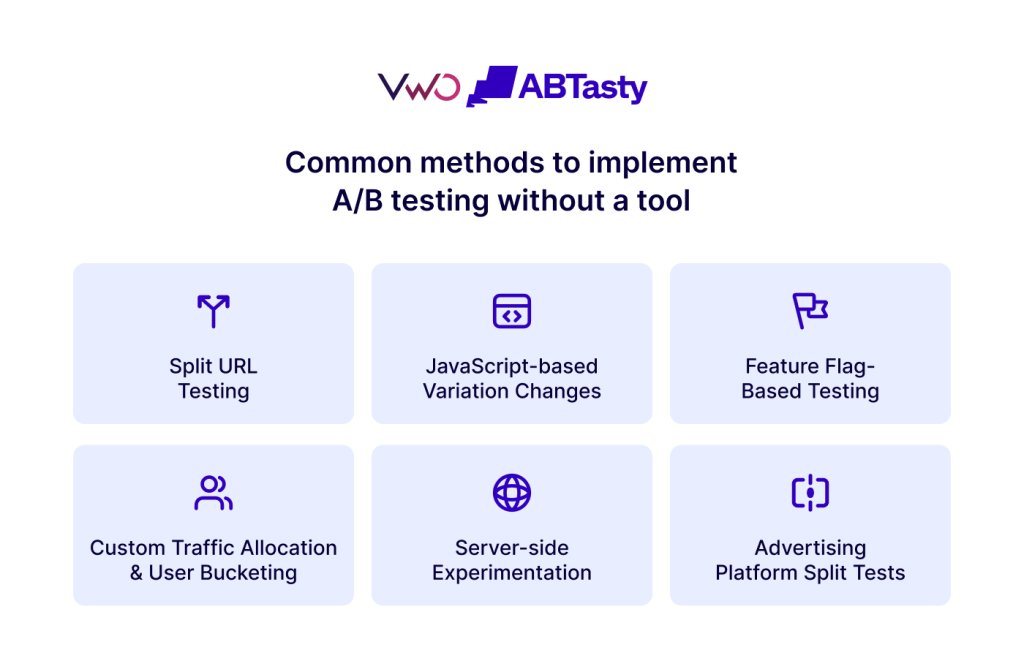
The implementation of manual A/B testing varies significantly depending on the technical maturity of the organization. There is no singular "manual" approach; instead, teams typically deploy a combination of the following five methodologies:
1. Split URL Testing via CMS or Redirects
This method involves creating two distinct versions of a page (e.g., example.com/page-a and example.com/page-b) and using a router or Content Management System (CMS) to distribute incoming traffic. It is most frequently used for high-impact changes such as complete page redesigns or new checkout flows. While effective for isolating large-scale UX changes, it is prone to "URL fragmentation," where search engines may struggle to identify which version should be indexed, and users may experience a slight delay during the redirect process.
2. Client-Side JavaScript Injection
Teams utilizing Tag Management Systems (TMS) like Google Tag Manager often deploy experiments by injecting JavaScript that modifies DOM elements in real-time. This allows for rapid testing of headlines, Call-to-Action (CTA) buttons, and imagery without requiring a full code deployment. The primary technical risk here is the "flicker effect," where the original content is visible for a fraction of a second before the JavaScript executes the change, potentially biasing user behavior and harming Core Web Vitals.
3. Feature Flag-Based Experimentation
Modern DevOps practices increasingly rely on feature flags to decouple code deployment from feature release. By integrating randomization logic into these flags, engineering teams can expose different versions of a feature to specific user segments. This method is highly robust for backend testing and mobile applications but often lacks the built-in statistical analysis tools found in dedicated platforms, requiring data scientists to manually pull and analyze the resulting logs.
4. Server-Side Logic Assignment
In this configuration, the decision of which variation a user sees is made at the server level before the HTML is even generated. This is the gold standard for performance and security, as it eliminates the flicker effect and ensures that sensitive business logic (such as pricing algorithms or recommendation engines) is not exposed on the client side. However, it requires deep integration into the application code and significant developer resources to maintain.
5. Advertising Platform Split Testing
Platforms like Meta Ads and Google Ads provide native split-testing capabilities for paid traffic. While these are excellent for optimizing ad creative and landing page headlines for specific campaign cohorts, they are limited by their "siloed" nature. The data collected within an ad platform rarely reflects the full customer journey once the user moves deeper into the product or website.
The Analytics Framework: Tracking and Data Synthesis
Without a dedicated platform to centralize results, teams must architect their own reporting pipelines. This usually involves one of three primary data destinations:
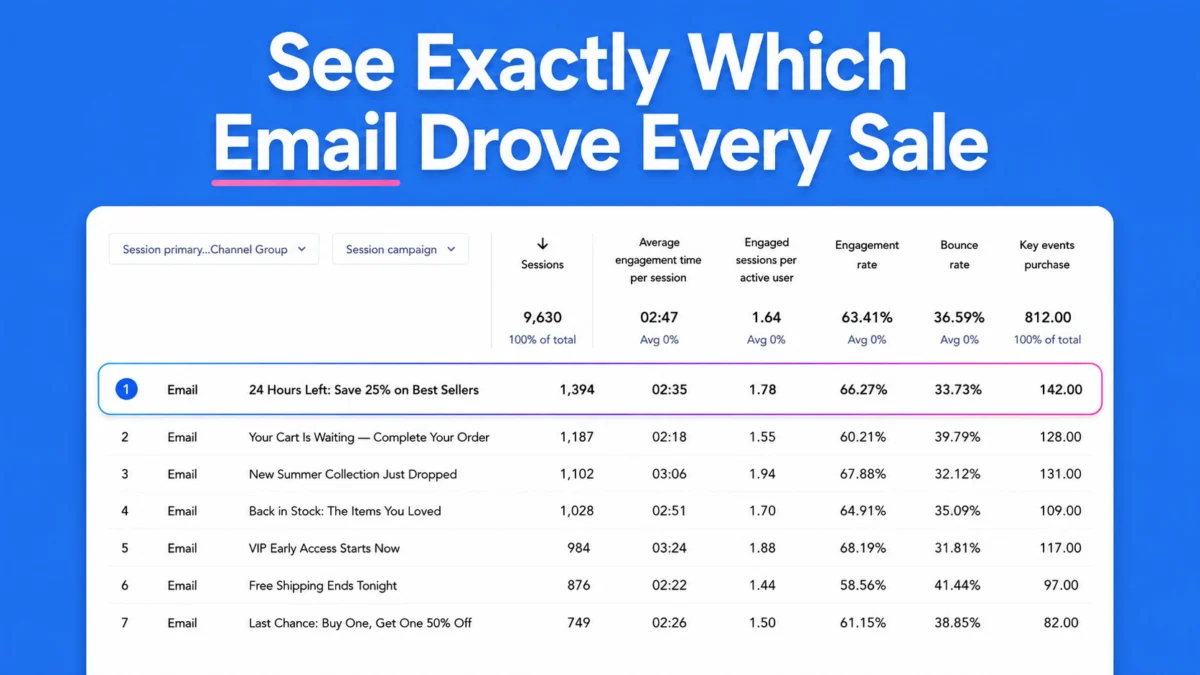
- Google Analytics 4 (GA4): Teams send "variant IDs" as custom dimensions or event parameters. While GA4’s exploration reports allow for basic conversion rate comparisons, the system does not natively calculate statistical significance for manual events. This leaves teams vulnerable to "peeking," where they declare a winner prematurely based on a temporary trend.
- Product Analytics (Mixpanel/Amplitude): These tools are superior for tracking long-term user retention and funnel progression. By tagging users with a "test_variant" property, teams can build complex cohorts. However, like GA4, these tools often lack the "guardrail metrics" necessary to detect if an experiment is accidentally breaking other parts of the site.
- Data Warehouses (BigQuery/Snowflake): For the highest level of accuracy, data-mature teams route all experiment events to a central warehouse. Data engineers then use SQL or Python to run statistical models. This provides the most flexibility but introduces a significant time lag between data collection and actionable insights.
The Statistical and SEO Risks of Manual Setups
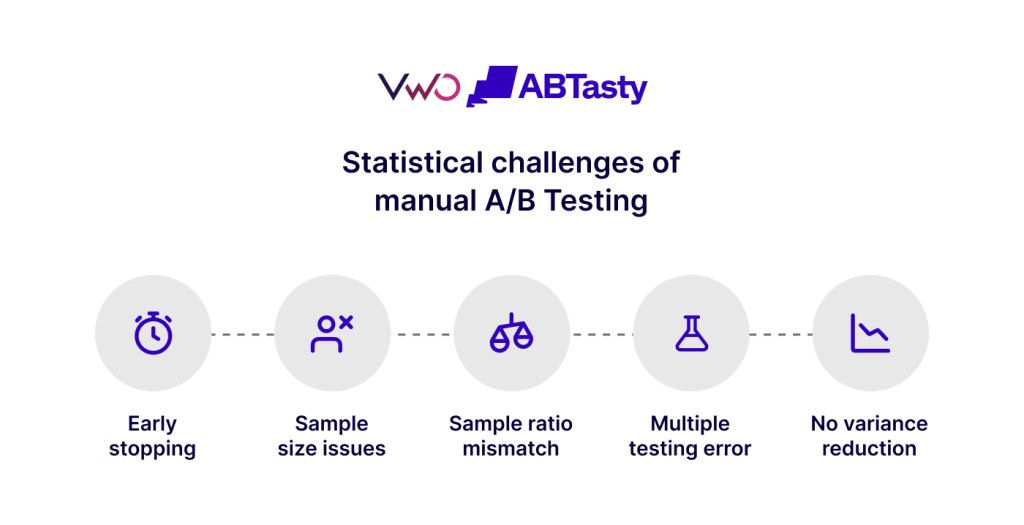
The most significant danger of manual A/B testing is not the execution, but the interpretation of data. Dedicated platforms include "statistical engines" designed to prevent common human errors. Manual setups lack these guardrails, leading to several critical issues:
Sample Ratio Mismatch (SRM)
SRM occurs when the actual traffic split (e.g., 48/52) deviates from the intended split (50/50). This is often a sign of a technical bug, such as a script failing to fire for a specific browser or a bot interfering with one variation. Dedicated tools flag SRM automatically; manual teams often ignore it, leading to results that are statistically invalid regardless of the "confidence level."
The Peeking Problem and False Positives
In a manual environment, stakeholders often check results daily. If they see a "95% confidence" result on day three, they may be tempted to stop the test. However, without "Sequential Testing" math, checking results early dramatically increases the probability of a false positive. A winning result in the first week often regresses to the mean after a full business cycle of 14 to 28 days.
SEO Integrity and "Cloaking"
Search engines like Google have strict guidelines regarding A/B testing. If a manual setup serves one version of a page to a Googlebot and another to a user—or if it fails to use rel=canonical tags on split URL tests—it can be flagged for "cloaking." This is viewed as a manipulative practice and can lead to severe ranking penalties. Additionally, client-side scripts that cause layout shifts can lower a site’s Core Web Vitals score, indirectly harming organic traffic.
Economic and Operational Implications
As an organization’s experimentation maturity grows, the "hidden costs" of manual testing begin to outweigh the licensing fees of a dedicated platform. Industry analysis suggests that engineering time is often the most expensive component of an experimentation program. When developers are required to manually bucket users, clean data, and build custom reports for every test, the "velocity" of the program slows down.
A study of high-performing growth teams indicates that the number of experiments run is directly correlated with revenue growth. Manual processes act as a bottleneck, often limiting teams to 1-2 tests per month. In contrast, teams using dedicated platforms like VWO or AB Tasty can often execute 10-20 tests in the same period by empowering non-technical staff (such as marketers and product managers) to launch experiments using visual editors and automated statistical dashboards.
Case Studies: The Value of Precision
The impact of moving from manual "guesswork" to platform-backed experimentation is evidenced by several industry leaders. For instance, the Dutch green energy company Vandebron utilized behavioral insights and automated testing to identify a technical friction point in their sign-up form—specifically a date-of-birth field that was causing silent errors. By validating a fix through a controlled experiment, they realized a 16.3% increase in sign-up rates.
Similarly, Meliá Hotels used server-side experimentation to test changes within their booking funnel. By utilizing a platform that allowed for progressive rollouts—starting with 5% of traffic and scaling to 100% as confidence grew—they achieved a 1.85% uplift in revenue per visitor while ensuring the stability of their high-transaction backend logic.
Conclusion: The Path Toward Scalable Optimization
Manual A/B testing serves as a valuable entry point for organizations beginning their optimization journey. It fosters a "test-and-learn" culture and forces teams to understand the underlying mechanics of data collection. However, it is a transitionary phase rather than a destination.

For an experimentation program to become a reliable engine for business growth, it must eventually move toward automation. The risks of statistical inaccuracy, SEO penalties, and engineering bottlenecks eventually create a ceiling that manual processes cannot break. The transition to a dedicated experimentation platform represents a shift from "running tests" to "building a system of insight," where data-driven decisions are made with speed, security, and statistical certainty. Organizations that recognize this shift early are better positioned to outpace competitors in an increasingly volatile digital economy.