

Instapage, a prominent leader in the post-click automation and landing page software industry, has officially announced the rollout of a suite of new features designed to address the escalating complexities of modern digital marketing. These updates, which include a robust automated Scheduling tool and a new category of Website Page Templates, represent a strategic expansion of the platform’s capabilities. By moving beyond the traditional confines of standalone landing pages, Instapage is positioning itself as a more comprehensive solution for marketers who require both high-velocity campaign execution and cohesive website development. Alongside these technical updates, the company has launched the Instapage Early Access Program, a strategic initiative aimed at fostering a collaborative development environment between the software’s engineering teams and its power-user community.
The introduction of these tools comes at a critical juncture for the MarTech (marketing technology) industry. As digital advertising costs continue to rise across platforms like Google Ads and Meta, the efficiency of the "post-click" experience—the journey a user takes after clicking an ad—has become the primary lever for maintaining a positive Return on Ad Spend (ROAS). Instapage’s latest developments are specifically engineered to reduce the manual labor associated with this process, allowing marketing teams to focus on strategy and creative optimization rather than technical maintenance.
The Evolution of Campaign Management Through Automated Scheduling
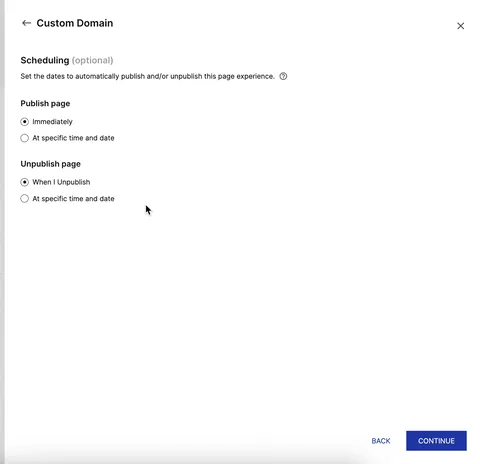
One of the most significant additions to the platform is the new Scheduling feature. This tool allows marketers to automate the lifecycle of their landing pages by setting specific dates and times for publishing, unpublishing, and updating content. In the fast-paced environment of digital advertising, where seasonal promotions, flash sales, and time-bound offers are standard, the ability to pre-program page transitions is a critical efficiency gain.
Historically, campaign managers were required to manually toggle pages on or off, often requiring "midnight launches" for global campaigns or weekend work to ensure that expired offers were removed promptly. This manual process was not only labor-intensive but also prone to human error, which could lead to "broken" user experiences or the continued promotion of expired discounts—factors that significantly damage brand trust and conversion rates.
With the new Scheduling tool, Instapage enables users to orchestrate complex campaign timelines weeks or months in advance. This is particularly beneficial for enterprise-level organizations managing hundreds of concurrent pages across different time zones. By automating the deployment of updates, teams can ensure that their messaging remains synchronized with their broader advertising schedule without requiring constant manual oversight. Industry analysts suggest that marketing automation of this nature can reduce administrative overhead by as much as 20% for high-volume agencies.
Expanding Into Website Architecture with Dedicated Page Templates
While Instapage has built its reputation as a premier landing page builder, the company has observed a growing trend among its user base: the use of its no-code builder to construct entire websites. Recognizing this shift in user behavior, Instapage has introduced a dedicated category of Website Page Templates. These templates are specifically designed to help users build core site pages—such as "About Us," "Services," and "Contact" pages—with the same ease of use and conversion-centric design philosophy that the platform applies to landing pages.
The new template library covers nine distinct industries, including Real Estate, Beauty, and Consumer Products. Each template is pre-optimized for mobile responsiveness and fast loading speeds, which are essential factors for both user experience and Search Engine Optimization (SEO). By providing these structures, Instapage is lowering the barrier to entry for small-to-medium businesses (SMBs) and specialized agencies that may lack the resources for custom web development but require a professional, high-performing digital presence.
This move signals a broader trend in the SaaS landscape where specialized tools are expanding their feature sets to become "all-in-one" solutions. By integrating website-building capabilities, Instapage is directly competing with traditional Content Management Systems (CMS) while maintaining its edge in conversion rate optimization (CRO). The "no-code" nature of these templates ensures that marketing teams can remain agile, making significant site updates in minutes rather than waiting on internal IT departments or external web developers.
The Instapage Early Access Program: A Collaborative Approach to Innovation
Beyond software updates, Instapage is emphasizing the importance of community-driven development through the launch of its Early Access Program. This program invites a selected group of users to test-drive new features before they are released to the general public. Members of the program have the unique opportunity to provide direct feedback to the Instapage product team, effectively helping to shape the roadmap of the platform.
This "beta-first" strategy is a response to the rapidly changing needs of digital marketers. In recent months, Instapage has aggressively expanded its feature set, introducing Carousels, Popups, and a completely redesigned Dashboard. The Early Access Program ensures that future features—such as potential AI-driven content generation or advanced data visualization tools—are refined through real-world usage scenarios before a wide-scale rollout.
For the participants, the program offers a competitive advantage, allowing them to leverage the latest marketing technologies ahead of their peers. For Instapage, it provides a vital feedback loop that reduces the risk of product-market misalignment. In an era where user experience (UX) can determine the success of a software platform, this collaborative approach is a strategic move to ensure long-term customer retention and satisfaction.
Contextualizing the Impact: Data and Market Trends
The drive toward automation and simplified web creation is supported by compelling industry data. According to recent marketing reports, companies that utilize automation for campaign management see a 14.5% increase in sales productivity and a 12.2% reduction in marketing overhead. Furthermore, the "post-click" experience has become a major focus for CRO specialists, as the average landing page conversion rate across industries hovers around 2.35%. However, the top 10% of performers—those who use advanced optimization tools and personalized experiences—see conversion rates of 11.45% or higher.
The introduction of Scheduling and Website Templates is a direct attempt to help more marketers reach that top-tier performance bracket. By ensuring that pages are always relevant (via Scheduling) and professionally designed (via Templates), Instapage is removing the friction points that often lead to "bounce" rates.
Moreover, the shift toward no-code solutions is part of a larger democratization of technology. Gartner predicts that by 2024, no-code and low-code application development will be responsible for more than 65% of application development activity. Instapage’s expansion of its no-code builder into full website pages aligns perfectly with this trajectory, empowering non-technical staff to take full control of the digital sales funnel.
Industry Implications and Future Outlook
The broader implications of these updates suggest a maturing of the landing page software market. What was once a niche tool for creating single-purpose pages is evolving into a comprehensive "Conversion Cloud." For marketers, the benefit is a unified workflow where the transition from a social media ad to a landing page, and eventually to a main website, is seamless and optimized for a single goal: conversion.
The reactions from the marketing community have been largely positive. Early testers of the Scheduling feature have noted that it provides a "safety net" for high-stakes campaigns, such as those during Black Friday or Cyber Monday, where timing is everything. Similarly, the industry-specific templates have been praised for their aesthetic quality and functional layout, which often requires minimal adjustment to align with a brand’s identity.
Looking forward, Instapage’s commitment to continuous improvement—evidenced by the Early Access Program—suggests that the platform will continue to integrate more advanced features, potentially moving into the realms of predictive analytics and deeper AI integration. As the digital landscape becomes increasingly crowded, the tools that offer the highest degree of efficiency and the best user experience will inevitably lead the market.
In conclusion, the launch of Scheduling, Website Page Templates, and the Early Access Program represents a significant milestone for Instapage. By addressing the dual needs of operational efficiency and high-quality web design, the platform is reinforcing its value proposition to a diverse range of users, from solo entrepreneurs to global marketing agencies. As marketers continue to navigate the challenges of audience segmentation and campaign scaling, these tools provide a necessary foundation for achieving sustained growth in an increasingly competitive digital economy.







