For over a decade, Adobe Marketo Engage has stood as a cornerstone for enterprise demand generation teams, renowned for its robust capabilities in B2B marketing automation. However, a significant shift is underway across the marketing technology landscape. Over the past few years, a growing cohort of marketing operations leaders and B2B executives are increasingly questioning Marketo’s long-term suitability, actively exploring a new generation of alternatives that promise greater efficiency, reduced complexity, and a more unified approach to revenue generation. This re-evaluation is driven by evolving market demands, the imperative for seamless data flow, and the burgeoning capabilities of artificial intelligence within marketing platforms.
The Shifting Paradigm: Enterprise Marketers Reconsider Marketo Engage
Adobe Marketo Engage’s historical dominance stemmed from its powerful suite of tools designed for lead nurturing, email marketing, account-based marketing (ABM), revenue attribution, and deep CRM integration. It carved out a niche as the go-to platform for large-scale, complex B2B operations. Yet, as the marketing landscape matures, so do the expectations of its practitioners. Data from 2023 indicates that nearly half of all marketers are now leveraging automation to streamline processes, underscoring its foundational role in modern strategy. This widespread adoption has intensified competition among platform providers, pushing innovation towards more integrated, intuitive, and cost-effective solutions.
Primary buyers of marketing automation platforms, including B2B marketing leaders, Revenue Operations (RevOps) leaders, and agency principals, are no longer content with merely functional tools. They demand platforms that not only perform but also empower their teams, reduce operational friction, and deliver tangible, measurable value swiftly. This has led to a critical examination of legacy systems like Marketo, prompting a deeper dive into the total cost of ownership, user experience, and the true efficacy of data integration.
Deep Dive into Marketo’s Challenges

The current trend of re-evaluation is not arbitrary; it stems from several persistent pain points associated with Marketo Engage that have become increasingly difficult to justify in a fast-paced, data-driven environment.
-
Exorbitant Total Cost of Ownership (TCO): Marketo’s licensing fees are often just the entry point. The true financial burden extends significantly beyond this initial outlay, encompassing a spectrum of hidden and indirect costs. These include expensive implementation services, ongoing administrative time for complex configurations and maintenance, the cost of integrating with various third-party tools, extensive training requirements for specialized staff, and the procurement of numerous add-ons to achieve desired functionalities. Industry estimates often place the all-in annual cost of running Marketo at two to three times the base license fee, a figure that frequently catches organizations by surprise and impacts overall marketing budgets.
-
Steep Learning Curves and Administrative Reliance: One of the most frequently cited frustrations is Marketo’s inherent complexity. It is not a platform that most generalist marketers can operate independently. Organizations often find themselves heavily reliant on a Marketo-certified administrator or an external consulting firm to build campaigns, manage intricate workflows, and ensure system health. This dependency creates bottlenecks, slows down campaign execution, and significantly inflates operational costs. The need for specialized expertise can stifle agility and prevent marketing teams from quickly adapting to new strategies or market changes.
-
Fragmented Data and Siloed Operations: While Marketo integrates with leading CRMs like Salesforce, the term "integrates with" is distinct from "unified with." Many teams report persistent challenges with data synchronization, including delays and inconsistencies in lead records. This fragmentation often leads to friction in the critical handoff between marketing and sales, where a unified view of the customer journey is paramount. Modern revenue teams cannot afford disparate datasets or reconciliation efforts that impede timely, informed decision-making and optimal customer engagement. The absence of a natively unified system undermines the very goal of a cohesive revenue operation.
-
Protracted Time to Value (TTV): The implementation timelines for Marketo are routinely long, often stretching between three to six months before teams are fully operational and able to launch sophisticated campaigns. In today’s competitive landscape, where companies need to generate pipeline and demonstrate ROI with unprecedented speed, such an extended onboarding period represents a significant opportunity cost. This delay can hinder market responsiveness and delay the realization of strategic marketing objectives.
The Rise of Unified Platforms: HubSpot as a Leading Alternative

In response to these challenges, platforms offering a more integrated and user-friendly experience are gaining significant traction. HubSpot, with its Marketing Hub and Smart CRM, emerges as a prominent alternative, directly addressing many of Marketo’s pain points through its unified architecture and emphasis on user accessibility.
HubSpot was engineered as a cohesive system from its inception, inherently connecting marketing automation and CRM functionalities within a single platform. This foundational design eliminates the need for complex integration layers and reduces data silos across marketing, sales, and service departments.
-
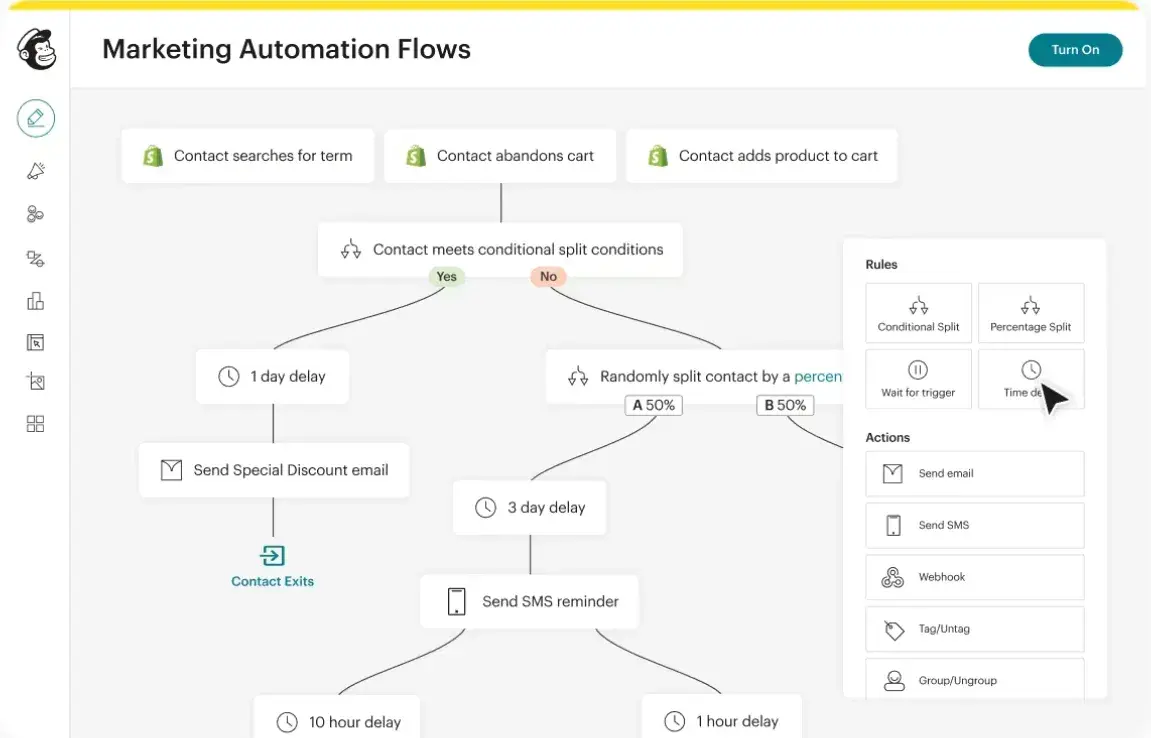
User-Centric Marketing Automation: HubSpot’s Marketing Automation features a visual workflow builder that empowers marketing teams to design and execute sophisticated campaigns without requiring specialized technical expertise. Users can construct lead nurture sequences, trigger-based campaigns, and multi-step automation using an intuitive drag-and-drop editor, significantly reducing the reliance on developers or IT support. This stands in stark contrast to Marketo’s automation builder, which often presents a steeper learning curve and necessitates administrative involvement for advanced configurations.
-
Seamless Customer Journey Orchestration: The platform’s Customer Journey Orchestration capabilities enable end-to-end automation across diverse channels, including email, social media, and messaging platforms. Critically, these journeys are powered by real-time CRM data, ensuring that each step adapts immediately to changes in a contact’s status or behavior. This eliminates the need to stitch together disparate tools or wait for data synchronization, fostering a truly dynamic and responsive customer experience.
-
AI-Powered Lead Intelligence: HubSpot’s Lead Scoring leverages artificial intelligence to provide AI-assisted fit and engagement scoring. This automatically prioritizes the most promising leads based on behavioral patterns and ideal customer profile (ICP) data. These scores are surfaced directly within the CRM, ensuring that both marketing and sales teams operate from a consistent, qualified list, thereby reducing ambiguity and improving lead quality. Siddharth Deswal, Founder of Enfra, notes the efficiency: "Lead scoring in Marketo often requires significant configuration and ongoing maintenance to stay accurate. HubSpot’s AI-assisted scoring adapts over time, which reduces the manual overhead considerably."
-
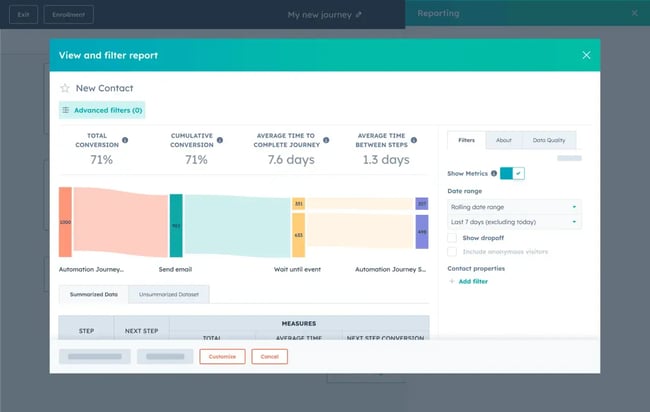
Robust Reporting and Revenue Attribution: With Advanced Marketing Reporting, HubSpot provides comprehensive multi-touch revenue attribution and customer journey analytics. This allows marketing teams to definitively demonstrate which campaigns contribute to closed revenue, bypassing the complex, often custom reporting setups typically required by Marketo. The native integration of data within the platform means no exports, no middleware, and no tedious reconciliation between systems, offering revenue teams unparalleled visibility into marketing’s pipeline impact.
-
Integrated Marketing Studio: HubSpot’s Marketing Studio consolidates campaign planning, content creation, and execution into a single, AI-powered workspace. For organizations accustomed to managing Marketo alongside separate content management systems, briefing documents, and project management platforms, this integration significantly reduces coordination overhead, streamlining campaign deployment.
-
Intelligent Email Personalization: AI-Powered Emails automate personalized 1:1 content at scale, drawing directly from live CRM data. HubSpot’s AI dynamically personalizes messages for each contact, eliminating the manual segmentation and token-building processes that are often necessary in Marketo, enhancing engagement and efficiency.
-
Comprehensive Contact Management and Smart CRM: HubSpot’s Contact Management centralizes every interaction – emails, form submissions, page visits, and campaign responses – into a unified contact record. This ensures that marketing and sales teams always possess complete context without needing to switch between tools or export data. Furthermore, integrated Reporting Dashboards provide real-time campaign performance and pipeline contribution insights in one accessible location, a feature that often necessitates expensive add-ons to replicate in Marketo.
Deswal praises HubSpot, stating, "Simplicity, power, and great design all in one package. Of course, all of that costs a bit, but it’s well worth the price when you’re a modern brand running sophisticated email campaigns that are based on customer actions, and a list of one." HubSpot Marketing Hub offers a free tier, with Professional plans starting at $800/month, scaling with contact volume and features. For many organizations, the combined cost of HubSpot, including its CRM, proves to be significantly lower than Marketo’s total cost of ownership, especially when accounting for implementation, administrative resources, and integration expenses.
Other Key Contenders in the Marketing Automation Landscape
While HubSpot leads the charge for unified solutions, several other platforms offer compelling alternatives depending on an organization’s existing tech stack, budget, and specific needs.
-
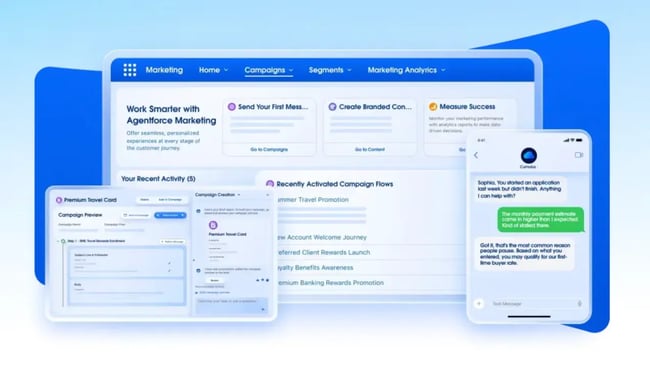
Salesforce Marketing Cloud Account Engagement (Pardot):
- Best For: Existing Salesforce CRM customers seeking marketing automation tightly integrated within their established ecosystem.
- Key Features: Robust lead scoring, native Salesforce-CRM synchronization, and engagement programs.
- Tradeoffs: Its value proposition significantly diminishes outside the Salesforce ecosystem. Organizations not using Salesforce, or those considering a CRM change, might find Pardot limiting. Deswal remarks on his experience: "We used it for a year, and a lot of the intelligence that was there in HubSpot was simply missing. Not just marketers, but even the web developers on my team complained about Pardot because it simply didn’t have the intelligence or capabilities for landing page creation that we had become used to in HubSpot."
- Pricing: Starts at $25/month for the Starter tier, with Advanced and Premium tiers being substantially higher.
-
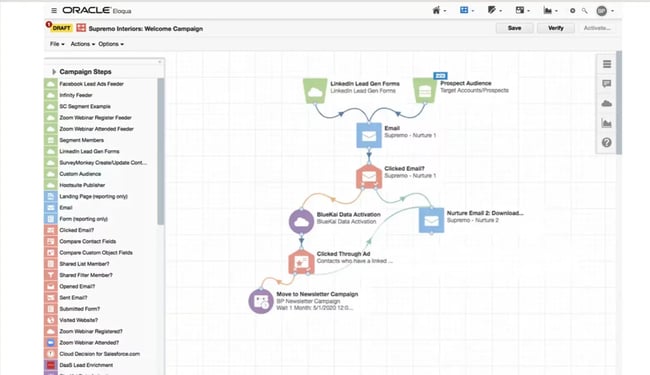
Oracle Eloqua:
- Best For: Large enterprises managing complex, multi-touch programs and requiring global deployment capabilities.
- Key Features: Advanced segmentation, comprehensive ABM functionalities, and robust global scalability. Its data management tools, including built-in deduplication and normalization, are particularly strong for organizations with intricate contact databases and stringent data hygiene requirements.
- Tradeoffs: Eloqua shares a similar complexity, cost profile, and administrative dependency with Marketo. Teams migrating from Marketo to Eloqua should critically assess whether they are genuinely solving root problems or merely swapping one complex platform for another. Deswal characterizes Eloqua as "basically an expensive email marketing system with powerful lead management capabilities (de-dupe, etc), but that’s it. It felt like it was best suited for large B2C like Insurance who struggled with bad or duplicate data on an enormous scale. It wasn’t a platform built for the modern marketer."
- Pricing: Custom pricing, typically falling within the mid-to-high enterprise range.
-
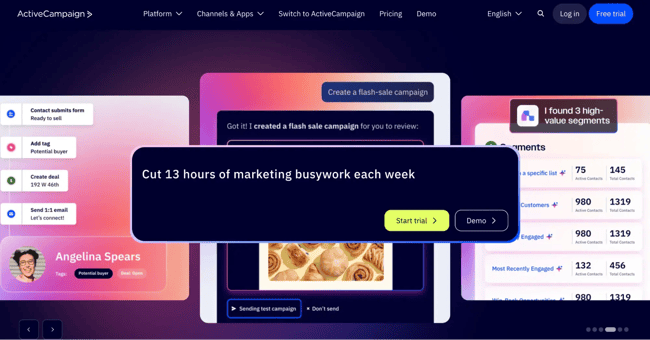
ActiveCampaign:
- Best For: Small to mid-market businesses (SMBs and mid-market teams) requiring strong email automation without the enterprise-level pricing or implementation complexity.
- Key Features: Intuitive email automation, a built-in CRM, and flexible segmentation options. Its accessible automation builder allows marketers to construct sophisticated sequences without extensive technical support.
- Tradeoffs: ActiveCampaign’s reporting and attribution software are less comprehensive compared to Marketo or HubSpot. Teams heavily reliant on multi-touch attribution and deep revenue analytics may encounter limitations.
- Pricing: Starts at $15/month; enterprise plans are available but scale with contact volume.
-
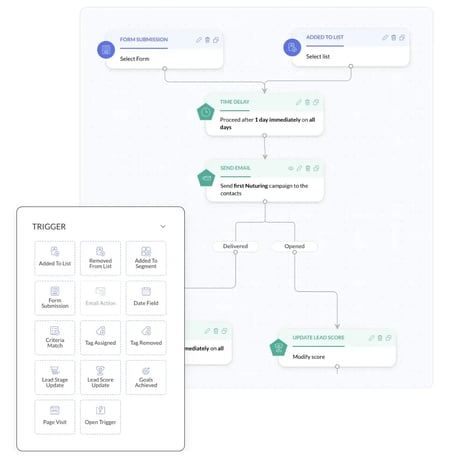
Zoho Marketing Automation:
- Best For: Budget-conscious teams already embedded within the broader Zoho ecosystem, particularly those utilizing Zoho CRM as their primary system of record.
- Key Features: Integrated email marketing, landing page creation tools, and lead scoring. The native integration with Zoho CRM is seamless.
- Tradeoffs: Integration options become more limited outside the Zoho ecosystem. For teams accustomed to Marketo’s advanced ABM and enterprise-level segmentation capabilities, Zoho Marketing Automation may feel less robust.
- Pricing: Starts at $14/month.
-
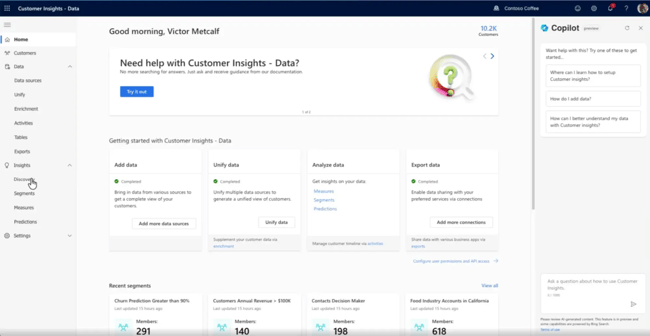
Microsoft Dynamics 365 Customer Insights:
- Best For: Organizations deeply invested in the Microsoft stack, including Microsoft 365 and Dynamics CRM.
- Key Features: Event marketing, B2B customer journeys, and advanced Copilot AI integration. It offers native connectivity with Microsoft products like Teams, SharePoint, and Power BI.
- Tradeoffs: Dynamics 365 Marketing is known for a complex licensing structure that can be challenging to navigate, and its implementation often requires significant IT involvement. Non-Microsoft-centric organizations should approach with caution.
- Pricing: From $1,700.00/month for the marketing application, with bundled pricing available for other Dynamics 365 modules.
-
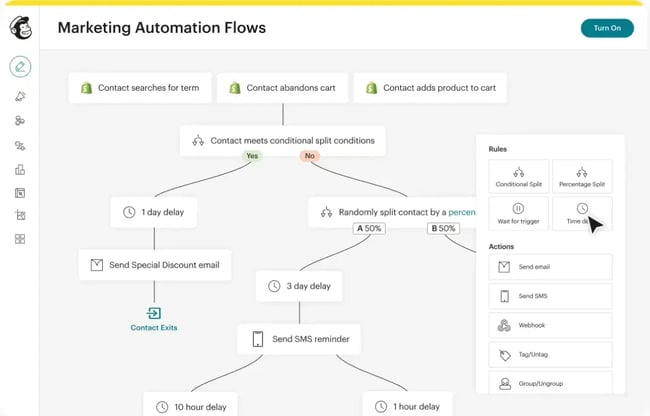
Mailchimp:
- Best For: Small teams and early-stage companies requiring straightforward email marketing programs and basic automation.
- Key Features: User-friendly email campaign creation, automation sequences, and audience management.
- Limitations: Mailchimp is not a like-for-like replacement for Marketo. It lacks the depth required for complex B2B nurture sequences, advanced ABM functionalities, or sophisticated multi-touch attribution needs. Deswal acknowledges its strengths: "Mailchimp has very nice email and newsletter designs out of the box." However, he cautions, "it’s not all that powerful for sophisticated marketing. I would easily recommend this to any brand that’s just starting out. It’s perfect for the Small Business with limited needs."
- Pricing: Offers a free tier, with paid plans starting from $13/month.
Strategic Considerations for Transitioning from Marketo
The decision to switch marketing automation platforms is a strategic one, requiring careful evaluation to ensure the new solution aligns with organizational goals and avoids merely trading one set of problems for another.
-
Marketing Automation and Workflow Complexity: Marketo’s "smart campaigns" and trigger logic are powerful but complex. When evaluating alternatives, teams must prioritize mapping their most critical programs, such as nurture sequences, lead routing, sales alert triggers, and scoring models. Each vendor should be challenged to demonstrate how their platform can replicate the organization’s three most complex programs, highlighting ease of use and flexibility.
-
CRM Integration and Data Unification: Given Marketo’s reliance on a sync layer for CRM integration, a key evaluation point for alternatives is their approach to data unification. Platforms offering native CRM functionality or a deeply integrated model significantly reduce data delays and inconsistencies. A truly unified CRM and marketing platform will eliminate data silos between marketing, sales, and service, which are often the root cause of friction in the revenue process.
-
Lead Scoring and Segmentation Capabilities: A thorough assessment of how each platform handles demographic fit scoring, behavioral engagement scoring, and score decay is crucial. The advent of AI-assisted scoring that adapts over time can substantially reduce the manual maintenance burden for lean operations teams. Furthermore, evaluate the platform’s flexibility in handling intricate segmentation requirements, including ICP filters, firmographic layering, and persona-based segments, without necessitating custom code.
-
Multi-Channel Campaign Execution: Modern B2B programs span multiple channels, including email, paid advertisements, social media, and direct outreach. The chosen alternative must support the full spectrum of an organization’s channel mix and ensure these channels can be orchestrated within a single, cohesive workflow, rather than requiring separate tools and manual handoffs.
-
Robust Revenue Attribution and Reporting: Marketo’s reporting often requires extensive configuration and additional investments to deliver multi-touch attribution analysis. A suitable alternative must provide clear insights into funnel conversion rates, campaign ROI, revenue influence, and sales handoff performance. Key questions for vendors include: "Can your platform attribute revenue across multiple touchpoints natively?", "How easily can we customize reports to reflect our unique sales cycle?", and "What dashboards are available out-of-the-box for marketing and sales leaders?" The opportunity cost of poor attribution data compounds over time, making this a critical area.
-
Ease of Migration and Onboarding: A successful transition hinges on a well-planned migration strategy. Prospective buyers should inquire about the vendor’s standard migration process, including data transfer mechanisms, support for existing integrations, and onboarding timelines. Understanding these elements before signing a contract is essential for a smooth transition.
A Structured Approach to Marketing Platform Migration
Migrating from a complex platform like Marketo can appear daunting, but a systematic approach can simplify the process and minimize disruption.
-
Step 1: Conduct a Comprehensive Audit of Current Usage: Begin by meticulously documenting what is actively driving results within the current Marketo instance. This includes identifying high-performing nurture sequences, critical scoring rules, essential smart lists, and frequently used reports. The goal is to migrate what works and judiciously leave behind programs that are dormant or ineffective.
-
Step 2: Meticulously Export and Clean Your Data: Extract all relevant data, including contacts, lead scores, activity history, and campaign associations. Prioritize data cleansing before migration. Duplicate records and poor data quality will only compound problems in a new system.
-
Step 3: Map All Existing Integrations: Compile a comprehensive list of every tool currently integrated with Marketo, such as CRM, advertising platforms, webinar tools, data enrichment services, and content management systems. Confirm the native integration capabilities of the target platform for each of these tools. Addressing integration gaps upfront is far more efficient than discovering them post-migration.
-
Step 4: Rebuild High-Priority Programs First: Avoid the temptation to migrate everything simultaneously. Prioritize programs that directly support active pipeline generation, such as top-of-funnel nurture sequences, lead routing workflows, and immediate sales alert triggers. Get these critical functions operational in the new platform before tackling lower-priority content or campaigns.
-
Step 5: Rigorously Validate Data Sync Before Going Live: If the new platform integrates with a separate CRM, establish a parallel testing period, typically two to four weeks. During this time, confirm that contact records, scoring data, and campaign associations synchronize correctly and consistently. Catching errors during this phase prevents them from impacting live campaigns.
-
Step 6: Plan Your Strategic Go-Live Window: Select a go-live date that avoids peak campaign periods or critical business cycles. A mid-quarter switch often provides sufficient time for the team to stabilize the new platform before entering high-volume sending windows.
-
Step 7: Implement Dedicated Team Training Before Day One: Allocate structured, hands-on training time for the entire team, rather than expecting them to "figure it out." Teams that invest in comprehensive onboarding during the initial four to six weeks are more likely to adopt the new platform faster and less likely to revert to old workarounds, maximizing their investment.
Frequently Asked Questions About Marketo Alternatives
-
How long does it typically take to migrate off Marketo? Most migrations from Marketo to another marketing automation platform span between 60 and 180 days. The timeline is influenced by the size of the contact database, the volume of active programs to be migrated, and the complexity of existing integrations. Platforms with robust onboarding support, such as HubSpot, can often facilitate core migrations within 60 to 90 days. Larger enterprise migrations with intricate CRM sync requirements and extensive program libraries typically require closer to six months.
-
What data and assets commonly cause problems during migration? The most frequent friction points during migration include duplicate contact records, undocumented or inconsistent lead scoring logic, nurture programs built on deprecated Marketo features, and CRM field mappings that do not translate cleanly to the new platform. A thorough data audit conducted before the migration process is the single most impactful step an organization can take to mitigate downstream problems.
-
Should organizations run Marketo and a new platform in parallel? Running both platforms in parallel for a short validation period (typically two to four weeks) is common and highly advisable, especially for teams with active pipeline programs. This parallel operation helps identify and resolve data sync issues and builds team confidence before a full transition. However, running both systems for an extended period often leads to confusion and uncertainty regarding which system holds the authoritative data.
-
How can organizations accurately estimate total cost beyond license fees? The total cost of ownership for marketing automation platforms extends beyond initial license fees. It includes professional services for implementation, ongoing administrative time for maintenance and campaign building, integration costs with other systems, training expenses for staff, and the cost of any necessary add-ons. For Marketo, industry estimates often place the all-in annual cost at two to three times the license fee alone. When evaluating alternatives, organizations should request a full TCO estimate from vendors, encompassing all these elements, and compare it against their fully loaded current Marketo expenses.
-
What are the fundamental differences between Marketo and HubSpot? Marketo is a standalone marketing automation platform that necessitates a separate CRM and an integration layer to connect marketing and sales data. HubSpot, conversely, is a unified platform where marketing automation and CRM functionalities are built together, sharing a single, cohesive contact record. This integrated design eliminates the data sync delays, integration maintenance overhead, and fragmented reporting commonly experienced by Marketo users. HubSpot also typically offers significantly shorter implementation timelines and lower operational complexity for most teams.
-
When is choosing a unified CRM and marketing platform the optimal decision? A unified CRM and marketing platform is the ideal choice when data fragmentation between marketing and sales is creating significant friction. This includes issues such as delayed lead handoffs, inconsistent contact records, or reporting that fails to directly connect marketing activities to revenue outcomes. If an organization’s team spends considerable time reconciling data between its marketing automation platform (MAP) and CRM, or if attribution analysis relies heavily on manual exports and spreadsheets, a unified platform like HubSpot provides a structural solution to these problems, rather than merely procedural workarounds.
-
Are there Marketo alternatives that offer strong event-based triggers? Yes, several platforms, including HubSpot, ActiveCampaign, and Pardot, offer robust support for event-based triggers. These triggers respond to behavioral actions such as page visits, form submissions, email clicks, and CRM updates, initiating automated sequences. HubSpot’s real-time CRM data ensures that event triggers fire immediately upon a contact’s behavior or status change, without delays from sync cycles. For teams heavily reliant on event-based logic, verifying trigger latency – the speed at which the platform responds to a triggering event – is a critical aspect of the evaluation process.
Conclusion: Navigating the Future of Enterprise Marketing Automation
The ongoing re-evaluation of Adobe Marketo Engage by enterprise demand generation teams signals a broader industry shift towards more integrated, user-friendly, and cost-effective marketing automation solutions. The optimal Marketo alternative ultimately hinges on an organization’s most pressing pain points, whether they be fragmented data, excessive operational complexity, or an unsustainable total cost of ownership.
Platforms like HubSpot Marketing Hub and Smart CRM directly address these challenges by offering a single, unified platform that includes predictive analytics, multi-touch attribution, and AI-powered features. This democratizes enterprise-grade capabilities, making them accessible to teams that may lack the extensive headcount or specialized resources traditionally required to support complex MAPs. Regardless of the platform chosen, the core principles for a successful transition remain constant: conduct a thorough audit of actual usage, meticulously clean data before migration, and rigorously evaluate alternatives against real-world use cases rather than theoretical expectations. The future of enterprise marketing automation lies in systems that empower agility, ensure data cohesion, and drive demonstrable revenue impact.