In an increasingly competitive digital marketplace, marked by escalating advertising costs and evolving privacy regulations, e-commerce businesses are increasingly recognizing email marketing as a critical, predictable, and high-return sales channel. Unlike paid advertising, which demands continuous investment for visibility, a well-managed email list represents an owned asset, granting brands direct, cost-effective access to their audience. Success in this domain hinges on three fundamental pillars: cultivating a high-quality email list, implementing sophisticated behavior-based automated flows, and meticulously tracking revenue-centric metrics. Mastering these elements empowers businesses to build a resilient sales engine, insulated from the unpredictable fluctuations of ad market dynamics.
The Strategic Imperative: Why Owned Channels Offer a Competitive Edge
The fundamental distinction between email marketing and paid advertising lies in control and cost efficiency. With an owned email list, businesses dictate the communication frequency, content, and targeting, bypassing the per-impression or per-click charges inherent in third-party platforms. This inherent advantage becomes even more pronounced as digital advertising costs continue their upward trajectory, squeezing profit margins for many online retailers. The ability to nurture direct relationships with shoppers, free from intermediary platform algorithms, translates into a more stable and sustainable growth model.
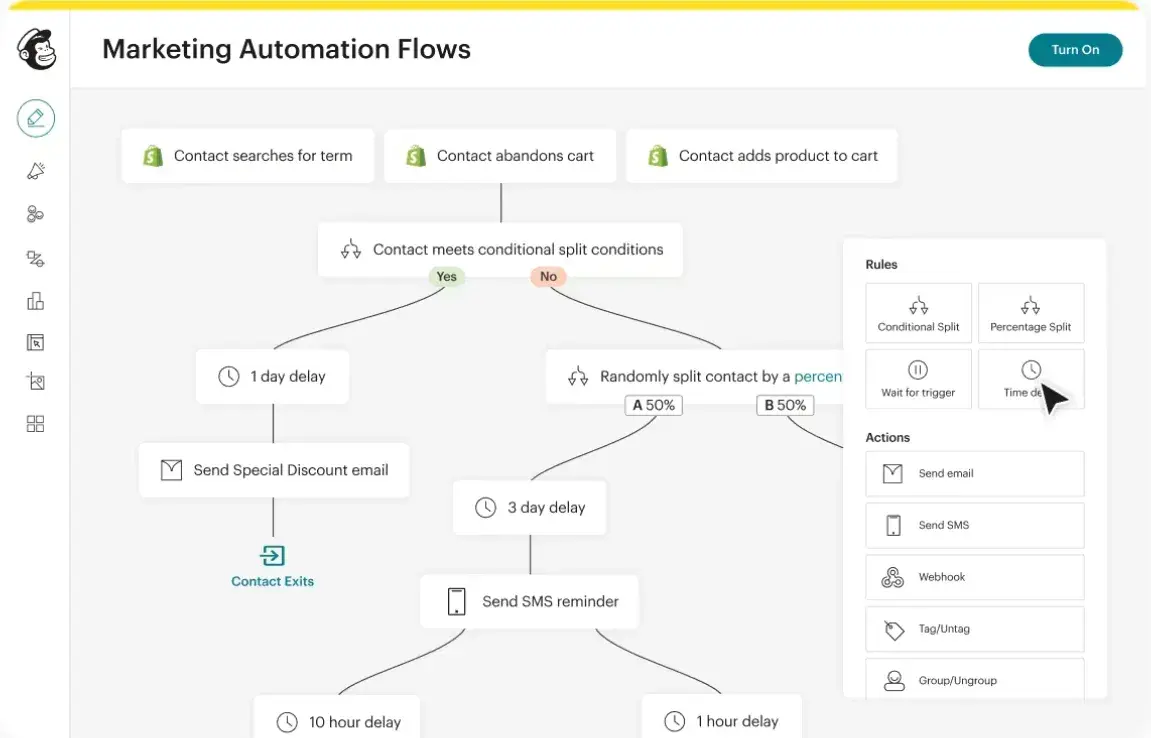
A critical differentiator for thriving e-commerce stores is the strategic deployment of behavioral triggers. While nascent or plateauing businesses might resort to generic newsletters sent indiscriminately, successful brands leverage customer actions—such as browsing a specific product, abandoning a shopping cart, or completing a purchase—to initiate highly relevant and timely email communications. Each message is precisely tailored to the shopper’s current position within their buying journey, maximizing engagement and conversion potential. This approach moves beyond mere broadcasting to create a personalized, responsive dialogue that fosters deeper customer relationships and drives repeat business.
This comprehensive analysis delves into the best e-commerce email marketing strategies, automation techniques, emerging trends for 2026, and common pitfalls to avoid. The insights are underpinned by robust 2025 and 2026 data gathered from a vast network of merchants, offering a forward-looking perspective on effective digital engagement.
Defining E-commerce Email Marketing: A Reactive and Personalized Approach
At its core, e-commerce email marketing is the strategic application of targeted email communications to promote products, cultivate lasting customer relationships, and incentivize repeat purchases. It distinguishes itself from traditional, generic email marketing by integrating sophisticated customer data and behavioral triggers. Instead of blasting identical messages to an entire subscriber base, e-commerce email marketing intelligently reacts to explicit shopper actions. A product view, an abandoned cart, a recent purchase, or a restocked item each serve as a prompt for a tailored, contextually relevant email. As Marty Bauer, Director of Sales & Partnerships at Omnisend, aptly puts it, "Automation works because it listens first. When brands respond to what shoppers are already doing, results follow." This reactive capability transforms email from a passive communication tool into an active driver of sales and loyalty.
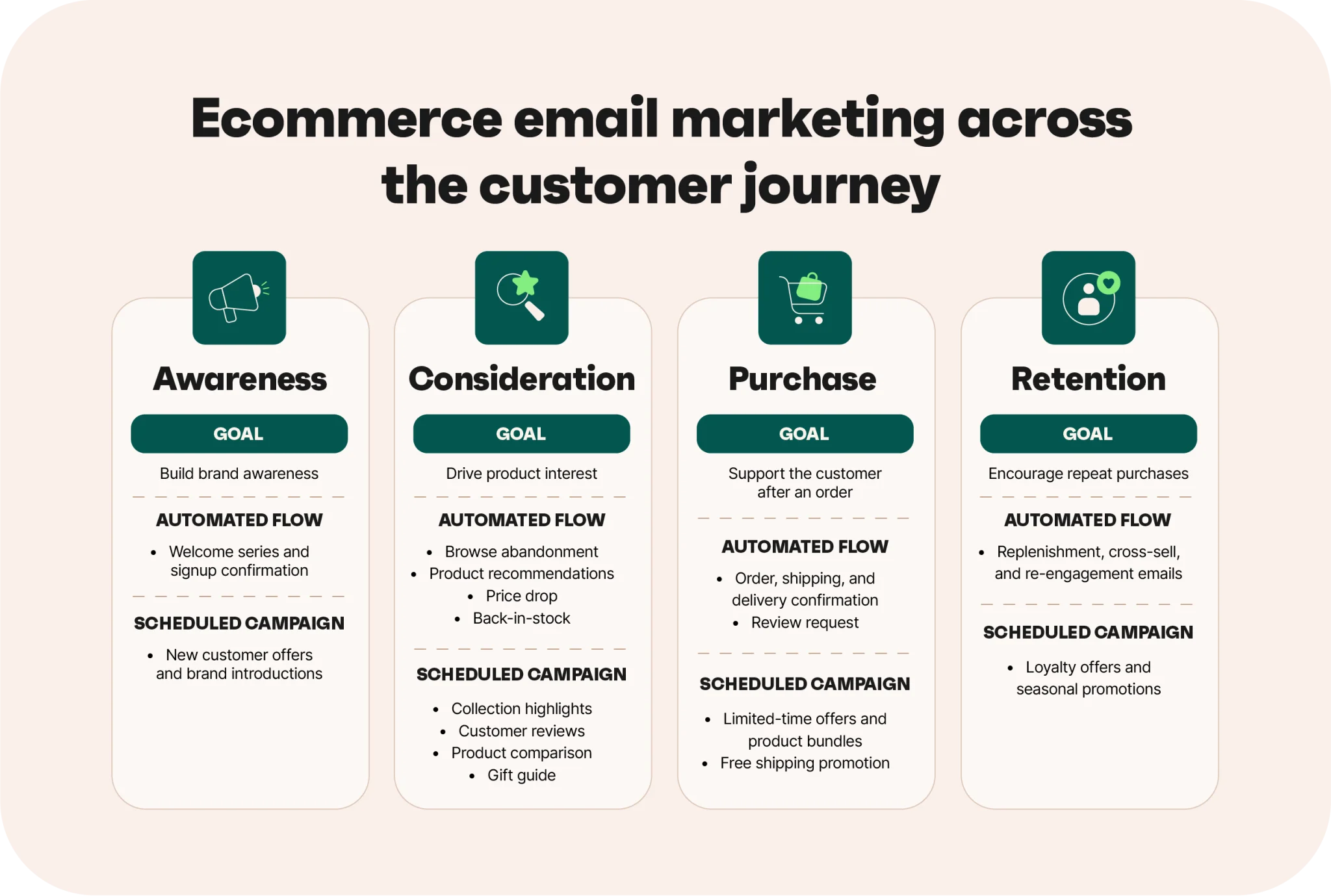
These behavioral triggers are the linchpin of personalization. For instance, if a customer views a single product three times within a short period, it can trigger a recommendation email featuring that product or closely related items, subtly guiding them towards a purchase decision. The overarching strategy of e-commerce email marketing is driven by two distinct yet complementary mechanisms: automated marketing flows and scheduled campaigns. While automated flows respond instantaneously to specific customer actions, scheduled campaigns are planned communications designed for broader announcements, promotions, or seasonal events. Both play vital roles across the entire customer journey, from initial awareness and consideration through purchase and long-term retention.
Demonstrable Returns: The Tangible ROI of Strategic Email Marketing
The financial returns from e-commerce email marketing are substantial and consistently outperform many other digital channels. According to Omnisend’s internal analysis of paid-plan merchants in 2025, businesses generated an impressive $79 for every $1 spent across email, SMS, and push notifications. When isolating email alone, the return remains exceptionally strong at $76 for every dollar invested. These figures underscore email’s position as a high-ROI channel, providing a powerful argument for its central role in any e-commerce marketing budget.
Further reinforcing email’s efficacy, Omnisend’s 2026 Ecommerce Marketing Report highlighted a significant year-over-year increase in click-to-conversion rates, reaching 9% across all email types, up from 5.9%. This indicates not just increased engagement, but a higher propensity for email recipients to complete a purchase after clicking. Automated emails, in particular, demonstrate superior performance: one in every three clicks on an automated email led to a purchase, a stark contrast to the one in eighteen clicks on standard campaigns. This data unequivocally champions the power of timely, behavior-triggered communications.
The real-world impact of these strategies is exemplified by success stories such as Salomon Japan. Utilizing Omnisend, the brand launched localized email campaigns for its 130,000 customers, meticulously segmented by sport category and loyalty tier. Their campaigns achieved a remarkable 45% open rate and generated an average of ¥1.9 million per campaign. Maria Nakazono, CRM and Digital Marketing Specialist at Salomon Japan, noted, "These automations have been really effective, especially for growing our membership base. One of our main goals beyond sales is to build loyalty — and Omnisend helps us do that." This case study illustrates how sophisticated segmentation and automation not only drive sales but also foster invaluable customer loyalty.
When benchmarked against other marketing channels, email marketing continues to deliver strong, often superior, returns. While search ads offer reach with a 6.64% click-through rate, they incur ongoing acquisition costs. SMS, with a 0.97% global click-to-conversion, serves as a high-open channel ideal for urgent, high-intent messages that complement email. Push notifications, showing a 22.9% click-to-conversion for automated sends, provide instant device reach. However, email’s unparalleled ability to deliver rich content and nurture relationships over time, combined with its impressive ROI, positions it as a cornerstone for sustainable e-commerce growth.
Automation: The Engine of E-commerce Revenue Generation
E-commerce email marketing automation is a sophisticated mechanism that orchestrates customer acquisition, conversion, and retention without requiring constant manual intervention. The 2026 Omnisend report dramatically illustrates its efficiency: automations, despite accounting for only 2% of total email sends, generated a substantial 30% of all email revenue. This translates to automated emails earning 16 times more revenue per send compared to scheduled campaigns, underscoring their critical role in a high-performing e-commerce strategy.
Here’s a detailed breakdown of the seven essential automation flows that consistently drive revenue:
-
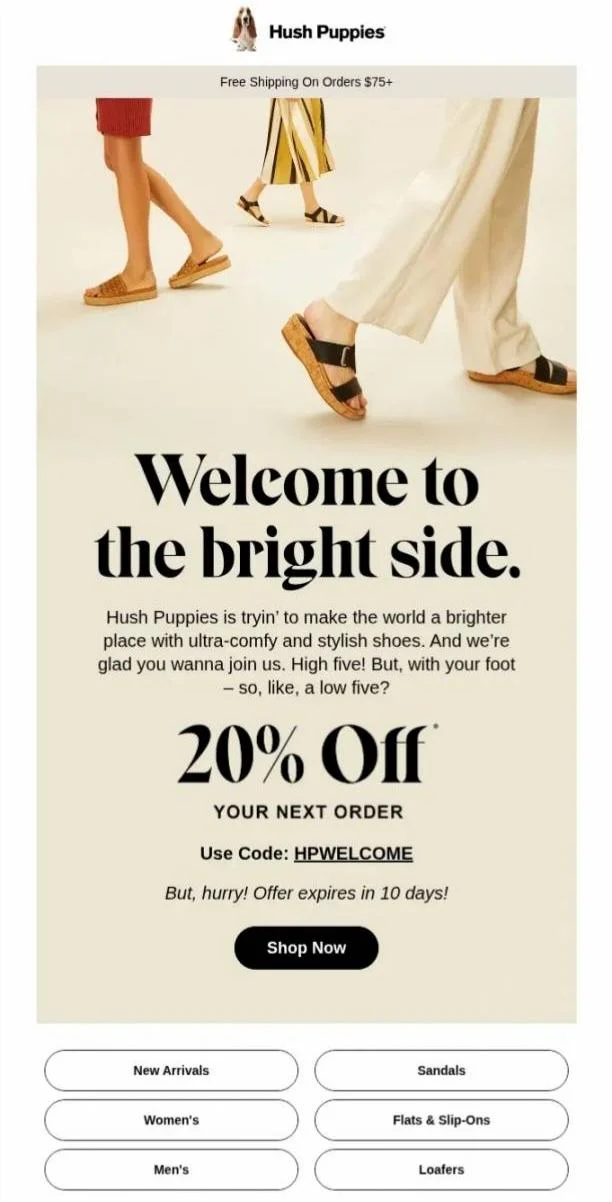
The Welcome Series: Triggered immediately upon a new subscriber joining the email list, welcome emails are crucial for making a strong first impression and converting new interest into initial purchases. These series typically convert at 2% and yield an impressive $6.30 per email. The first email should arrive within 30 minutes of sign-up, followed by two more within the same week. The initial messages should introduce the brand’s ethos and highlight top products, with an exclusive offer often reserved for the second or third email, coupled with a clear 7-14 day deadline to encourage prompt action. Hush Puppies effectively utilizes this by combining a warm brand message with a time-limited discount, an enticing conversion driver.
-
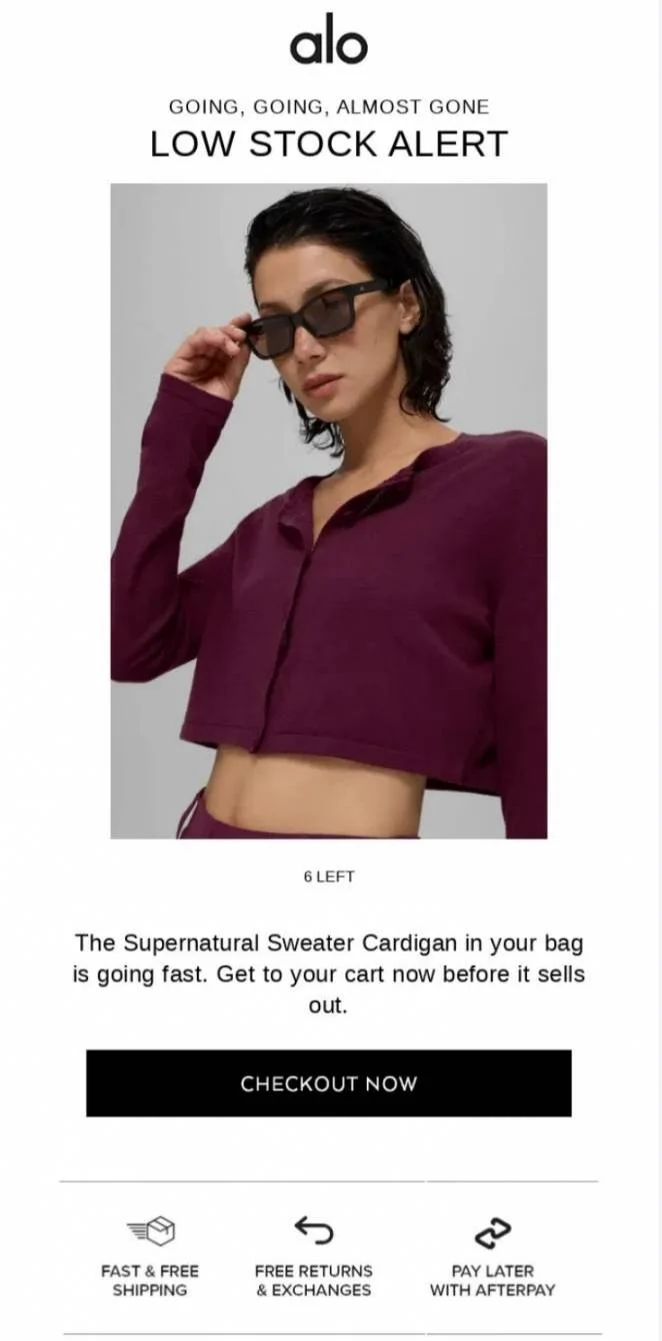
The Browse and Cart Abandonment Series: This flow targets customers who have shown high intent by viewing products or adding items to their cart but have not completed a purchase. Abandoned carts represent some of the highest-intent revenue opportunities. A well-timed reminder can recover these lost sales, with a conversion rate of 1.51% and a return of $2.54 per email. The first email should be sent one to three hours after the abandonment, with subsequent follow-ups at 24 and 72 hours. Crucially, these emails should prominently display the abandoned cart contents and include a one-click return link. Initially, focus on reminding the shopper of the product’s value; a discount can be introduced in a later email if the shopper remains unconverted. Alo’s strategy of leveraging low-stock urgency in their cart abandonment emails effectively pushes shoppers back to their purchases by creating a sense of scarcity. As Marty Bauer advises, "We’ve seen customers consistently increase revenue by starting small. They prioritize abandoned-cart and welcome flows and then let the data dictate where to optimize next."
-
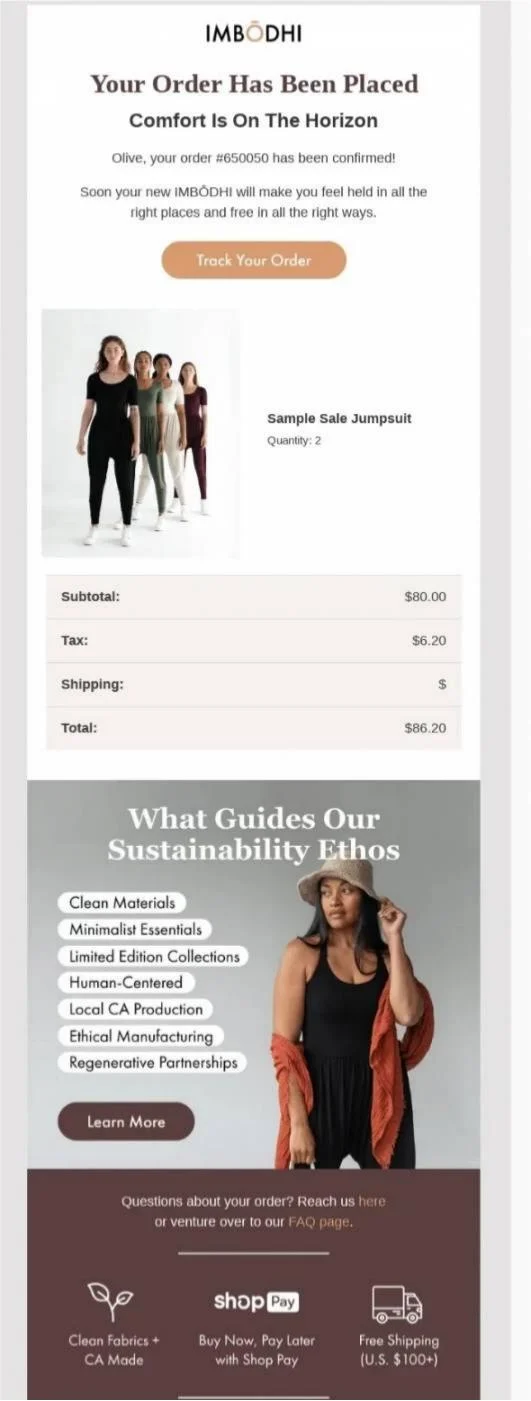
The Post-Purchase and Thank-You Series: Beginning immediately after a purchase, these flows are vital for fostering loyalty and encouraging repeat business. Order and shipping confirmation emails boast high engagement, with conversion rates of 1.10% and 2.28% respectively. The order confirmation should be sent within minutes, followed by shipping updates as status changes. A crucial follow-up email should be sent 7-14 days after product delivery, leveraging the customer’s recent purchase to recommend three complementary products. This contextual relevance significantly drives second orders. IMBODHI, for example, uses its order confirmation to reinforce brand values like sustainability, keeping customers engaged beyond the transaction.
-
The Product Recommendation Series: Triggered by a shopper’s browsing behavior, purchase history, or product interactions, these emails capitalize on active interest. Sent three to seven days after a customer’s last order or after a second product view, cross-sell emails convert at 0.75% and return $0.79 per email. It’s effective to use two or three recommendation emails with varied product logic, combining related items with bestsellers and recently viewed products. Critically, exclude already purchased items and prioritize those that genuinely complement the customer’s interests. Ka’Chava masterfully uses early access in product recommendation emails, introducing new products to existing subscribers with an exclusive purchase opportunity.
-
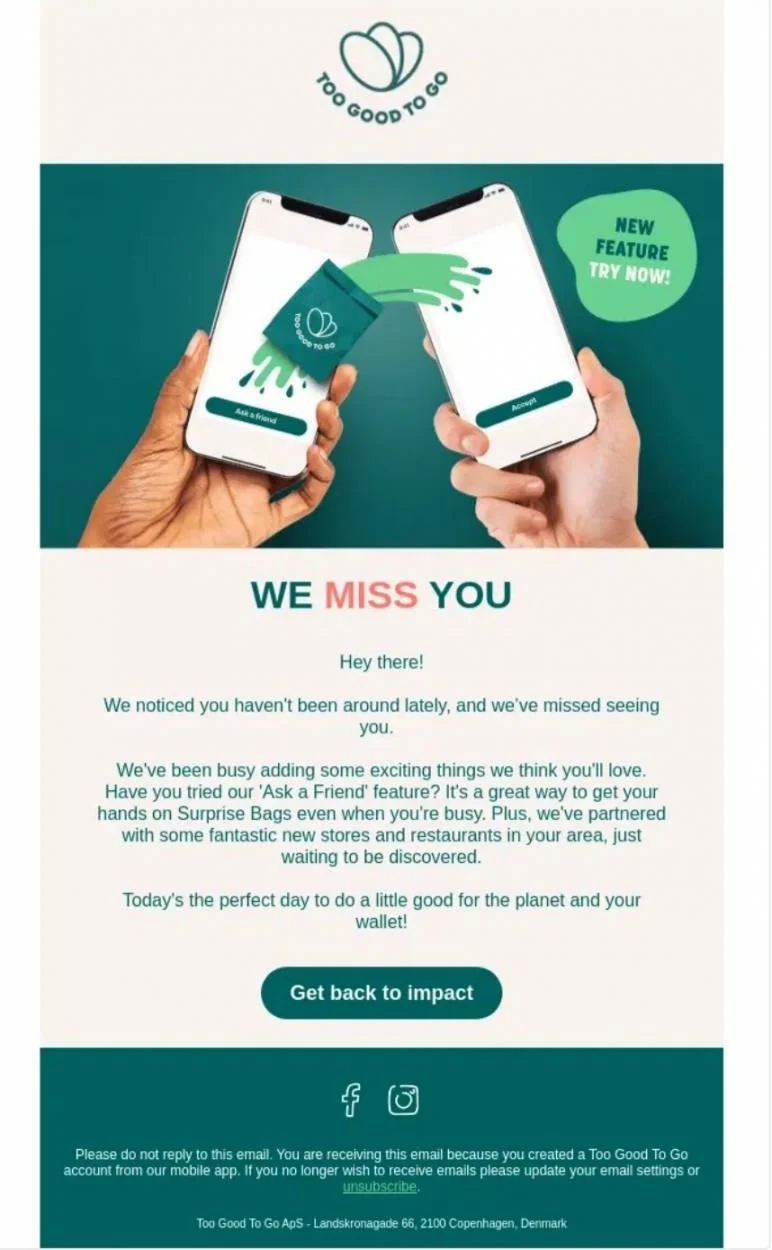
The Customer Winback Series: Designed to reactivate lapsed buyers, winback flows are initiated after 60-90 days of no purchase, with timing adjusted to typical customer buying cycles. Omnisend’s 2026 benchmarks show these reactivation emails achieve a 33.11% open rate and a 0.54% conversion rate. The initial emails can feature new products, useful recommendations, or a simple brand reminder, reserving discounts for later emails if engagement remains low. If a customer ignores all three winback attempts, a survey can precede their removal from the active list, ensuring list hygiene. Too Good To Go’s winback strategy, highlighting new features and partnerships, effectively rekindles interest before customer churn.
-
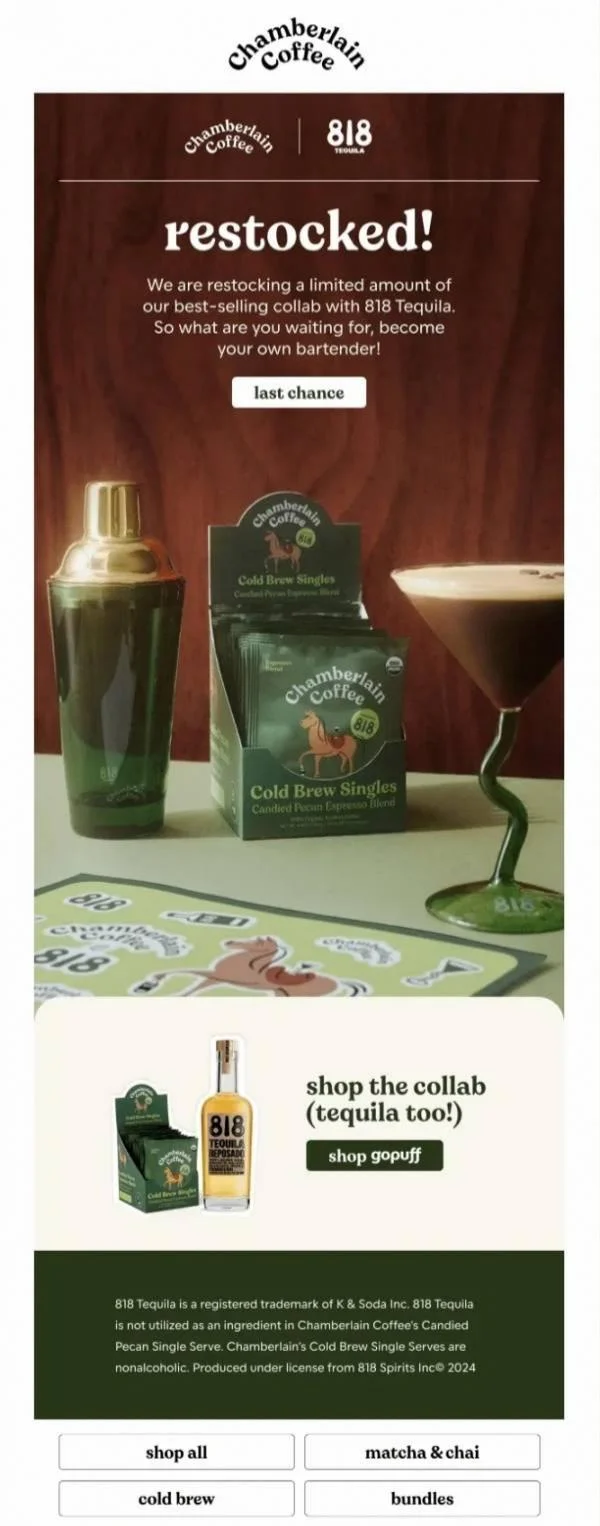
The Back-in-Stock Alert: These highly effective alerts are triggered instantly when a previously requested, sold-out product becomes available again, capitalizing on proven demand. These flows boast the strongest conversion rate in this set, at 6.46%. The alert should immediately inform the shopper about the restocked item, ideally with a one-click purchase link. While urgency is potent, it should only be used when stock is genuinely limited. Including the current stock level and two similar products provides alternatives if the requested item sells out quickly. Chamberlain Coffee effectively uses restock messages to generate new demand for popular products, creating urgency around proven customer interest.
-
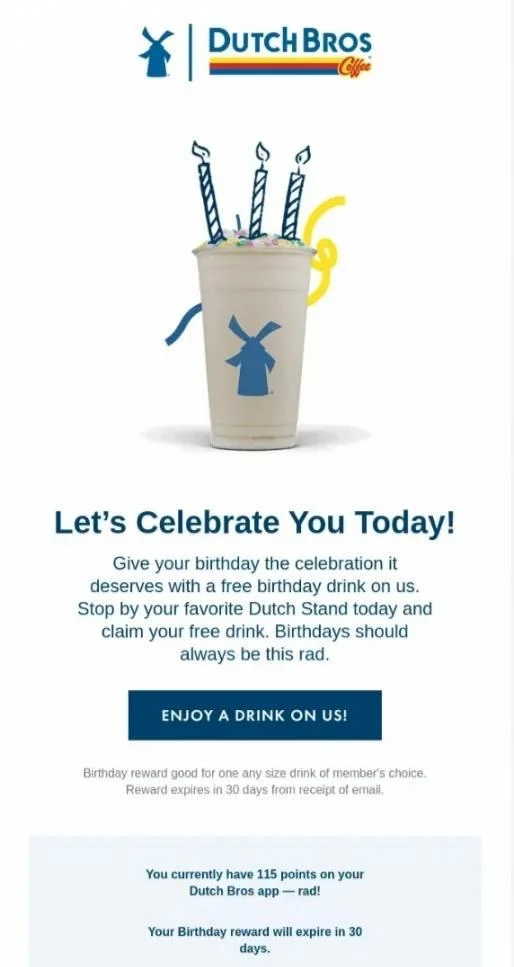
The Loyalty and VIP Reward Email: Essential for increasing customer lifetime value, these emails recognize and reward your most valuable customers. Triggered by milestones such as reaching a spending tier, an anniversary, or a birthday, these emails deliver exclusive offers on the specific milestone date. Rewards can extend beyond total spending to include reviews, referrals, and repeat purchases. Birthday emails, in particular, proved highly lucrative in the 2026 report, averaging a $744.37 order value. Clearly communicating the customer’s VIP status encourages repeat purchases and reinforces their value to the brand. Dutch Bros, for instance, uses birthday rewards and loyalty points to make loyal customers feel genuinely recognized and appreciated.

Campaigns: Driving Timely Engagement and Promotions
Beyond the automated flows that operate continuously in the background, e-commerce email marketing campaigns are distinct messages sent to a pre-selected audience at a specific, chosen time. These are typically used for broader announcements, seasonal promotions, or new product launches, providing brands with direct control over their messaging schedule. While automations react to individual shopper behavior, campaigns proactively shape customer perceptions and drive demand during planned commercial periods. Tracking revenue per recipient, click-to-conversion rates, overall conversion rate, and unsubscribe rates are crucial for evaluating campaign effectiveness and comparing results across different audience segments.
Four primary types constitute the majority of retail e-commerce email marketing campaigns:
- Promotional Sales Campaigns: Announcing discounts, flash sales, or special offers.
- New Arrivals Campaigns: Showcasing recently added products.
- Seasonal and Holiday Campaigns: Tailored messages for specific holidays or seasons (e.g., Black Friday, Valentine’s Day).
- Content and Storytelling Campaigns: Sharing brand stories, educational content, or customer testimonials to build engagement and loyalty.
Oakley’s seasonal campaign, promoting up to 25% off selected sunglasses for October, exemplifies effective campaign execution. The offer is clear, prominently features product images, and directs customers with a concise call-to-action (CTA). Such campaigns often benefit from elements like countdown timers to heighten urgency during flash promotions.
Crafting an Effective Strategy: A Seven-Step Blueprint
Building a successful e-commerce email marketing strategy is a structured process that aligns revenue goals with customer data, behavioral segmentation, and automated journeys. These steps are interdependent, ensuring that each phase provides the necessary foundation for the next.
-
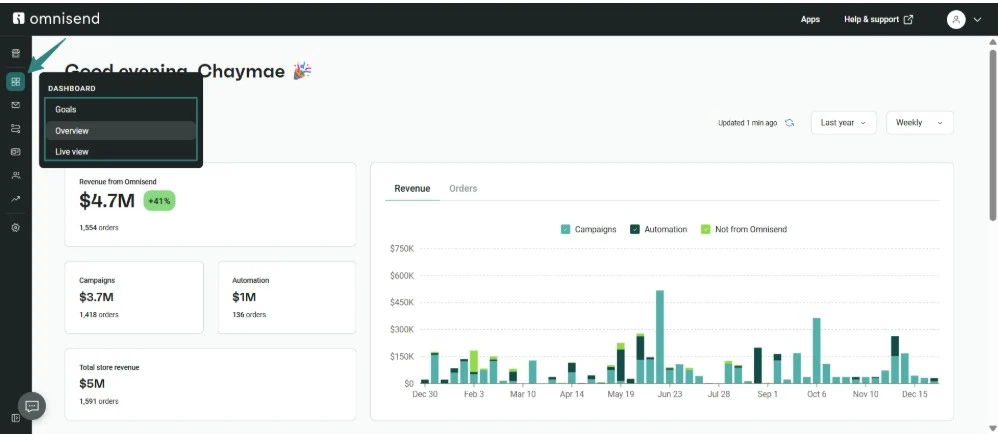
Set Clear Business and Financial Goals: The initial step involves defining measurable goals directly tied to revenue and customer value. This could mean aiming to generate 30% of total store revenue from email or increasing customer lifetime value (CLTV) by 25%. Progress should be tracked using metrics such as Revenue Per Recipient (RPR), conversion rate, and Average Order Value (AOV). Platforms like Omnisend offer analytics dashboards that provide transparent revenue attribution, clearly demonstrating email marketing’s contribution to overall store sales.
-
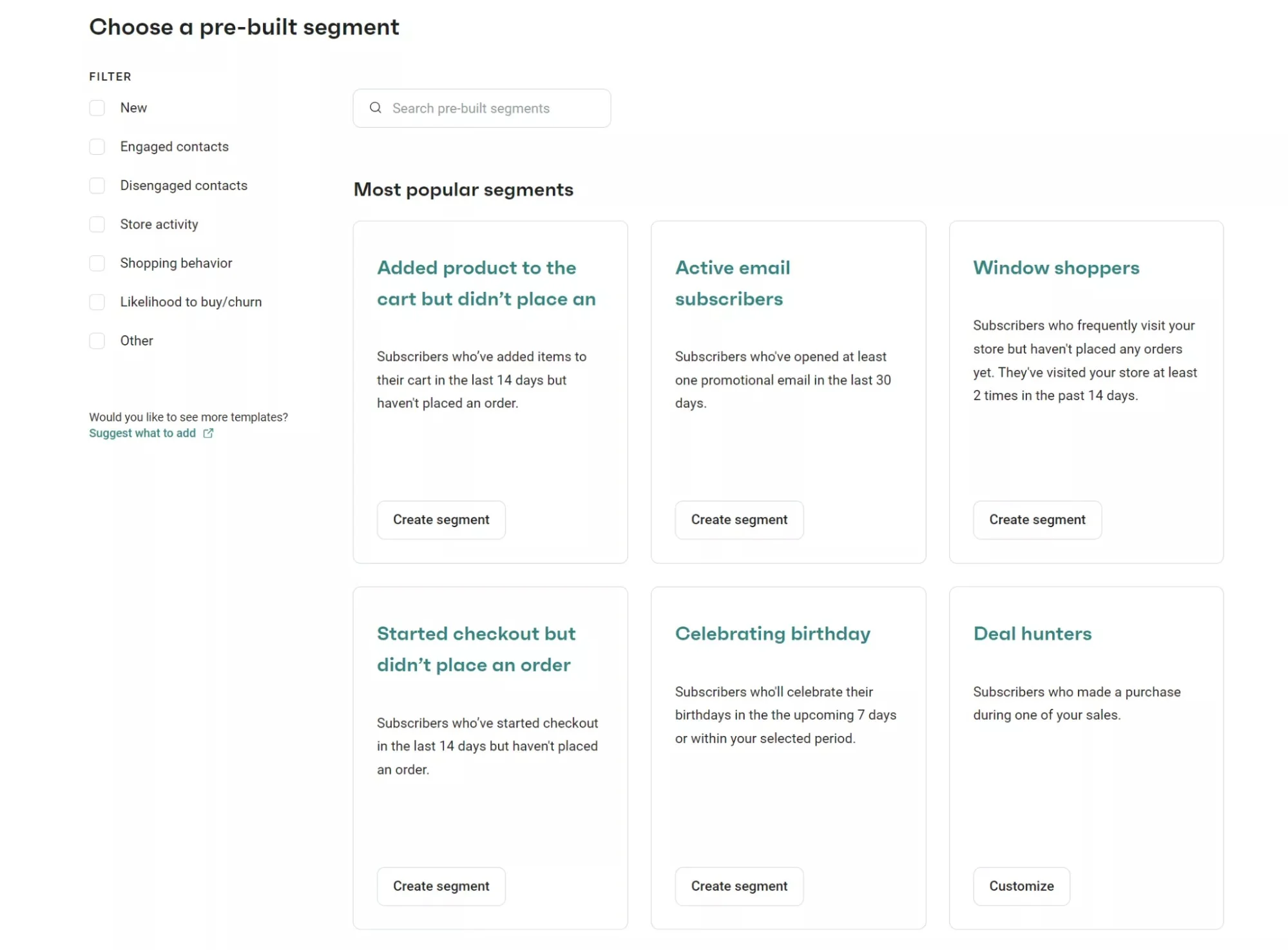
Understand Your Audience and Collect Data: An effective strategy is rooted in a deep understanding of the audience, requiring both zero-party and first-party data. Zero-party data, voluntarily shared by customers through quizzes, surveys, and preference centers, offers direct insights into their preferences and intentions. First-party data, derived from customer activity on the website and previous purchase history, provides behavioral context. Collecting preferences during sign-up or post-purchase engagement allows for highly targeted segments. Platforms like Omnisend offer pre-built segments that transform raw store data into actionable customer groups from day one.
-
Choose the Right Email Marketing Platform: The selection of an e-commerce email marketing software is pivotal. The ideal platform must seamlessly integrate with the e-commerce store, ensuring real-time synchronization of customer data. Key features to prioritize include native e-commerce sync, dynamic product blocks for personalized recommendations, and pre-built automation workflows. Omnisend, for example, boasts over 280 integrations with leading e-commerce platforms such as Shopify, WooCommerce, and BigCommerce, facilitating effortless data flow and setup.
-
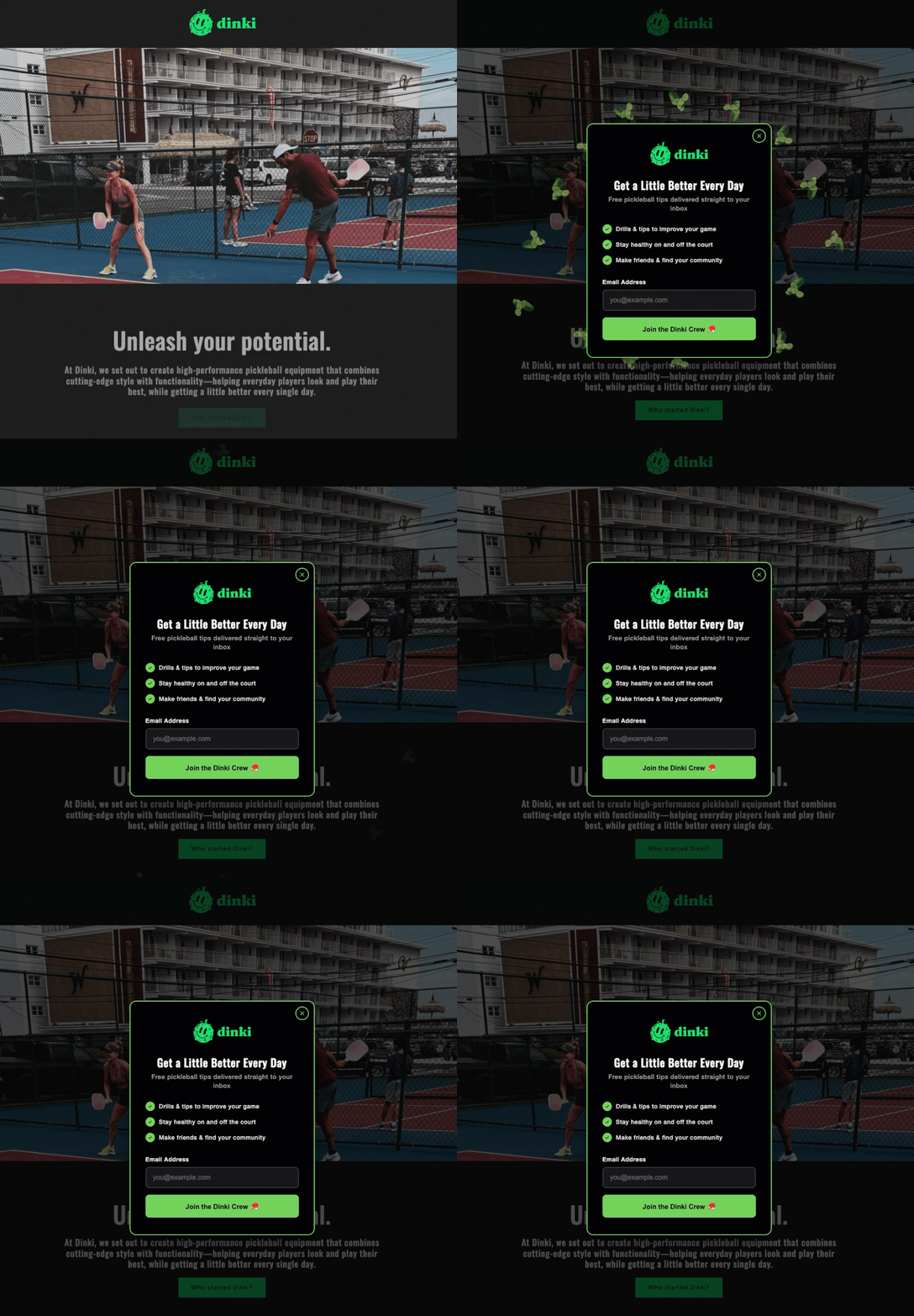
Build and Grow Your Email List Organically: A robust email list is the bedrock of any successful email marketing strategy. Organic growth methods include strategically placed sign-up pop-ups, multi-step forms, embedded forms on blog posts or product pages, and compelling lead magnets. The initial sign-up step should be kept simple, with additional preference details collected later. Compliance with data protection regulations like GDPR and TCPA, requiring explicit opt-in, is paramount. Double opt-in further enhances deliverability by ensuring genuine interest. Marty Bauer emphasizes, "The best brands treat subscriber growth as its own skill, not an afterthought. Brands that collect more subscribers with more opt-in methods consistently outperform on sales and retention. The bigger your audience dataset gets over time, the better you understand what actually converts." Platforms like Omnisend provide customizable form and pop-up builders to facilitate this process, with gamified wheels on landing pages showing conversion rates as high as 11.02%.
-
Segment Your Audience for Personalization: Segmentation transforms a generic email list into a powerful tool for personalization. By dividing the audience into distinct groups based on lifecycle stage, purchase behavior, and customer value, brands can send highly relevant messages. For instance, new subscribers receive a welcome sequence aimed at a first purchase, while VIP high spenders receive early access and rewards to foster retention. This tailored approach significantly boosts engagement and conversion rates, moving beyond generic communications to address specific customer needs and behaviors.
-
Map Your Customer Journey Emails: This step involves aligning email communications with critical stages of the customer journey: sign-up, consideration, purchase, and retention. Email automation is deployed to respond to real-time shopper actions, while scheduled campaigns handle planned launches, offers, and seasonal events. The seven essential automation flows discussed earlier are often available as pre-built templates within platforms like Omnisend, allowing for quick deployment and customization. This strategic mapping ensures that customers receive the right message at the right time, maximizing relevance and impact.
-
Design Your Emails and Plan Your Calendar: Effective email design is crucial for engagement. Best practices include using a single-column layout, ensuring body text is at least 16px, and designing CTA buttons at 44px for optimal mobile experience. Previewing emails in dark mode is also essential for a consistent brand experience. A consistent sending cadence, typically one to three promotional campaigns per week, helps maintain audience engagement without overwhelming subscribers. Tools like Omnisend’s integration with Figma allow for seamless creation of email banners and visuals, ensuring brand consistency and efficiency in design.
Performance Measurement and Optimization: Beyond Vanity Metrics
To truly gauge the success of e-commerce email marketing, businesses must shift their focus from superficial engagement metrics to those directly linked to revenue. While open rates and click-through rates (CTR) were once primary indicators, changes like Apple Mail Privacy Protection (MPP), which can pre-load email content, distort open rates. Similarly, security scanners can inflate CTRs without actual human interaction. Therefore, open and click-through rates should be treated as diagnostic metrics, indicating potential deliverability issues or subject line effectiveness, rather than definitive measures of campaign success.
The critical metrics for e-commerce email marketing are:

- Revenue Per Recipient (RPR): Total revenue divided by total delivered emails. Omnisend’s 2026 report indicates $0.18 for campaigns and $2.87 for automations.
- Placed Order Rate: Total conversions divided by total delivered emails. Benchmarks suggest 0.27% for campaigns and 1.90% for automations.
- Conversion Rate: Conversions divided by delivered emails multiplied by 100. Industry ranges typically fall between 2-21%.
To continuously improve these revenue-centric metrics, a structured A/B testing process is indispensable. This involves:
- Formulating a Hypothesis: Identifying a specific element to test (e.g., subject line, CTA color, discount offer).
- Isolating Variables: Testing only one change at a time to accurately attribute results.
- Randomized Audience Split: Dividing the audience into statistically significant groups.
- Setting a Duration: Allowing sufficient time for the test to gather meaningful data.
- Analyzing Results: Using analytics dashboards, such as Omnisend’s A/B test reports, to compare performance and identify the winning variation.
Once testing identifies successful strategies, maintaining strong technical deliverability practices is crucial to protect these gains. With updated sender requirements from major providers like Gmail and Yahoo, ensuring emails reach the inbox is more complex than ever. Essential practices include authenticating the sending domain with SPF, DKIM, and DMARC records, using a branded sending domain, implementing one-click unsubscribe options, and regularly cleaning the email list by removing inactive contacts. These measures safeguard sender reputation and ensure consistent inbox placement.
Emerging Trends: The Future of E-commerce Email Marketing in 2026
The landscape of e-commerce email marketing is rapidly evolving, driven by advancements in technology and shifting consumer expectations. The overarching trend for 2026 points towards more predictive targeting and a highly coordinated, multi-channel customer journey, moving beyond simply sending more messages to making every interaction maximally relevant and impactful.
Key trends shaping the future include:
- Advanced AI Integration: AI is moving beyond basic content generation to automate sophisticated marketing decisions. This includes AI-powered segmentation, customer scoring, lifetime value forecasting, and optimizing send times, significantly reducing manual effort for marketing teams. Marty Bauer emphasizes, "Openness to AI is clearly on the rise, and businesses can no longer ignore it. But there’s a big difference between offering suggestions and inserting AI into every interaction in a way that feels intrusive. As privacy remains a major concern, ecommerce businesses must be crystal clear about where, why, and how they use AI."
- Hyper-Personalization: Leveraging deeper customer data, personalization will become more granular, moving beyond basic name insertion to contextually relevant product recommendations, content, and offers based on real-time behavior and inferred preferences.
- Multi-channel Orchestration: Email will increasingly be integrated seamlessly with other communication channels like SMS, web push notifications, and social media, creating a cohesive and consistent brand experience across all touchpoints.
- Interactive Emails (AMP for Email): The adoption of interactive elements within emails, such as quizzes, polls, and mini-games, will increase engagement directly within the inbox, streamlining the customer journey.
- Sustainability and Ethical Marketing: With growing consumer awareness, brands will increasingly focus on communicating their sustainable practices and ethical sourcing through email, aligning with customer values.
- Voice Commerce Integration: As voice-activated shopping grows, email marketing may adapt to integrate with voice assistants, potentially offering voice-activated purchase options or information retrieval.
Selecting the Right Tools for Implementation
The effectiveness of any e-commerce email marketing strategy is heavily reliant on the underlying software. Top platforms such as Omnisend, MailerLite, Brevo, Drip, Klaviyo, and ActiveCampaign are specifically designed to support the unique demands of e-commerce, offering features like cart recovery, dynamic product recommendations, and sophisticated automation workflows. Unlike generic newsletter platforms, these tools seamlessly connect customer data with campaigns and sales, providing a unified view of the customer journey.
When evaluating platforms, consider factors like:
- E-commerce Integration: Native sync capabilities with your store (Shopify, WooCommerce, etc.).
- Channels Offered: Beyond email, consider SMS, web push, and other channels for multi-channel orchestration.
- Automation Capabilities: Pre-built workflows, visual builders, and behavioral triggers.
- Segmentation & Personalization: Ease of creating and managing customer segments.
- Pricing Structure: Scalability with your subscriber growth.
- User-Friendliness & Support: Ease of use for your team and reliable customer support.
Omnisend stands out for its one-click e-commerce integrations, pre-built workflows, dynamic product blocks, and AI-powered form builders, making it suitable for e-commerce stores of any size. Klaviyo is often favored by data-heavy brands for its deep e-commerce data, advanced segmentation, and predictive analytics. MailerLite is a strong contender for smaller, content-led stores, while Brevo offers send-volume billing and a broad range of channels. The optimal choice ultimately depends on a store’s specific size, data requirements, and desired communication channels. Businesses are encouraged to shortlist one or two platforms and test their performance with a key automation flow to determine the best fit.
In conclusion, e-commerce email marketing, driven by intelligent automation, deep personalization, and a focus on revenue-centric metrics, is not just a tactical tool but a strategic imperative. In an era of rising acquisition costs and evolving digital landscapes, it offers a powerful, sustainable, and predictable pathway to building strong customer relationships and driving consistent revenue growth.