In the intricate world of Business-to-Business (B2B) marketing, particularly within the realm of paid media, a persistent disconnect often exists between the metrics readily available on advertising platforms and the tangible business outcomes that resonate with financial stakeholders. While B2B marketing teams can often provide immediate answers regarding cost-per-click (CPC) reductions, conversion rate improvements, and healthy Return on Ad Spend (ROAS), a stark silence frequently falls when the conversation shifts to the actual dollar value of pipeline generated by these efforts in the preceding quarter. This silence underscores a fundamental challenge: B2B sales cycles are inherently complex, involving sophisticated buyers such as CEOs, CFOs, and HR leaders who navigate multi-month evaluation periods and engage buying committees that can comprise five to ten individuals. Reporting that terminates at platform-specific metrics, therefore, measures the efficacy of the advertising platform itself rather than its true impact on the business’s revenue generation.
The prevailing solution to this measurement dilemma lies not in the proliferation of new dashboards, but in a strategic realignment of fundamental tracking and attribution practices. It necessitates an integrated approach that begins by establishing a robust connection between paid media activities and the Customer Relationship Management (CRM) system before any campaigns are launched. Crucially, the definition of a "result" must be recalibrated to align with pipeline generation, meaning no metric is considered a success until it demonstrably contributes to the sales pipeline.
Establishing a Foundation: Integrating Media with the CRM from Inception
The root of many measurement challenges can be traced to a failure to implement proper tracking mechanisms at the outset. In numerous B2B organizations, campaign identifiers are never systematically linked to CRM platforms like Salesforce. Similarly, Urchin Tracking Module (UTM) parameters, essential for segmenting and analyzing traffic sources, are either applied inconsistently or introduced weeks after campaign deployment, rendering their data unreliable. Furthermore, lead forms, the primary mechanism for capturing prospect information, frequently fail to synchronize with campaign objects within the CRM. By the time a query arises regarding the origin of a crucial first meeting, the digital trail has often gone cold, leaving a void in understanding campaign effectiveness.
The most effective approach to rectifying this situation is characterized by an unglamorous, yet critical, upfront discipline. This involves meticulous tagging of every campaign at its launch. Lead forms must be configured to sync directly with CRM campaign objects, ensuring a seamless flow of prospect data. Crucially, conversion tracking within advertising platforms such as Google Ads and LinkedIn must be configured to link directly to downstream pipeline outcomes, including Marketing Qualified Leads (MQLs), initial sales meetings, and CRM-defined lead quality scores. This essential setup must be completed before any campaign adjustments or optimizations are made, providing a stable baseline for performance evaluation.
This foundational data integrity allows for a clear differentiation between improvements in platform-specific metrics and genuine advancements in business outcomes. When implemented correctly, this approach enables marketers to trace the entire customer journey, from the initial touchpoint with a paid media campaign through to MQL status, Sales Qualified Lead (SQL) progression, and ultimately, high-intent actions. Where data permits, the journey can even extend to closed-won deals. This comprehensive view aligns with the way sales teams already perceive and operate, rather than presenting finance departments with an abstract analytics narrative that requires blind trust.
The Illusion of a Single Source of Truth: Embracing Multi-Layered Attribution
A critical, yet often unspoken, truth in the B2B paid media landscape is the inherent limitation of any single attribution model. The notion of a singular "source of truth" is frequently a marketing oversimplification, designed to present a seemingly straightforward solution to a complex problem. In reality, no one attribution model can perfectly and comprehensively attribute B2B pipeline generation.
The most effective strategy involves employing a layered approach where multiple attribution models act as checks and balances against each other. Multi-touch attribution, for instance, links advertising interactions and self-reported prospect data to CRM outcomes. While valuable, this model can be biased towards the last trackable touchpoint, potentially over-crediting channels that are more easily measured.
To address this, causal modeling, grounded in econometric methodologies, emerges as a vital component. This approach quantifies each channel’s specific contribution to pipeline generation while meticulously controlling for external variables such as seasonality, market trends, and overall brand demand. By isolating the incremental impact of paid media, causal modeling provides a more objective measure of its influence.
Complementing these methods is geo-based incrementality testing. This rigorous technique aims to definitively prove whether paid media efforts have generated net-new pipeline or merely captured demand that would have materialized organically. By comparing performance in test markets exposed to advertising with control markets that are not, incrementality testing offers a powerful validation of campaign efficacy.

Each of these layers addresses the blind spots inherent in the others. Multi-touch attribution can overemphasize the final click, causal modeling may struggle to track individual prospect journeys with granular detail, and incrementality testing, while highly accurate, can be a slower process. By running these models concurrently, organizations can achieve a more robust and defensible understanding of their paid media performance, moving beyond flattering, but potentially misleading, reports to a more accurate representation of reality. In the context of complex B2B sales cycles, causal approaches are frequently the most reliable foundation for confident budget allocation decisions, as they isolate the true impact of marketing spend by accounting for what would have occurred regardless.
Speaking the Language of Finance: Reporting for Business Value
For any measurement framework to gain traction and credibility, it must be perceived as valuable by the Chief Financial Officer (CFO) and the broader finance department. This necessitates a shift in reporting vernacular, moving away from marketing-centric jargon towards the financial metrics that govern business operations. Revenue-based planning, for example, begins with a thorough audit of marketing spend against actual revenue generated, followed by an assessment of market opportunity, and then iterative refinement of strategies.
The metrics that endure and inform strategic decisions are those already employed by finance to run the company. These typically include critical indicators such as contribution margin, the ratio of Lifetime Value (LTV) to Customer Acquisition Cost (CAC), and payback period. Cost per first meeting and cost per pipeline dollar are metrics that deserve a place alongside these established financial benchmarks. Platform metrics like impressions and clicks, while offering directional insights, possess limited utility in a serious pipeline review and should not be the primary focus.
This is where sophisticated modeling tools truly demonstrate their value. Marketing Mix Modeling (MMM), for instance, can establish a direct correlation between marketing spend and key outcomes like first meetings, MQLs, and pipeline progression, all tracked through the CRM. Geo-holdout testing, a more granular form of incrementality testing, can further validate campaign effectiveness by demonstrating which specific markets are genuinely responding to advertising investment, as opposed to simply exhibiting correlated growth. The ultimate objective is not to achieve analytical complexity for its own sake, but to arrive at a quantifiable performance metric that an organization can confidently present and defend to its board of directors.
The Transformative Impact of Measurement-Led Strategies
The tangible proof of a measurement-centric approach is most evident in accounts where data and analytics have actively guided strategic decisions, rather than merely serving as a post-hoc reporting layer. Consider the case of an integrated search program for a B2B Software-as-a-Service (SaaS) company. By prioritizing pipeline signals over raw click volume, this initiative achieved a 27% reduction in cost per MQL, a 18% increase in conversion rates, and a 22% uplift in qualified traffic. These improvements were not the result of a more intricate bidding algorithm, but rather a strategic reallocation of budget informed by genuine pipeline indicators.
Another compelling example involves a global technology company. By directly integrating Salesforce lead scoring into their Google Ads campaigns and assigning real dollar values to each lead tier, they experienced a remarkable 138% increase in ROAS. Again, this substantial gain stemmed not from a novel advertising tactic, but from the fundamental act of measuring the right thing first and then rigorously optimizing towards it.
The Crucial Takeaway: Measurement as the Bedrock of Paid Media
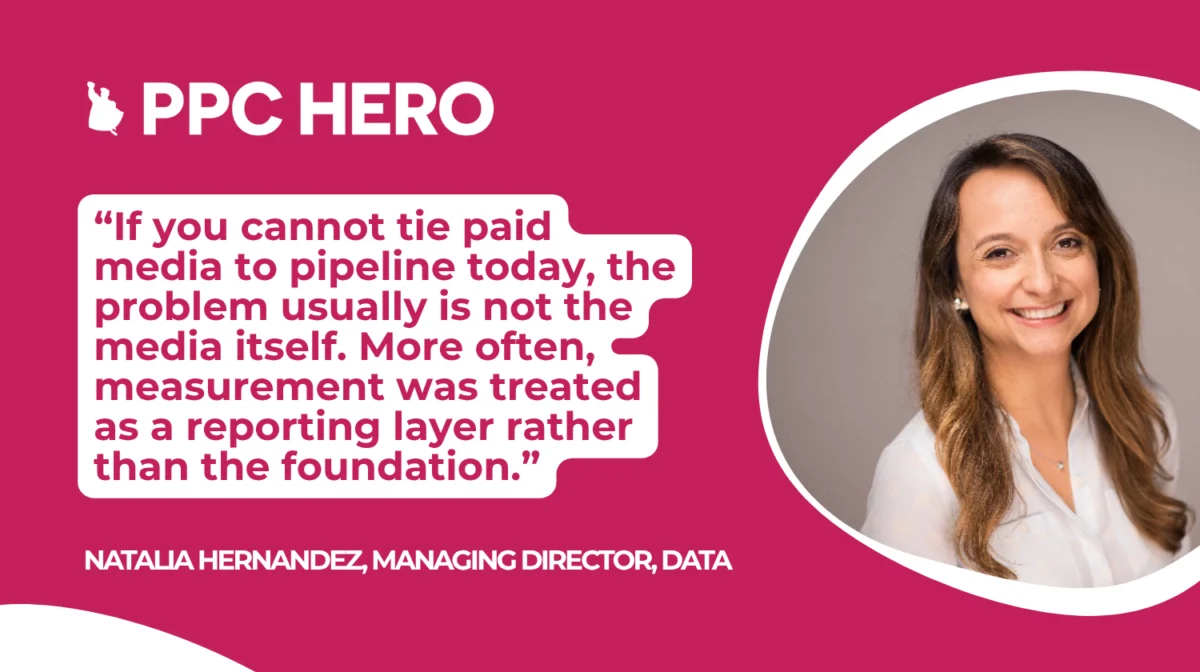
In conclusion, if a B2B organization struggles to connect its paid media efforts directly to pipeline generation, the issue often lies not with the media campaigns themselves, but with how measurement has been approached. Frequently, measurement has been relegated to a secondary reporting function, rather than being established as the foundational element upon which all media activities are built.
The path forward requires a commitment to integrating paid media efforts with the CRM before any optimization takes place. It necessitates the adoption of multiple attribution models, recognizing that no single model can provide a complete and unbiased picture. Critically, it demands a shift in reporting focus to the metrics that finance departments already trust and utilize to manage the business.
By implementing these principles, B2B marketers can confidently transition from ambiguous platform metrics to a clear, defensible pipeline number. The next time the question arises regarding paid media’s contribution to the sales pipeline, the answer will be precise, data-driven, and robust enough to withstand scrutiny from the highest levels of financial oversight. This strategic evolution ensures that paid media is not just an expenditure, but a demonstrably effective engine for revenue growth.