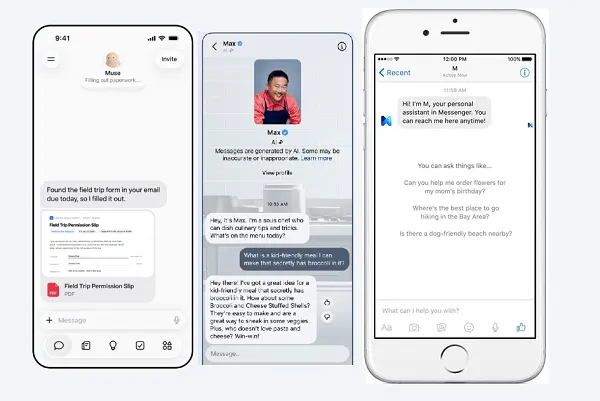
Despite a recurring pattern of public disinterest and outright rejection of its digital assistant initiatives, Meta CEO Mark Zuckerberg remains steadfast in his commitment to the concept, envisioning these AI tools as instruments to forge a "better world." This week marked the unveiling of Meta’s latest foray into this arena: the Muse app and chatbot. Positioned as the company’s most sophisticated artificial intelligence-powered assistant to date, Muse empowers users to personalize their bot, engage in conversations, delegate background tasks, and effectively integrate it as an omnipresent personal aide. Zuckerberg frames this launch as a pivotal evolutionary step for AI, paving the path towards the democratization of "personal superintelligence for everyone." However, a closer examination reveals that Muse is not an entirely novel proposition, but rather the latest iteration in a series of similar ventures that have, to date, struggled to capture widespread user adoption.
The Latest Iteration: Muse and the Vision of Personal Superintelligence
The debut of Muse signals Meta’s renewed vigor in the highly competitive and rapidly evolving field of conversational AI. Unlike previous attempts that were often integrated into existing platforms like Messenger, Muse is presented as a standalone application, offering a dedicated interface for interaction. Users are granted the ability to name their AI, fostering a sense of personalization and ownership, which Meta hopes will encourage deeper engagement. The core functionality revolves around task delegation, where Muse can operate in the background, ostensibly streamlining daily routines and enhancing productivity. This vision aligns directly with Zuckerberg’s long-held belief in the transformative power of AI to augment human capabilities, moving beyond simple queries to proactive assistance that anticipates needs and optimizes outcomes. His aspiration for "personal superintelligence" suggests an AI that not only understands complex commands but also learns individual preferences, contexts, and goals, evolving into an indispensable digital extension of the user. This ambition is not merely about convenience; it speaks to a broader philosophical outlook on human efficiency and potential, where AI serves as a constant companion dedicated to maximizing every aspect of life.
A Decade of Digital Assistant Ambition: A Chronology of Meta’s Attempts
Meta’s journey into the realm of personal AI assistants is far from recent, marked by a series of launches and subsequent retreats spanning nearly a decade. This history provides crucial context for understanding the challenges and potential pitfalls facing Muse.
Facebook M: The Pioneer (2015-2018)
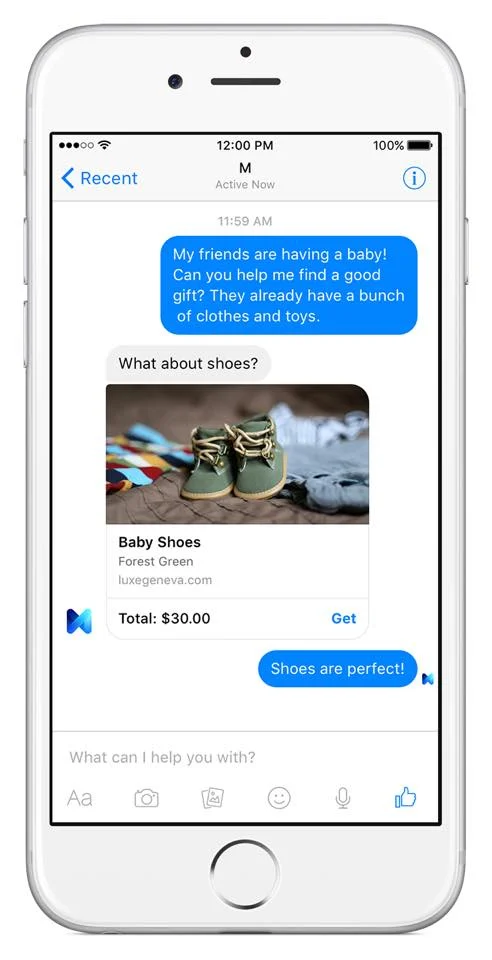
In August 2015, Meta, then Facebook, introduced "M," an ambitious personal assistant embedded within its Messenger platform. At the time, M was touted as a significant leap forward, designed to compete with nascent voice assistants like Apple’s Siri and Microsoft’s Cortana. M combined AI with human trainers, allowing it to handle a remarkably broad range of tasks. Davis Marcus, then head of Messenger, articulated M’s capabilities: "It can purchase items, get gifts delivered to your loved ones, book restaurants, travel arrangements, appointments and way more." This description eerily mirrors the functionalities promised by Muse today. Users could text M to perform actions such as booking flights, ordering flowers, finding information, or even making dinner reservations. The hybrid model, where AI handled routine queries and human operators stepped in for more complex or nuanced requests, was an innovative approach for its time, intended to ensure a high level of accuracy and capability.
However, despite its advanced features and significant investment from Meta, M struggled to gain traction. The public, perhaps unaccustomed to such pervasive digital assistance or wary of the privacy implications of an AI handling personal affairs, largely overlooked it. The service remained in limited beta for an extended period, indicating Meta’s difficulty in scaling it or proving its value proposition to a wider audience. Ultimately, after three years of development and limited adoption, M was officially shelved in January 2018. Its closure underscored a critical disconnect between Meta’s vision and actual user demand for such a comprehensive, always-on assistant.
Messenger Bots and Celebrity Chatbots: Diversified Attempts
The discontinuation of M did not deter Meta from further exploring AI-powered conversational tools. In 2016, alongside the initial rollout of M, Meta also launched a broader platform for "Messenger bots." This initiative allowed businesses and developers to create automated chatbots within Messenger, enabling users to interact with companies for customer service, e-commerce, and information retrieval. While some businesses found utility in these bots for automating basic interactions, widespread consumer adoption for personal use cases remained elusive. The experience was often clunky, and the bots frequently failed to understand complex queries, leading to user frustration.
More recently, Meta ventured into "celebrity-themed chatbots on Messenger." These AI personas, voiced and styled after popular figures, were designed to offer a more engaging and personalized interaction experience, leveraging the appeal of celebrity culture. Launched in various forms, these chatbots aimed to foster deeper engagement and perhaps demonstrate a more relatable application of AI. Yet, like their predecessors, these celebrity bots failed to generate significant or sustained user interest. Despite promotional pushes and celebrity endorsements, these features largely faded into obscurity, further reinforcing the pattern of user indifference towards Meta’s recurring attempts to integrate AI assistants into daily life.
The Evolving Landscape of AI and Meta’s Position
The technological landscape has undergone a dramatic transformation since Meta first launched M in 2015. The advent of large language models (LLMs) and generative AI, exemplified by OpenAI’s ChatGPT, has revolutionized the capabilities of conversational AI. Modern AI systems boast vastly improved natural language understanding (NLU) and natural language generation (NLG), enabling them to comprehend nuanced requests, generate coherent and contextually relevant responses, and perform complex tasks with greater accuracy than ever before. This technological leap provides Muse with a far more robust foundation than M ever had. Muse, presumably powered by Meta’s own advanced LLMs like the Llama series, can likely process information, learn from interactions, and execute tasks with a sophistication that was unimaginable a decade ago.
Meta has invested billions in AI research and development, establishing itself as a significant player in the global AI ecosystem. Its open-source approach with Llama has garnered considerable attention and fostered a vibrant developer community. This investment underscores Zuckerberg’s strategic pivot towards AI as a core pillar of Meta’s future, alongside the metaverse. The global market for AI assistants is projected to grow substantially, with estimates reaching hundreds of billions of dollars in the coming years. Major tech rivals like Apple (Siri), Google (Google Assistant), Amazon (Alexa), and Microsoft (Copilot) are all heavily invested in their own AI assistant ecosystems, each vying for a central role in users’ digital lives. While these existing assistants have achieved widespread penetration, their usage often remains confined to basic tasks like setting alarms, playing music, or answering simple queries. Deeper, more integrated personal assistance, particularly proactive task management, remains a frontier yet to be fully conquered.
The challenge for Meta, even with vastly superior technology, is not merely building a capable AI, but convincing users that they need such an assistant. Data on existing AI assistant adoption suggests that while many own smart devices with AI capabilities, a significant portion uses them sparingly or for limited functions. A 2023 study, for instance, indicated that while over 80% of smartphone users have access to a voice assistant, only about half use them regularly, and a smaller fraction utilizes their full range of features for complex tasks. This "usage gap" highlights the difficulty in translating advanced technological capability into indispensable daily utility for the average consumer.
Zuckerberg’s Vision vs. User Reality: The Perceptual Misalignment
The persistent push for digital assistants by Meta, despite repeated lukewarm public reception, appears to be deeply rooted in Mark Zuckerberg’s personal philosophy and approach to life. His public statements, particularly his recent interview outlining his personal use case for Muse, offer critical insight into this "perceptual misalignment" with the general user base.
Zuckerberg explicitly stated his desire for Muse to "help me be a better father and a better husband, and show up better for my friends." This reveals an "optimization mindset" – a drive to enhance efficiency, maximize productivity, and systematically improve various facets of his life through technological assistance. For Zuckerberg, every moment holds potential for optimization, and AI is the key to unlocking this potential, ensuring he performs optimally in all his roles. This perspective is a valuable trait for a programmer and a business leader, driving innovation and relentless pursuit of efficiency within his organizations. He even developed a personal AI system for his own home years ago, demonstrating a long-standing personal interest in this kind of pervasive, assistive technology.
However, this deeply ingrained optimization mindset is not a universal desire. Many individuals approach life with a different set of priorities, often valuing organic learning, human interaction, and the inherent experience of undertaking tasks independently. The process of researching a product, planning a trip, or choosing a gift – activities that an AI assistant could easily automate – are often viewed by others not as inefficiencies to be eliminated, but as opportunities for engagement, discovery, and personal growth. These are moments of connection with the wider world, opportunities to exercise autonomy, or even simply to enjoy the process itself. For many, the idea of delegating such tasks to an AI, even a highly capable one, risks diminishing these experiences, replacing human agency with automated efficiency.
This fundamental difference in perspective explains the recurring pattern of user indifference. While Meta views human experiences through the lens of data and optimization, the broader public often sees them as a "catalog of the various ways in which people are looking to connect with the wider world," as the original article insightfully notes. People are generally content to live and learn, to engage in the messy, often inefficient, but deeply human process of navigating life’s complexities. The desire for an always-on, proactive AI assistant that optimizes every decision and task, while compelling to an "optimizer," may feel intrusive, unnecessary, or even dehumanizing to others. This gap between Meta’s internal vision and external user behavior is arguably the most significant hurdle for Muse and any subsequent AI assistant endeavors from the company.
Implications and Future Outlook
The implications of Meta’s persistent pursuit of digital assistants, particularly in the face of repeated user disinterest, are multifaceted, touching upon financial, strategic, and societal dimensions.
Financial Implications: Developing advanced AI models and integrating them into consumer products requires colossal investment in research, infrastructure, and talent. Each failed or underperforming project represents a significant drain on Meta’s resources, potentially diverting capital from other promising ventures. While Meta’s vast financial reserves can absorb these costs, a continued pattern of expensive projects failing to generate substantial revenue or user engagement could eventually raise questions among investors regarding the efficiency of its R&D spending, especially in a market increasingly scrutinizing tech companies’ pathways to profitability.
Strategic Implications: Meta’s strategy to embed AI deeply into its ecosystem is clear, viewing it as a critical component for its future, including the metaverse. However, if its consumer-facing AI products consistently fail to resonate, it could undermine the broader narrative of Meta as an AI leader in the eyes of the public. It risks being perceived as out of touch with user needs, even if its underlying AI research is cutting-edge. The challenge lies in translating foundational AI capabilities into products that people genuinely want and find indispensable, not just technically impressive. Meta may need to reconsider its approach, perhaps focusing on niche applications where the optimization mindset is more prevalent, or integrating AI assistance more subtly rather than as a central, always-on entity.
Societal and User Adoption Challenges: The broader societal conversation around AI integration into daily life is complex. Concerns about privacy, data security, algorithmic bias, and the potential for AI to diminish human skills or autonomy are prevalent. While Muse promises convenience, it also asks users to entrust a significant portion of their personal tasks and data to an AI, potentially exacerbating these concerns. For many, the value proposition of convenience may not outweigh the perceived risks or the inherent satisfaction of self-reliance. The success of AI assistants will likely depend on their ability to build trust, demonstrate clear and compelling value without feeling intrusive, and perhaps most importantly, align with diverse human desires beyond pure optimization.
Looking ahead, Meta’s unwavering commitment suggests that Muse is unlikely to be its final attempt. The company will undoubtedly learn from Muse’s performance, just as it theoretically learned from M and its other chatbots. Future iterations might explore different interaction models, less intrusive integration, or target specific user segments with a clearer need for optimization. However, until Meta bridges the fundamental perceptual gap between its leadership’s optimization-driven vision and the public’s varied motivations and desires, its path to widespread digital assistant adoption will remain an uphill battle. The future of personal superintelligence, as envisioned by Meta, hinges not just on technological prowess, but on a profound understanding of the human condition itself.