Fitness email marketing has emerged as an indispensable tool for gym owners and fitness coaches seeking to engage existing members, attract new clients, and drive sustainable business growth in an increasingly competitive digital landscape. In an industry profoundly driven by individual motivation and consistent engagement, email marketing provides a direct, personalized, and highly effective channel of communication to keep audiences informed, regularly inspired, and continuously connected to a brand’s ethos and offerings. Through strategically crafted fitness email campaigns, businesses can not only showcase their expertise and build lasting customer relationships but also deliver personalized workout plans, offer exclusive promotions, and foster a strong sense of community. This comprehensive guide will explore proven strategies to elevate gym email marketing efforts, improve engagement metrics, and drive tangible results, delving into best practices, diverse campaign types, and innovative tactics specifically tailored for the dynamic world of fitness enthusiasts.
The Strategic Imperative: Why Email Marketing is Crucial for Fitness Businesses
The digital transformation across industries has cemented email marketing’s position as a cornerstone of modern business communication. For gyms and fitness centers, its role is particularly vital, serving as a powerful conduit for boosting member engagement, enhancing customer retention, and laying the groundwork for long-term business success. Unlike transient social media feeds, an email inbox represents a direct, permission-based channel, allowing for more in-depth communication and a higher likelihood of message delivery.
The benefits of integrating a robust email marketing strategy are multifaceted:
- Direct Communication and Relationship Building: Emails foster a direct, personal connection with members and prospects. This channel allows for one-on-one communication, making recipients feel valued and understood, which is crucial for building loyalty in a service-oriented industry like fitness.
- Cost-Effectiveness and High ROI: Email marketing consistently outperforms many other digital marketing channels in terms of return on investment. Industry data frequently cites an average ROI of $36 for every $1 spent, making it an incredibly efficient way to allocate marketing budgets. This efficiency is particularly appealing to smaller gyms or independent coaches.
- Enhanced Member Engagement and Retention: Regular, valuable emails keep members engaged beyond their gym visits. Sending workout tips, nutritional advice, class schedules, or motivational content helps maintain momentum and reinforces their commitment to fitness goals, thereby reducing churn rates.
- Targeted Promotion and Sales Opportunities: Email allows for highly segmented campaigns, enabling businesses to promote specific classes, personal training packages, merchandise, or membership upgrades to the most relevant audience segments. This precision marketing significantly boosts conversion rates.
- Brand Building and Authority: Consistent, high-quality email content helps establish a gym or coach as an authority in the fitness space. Sharing expert insights, success stories, and brand values builds trust and strengthens brand identity.
- Measurable Results and Data-Driven Optimization: Email marketing platforms provide detailed analytics on open rates, click-through rates, conversions, and subscriber behavior. This data is invaluable for understanding what resonates with the audience and continuously optimizing campaigns for better performance.
The Evolution of Digital Engagement in Fitness
The fitness industry has witnessed a significant shift in how it engages with its audience. Historically reliant on word-of-mouth and local advertising, the advent of the internet and subsequently social media transformed outreach capabilities. However, as digital noise increased, the directness and measurability of email marketing resurfaced as a critical differentiator. The COVID-19 pandemic further accelerated this trend, forcing many fitness businesses to pivot to online models and deepen their digital communication strategies. Email became indispensable for communicating operational changes, offering virtual classes, and maintaining community connections when physical access was restricted. This period cemented email’s role not just as a promotional tool, but as a vital lifeline for business continuity and member welfare.
Key Strategies for Effective Fitness Email Marketing
A successful fitness email marketing strategy is not a one-size-fits-all approach. It features a diverse array of campaign types, each meticulously designed to serve a distinct purpose in driving growth, engagement, and retention.
1. Welcome Email Sequences: The First Impression
- Purpose: To warmly greet new subscribers or members, introduce them to the brand, set expectations, and guide them towards initial engagement. These emails are critical for making a strong first impression and preventing immediate churn.
- Key Elements: A personalized greeting, a clear thank you for joining, an introduction to the brand’s mission and values, a call to action (e.g., visit website, book a free session), and an incentive (e.g., discount code, free guide).
- Content Suggestions: A welcome message from the owner/head coach, a brief overview of services, a link to popular classes or trainers, a free workout guide, or a special offer for first-time purchases or bookings.
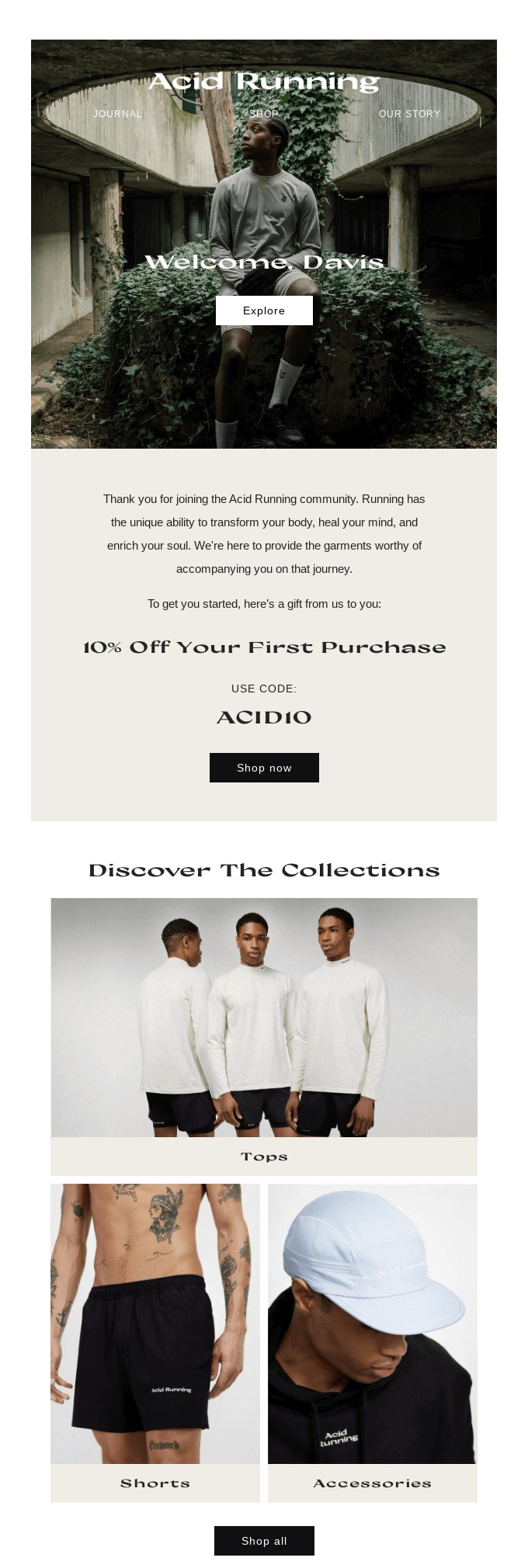
- Example (Acid Running): Acid Running’s welcome email effectively integrates these elements. It starts with a personalized greeting and a compelling visual. The copy emphasizes community and transformation. A 10% discount incentivizes purchase, and product categories encourage website exploration. The email also introduces brand philosophy and values, providing multiple engagement points through social media and footer links, thus setting the stage for a lasting relationship.
2. Weekly or Monthly Newsletters: Sustained Engagement and Value
- Purpose: To provide ongoing value, keep the audience informed about new developments, share educational content, and reinforce brand loyalty. Newsletters are about nurturing relationships over time.
- Key Elements: A consistent design template, a clear subject line indicating content, a mix of informative and promotional content, visually appealing layouts, and multiple calls to action.
- Content Suggestions: New class schedules, trainer spotlights, success stories, healthy recipes, workout tips, motivational articles, upcoming events, and community news.
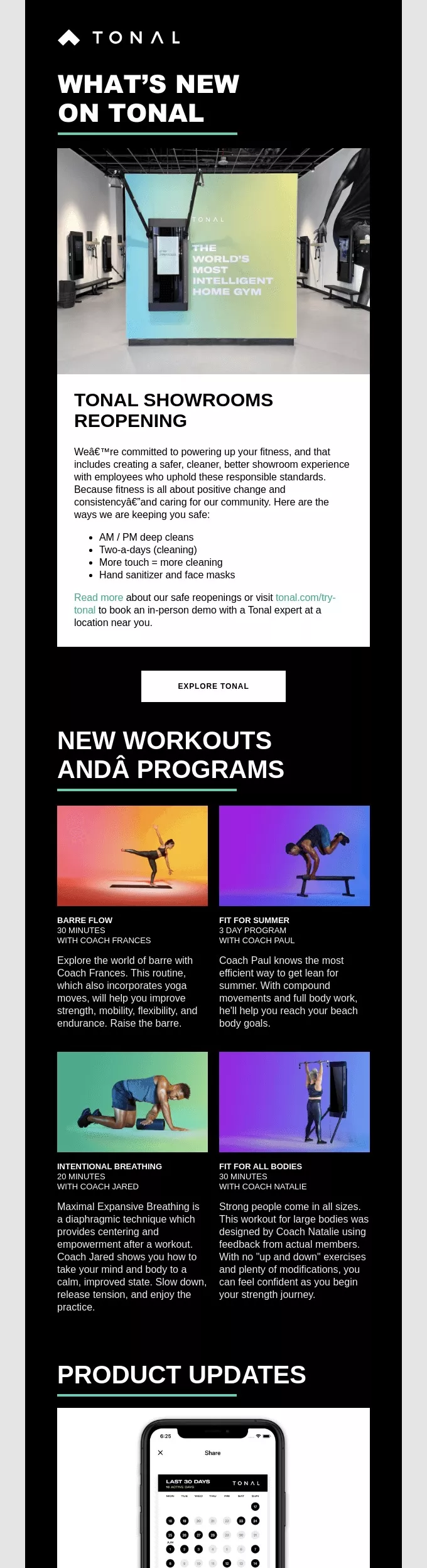
- Example (Tonal): Tonal’s newsletter exemplifies effective fitness updates. It opens with "WHAT’S NEW ON TONAL," setting expectations. It addresses timely information like showroom reopenings and then transitions to new workouts and programs with colorful images and brief descriptions. Each workout lists the coach, duration, and benefits, making it easy for members to choose.
3. Promotional Emails: Driving Conversions and Special Offers
- Purpose: To announce special offers, discounts, new services, or limited-time promotions, driving immediate action and generating sales.
- Key Elements: A compelling subject line, clear and concise offer details, a strong sense of urgency or scarcity, high-quality visuals, and prominent calls to action.
- Content Suggestions: Holiday sales, new membership tiers, personal training package discounts, referral bonuses, flash sales on merchandise, or early bird offers for workshops.
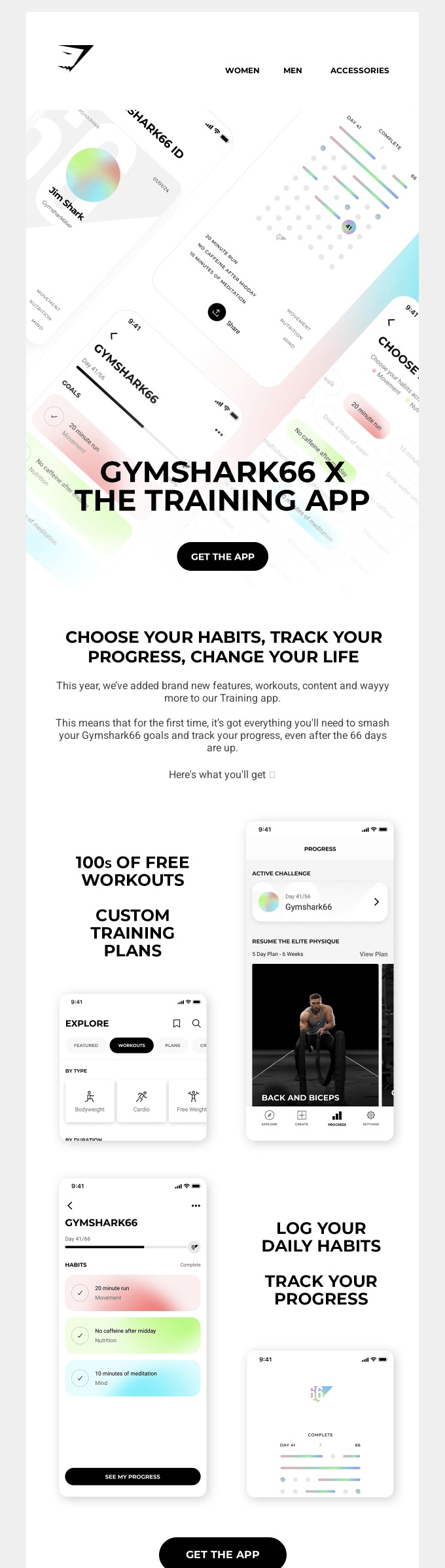
- Example (Gymshark): Gymshark’s promotional email for its "Training App" combines several key elements. A bold header directs readers to the collaboration. The clean, modern design showcases the app’s interface. The copy empowers customers with "CHOOSE YOUR HABITS, TRACK YOUR PROGRESS, CHANGE YOUR LIFE," aligning with fitness goals. Multiple "GET THE APP" CTAs increase conversion opportunities.
4. Re-engagement Emails: Rekindling Interest
- Purpose: To reactivate inactive members or subscribers who haven’t engaged recently. This is a cost-effective strategy to retain customers before they churn completely.
- Key Elements: A friendly, non-accusatory tone, a clear value proposition, an incentive to return, and a simple call to action. Segmentation is crucial here to tailor messages based on inactivity reasons.
- Content Suggestions: "We miss you" messages, special discounts for returning members, reminders of unused benefits, new feature announcements, or personalized recommendations based on past activity.
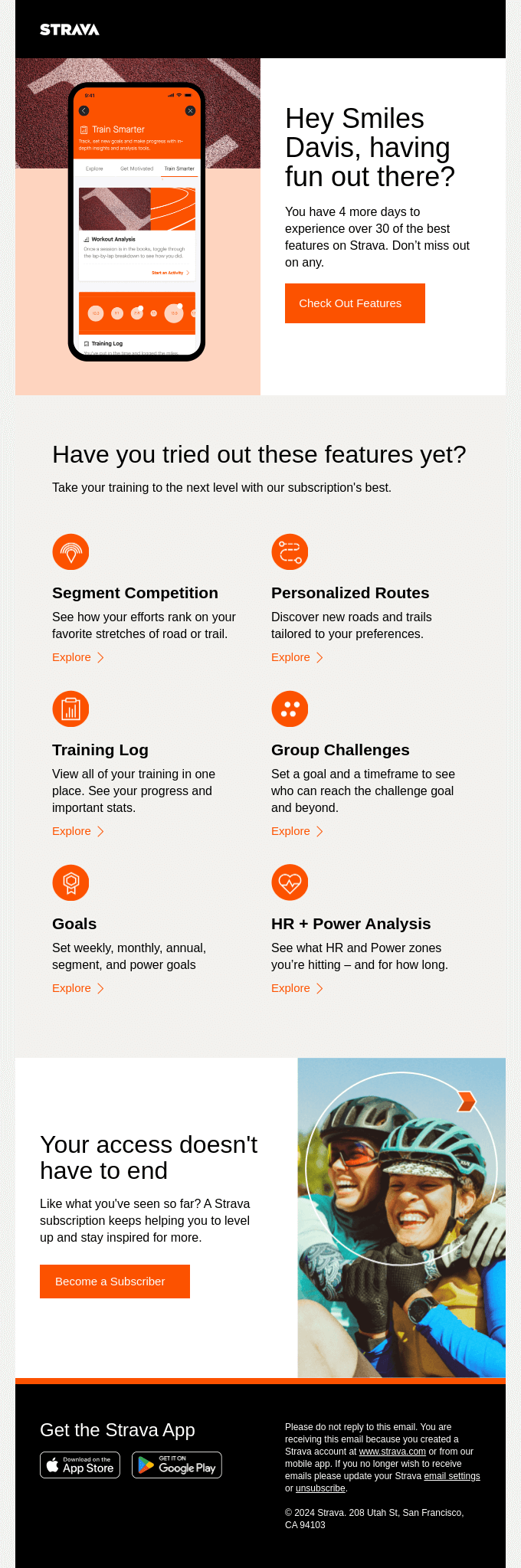
- Example (Strava): Strava’s re-engagement email effectively combines personalization and urgency. The greeting, "Hey Smiles Davis, are you having fun out there?" creates a friendly tone. It reminds recipients of a limited-time premium feature trial, creating urgency. It showcases six key features with concise descriptions and CTAs, making it easy to try. The app interface image provides a visual reminder, and the email concludes with a clear call to action to subscribe, emphasizing ongoing benefits.
5. Event and Seasonal Campaigns: Timely Relevance and Community Building
- Purpose: To promote upcoming events, workshops, challenges, or seasonal offers, capitalizing on relevant trends and fostering a sense of community.
- Key Elements: Clear event details (date, time, location/link), exciting visuals, benefits of attending, registration links, and social sharing options.
- Content Suggestions: Holiday fitness challenges, summer boot camps, nutrition workshops, charity runs, open house events, or seasonal merchandise launches.
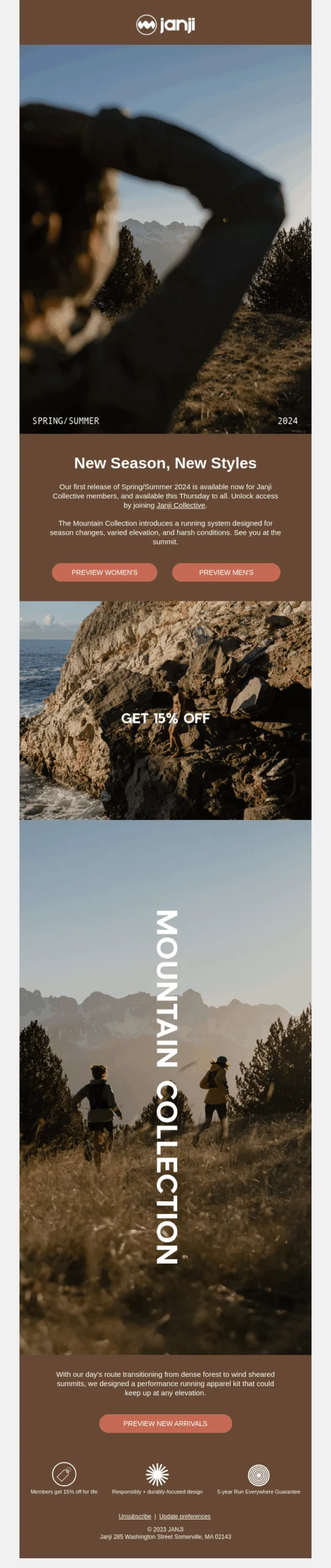
- Example (Janji): Janji’s event and seasonal campaign email effectively demonstrates seasonal marketing. The header "New Season, New Styles" immediately sets the spring/summer 2024 context. The copy describes a new running system designed for season changes and harsh conditions, appealing to adventurous customers. It offers a clear CTA to explore collections and a prominent "GET 15% OFF" incentive. A vertical image with "MOUNTAIN COLLECTION" overlaid creates a powerful visual impact.
Building and Maintaining a Robust Email Marketing List
A well-maintained, targeted email list is the foundational bedrock of successful email marketing for fitness businesses. It ensures that messages reach the right audience, significantly increasing the likelihood of conversions and long-term member retention.
1. Having a Targeted Email List:
- Quality over Quantity: Focus on attracting subscribers genuinely interested in fitness and your specific offerings.
- Diverse Acquisition Methods: Utilize website sign-up forms, pop-ups, lead magnets (e.g., free workout guides, healthy meal plans), in-gym sign-ups, and social media promotions.
- Clear Value Proposition: Articulate what subscribers will gain by joining your list (e.g., exclusive content, early access to promotions, expert tips).
2. Segmentation and Personalization:
- Divide and Conquer: Segment your list based on demographics, fitness goals, membership status (active, inactive, prospect), class preferences, purchase history, and engagement levels.
- Tailored Content: Send personalized content that resonates with each segment. For example, new members might receive onboarding tips, while long-term members receive advanced workout challenges. Personalized emails boast a 6x higher transaction rate and significantly higher open rates.
- Dynamic Content: Use email marketing platforms that allow dynamic content insertion, where specific blocks of content change based on the recipient’s profile data.
3. Maintaining and Cleaning the List:
- Regular Audits: Periodically review your list for inactive subscribers, bounces, and unsubscribes.
- Re-engagement Campaigns: Attempt to re-engage inactive subscribers before removing them.
- Remove Unengaged Subscribers: A clean list improves deliverability rates, reduces spam complaints, and ensures your engagement metrics accurately reflect your active audience. Sending emails to unengaged subscribers can harm your sender reputation.
To maximize the effectiveness of your fitness email marketing list, consider these additional tips:
- Incentivize Sign-ups: Offer a small discount, a free class pass, or exclusive content for new subscribers.
- Integrate with CRM: Connect your email list with your customer relationship management (CRM) system for a holistic view of member data.
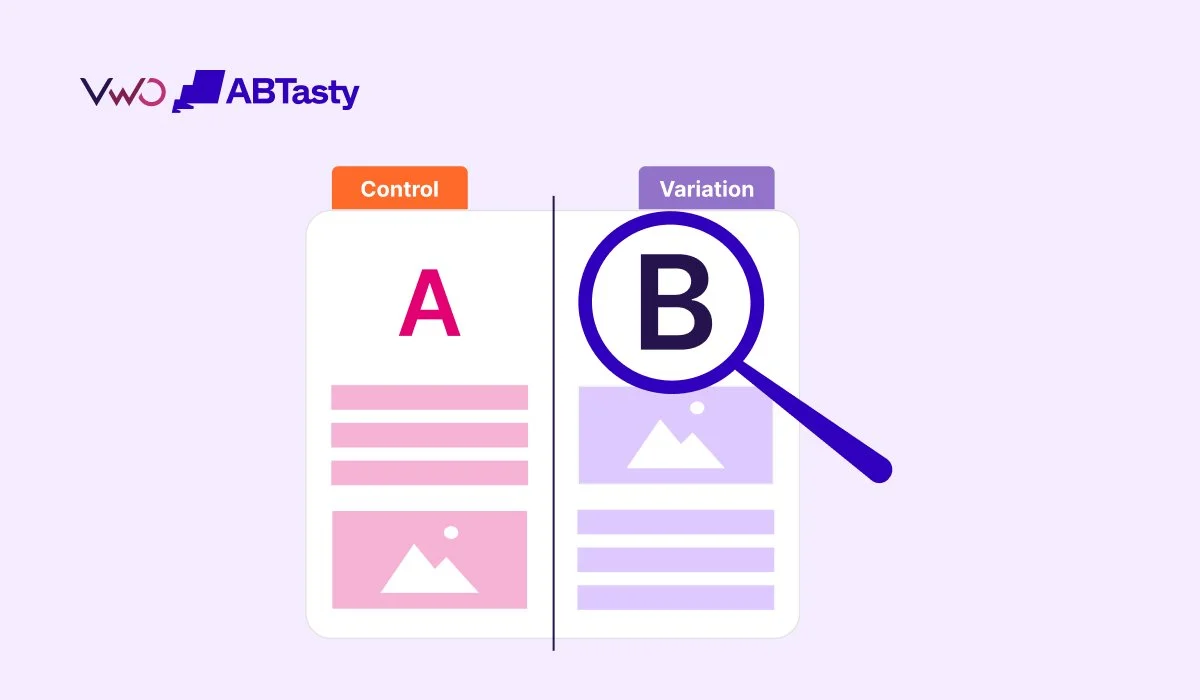
- A/B Test Everything: Experiment with subject lines, content, calls to action, and send times to discover what yields the best results for your audience.
- Compliance with Regulations: Always adhere to data privacy regulations such as GDPR and CCPA when collecting and managing email addresses.
Strategies to Stand Out in Email Marketing for Gyms
In a crowded digital space, merely sending emails isn’t enough; they must stand out. Implementing innovative strategies that capture attention will enable gyms to excel in fitness email marketing and boost engagement significantly.
1. Personalization and Dynamic Content:
- Beyond First Names: True personalization goes beyond addressing recipients by their first name. It involves tailoring content based on their specific fitness interests, past attendance, membership type, and engagement history.
- Automated Triggers: Use automation to send emails based on specific actions (e.g., celebrating a workout milestone, sending a birthday discount, reminding them of an upcoming class they showed interest in).
- Product/Service Recommendations: Recommend classes, trainers, or merchandise based on their past interactions or stated preferences. This level of relevance can increase click-through rates by 14% and conversions by 10%.
2. Storytelling in Fitness Emails:
- Human Connection: Share inspiring success stories from members, highlight a trainer’s journey, or narrate the gym’s origin story. People connect with authentic narratives.
- Brand Narrative: Weave your brand’s mission, values, and philosophy into your emails. Explain why you do what you do, fostering a deeper emotional connection.
- Before-and-Afters (with consent): Showcase transformative journeys to inspire and demonstrate tangible results, making the content relatable and aspirational.
3. Using Testimonials and Social Proof:
- Credibility Boost: Feature positive reviews, testimonials, and member success stories. This peer validation builds trust and encourages new sign-ups or continued engagement.
- Expert Endorsements: If applicable, include endorsements from local health professionals or fitness influencers.
- Numbers Speak: Highlight statistics like "Over 500 members achieved their goals last year" or "Rated 5 stars by our community."
4. Interactive Email Elements:
- Engaging Content: Incorporate GIFs, short videos (linking to YouTube/Vimeo), polls, quizzes, or countdown timers for upcoming events. These elements break monotony and increase engagement.
- Gamification: Introduce elements like loyalty points tracking, progress bars for challenges, or badges for achievements, making the fitness journey more interactive and rewarding.
- Clickable Surveys: Embed quick polls or surveys directly within the email to gather feedback and make recipients feel heard, simultaneously boosting interaction.
Technological Enablers: How Omnisend Can Enhance Your Fitness Email Marketing
Platforms like Omnisend are specifically designed to empower fitness businesses with robust SMS and email marketing capabilities, streamlining marketing efforts and driving superior results. These platforms provide the infrastructure for automation, personalization, and comprehensive campaign management.
Key features typically offered by such platforms include:
- Intuitive Drag-and-Drop Builders: Simplify the creation of visually appealing emails without requiring coding knowledge.
- Pre-built Automation Workflows: Ready-to-use sequences for welcome series, abandoned cart reminders (for merchandise), re-engagement campaigns, and post-purchase follow-ups.
- Advanced Segmentation: Tools to segment audiences based on a wide array of criteria, enabling hyper-targeted messaging.
- A/B Testing Capabilities: Facilitate experimentation with different email elements to optimize performance.
- Detailed Analytics and Reporting: Provide insights into campaign performance, subscriber behavior, and ROI.
- SMS Marketing Integration: Allow for multi-channel communication, sending timely alerts, promotions, and reminders via text messages, which boast exceptionally high open rates.
- Landing Page Builders: Create dedicated landing pages for promotions or lead generation, ensuring a consistent brand experience.
- Pop-ups and Forms: Tools to easily create sign-up forms and pop-ups for effective list building on websites.
Future Outlook and Implications
The landscape of fitness email marketing is continuously evolving. The increasing sophistication of AI and machine learning will lead to even more precise personalization, predictive analytics for churn prevention, and dynamic content generation. Hyper-personalization, driven by deeper data integration (e.g., wearables data, in-gym attendance), will allow for truly individualized fitness journeys communicated via email. For gyms, this means a sustained competitive advantage, stronger member loyalty, and a more resilient business model capable of adapting to future market shifts. The implication is clear: those who master sophisticated email marketing will not only survive but thrive, building deeply engaged communities that fuel long-term growth.
Conclusion
In the modern fitness industry, establishing a direct line of communication with customers is paramount for boosting engagement and driving the sustained growth of gyms and health clubs. By diligently implementing sophisticated email marketing strategies—including highly personalized content, intelligently automated workflows, and precisely segmented campaigns—fitness businesses can craft impactful, fitness-based email marketing initiatives that deeply resonate with their target audience. To maximize fitness email marketing efforts, consider immediately implementing a robust onboarding email sequence. This series of targeted messages is crucial for making new members feel genuinely welcome, thoroughly understanding the gym’s comprehensive offerings, and establishing a strong, positive connection right from the very start of their fitness journey.
FAQs
1. Do gyms need email marketing?
Yes, gyms absolutely need email marketing. It is a highly effective and cost-efficient way to engage members, promote services, and significantly increase retention rates. Fitness email marketing allows gyms to send personalized content, valuable workout tips, motivational messages, and exclusive offers directly to members’ inboxes, ensuring they remain motivated, informed, and deeply connected to the gym community.
2. How do I market my fitness gym effectively?
To market your fitness gym effectively, adopt a comprehensive multi-channel approach. Implement a strong fitness email marketing strategy, actively leverage social media platforms, offer compelling referral programs to incentivize existing members, host engaging community events, and consider local partnerships. Consistency across all channels and a clear brand message are crucial for success.
3. What should be included in a fitness newsletter?
A fitness newsletter should include a diverse mix of valuable and engaging content. This typically encompasses practical workout tips, evidence-based nutrition advice, inspiring member success stories, updates on upcoming classes or events, and exclusive offers. Utilizing gym marketing email templates can help create visually appealing and consistent newsletters that align with your brand identity and effectively engage your audience.
4. How do you stand out in email marketing?
To stand out in email marketing, focus on creating highly compelling and unique content. This includes using eye-catching subject lines, incorporating interactive elements like short videos or GIFs, and segmenting your list for hyper-targeted messaging that feels personalized to each recipient. Regularly analyze your email performance metrics—such as open rates, click-through rates, and conversion rates—to continuously refine your strategy and improve overall engagement.