Commerce has continually reinvented itself, moving from local marketplaces to global, internet-driven e-commerce experiences. Now, propelled by advancements in artificial intelligence, the retail landscape stands on the precipice of another transformative shift: agentic commerce. This emerging model envisions a future where sophisticated AI agents actively assist consumers, not just by recommending products, but by autonomously discovering, comparing, and even completing purchases on their behalf. While the promise of unparalleled convenience and personalization sparks considerable excitement, it also raises critical questions regarding consumer trust, business return on investment, and the potential complexities introduced into the buying journey. This article delves into the intricate workings of agentic commerce, explores the technological breakthroughs fueling its ascent, and examines the multifaceted challenges that will ultimately shape its widespread adoption.
At its core, agentic commerce defines a retail paradigm where AI agents assume the role of decision-makers and executors for customers. Unlike traditional shopping, where individuals manually navigate websites, filter options, and complete transactions, agentic commerce empowers users to delegate these tasks to AI, guided by their expressed intent, preferences, constraints, and purchasing objectives. As Alex Moss articulated in the SEO Unplugged: Agentic Commerce with Alex Moss podcast, the vision is one of seamless integration: "I could literally say into the into a phone to my agent, go and buy me some new shoes with that jacket I bought last week, and that’s it." The agent would then conduct the necessary research, with the user retaining control over the final approval. Essentially, agentic commerce operates as a digital shopping proxy, where human intent drives the goal, and AI agents meticulously execute the process behind the scenes, always ensuring the user maintains ultimate oversight of the final decision-making.
The Dawn of Agentic Commerce: A Paradigm Shift

The journey of commerce has been one of continuous evolution. From the bustling physical markets of antiquity to the advent of catalog mail-order, each era introduced new efficiencies and expanded reach. The late 20th century ushered in e-commerce, dissolving geographical barriers and revolutionizing access to goods. The subsequent mobile revolution further tethered shopping to daily life, making purchasing ubiquitous. Agentic commerce represents the next logical, albeit profound, leap. It moves beyond merely digitizing existing shopping behaviors to automating and intelligently orchestrating them. This shift is not merely incremental; it redefines the very essence of product discovery and transaction, transferring cognitive load from the consumer to an intelligent agent. This evolution is particularly timely given the explosion of generative AI technologies, which provide the conversational interfaces and reasoning capabilities necessary for agents to understand complex human requests and act upon them.
The Driving Forces: Why Now?
The rapid emergence of agentic commerce is underpinned by several confluence factors, primarily driven by evolving consumer behavior, advancements in AI, and compelling economic forecasts.
Consumer Reliance on AI for Shopping: The notion of AI-powered shopping is no longer futuristic; consumers are already integrating AI tools into their buying journeys. A McKinsey & Company report highlights this trend, revealing that over 70% of AI-powered search users engage with these tools for top-of-the-funnel inquiries about categories, brands, products, or services. Furthermore, nearly 50% of consumers currently leverage AI-powered search experiences. This indicates a significant behavioral shift where individuals increasingly turn to AI not just for information retrieval, but for guidance in their purchasing decisions. The report provocatively suggests that businesses could witness 20-50% of their traditional search traffic migrate to AI-powered discovery over time, underscoring the urgency for brands to adapt their digital strategies. This trend reflects a growing comfort level with AI and a desire for more efficient, personalized interactions.

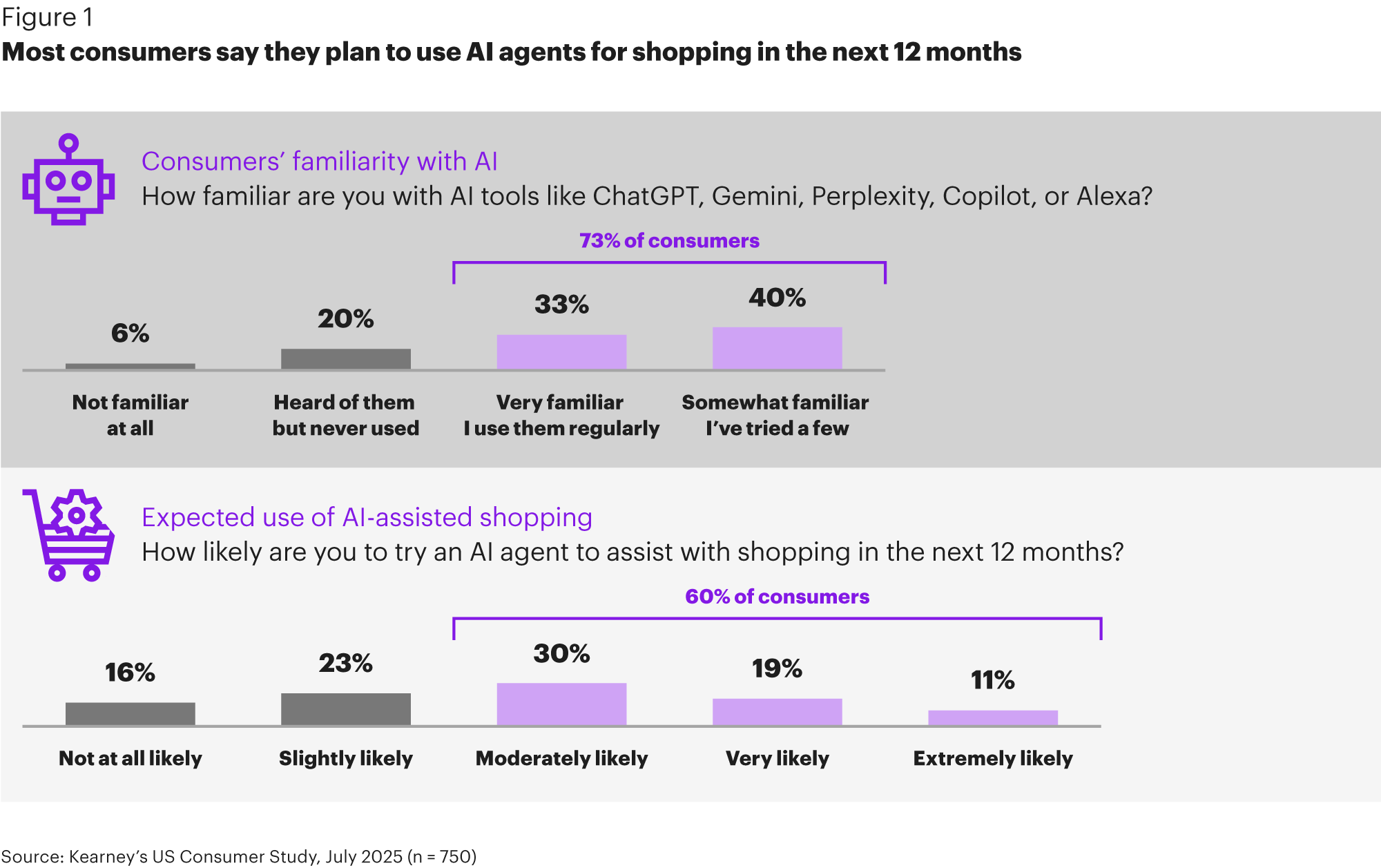
Growing Consumer Expectation for Agentic Shopping: Beyond current usage, consumer interest and expectation for agentic commerce are surging. The 2025 Kearney report, "Agentic Commerce: From Brand Loyalty to Bot Logic," surveyed shopper sentiment towards AI agents in retail. A striking finding was that over 60% of shoppers anticipate using agentic AI by 2026. This research also unveiled a profound shift in consumer priorities, with convenience, speed, competitive pricing, and trust now outweighing traditional platform loyalty. In an agentic world, shoppers might bypass individual retailer apps in favor of AI agents capable of cross-platform product comparison, review analysis, deal identification, and streamlined purchasing. This fundamentally alters the competitive landscape, shifting focus from direct retailer-versus-retailer competition to an ecosystem where AI-driven discovery becomes the primary battleground. Consumers, accustomed to instant gratification and personalized digital experiences, are increasingly demanding more proactive and intelligent assistance in their purchasing decisions.
Explosive Growth Predicted by Analysts: Industry analysts foresee agentic commerce as a monumental economic opportunity. Another McKinsey report projects that agentic commerce could fundamentally reshape the shopping experience, unlocking an orchestrated revenue opportunity of $900 billion to $1 trillion in the US B2C retail market alone by 2030. Globally, this figure could range from an astonishing $3 trillion to $5 trillion. These projections, based on accelerated AI adoption and increasing merchant readiness, underscore the immense transformative potential and the strategic imperative for businesses to engage with this burgeoning domain. Such growth would rival, if not surpass, previous e-commerce revolutions, indicating a complete reimagining of the retail value chain.
The Mechanics of Autonomous Shopping: How Agentic Commerce Works
The operational framework of agentic commerce seamlessly blends human directive with AI autonomy. It empowers users to delegate significant portions of the shopping process to AI agents, which are equipped to understand goals, evaluate options, make constrained decisions, and execute transactions. The key differentiator from merely "assistive" AI lies in its capacity for independent action across the entire shopping journey.
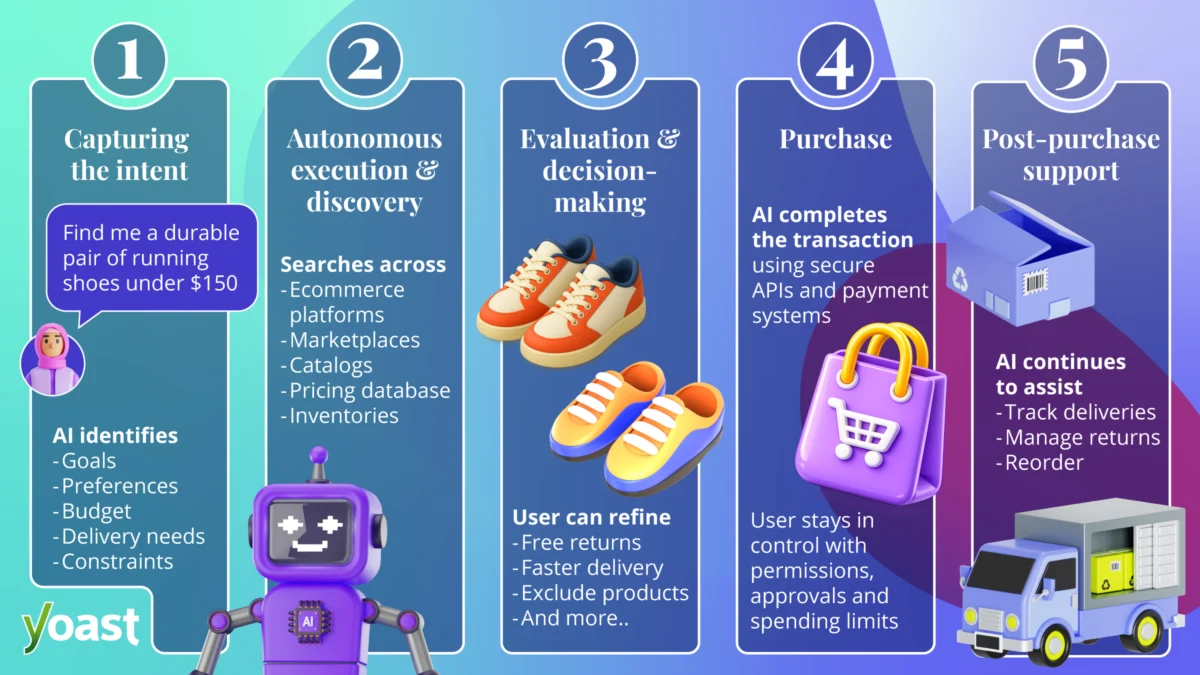
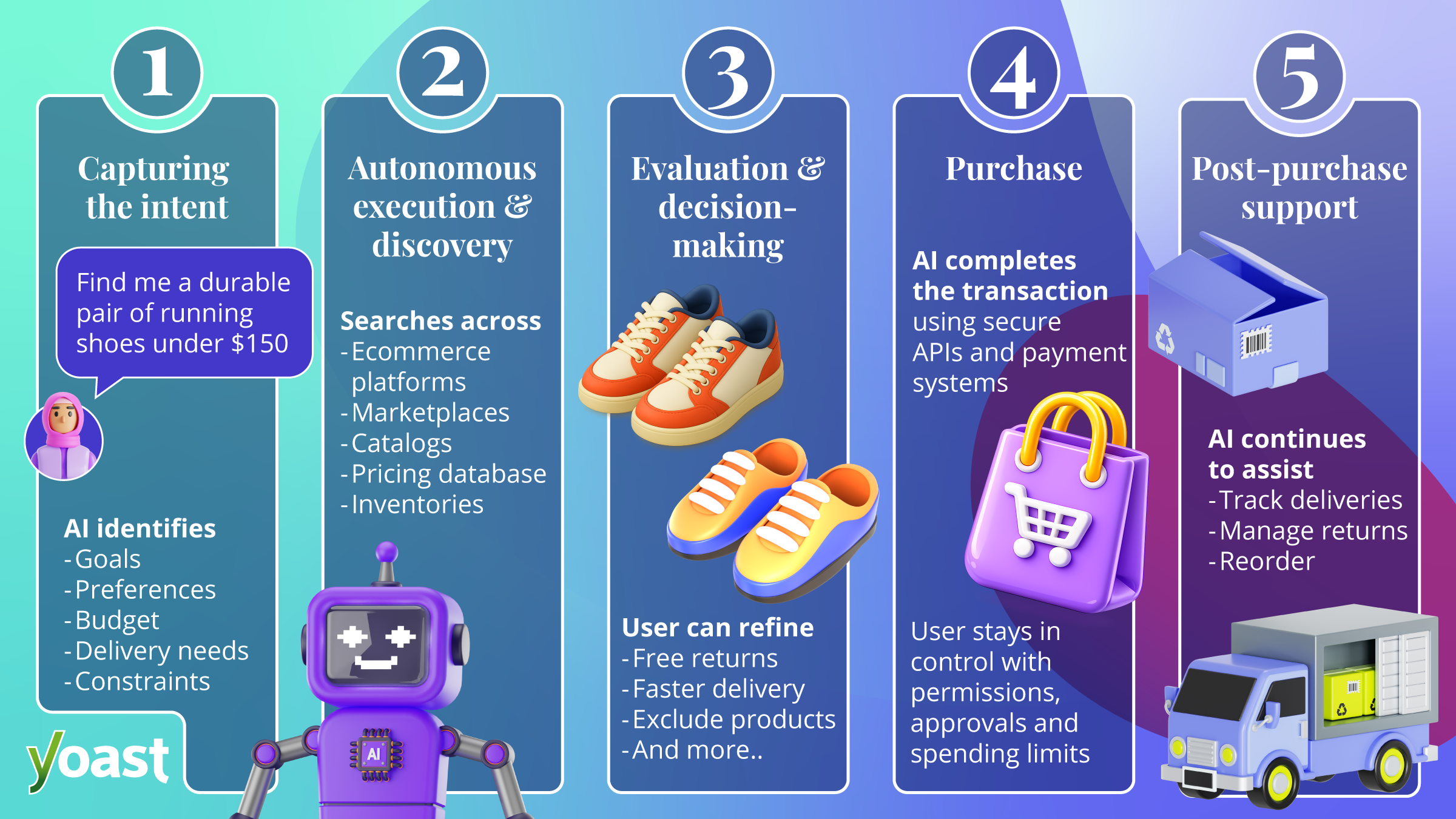
Here’s a step-by-step breakdown of how agentic commerce functions:
-
Capturing the Intent: The process commences with the user articulating their intent. Unlike fragmented keyword searches, interaction with an AI agent is conversational and holistic. A shopper might articulate, "Find me a sustainable, ethically sourced coffee maker under $150 that delivers within two days," or "I need a new pair of running shoes for trail running, similar to the ones I bought last year, but with better cushioning." At this stage, the AI agent’s primary objective is to fully comprehend the user’s goals, preferences, budget, delivery expectations, and any specific constraints. If the initial request lacks sufficient detail, the agent intelligently prompts for follow-up questions to refine the intent before proceeding, leveraging natural language processing (NLP) to understand nuances and context.
-
Autonomous Instruction Execution and Brand Discovery: Once the user’s intent is crystallized, the AI agent autonomously executes the task. Rather than confining its search to a single website, it dynamically scans and synthesizes information from a vast array of e-commerce platforms, online marketplaces, product catalogs, review aggregators, pricing databases, and real-time inventory systems. This capability fundamentally disrupts traditional product discovery. Instead of presenting an overwhelming deluge of product pages, the agent intelligently curates and narrows down the most pertinent options based on the shopper’s refined needs. Crucially, brands with meticulously structured product data, accurate and real-time inventory information, transparent pricing, and machine-readable content are significantly more likely to be discovered and prioritized by these AI agents. This emphasizes the growing importance of semantic SEO, robust product information management (PIM), and data quality for online visibility.
-
Evaluation and Decision-Making: Having gathered a comprehensive set of options, the AI agent embarks on an analytical evaluation, comparing trade-offs across various products. Its analysis encompasses a broad spectrum of factors: product specifications (features, materials, compatibility), price and discounts (identifying best deals, predicting future price drops), availability and delivery (stock levels, shipping times, costs), reviews and ratings (synthesizing sentiment from multiple sources), brand reputation and sustainability (aligning with user values), and warranty and return policies (assessing post-purchase security). The agent doesn’t merely list products; it articulates its reasoning, explaining why certain selections better align with the shopper’s requirements. Users can further fine-tune this process by introducing additional conditions, such as "prioritize brands with carbon-neutral shipping" or "exclude any product with less than a 4-star average rating." This iterative feedback loop continuously enhances the AI agent’s recommendations, personalizing the experience over time through machine learning.
-
Purchase: Upon user approval of a specific product or the establishment of predefined purchasing rules, the AI agent proceeds with the transaction. Leveraging robust APIs, established commerce protocols, and secure payment systems, the agent can seamlessly add items to virtual carts, apply eligible discounts, authenticate payments, and finalize purchases. In scenarios where immediate acquisition is desired, the transaction can be instantaneous. Alternatively, the AI agent can be programmed to await specific conditions, such as a targeted price drop, renewed stock availability, or the emergence of faster delivery options, before completing the purchase. Despite the AI’s execution capabilities, users retain ultimate control through customizable permissions, explicit approval settings, and defined spending limits, ensuring a secure and user-centric experience.
-
Post-Purchase Support: The utility of AI agents extends beyond the point of sale. Agentic commerce integrates post-purchase support, transforming shopping into an ongoing, intelligent relationship. AI agents can continue to assist users by: tracking orders and managing deliveries (providing real-time updates and resolving shipping issues), facilitating returns and exchanges (streamlining the process and ensuring compliance with policies), monitoring product performance (alerting users to recalls, updates, or maintenance needs), proactive reordering (automatically repurchasing consumables when stock levels are low), and handling customer service inquiries (resolving common issues or escalating complex ones to human agents). This continuous engagement elevates shopping from discrete transactions to a holistic, intelligent service, enhancing overall customer satisfaction and loyalty.
Building the Foundation: Key Technological Protocols and Partnerships
The realization of agentic commerce is not solely dependent on advanced AI models but rather on a sophisticated ecosystem of underlying protocols, frameworks, APIs, and secure payment systems. These components enable AI agents to interact securely and efficiently with diverse digital commerce platforms. The Model Context Protocol (MCP), for instance, serves as a crucial enabler for agentic AI by providing a standardized communication layer, allowing AI models to interface with external systems, tools, and databases without requiring bespoke integrations for every interaction. As agentic commerce matures, similar, more specialized commerce-focused protocols are emerging.

Agentic Commerce Protocol (ACP) by Stripe & OpenAI: A pivotal development in this nascent field is the Agentic Commerce Protocol (ACP), an open standard spearheaded by Stripe in collaboration with OpenAI. Introduced in late 2023, ACP was designed to facilitate more natural and secure interactions between AI agents and e-commerce systems, providing the essential infrastructure for product discovery, checkout, and payment execution. Its objective is to move AI agents beyond mere recommendations, empowering them to complete actual purchases securely on behalf of users.
Early real-world implementations of ACP are already visible. ChatGPT users in the United States, for instance, can directly purchase products from Etsy merchants within the conversational interface, with transactions powered by Stripe’s checkout technology. Further integrations, notably with Shopify, are anticipated. This marks a significant transition, signaling that AI-enabled transactions are shifting from external redirects to seamless integrations within conversational AI platforms themselves. The open-standard nature of ACP is strategic, positioning it as a broadly adoptable framework for developers, merchants, and e-commerce platforms as agentic commerce evolves, thereby fostering a more interconnected and interoperable ecosystem. Stripe’s involvement underscores the critical need for secure and efficient payment processing in this new paradigm.
Universal Commerce Protocol (UCP) by Google: Addressing the critical challenge of interoperability across a fragmented retail landscape, Google introduced the Universal Commerce Protocol (UCP) in early 2024. As agentic AI proliferates, the prospect of millions of agents needing custom integrations for every retailer, marketplace, and payment provider becomes impractical. UCP aims to solve this by creating a common language for agentic commerce, providing a shared framework for efficient communication throughout the entire shopping journey.
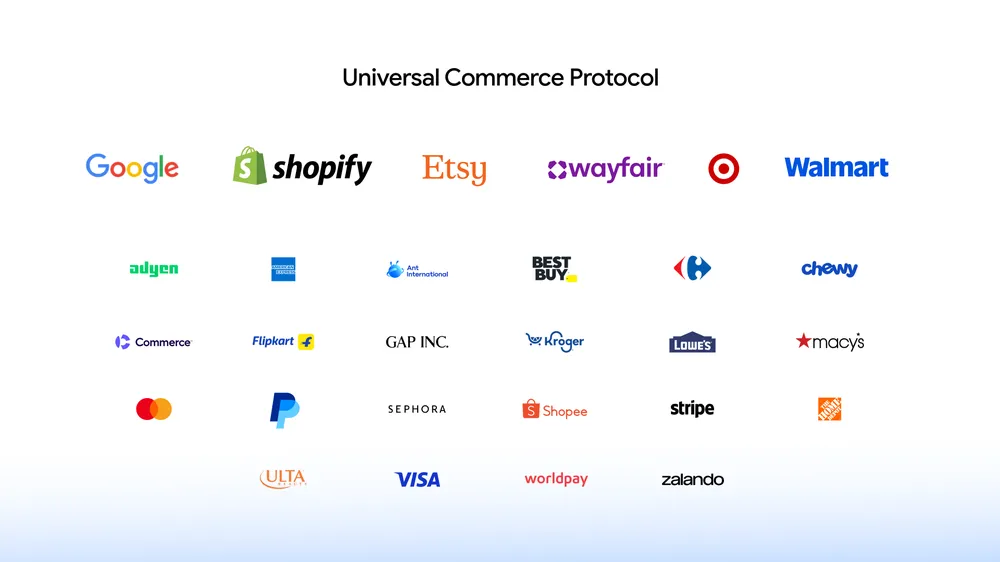
UCP’s broad scope distinguishes it. Unlike protocols primarily focused on the purchase phase, UCP is designed to support the entire commerce lifecycle, encompassing: product discovery and comparison (standardized access to product data), inventory checks and price monitoring (real-time data exchange), order placement and management (streamlined transaction processes), shipping and logistics coordination (enhancing delivery efficiency), and returns, exchanges, and customer support (post-purchase service integration). Google has deliberately engineered UCP for compatibility with other emerging AI standards, including Agent2Agent (A2A), Agent Payments Protocol (AP2), and the Model Context Protocol (MCP). This ensures that businesses can adopt agentic commerce capabilities without necessitating a complete overhaul of their existing IT infrastructure. The initiative enjoys substantial industry backing, co-developed with major players such as Shopify, Etsy, Wayfair, Target, and Walmart, and supported by financial giants like Mastercard, Visa, Stripe, and American Express. UCP is poised to become a foundational infrastructure, enabling a future where AI agents, merchants, and payment providers operate within a unified ecosystem, thereby scaling agentic commerce across the broader digital economy.
Mastercard Agent Pay: Complementing the