In the modern landscape of digital communications, the distinction between a successful marketing campaign and a failed investment often rests not on the quality of individual components, but on the seamlessness of their integration. Industry experts frequently observe that many organizations possess all the necessary "ingredients" for a robust marketing strategy—paid advertising, earned media, shared social platforms, and owned content—yet fail to achieve a cohesive output. This phenomenon, often compared to the precision required in crafting a complex beverage, highlights a critical gap in contemporary corporate strategy: the confusion between mere coordination and true integration.
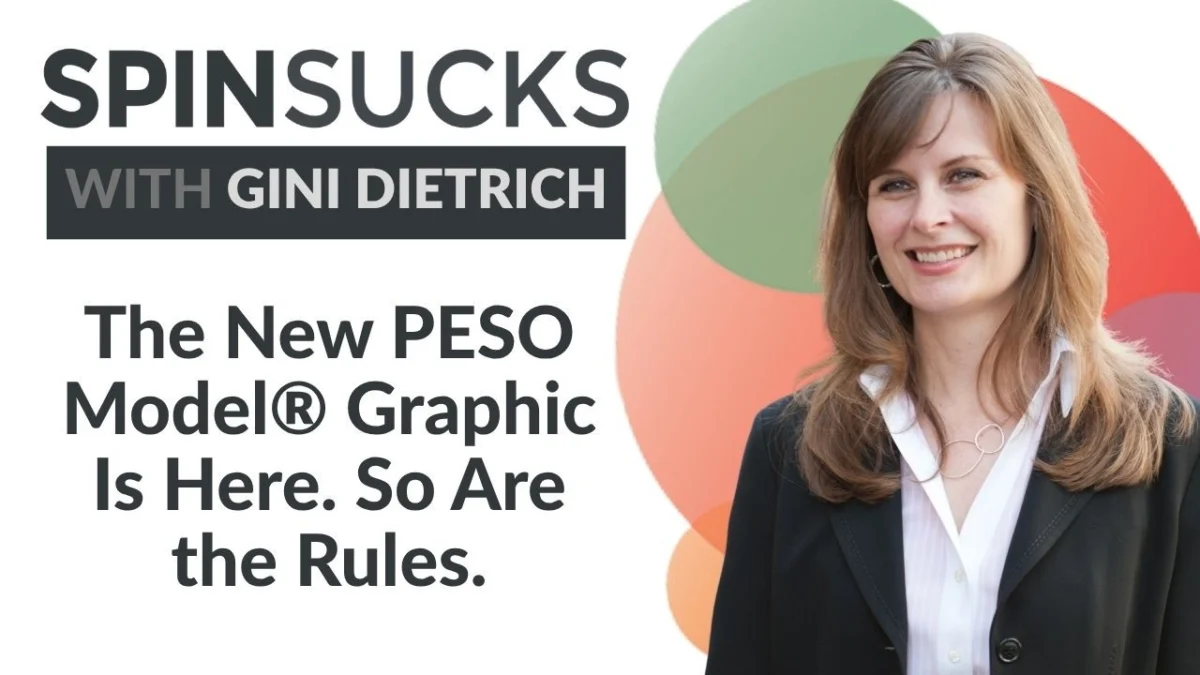
The PESO Model, an industry-standard framework developed by Gini Dietrich, serves as the foundation for understanding this integration. It categorizes media into four distinct yet overlapping segments: Paid, Earned, Shared, and Owned. While many marketing teams ensure that these four elements are present during a product launch, a lack of intentional synergy often leads to disjointed messaging, diluted brand authority, and diminished return on investment (ROI). To move beyond basic coordination, organizations must adopt an "operating system" mindset where every channel functions as a unified mechanism designed to guide the consumer toward a specific, measurable destination.
The Structural Difference: Coordination vs. Integration
The distinction between coordinated marketing and integrated marketing is more than semantic; it is a fundamental shift in operational philosophy. Coordination occurs when various departments—such as Public Relations, Social Media, and Digital Advertising—synchronize their schedules to launch efforts simultaneously. For instance, a "coordinated" launch might see a press release issued on the same day a Facebook ad goes live. While this creates a spike in activity, it does not guarantee that the efforts are mutually reinforcing.
Integration, by contrast, requires that these channels operate as a single system. In an integrated model, the earned media hit (a feature in a major publication) is used as the creative asset for the paid media (boosted posts), which in turn drives traffic to the owned media (a specific landing page), while the shared media (social conversations) provides the social proof necessary to convert visitors. Without this interconnectedness, the consumer journey becomes fragmented. Marketing data suggests that it takes an average of seven to thirteen touchpoints before a lead is qualified; if those touchpoints do not lead to a consistent destination, the cumulative effect is lost.
A Chronology of Campaign Execution: The Integrated Path
To understand how integration manifests in a professional environment, one must examine the lifecycle of a strategic campaign. The following chronology outlines the transition from siloed planning to integrated execution:
- Strategic Alignment and Goal Setting: Rather than each department setting independent Key Performance Indicators (KPIs), the leadership team establishes a singular objective, such as a specific sales target for a new product or a set number of lead conversions.
- Cross-Departmental Resource Mapping: Teams identify how assets from one pillar can serve another. For example, the "Owned" team produces a white paper that the "Earned" team uses as a hook for journalist outreach.
- The Feedback Loop Phase: Before the launch, the "Shared" team monitors community sentiment on platforms like Reddit or Discord to refine the messaging used by the "Paid" team.
- Simultaneous Launch with Cross-Linking: On launch day, every piece of content, regardless of the channel, contains a direct path to the primary conversion point.
- Optimization and Amplification: As "Earned" media wins are secured, they are immediately recycled into "Paid" and "Shared" channels to extend their shelf life and credibility.
Analyzing the "Coordinated" Failure: A Case Study in Disconnected Media
Consider a hypothetical launch of a high-end skincare line. In a coordinated but non-integrated scenario, the brand may secure a major feature in Allure magazine (Earned) and hire a high-profile influencer like MrBeast for a promotion (Shared). Simultaneously, the digital team runs Google Ads (Paid) while the content team publishes a blog post on the company website (Owned).
On the surface, this appears to be a massive success. However, an analytical breakdown reveals significant inefficiencies:
- The Attribution Gap: The influencer fails to direct their audience to the specific landing page, instead sending them to a generic homepage where the "conversion scent" is lost.
- Missed Amplification: The Allure feature, a high-trust asset, is never boosted via paid social media, meaning its reach is limited to the magazine’s organic audience.
- Audience Mismatch: Because the Shared team did not collaborate with the Earned team, the influencer chosen has a broad, non-niche audience that may not be interested in skincare, leading to high traffic but zero conversions.
- Community Neglect: While conversations happen on Reddit about the product, the company provides no official links or expert engagement, allowing the narrative to be shaped by competitors or misinformation.
This scenario illustrates a "lukewarm" result. The ingredients were present, but the lack of a unified "operating system" resulted in a campaign that was less than the sum of its parts.
Supporting Data: The Value of Integrated Systems
Market research underscores the financial necessity of integration. According to a study by the Interactive Advertising Bureau (IAB), integrated campaigns across multiple media platforms are 31% more effective at building brands than non-integrated ones. Furthermore, organizations that utilize the PESO Model to bridge the gap between PR and marketing report a more accurate ability to measure the impact of "Earned" media on the bottom line.
Data from Gartner indicates that "integrated marketing leaders" who prioritize cross-functional collaboration achieve a 20% higher marketing-attributed revenue compared to those who operate in silos. The primary reason for this is the reduction of "friction" in the customer journey. When the message is consistent and the path to purchase is clear across all channels, the conversion rate increases significantly.
The Role of the PESO Model Operating System
The PESO Model is not merely a checklist; it is a diagnostic tool for identifying where integration breaks down. By viewing marketing through this lens, leaders can pinpoint specific failures:
- Paid Media: Is it being used to amplify the most successful "Earned" and "Owned" content, or is it operating in a vacuum?
- Earned Media: Are the media hits being leveraged to build SEO authority through backlinks to "Owned" properties?
- Shared Media: Is the social strategy focused on community engagement and distribution, or is it just another broadcast channel?
- Owned Media: Does the content provide the ultimate destination for all other channels, or is it a dead end?
In a truly integrated system, "Owned" media is the heart of the operation. Everything else—the ads, the news stories, and the social posts—acts as a circulatory system, pumping traffic and credibility back to the organization’s proprietary platforms.
Industry Reactions and Expert Analysis
Communication scholars and marketing executives have long argued that the "siloization" of agencies is the greatest barrier to integration. Traditionally, a company might hire a PR firm for earned media and a separate digital agency for paid ads. These entities often have competing incentives and rarely communicate.
"The greatest risk to a modern brand is not a lack of budget, but a lack of internal alignment," states one industry analysis of recent major brand campaigns. "When the PR team doesn’t know what the search engine marketing (SEM) team is bidding on, the brand pays twice for the same customer."
Experts suggest that the solution lies in "intentional collaboration." This involves regular "PESO syncs" where representatives from every channel review the upcoming calendar to ensure that an "Earned" win in one week is supported by a "Paid" boost the next.
Broader Impact and Strategic Implications
The shift toward integrated marketing has profound implications for the future of the industry. As consumer attention becomes increasingly fragmented, the ability to provide a cohesive brand experience becomes a competitive advantage.
- Measurement and Attribution: Integrated systems allow for better data collection. When all channels point to a single landing page with proper UTM parameters, marketers can finally see how a "Shared" post on LinkedIn influenced a final sale three weeks later.
- Resource Efficiency: Integration prevents the "reinvention of the wheel." A single high-quality video (Owned) can be cut into snippets for social (Shared), used as a YouTube ad (Paid), and sent to journalists as a visual aid (Earned).
- Brand Trust: In an era of "fake news" and deepfakes, the consistency provided by an integrated PESO strategy builds a "moat" of credibility around a brand. When a consumer sees the same message in a news outlet, a social community, and a targeted ad, the perceived legitimacy of the brand increases.
In conclusion, the era of treating marketing channels as independent silos is over. Organizations must move toward a model of "perfectly chilled" integration, where every element of the PESO framework is balanced, intentional, and directed toward a shared goal. Success is no longer defined by having the right ingredients; it is defined by the skill with which they are combined to create a seamless, high-performance operating system. Only through this level of strategic rigor can marketing teams stop settling for subpar results and begin delivering the compounding returns that true integration promises.