The digital retail landscape is currently undergoing a seismic shift as the commoditization of artificial intelligence lowers the barrier to technical execution. In this evolving environment, the focus for major enterprises is shifting from the sheer volume of output to the quality of strategic judgment. Craig Kistler, the Vice President of User Experience, Personalization, and Experimentation at Signet Jewelers, has emerged as a leading voice in this transition. Signet Jewelers—the world’s largest retailer of diamond jewelry and the parent company of iconic brands such as Kay Jewelers, Zales, Jared, and Diamonds Direct—is at the forefront of integrating rigorous scientific testing with high-end consumer experiences. Kistler’s methodology moves beyond traditional conversion rate optimization (CRO) to a more holistic approach that prioritizes customer guidance and long-term behavioral insights.
From UX Research to Scalable Experimentation
Craig Kistler’s journey into the world of experimentation was not a linear progression from data science, but rather an evolution from the discipline of User Experience (UX). Having built UX practices for several large brands, Kistler joined Signet Jewelers as its inaugural UX designer. The pivotal moment in his career occurred when a parallel team introduced an A/B testing tool to validate the design hypotheses generated by his UX work.

In the traditional UX model, researchers utilize usability studies to observe customer struggles and gather qualitative feedback. While these studies identify the "why" behind user behavior, they often lack the scale to prove a solution’s efficacy across millions of sessions. Kistler realized that experimentation was the bridge between qualitative discovery and quantitative validation. "UX research helped us find the problem," Kistler noted. "Experimentation helped us see whether we actually solved it." This synergy allowed Signet to transition from speculative design to evidence-based experience management, a move that quickly yielded significant business results and deepened the organization’s understanding of shopper psychology.
The AI Influence: Reducing Execution Costs While Elevating Judgment
The integration of Artificial Intelligence (AI) into the experimentation workflow has been one of the most significant developments in recent years. However, Kistler maintains a cautious perspective on the technology’s role. While AI is frequently marketed as an "experiment factory" capable of generating endless variations, Kistler argues that the real challenge remains rooted in human judgment.
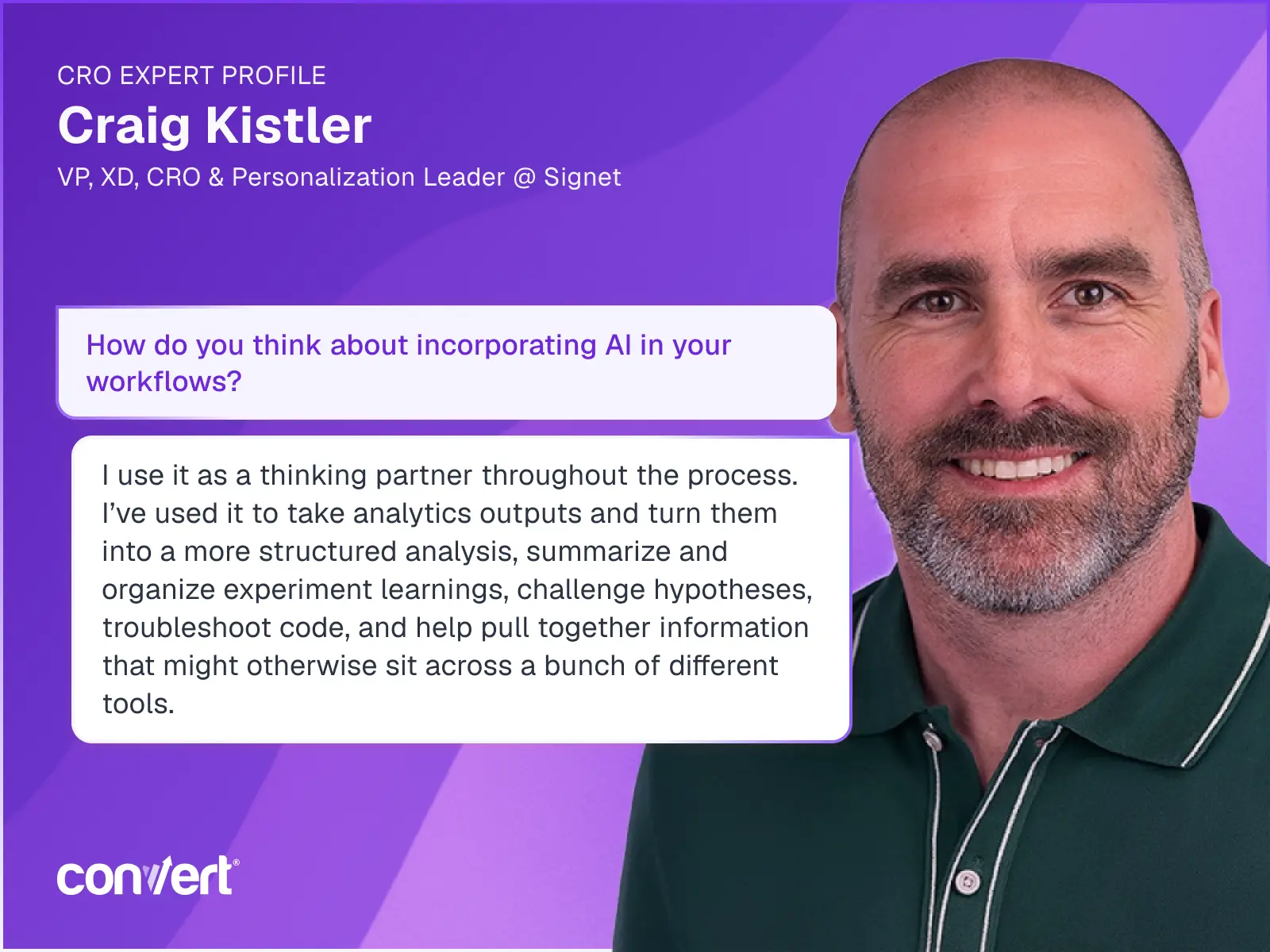
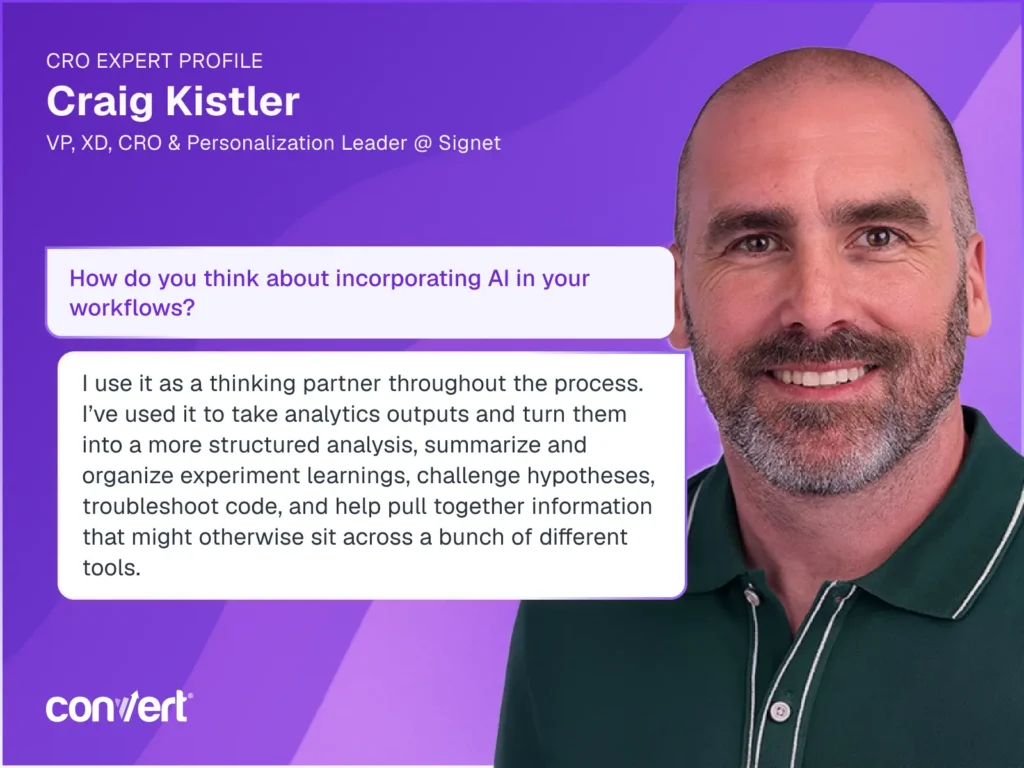
At Signet, AI is utilized as a "thinking partner" rather than a replacement for strategic oversight. It is deployed to:

- Structure Analysis: Transforming raw analytics outputs into coherent reports.
- Synthesize Learnings: Summarizing results across multiple tests to find overarching patterns.
- Challenge Hypotheses: Playing "devil’s advocate" to stress-test the logic behind a proposed change.
- Rapid Prototyping: Building functional versions of ideas to gather preliminary user feedback before committing full development resources.
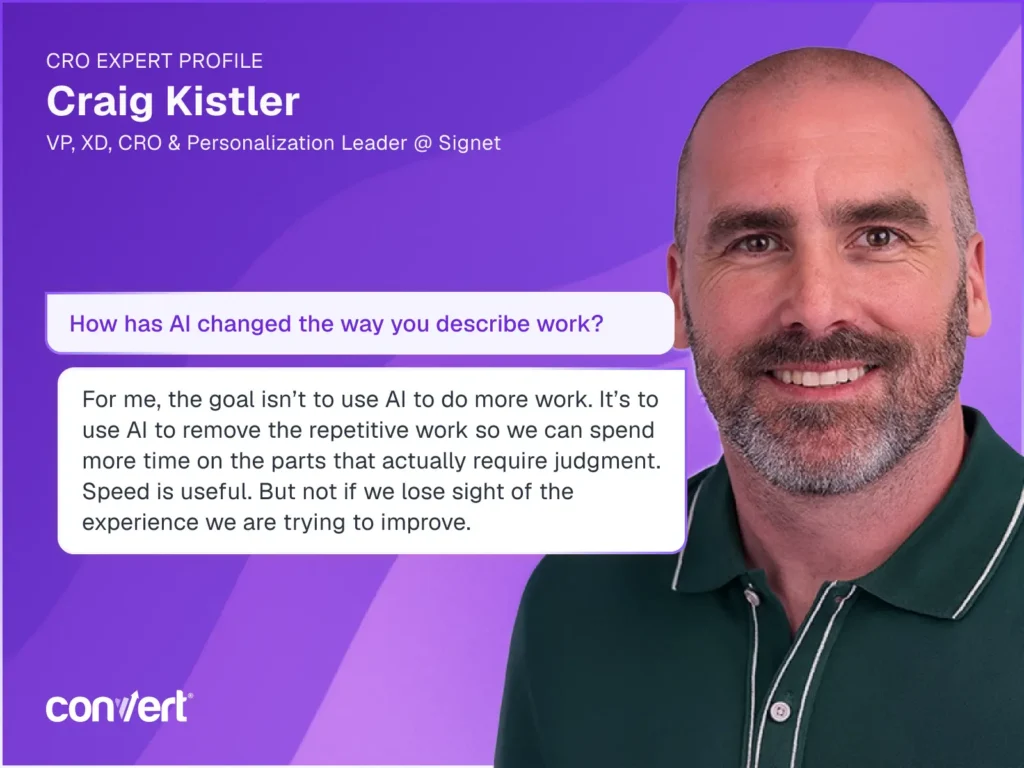
Kistler’s framework for this process is categorized into four stages: Problem, Bet, Evidence, and Extension. He warns that if the underlying problem identification is weak, AI merely allows a team to "produce more bad ideas faster." The true value of AI lies in its ability to strip away the "busy work," allowing experimentation leads to focus on the high-level decisions of what to measure and how to interpret the results within the context of the broader brand strategy.
The Future of Personalization: Moving Beyond Segments
Personalization has been a cornerstone of Signet’s digital strategy for nearly a decade. While AI has fueled a resurgence of interest in the topic, Kistler views it as an evolution of existing strategies rather than a new phenomenon. The industry is moving away from basic one-to-one personalization—which often proves difficult to scale effectively—toward dynamic, intent-based experiences.
Historically, e-commerce sites have been "one-size-fits-all," where a Product Detail Page (PDP) carries every possible message to satisfy every possible visitor. Kistler envisions a future where the page itself becomes adaptive. Instead of a static layout, the page assembly, content hierarchy, and guidance elements will change in real-time based on the signals a visitor provides during their session.
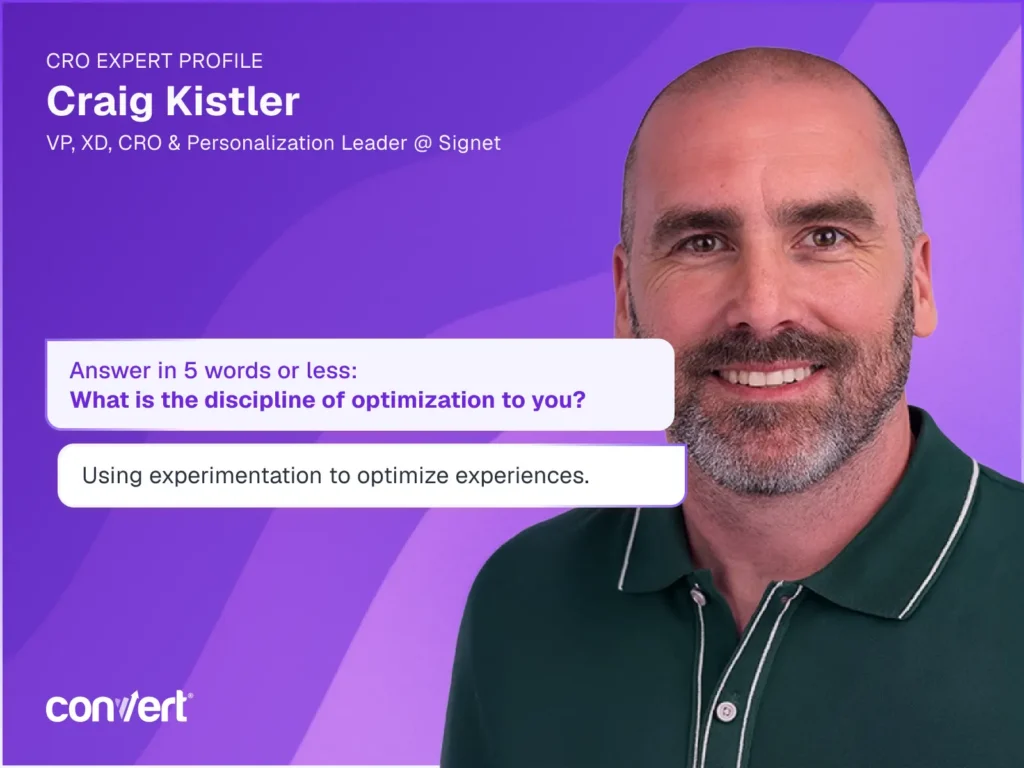
"The page should change because the shopper’s needs change," Kistler asserts. By using AI to interpret real-time signals, retailers can move beyond broad demographic segments (such as "returning visitor") to more granular, situational segments (such as "visitor comparing diamond clarity for an engagement ring vs. a gift for an anniversary"). This approach reduces cognitive load for the shopper and ensures that the most relevant information is prioritized.
Case Studies in Counter-Intuitive Experimentation
One of the most compelling aspects of Kistler’s playbook is his willingness to challenge "best practices" that have become dogma in the e-commerce industry. Two specific experiments at Signet highlight the power of evidence over conventional wisdom.
1. Guidance vs. Frictionless Design
A common tenet of digital design is that "friction" is the enemy. Designers are taught to reduce clicks and steps to get the user to the checkout as quickly as possible. However, Kistler observed that when shoppers were presented with a category page containing thousands of products without direction, they often scrolled aimlessly and abandoned the site.
In response, Signet intentionally added a step—an interstitial question asking what the visitor was looking for. By narrowing the selection based on user input, they increased the click count but provided much-needed direction. The result was a higher conversion rate, proving that "guidance is not the same thing as friction." In complex categories like jewelry, an extra step that provides clarity is often perceived as a service rather than a hurdle.
2. The Value Exchange of Data Collection
Most e-commerce platforms immediately prompt new visitors with an email signup pop-up in exchange for a discount. Kistler viewed this as a strained "value exchange" where the brand asks for personal data before the user even knows if they like the products.
Signet tested an alternative approach: instead of asking for an email, they offered immediate help. By asking users about their shopping intent early in the journey, Signet was able to tailor the site experience to be more relevant. This "help-first" strategy not only improved performance but also provided a more sustainable way to gather first-party data.
Organizational Implications: The Persistence of Belief
Experimentation is often viewed as a tool for finding "winners," but Kistler emphasizes its role in "de-risking" the organization. In large enterprises, stakeholders often hold strong convictions about specific features or competitor-driven ideas.
Kistler recounts instances where a strongly held internal belief was tested and failed. However, a single failed experiment was rarely enough to change minds. It often took multiple iterations—changing the execution, the placement, and the timing—to provide enough evidence to finally "let the idea go." This process of "patience in failure" is crucial for organizational learning. It ensures that the team is not just moving fast, but moving in a direction supported by customer behavior.
The Broader Impact on the Retail Industry
The insights shared by Kistler reflect a broader trend in the retail sector, where the "growth at all costs" mentality is being replaced by a focus on "profitable, customer-centric growth." As major retailers like Signet Jewelers refine their experimentation practices, several implications emerge for the wider industry:

- The Shift from Quantity to Quality: As AI makes it easier to launch tests, the primary differentiator for brands will be the quality of their hypotheses. Companies that treat experimentation as a "volume game" risk diluting their brand experience with a "Frankenstein" of winning but disconnected features.
- The Rise of Zero-Party Data: With the decline of third-party cookies, the "ask and offer help" model described by Kistler is becoming the gold standard for data collection. Voluntarily provided "zero-party data" (preferences, intent, and context) is far more valuable for personalization than inferred data.
- The Democratization of Testing: While Kistler leads a sophisticated practice at a multi-billion dollar firm, the tools he uses—AI for analysis and rapid prototyping—are increasingly available to smaller retailers. This levels the playing field in terms of execution, making "judgment" the ultimate competitive advantage.
In conclusion, the work being done at Signet Jewelers under Craig Kistler’s leadership serves as a blueprint for the modern digital enterprise. By prioritizing human judgment, embracing counter-intuitive findings, and viewing AI as a strategic partner rather than an autonomous operator, Signet is navigating the complexities of modern retail with a focus on genuine customer guidance. As Kistler aptly summarizes, "Speed is useful. But not if we lose sight of the experience we are trying to improve."