
Yoast SEO Premium version 27.6.1 has been swiftly released to the public, containing a vital security fix for a vulnerability discovered within the Redirect Manager feature of Yoast SEO Premium. While the company assures that the vast majority of its extensive user base remains unaffected, the update is critical for a specific subset of users who could potentially face severe risks, ranging from website crashes to remote code execution (RCE). The announcement urges all customers utilizing Yoast SEO Premium, Yoast WooCommerce SEO, or Yoast SEO AI+ to review their configurations and update their plugins without delay. This proactive measure by Yoast underscores the constant vigilance required in the dynamic landscape of web security, particularly for widely adopted platforms like WordPress.
Understanding the Critical Vulnerability
The core of the vulnerability lies in the Redirect Manager, a feature integral to maintaining search engine optimization (SEO) by effectively handling URL changes and preventing broken links. Specifically, an authenticated user—meaning someone with legitimate access to the WordPress administration area, even with limited privileges—could exploit a flaw to inject unexpected and potentially malicious configuration directives directly into a site’s .htaccess file. The .htaccess file is a powerful, server-level configuration file primarily used by Apache web servers to control various aspects of a website’s behavior, including redirects, access control, and custom error pages. Its direct manipulation by an attacker presents a significant threat vector.
The potential impact of such an injection is multifaceted and severe. At the less critical end, an attacker could introduce malformed rules that might cause a site crash, rendering the website inaccessible to visitors. More alarmingly, in the most serious scenarios, this vulnerability could facilitate remote code execution (RCE). RCE is one of the most dangerous types of vulnerabilities, as it allows an attacker to run arbitrary code on the server, potentially leading to full compromise of the website, theft of sensitive data, defacement, or even using the compromised server as a platform for further attacks. Yoast has confirmed that while a sample of sites with the affected configuration was reviewed, no evidence of exploitation or known cases of abuse have been found prior to the patch’s release, offering a degree of reassurance to users.
Who is Potentially Affected? Pinpointing the Risk
Despite the severity of a potential RCE vulnerability, Yoast emphasizes that the exposure is limited to a small segment of its user base. A site is only potentially at risk if all three of the following conditions are met:
- Yoast SEO Premium, Yoast WooCommerce SEO, or Yoast SEO AI+ is installed and active: This clarifies that the vulnerability is specific to the premium versions of their SEO suite, which include the advanced Redirect Manager.
- The site is hosted on an Apache web server: The
.htaccessfile is a configuration file specific to Apache web servers. Sites hosted on Nginx or other web server software are not directly susceptible to this particular.htaccessinjection vulnerability. WordPress hosts often use Apache, but many modern, high-performance hosting environments utilize Nginx, or a combination with Nginx acting as a reverse proxy. - The Redirect Manager is configured to use
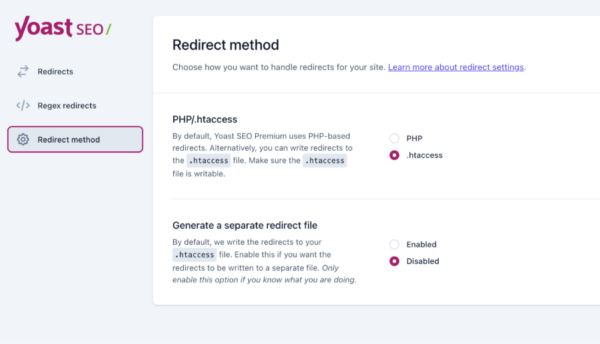
.htaccessmode: The Yoast SEO Premium Redirect Manager offers different methods for handling redirects. The.htaccessmode is one such method, directly writing redirect rules to the server’s.htaccessfile. Other methods, which might rely on PHP-based redirects or server-level configurations managed through other means, are not affected by this specific flaw.
This precise delineation of affected users is crucial for understanding the scope of the problem. Given that Yoast SEO boasts millions of active installations across its free and premium versions, narrowing down the potential impact to sites meeting these three specific criteria significantly reduces the overall number of at-risk websites. However, for those who do meet these conditions, the risk is substantial, necessitating immediate action.
The Role of .htaccess in Web Security and Performance
To fully appreciate the gravity of this vulnerability, it’s essential to understand the fundamental role of the .htaccess file. Short for "hypertext access," .htaccess files are directory-level configuration files supported by Apache web servers. They allow for decentralized management of web server configuration, meaning individual directories can have their own rules that override or supplement the main server configuration.
Common uses of .htaccess include:

- URL Rewriting: Creating "pretty URLs" (e.g.,
yoursite.com/about-usinstead ofyoursite.com/?page_id=123). This is fundamental for SEO and user experience. - Redirects: Implementing 301 (permanent) or 302 (temporary) redirects for changed URLs, crucial for SEO to pass link equity.
- Access Control: Restricting access to certain files or directories based on IP address or authentication.
- Custom Error Pages: Defining custom pages for 404 Not Found, 500 Internal Server Error, etc.
- Security Headers: Adding headers like X-Content-Type-Options or Content-Security-Policy to enhance security.
- Compression and Caching: Optimizing website performance.
Because .htaccess files execute server-side instructions, injecting malicious code into them can have far-reaching consequences, bypassing application-level security measures and directly influencing how the web server processes requests. This makes the .htaccess injection vulnerability particularly potent, as it targets a foundational component of the web server’s operation.
Yoast’s Swift Response and Multi-Layered Protection
Upon discovery of the vulnerability, Yoast’s security team acted decisively to develop and deploy a comprehensive fix. The patch included in version 27.6.1 incorporates three distinct layers of protection, designed to robustly mitigate the risk:
- Improved Input Sanitization: This is a fundamental security practice where all user-supplied data is rigorously cleaned and validated before being processed or stored. In this context, it means that any special characters or unexpected inputs within redirect URLs that could be used for injection are now filtered out or properly escaped, preventing them from being written directly into the
.htaccessfile. - Enhanced Output Escaping: Even if malicious data somehow bypasses input sanitization, output escaping ensures that when data is rendered or written to a file, any potentially dangerous characters are converted into their harmless literal representations. This prevents the server from interpreting them as executable commands.
- Strict Validation of .htaccess Directives: The update introduces more stringent validation rules specifically for the content intended for the
.htaccessfile. This layer checks if the generated redirect rules conform to expected, safe formats, rejecting any constructs that deviate from legitimate.htaccesssyntax or could be interpreted as malicious commands.
These three layers work in concert to create a robust defense, significantly reducing the attack surface and making it exceedingly difficult for an authenticated user to exploit the vulnerability. Yoast’s commitment to security is evident in this multi-pronged approach, aiming not just to fix the immediate flaw but to enhance the overall resilience of the Redirect Manager.
A Chronology of Proactive Security Measures
While the original article does not provide specific dates for the vulnerability’s discovery, the rapid release of version 27.6.1 indicates a swift response cycle typical of responsible software vendors. The implied timeline is as follows:
- Recent Discovery: The vulnerability was identified, either internally through security audits, bug bounty programs, or reported by a security researcher.
- Vulnerability Assessment: Yoast’s security team immediately assessed the severity and potential impact of the
.htaccessinjection flaw, confirming the risk of RCE for specific configurations. - Patch Development: Engineering teams were mobilized to develop the multi-layered security fix. This often involves careful coding, testing, and quality assurance to ensure the patch resolves the issue without introducing new problems or breaking existing functionality.
- Internal Review and Verification: The patch underwent internal security reviews and testing to confirm its effectiveness and stability.
- Release of Yoast SEO Premium 27.6.1: The updated version was pushed out to users, accompanied by a public announcement detailing the vulnerability and the required actions.
- Upcoming Full Security Advisory: Yoast has committed to publishing a more detailed security advisory, which typically includes specifics about the CVE (Common Vulnerabilities and Exposures) identifier, a more technical breakdown of the vulnerability, and further context for security professionals.
This rapid response mechanism is crucial in the cybersecurity landscape, where unpatched vulnerabilities can quickly become targets for exploitation by malicious actors.
WordPress Security Landscape: The Importance of Updates
The Yoast SEO Premium vulnerability serves as a stark reminder of the ongoing security challenges within the WordPress ecosystem. As the world’s most popular Content Management System (CMS), powering over 43% of all websites, WordPress is a frequent target for attackers. While the core WordPress software is generally secure, the vast ecosystem of plugins and themes (tens of thousands available) introduces numerous potential entry points for vulnerabilities.
Common types of WordPress vulnerabilities include:
- Cross-Site Scripting (XSS): Injecting client-side scripts into web pages viewed by other users.
- SQL Injection (SQLi): Manipulating database queries to gain unauthorized access or data.
- Arbitrary File Upload: Uploading malicious files to the server.
- Authentication Bypass: Circumventing login procedures.
- Privilege Escalation: Gaining higher access rights than intended.
Plugin vulnerabilities, like the one found in Yoast SEO Premium, are a significant concern because they often have access to critical parts of the WordPress installation and can be widely deployed. The security community consistently stresses that keeping all WordPress core, themes, and plugins updated is the single most effective measure website owners can take to protect their sites. Updates frequently contain security fixes, performance enhancements, and new features. Delaying updates leaves known vulnerabilities unpatched, essentially inviting attackers to exploit them.
Expert Commentary and Broader Implications
Cybersecurity experts generally categorize Remote Code Execution (RCE) vulnerabilities as highly critical, often receiving the highest CVSS (Common Vulnerability Scoring System) scores. An RCE flaw in a widely used plugin like Yoast SEO Premium, even if limited to specific configurations, underscores the potential for widespread damage. "Any vulnerability that allows for remote code execution is a five-alarm fire for website administrators," states a hypothetical cybersecurity analyst. "While Yoast has contained the impact by quickly patching and identifying affected configurations, this incident highlights the need for continuous vigilance. Even an ‘authenticated’ user with low privileges can become an attack vector if a flaw exists."
The implications for affected sites, if exploited, could include:
- Data Breach: Exposure of user data, customer information, or sensitive business records.
- Website Defacement: The attacker altering the website’s content to display their messages.
- SEO Damage: Malicious redirects, spam injections, or site crashes can severely impact search engine rankings and traffic.
- Reputational Harm: Damage to brand trust and customer confidence.
- Server Compromise: The attacker could gain control over the entire server, impacting other websites hosted on it.
Yoast’s transparency in immediately communicating the issue and providing a clear path to resolution is commendable. This approach builds trust within the user community and encourages prompt action, which is vital in mitigating the potential fallout from such vulnerabilities.
Call to Action: What Website Administrators Must Do
For all users of Yoast SEO Premium, Yoast WooCommerce SEO, or Yoast SEO AI+, the primary directive is clear and immediate: update to version 27.6.1 as soon as possible. The process is straightforward and can typically be completed by a WordPress administrator in under two minutes via the WordPress plugins screen.
Even if a site does not meet the three specific conditions that put it at risk, updating to 27.6.1 is strongly recommended. Maintaining all plugins at their latest versions is a fundamental best practice for overall website security and performance.
To ascertain whether a site is specifically at risk, administrators can directly check their redirect settings. By navigating to [www.yoursite.com]/wp-admin/admin.php?page=wpseo_redirects#/redirect-method within their WordPress dashboard, they can verify the redirect method in use. If the .htaccess mode is not enabled, the site is not at risk from this specific vulnerability. The accompanying visual provided by Yoast helps users quickly identify the relevant setting in the user interface.
For any questions or concerns, Yoast’s support team is available to assist users, providing an additional layer of reassurance and guidance. The forthcoming full security advisory will offer further technical details for those requiring in-depth information.
Conclusion: Sustaining Trust Through Proactive Security
The release of Yoast SEO Premium 27.6.1 is a timely and critical security update addressing a significant vulnerability. While the potential impact, including remote code execution, is severe, Yoast’s swift identification, development of a multi-layered fix, and transparent communication have minimized the risk. This incident underscores the dynamic nature of web security and the non-negotiable importance of regular software updates. For millions of WordPress users who rely on Yoast for their SEO needs, this event reinforces the need for vigilance while also showcasing Yoast’s ongoing commitment to the security and integrity of its products and, by extension, the websites that utilize them. Trust in digital tools is built not just on functionality, but on the unwavering dedication to user safety and privacy.