The digital marketing and search engine optimization (SEO) communities observed a dynamic period in early September 2026, marked by significant developments from Google across its advertising platforms, core search algorithms, and business services. On September 4, 2026, a series of reports highlighted Google’s continued push towards AI integration in advertising, an expansion of its Waze ad offerings, critical issues within its Job Search feature, and enhancements to Google Business Profiles. These updates unfolded against a backdrop of persistent search algorithm volatility and crucial regulatory news regarding Google’s ad technology dominance, collectively signaling a complex and rapidly evolving digital landscape for businesses and users alike. The Search Engine Roundtable, a prominent industry news source, captured these multifaceted developments, providing timely insights into Google’s strategic shifts and operational challenges.
The Evolving Landscape of Google Ads: AI, Expansion, and Technicalities
Google’s advertising ecosystem continues its profound transformation, driven largely by advancements in artificial intelligence and strategic global expansion. September 4, 2026, brought to light several key developments that underscore this ongoing evolution, impacting advertisers, publishers, and the broader digital economy.
AI-Driven Restrictive Match Types: A New Frontier
A significant test reported on September 4 at 2:50 pm GMT+0, revealed Google Ads serving search ads with "restrictive match types" in AI Mode. This development marks another step in Google’s journey to automate and optimize ad campaigns through machine learning. Historically, Google Ads has offered advertisers granular control over keyword targeting through match types: exact match (showing ads for precisely specified keywords or close variants), phrase match (including the keyword phrase and close variations), and broad match (the widest reach, allowing for highly related searches). Restrictive match types like exact and phrase were designed to give advertisers precision, ensuring their ads appeared only for highly relevant queries, thereby maximizing return on ad spend (ROAS) and minimizing wasted impressions.
The integration of AI Mode, particularly within frameworks like Performance Max and Smart Bidding, has gradually shifted control from manual keyword management to algorithmic optimization. This new test, where AI ostensibly influences even restrictive match types, suggests that Google’s systems are increasingly empowered to interpret user intent and match it with advertiser offerings, potentially even when a direct keyword match isn’t present. For advertisers, this represents a double-edged sword. On one hand, it could lead to increased reach and discovery for relevant queries that might have been missed with purely manual, restrictive targeting. Google’s rationale likely centers on efficiency, leveraging vast datasets and predictive analytics to identify conversion opportunities beyond explicit keyword declarations. On the other hand, it raises concerns about transparency and control. Advertisers accustomed to precise targeting may find their campaigns reaching a broader, potentially less qualified, audience, leading to higher costs per click (CPC) or lower conversion rates if the AI’s interpretations are not perfectly aligned with their business objectives. The SEO and SEM communities are closely watching to see if this represents a further erosion of advertiser control or a genuine enhancement in AI-driven efficiency. This shift aligns with broader industry trends towards automated bidding and smart campaign management, where platforms like Google are increasingly dictating the ‘how’ of advertising, requiring advertisers to trust the algorithms more than ever before.
Global Expansion for Waze Ads
In a move set to open new revenue streams and expand advertising opportunities, Google announced on September 4 at 7:41 am GMT+0, the expansion of Waze Ads beyond the United States. Waze, the community-driven navigation app acquired by Google in 2013, has steadily grown its user base globally, offering unique location-based advertising formats. These typically include branded pins on the map, sponsored search results within the app, and "takeover" ads that appear when a driver is stopped. Until this expansion, these ad functionalities were primarily concentrated in the U.S. market.
The international rollout signifies Google’s strategy to leverage Waze’s extensive global user data and real-time traffic information for localized advertising. This expansion is particularly impactful for small and medium-sized businesses (SMBs) in industries like retail, hospitality, and services, allowing them to target potential customers based on their proximity and travel patterns. For instance, a coffee shop in Paris or a petrol station in Sydney could now utilize Waze ads to reach drivers nearby, offering promotions or simply increasing visibility. This development is expected to significantly bolster Google’s share in the burgeoning mobile and location-based advertising markets, potentially challenging local ad platforms and traditional billboard advertising. The initial phase of expansion is anticipated to target key metropolitan areas in Europe, Latin America, and Asia-Pacific, where Waze has a strong user presence, providing businesses in these regions with innovative tools to connect with consumers on the go.

AdSense Impression Changes and Persistent Bugs
Further underscoring the dynamic nature of Google’s ad ecosystem, the Search News Buzz Video Recap published on September 4 at 8:01 am GMT+0, highlighted "AdSense Impression Changes & Bugs." AdSense, Google’s program that allows publishers to monetize their websites with ads, is a critical revenue source for millions of content creators worldwide. Changes to how impressions are counted or displayed, even seemingly minor ones, can have significant financial implications for publishers.
While specific details of the "changes" and "bugs" were not fully elaborated in the snippet, such occurrences typically involve adjustments to ad rendering, viewability metrics, or reporting discrepancies. For instance, a change in how Google defines a "viewable impression" could lead to fluctuations in reported earnings, requiring publishers to adapt their website layouts or ad placements. Bugs, on the other hand, can range from minor display glitches to serious issues affecting ad serving or revenue attribution, causing frustration and financial uncertainty for publishers. These recurring technical challenges highlight the immense complexity of managing a global ad network that serves billions of impressions daily across diverse platforms and devices. Google regularly updates its AdSense policies and technologies to combat ad fraud, improve user experience, and enhance advertiser performance, but these updates sometimes introduce unintended side effects or require a period of adjustment for the publishing community. The mention of "persistent bugs" suggests that some issues may not be quickly resolved, demanding ongoing vigilance from publishers to monitor their AdSense performance and adapt accordingly.
Navigating Google Search Algorithm and Functionality
Google Search, the bedrock of the internet, is in a constant state of flux. Early September 2026 presented a mix of ongoing algorithmic adjustments and specific functionality issues, demanding adaptability from SEO professionals and impacting user experience.
Persistent Algorithmic Volatility
Data from the Google Search Volatility chart, covering August 7 to September 6, 2026, indicated significant fluctuations in search rankings. The volatility scores, ranging from lows in the mid-20s to peaks near 38.0, illustrate a period of consistent algorithmic activity rather than a single, isolated major update. Notably, peaks were observed around August 12 (37.5), August 23 (36.0), August 28 (37.2), and September 4 (38.0). This sustained level of turbulence suggests that Google is either rolling out a series of smaller, continuous adjustments to its core ranking algorithms or that the search ecosystem itself is reacting dynamically to recent changes, creating a ripple effect across search results.
Algorithmic volatility refers to the degree of fluctuation in search engine results pages (SERPs) over a given period. High volatility often signals that Google’s algorithms are making significant changes to how content is evaluated and ranked. While Google frequently deploys minor updates daily, periods of elevated volatility often precede or accompany more substantial "core updates" designed to improve overall search quality and relevance. For SEOs and website owners, such volatility translates into uncertainty regarding organic traffic and keyword rankings. It necessitates a continuous monitoring of performance metrics, a deep dive into analytics to understand shifts, and a flexible content strategy focused on core SEO best practices—creating high-quality, relevant, and authoritative content—rather than chasing ephemeral algorithmic signals. The consistent nature of the observed volatility suggests that Google’s AI-driven ranking systems are perpetually learning and adapting, making the search landscape more fluid than ever before. This ongoing evolution demands that businesses not only stay informed but also build resilient digital strategies that can weather frequent algorithmic shifts.
Job Search Functionality Under Scrutiny
On September 4 at 11:12 am GMT+0, a critical issue emerged concerning Google Job Search, with reports indicating it was "Not Showing New Jobs." Google Job Search, an aggregator that pulls job listings from various career sites and company pages, has become a vital resource for millions of job seekers and a significant channel for employers to attract talent. The reported bug, preventing new job postings from appearing, has immediate and severe implications.
For job seekers, a non-functional or incomplete job search tool means missed opportunities, delayed applications, and prolonged unemployment. In a competitive job market, timely access to new listings is paramount. For employers and recruiters, the bug translates into reduced visibility for their open positions, potentially hindering their ability to fill critical roles and impacting recruitment timelines and costs. The absence of new listings could also skew labor market data, creating an inaccurate picture of hiring trends. While Google typically addresses such functionality issues with urgency, the incident underscores the reliance of both individuals and businesses on the integrity and real-time accuracy of Google’s services. An inferred response from Google would likely involve acknowledging the issue, deploying engineering teams to investigate and resolve it, and providing updates through official channels. The incident serves as a reminder of the complex technical infrastructure required to maintain a global-scale service like Job Search and the cascading effects when even a small component malfunctions.
Enhancements and Challenges in Google’s Broader Ecosystem
Beyond core search and advertising, Google continues to refine its broader suite of tools, impacting local businesses and the ethical considerations surrounding artificial intelligence.
Streamlined Business Verification for Google Business Profiles
Google Business Profiles (GBP), formerly Google My Business, is an indispensable tool for local businesses seeking visibility in Google Search and Maps. On September 4 at 7:51 am GMT+0, Google introduced a new feature: the ability for businesses to "Submit A Business Photo For Verification." This enhancement aims to streamline and expedite the verification process, which is crucial for establishing legitimacy and unlocking full GBP features.
Traditionally, GBP verification methods included postcard by mail, phone, or video call. While effective, these methods could sometimes be time-consuming or inconvenient. The new photo verification option likely involves businesses uploading specific photos that clearly identify their location—such as exterior signage, storefronts, or interior elements that confirm the business’s existence at the registered address. This method could significantly reduce the waiting period for verification, allowing new businesses to get online faster and existing ones to update their information more efficiently.
The implications are far-reaching. For legitimate businesses, it means quicker access to managing their online presence, responding to reviews, and posting updates. For Google, it represents an effort to enhance data accuracy, combat spam listings, and improve the overall quality of local search results. Spammers often exploit lax verification processes to create fake business profiles, which can mislead consumers and dilute the integrity of Google Maps. By adding photo verification, Google strengthens its defenses against such fraudulent activities, contributing to a more trustworthy local search experience. This move aligns with Google’s ongoing commitment to provide accurate, reliable information for users searching for local services and products.
Gemini’s Citation Challenges Spark Ethical Debate
The Search News Buzz Video Recap also brought to attention a critical issue with Google’s advanced AI model, Gemini: "Gemini Not Citing." As large language models (LLMs) like Gemini become increasingly sophisticated and integrated into various Google products, the question of source attribution and factual accuracy has become paramount. When an AI generates content, especially in response to factual queries, it draws upon vast datasets of information. The ability to cite its sources is crucial for transparency, allowing users to verify information, understand its context, and avoid potential plagiarism.
The report that Gemini was "Not Citing" suggests a significant oversight or technical challenge in its output generation. In an era where misinformation is rampant and the ethical use of AI is under intense scrutiny, the failure of a leading AI model to properly attribute information raises serious concerns. It could lead to users inadvertently spreading unverified or inaccurate information, diminish trust in AI-generated content, and potentially expose Google and its users to intellectual property disputes. For instance, if Gemini produces content mirroring a specific published work without citation, it could be seen as plagiarism. This issue underscores the ongoing challenges in developing responsible AI, particularly regarding source traceability, factual grounding, and ethical content generation. Google has been a vocal proponent of responsible AI, and this reported issue with Gemini’s citations highlights the complexities of implementing these principles in practice, requiring continuous refinement of AI models and their output mechanisms.
Regulatory Landscape: Google Avoids Ad Tech Breakup Amidst Antitrust Pressures
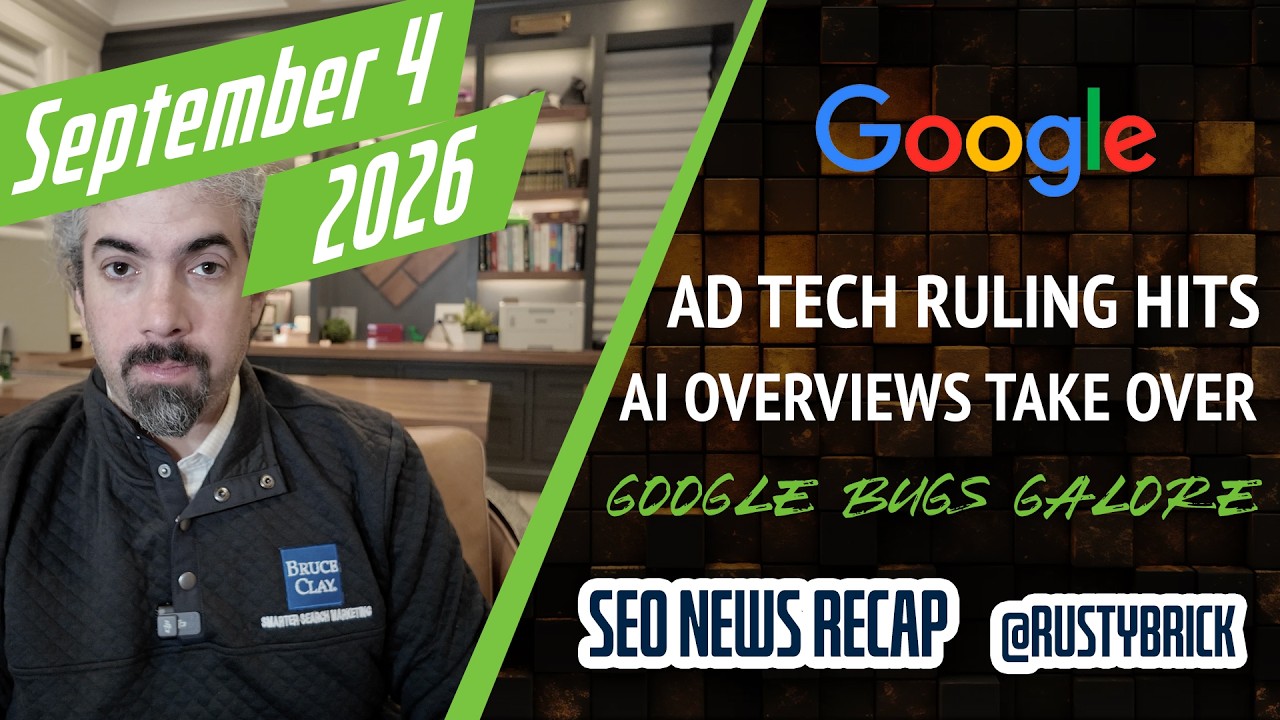
Perhaps one of the most significant pieces of news discussed in the Search News Buzz Video Recap was the pronouncement that "Google Ad Tech Monopoly Won’t Be Broken Up." This statement refers to the ongoing global antitrust investigations and lawsuits targeting Google’s dominant position in the digital advertising technology market. For years, regulatory bodies in the United States, European Union, and other jurisdictions have scrutinized Google’s control over various aspects of the ad tech stack, from publisher ad servers to advertiser ad-buying tools and the ad exchange itself. Critics argue that this comprehensive control allows Google to stifle competition, unfairly favor its own services, and extract higher fees from both publishers and advertisers.
The news that Google’s ad tech operations "won’t be broken up" suggests a significant victory for the tech giant in at least one major legal or regulatory battle. A breakup would have forced Google to divest parts of its ad tech business, fundamentally altering its structure and potentially creating a more competitive market. Such a structural remedy is often considered the most aggressive form of antitrust enforcement. The reported outcome implies that regulators may have either settled for behavioral remedies (agreements to change specific business practices) or failed to convince courts that a breakup was necessary or feasible.
The implications of this decision are substantial. For Google, it means maintaining its integrated ad tech ecosystem, allowing it to continue leveraging its market power across different segments. This could ensure continued revenue growth from its advertising business, which remains a cornerstone of its financial success. For publishers, advertisers, and smaller ad tech competitors, the news is likely met with disappointment, as it signals a continuation of the status quo where Google remains a formidable, vertically integrated player. Concerns about fairness, transparency, and competitive access to ad inventory and data are likely to persist. While this specific decision may alleviate immediate pressure on Google, the broader regulatory scrutiny over its market power, particularly in areas like search, Android, and other digital services, is expected to continue globally, indicating that the battle for a more competitive digital landscape is far from over.
Conclusion: The Road Ahead for Search and Digital Advertising
The snapshot from early September 2026 paints a picture of a digital ecosystem in constant evolution, driven by technological innovation, market forces, and regulatory pressures. Google’s ongoing integration of AI into its advertising products, while promising increased efficiency, concurrently raises questions about advertiser control and transparency. The global expansion of Waze Ads underscores Google’s relentless pursuit of new growth avenues in location-based mobile advertising. Meanwhile, persistent algorithmic volatility in core search and critical functionality bugs in services like Job Search highlight the immense complexity and continuous maintenance required to operate at Google’s scale, impacting user experience and demanding agility from SEO professionals.
The introduction of streamlined photo verification for Google Business Profiles reflects a commitment to enhancing data quality and combating spam in local search, benefiting legitimate businesses. However, the reported challenges with Gemini’s citation practices bring into sharp focus the ethical considerations and developmental hurdles associated with advanced AI, particularly concerning accuracy and intellectual property. Finally, the significant news that Google’s ad tech monopoly will not be broken up, while a win for Google, ensures that the debate over market competition and regulatory oversight will remain a central theme in the digital industry.
For businesses, marketers, and publishers, the events of early September 2026 reiterate the imperative to remain adaptable, continuously monitor changes, and diversify strategies. The increasing reliance on AI across Google’s platforms necessitates a deeper understanding of these complex systems and a willingness to embrace new methodologies while critically assessing their impact. As Google navigates its own path through innovation, user demands, and regulatory scrutiny, the digital landscape will undoubtedly continue to evolve, presenting both opportunities and challenges for all stakeholders.