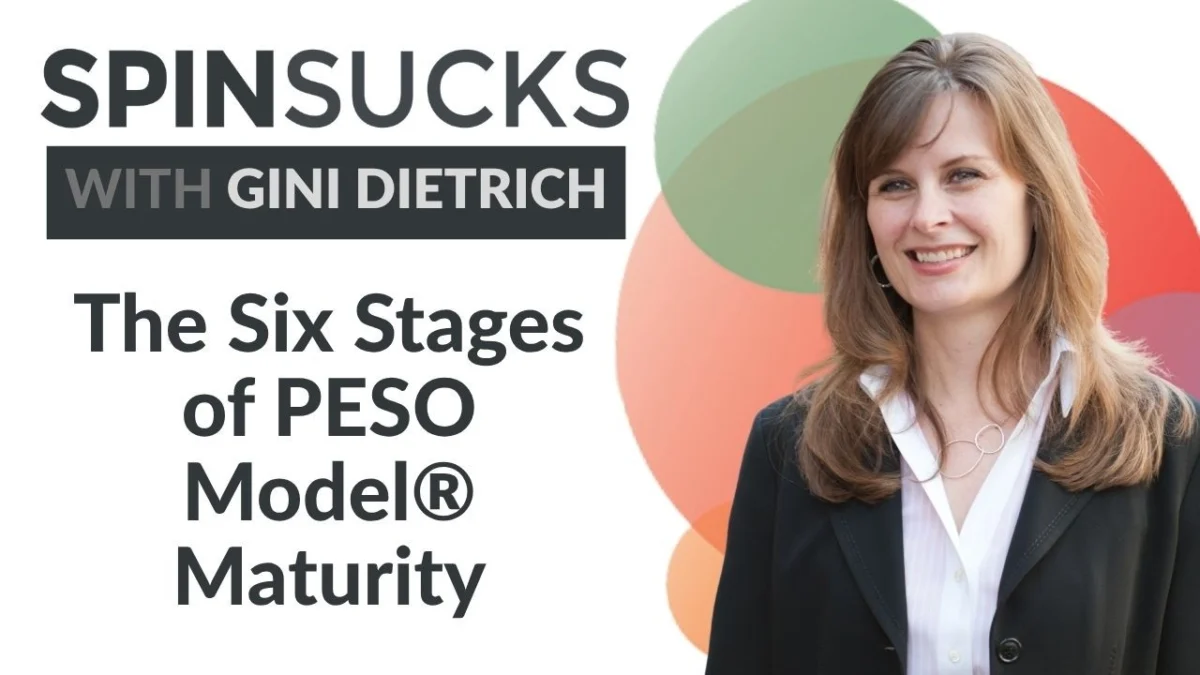
The marketing and communications industry is currently facing a profound "perception-versus-reality" crisis regarding the integration of media channels, according to new data released by Spin Sucks. A recent study conducted via the newly launched PESO Model Diagnostic tool indicates that while nearly half of professional marketing teams describe their operations as "integrated," a staggering 91% are actually functioning within the bottom half of the maturity ladder. This disconnect suggests that most organizations are operating with siloed tactics despite internal beliefs that they have achieved a synergistic "operating system" across Paid, Earned, Shared, and Owned media.
The data emerges from a comprehensive assessment of senior leaders, mid-market marketers, agency principals, and in-house teams across diverse sectors, including B2B financial services, nonprofits, and consumer brands. The findings highlight a critical gap: 68% of respondents claimed to run the PESO Model as a system, yet 100% of those respondents scored at the lowest two stages of the maturity scale. Furthermore, of the 31% who rated themselves as "fully integrated," only two individual respondents actually scored above the "Scale" level. Perhaps most tellingly, exactly zero teams in the initial data set reached the "Leadership" stage, the highest rung on the ladder.
The Evolution of the PESO Model Operating System
The PESO Model, originally codified by Gini Dietrich in 2014, was designed to provide a framework for communicators to integrate the four media types: Paid (advertising and boosted content), Earned (media relations and publicity), Shared (social media and community engagement), and Owned (original content and websites). Over the past decade, the framework has transitioned from a conceptual graphic into what Dietrich now describes as a "PESO Operating System."
This evolution reflects a shift in the digital landscape. In the early 2010s, channels were often managed by separate departments with distinct KPIs. However, the rise of "answer engines," AI-driven search, and fragmented consumer attention has necessitated a more cohesive approach. The recent diagnostic data serves as the third installment in a series titled "The PESO Operating System," which argues that the primary challenge for modern teams is no longer a lack of tools, but a lack of organizational discipline.
Analyzing the Six Stages of PESO Maturity
To understand why so many teams are stalled, it is necessary to examine the six distinct stages of the maturity ladder. These stages are not merely aspirational; they represent the functional reality of how a brand interacts with its audience and manages its resources.
Stage 0: Foundation
At the Foundation level, channels exist but operate in total isolation. This stage is characterized by "execution-led" teams where each function—PR, social, advertising—runs its own calendar and maintains its own set of KPIs.
A prominent example of Foundation-level maturity at scale is Oracle. Despite having significant market share in enterprise AI infrastructure and high-profile cloud deals, the company’s media types often function independently. Paid media operates on its own track, Earned media reacts to executive leadership statements, Owned media focuses on technical documentation, and Shared media is tethered to event cycles. While each channel is active and well-funded, they do not reinforce or amplify one another. For brands at this level, integration would mean developing a single, unified thesis that is reinforced across all four channels simultaneously.
Stage 1: Pilot
The Pilot stage represents the first step toward true integration. At this level, a team may successfully run one integrated campaign per year, demonstrating a proof of concept. However, the discipline has not yet become a permanent fixture of the organization’s daily operations.
McDonald’s serves as a primary example of Pilot-level maturity. The brand is renowned for "cultural moments" like the Travis Scott Meal or the Grimace Shake campaign. During these windows, Paid, Earned, Shared, and Owned media work in perfect harmony. However, once the special event concludes, the organization reverts to a channel-organized model where value menus, breakfast promotions, and regional marketing are handled by separate teams with separate agencies. Integration at this stage is an "event" rather than an "operating mode."
Stage 2: Scale
At the Scale level, integration becomes a recurring behavior. Teams at this stage run multiple integrated campaigns annually and have established shared KPIs between marketing and communications departments.
Dove is a quintessential example of a brand at the Scale level. For two decades, the "Real Beauty" platform has served as a unified thesis. Campaigns such as "Real Beauty Sketches" or "The Code" utilize all four PESO pillars effectively. However, the integration often remains campaign-specific. Between these major launches, standard CPG marketing—such as product pushes and retailer co-marketing—often falls back into siloed execution. The transition from Scale to the next level requires operationalizing integration so it occurs every week, not just during campaign cycles.
Stage 3: Systemize
At the Systemize level, integration shifts from a behavior to a dedicated function. This stage is marked by the presence of a dedicated PESO integrator—a specific role or person tasked with ensuring cross-channel alignment. Organizations at this level utilize shared dashboards that track performance across all four media types in a single view.
Sephora demonstrates Systemize-level maturity through its "Beauty Insider" loyalty program. This data layer connects digital interactions, in-store purchases, and creator partnerships. Owned media generates first-party data, which informs Paid targeting and Earned credibility. While the system is robust, it often operates on a quarterly cycle, making it less nimble when faced with rapid cultural shifts or viral trends that require immediate pivots.
Stage 4: Real-Time
The Real-Time stage is characterized by agility. Decisions regarding budget reallocation across Paid, Earned, Shared, and Owned media are made in days or even hours based on live performance data. The integrated insights derived from the PESO system begin to influence broader business decisions, including product development and hiring.
Netflix is currently the gold standard for Real-Time PESO operations. When a series like "Squid Game" becomes a viral hit, the entire brand pivots instantly. Paid budgets are reallocated, talent is booked for Earned media circuits, and the "Owned" algorithm reorganizes the homepage. This level of maturity allows a brand to capitalize on momentum with surgical precision.
Stage 5: Leadership
At the Leadership level, the PESO operating system becomes a brand’s "competitive moat." The way the company integrates its communications is publicly recognized as the reason for its market dominance.
Liquid Death is frequently cited as a brand that has reached this pinnacle. The company has turned a commodity (canned water) into a billion-dollar brand by treating the marketing operation as the product itself. Every channel feeds the others: Paid media exists to provoke Earned media, and Shared media runs on high-concept creator collaborations. The integrated operation is so distinctive that competitors cannot easily replicate it, making the PESO system a durable business advantage.
Supporting Data: The Perception Gap
The data from the PESO Model Diagnostic reveals a persistent psychological trend in the marketing industry: the "rounding up" of capabilities. When asked to self-rate their level of integration, most teams placed themselves one to two rungs higher than their actual workflows justified.
The diagnostic results showed:
- The Integration Paradox: 47% of respondents who described themselves as "integrated" were actually at the Pilot or Foundation levels.
- The Systemic Failure: 68% of those who claimed to have a PESO "system" lacked the cross-functional dashboards and shared KPIs necessary to qualify for the "Systemize" stage.
- The Rarity of High Maturity: Zero respondents scored in the "Leadership" category, highlighting that true integrated mastery is currently an outlier in the professional landscape.
Industry analysts suggest this gap exists because many leaders mistake "cooperation" for "integration." Having different teams attend the same meeting is cooperation; having those teams work from a single dashboard with shared financial accountability is integration.
Broader Implications and the Path Forward
The findings from Spin Sucks suggest that the marketing industry is at a crossroads. As AI continues to commoditize content creation, the value of "volume" is decreasing, while the value of "coordination" is increasing. A team at the "Foundation" level using AI will simply create more noise across four disconnected channels. Conversely, a team at the "Systemize" level can use AI to amplify a single, unified message with much higher efficiency.
For CMOs and agency principals, the data serves as a call to action to move beyond "vibecoding" their strategy—relying on a general feeling of effectiveness—and instead move toward rigorous diagnostic assessment. The path to climbing the maturity ladder involves small, structural changes:
- Appointing an Integrator: Designating a single point of contact responsible for cross-channel alignment.
- Shared KPIs: Eliminating channel-specific goals in favor of unified business outcomes.
- Real-Time Dashboards: Moving away from quarterly reviews toward live data environments.
As the industry moves toward 2026, the competitive advantage will likely belong not to the brands with the largest budgets, but to those with the most disciplined operating systems. The "crime," as the report concludes, is not being at the bottom of the ladder, but remaining there while operating under the illusion of being at the top. Knowing the true starting point is the only way to begin the ascent.