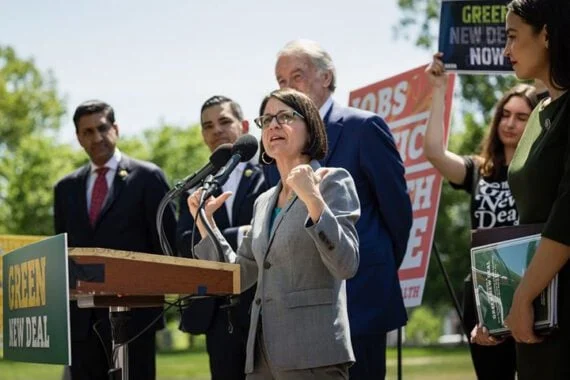
A pivotal piece of legislation, the Online Sellers’ Bill of Rights Act of 2026, was introduced in the U.S. House of Representatives last week, aiming to equip independent online sellers with much-needed protections against the arbitrary freezing of revenue and the stranding of inventory that can result from alleged policy violations on major e-commerce marketplaces. This proposed bill, spearheaded by Representative Becca Balint (D-Vt.) and a cohort of co-sponsors, seeks to establish a federal framework for fairer enforcement practices by platforms like Amazon and Walmart, which have become indispensable channels for millions of small and medium-sized businesses.
The current e-commerce landscape offers unprecedented opportunities for entrepreneurs. Platforms such as Amazon and Walmart, with their vast customer bases, allow even the smallest enterprises to reach a global audience, fostering a vibrant ecosystem of third-party sellers. However, this reliance on marketplaces can also create significant vulnerability. When a seller faces an alleged policy violation, the consequences can be severe, leading to immediate disruption of income streams and the inability to access or sell crucial stock. For many businesses, this disruption can be an existential threat, potentially leading to closure. The Online Sellers’ Bill of Rights Act of 2026 is designed to address this imbalance of power and introduce a degree of commercial due process into these critical online marketplaces.
Federal Bill: Addressing a Growing Concern
The proposed legislation, officially designated H.R. 9799, was formally introduced on July 21, 2026. Its core objective is to mandate that online marketplaces provide clear explanations for account suspensions and other enforcement actions, adhere to defined response timelines for seller inquiries, and offer a meaningful avenue for appeals. Crucially, the bill is not intended to hamstring marketplaces’ ability to combat illicit activities. It explicitly states that the legislation would not prevent platforms from removing counterfeit goods, suspending fraudulent sellers, or enforcing critical product safety policies. Instead, H.R. 9799 aims to establish federal standards governing inventory holds, payment freezes, policy modifications, investigation procedures, and the appeals process, ensuring these actions are conducted with greater transparency and fairness.
The bill is currently under consideration by the House Judiciary Committee. Proponents express optimism that the legislation will benefit legitimate sellers without compromising the integrity of marketplaces or allowing bad actors to evade accountability. The sentiment is that by introducing more structured and transparent enforcement mechanisms, the bill can foster a healthier and more sustainable e-commerce environment for all parties involved.
Key Provisions for Seller Protection
The Online Sellers’ Bill of Rights Act of 2026 outlines several specific protections for third-party sellers facing enforcement actions from online marketplaces. These provisions are designed to mitigate the immediate financial and operational damage that can occur when a seller’s account or inventory is affected.
Inventory Holds: Limiting Stranded Stock
One of the most disruptive consequences for sellers is the indefinite hold placed on their inventory. When a marketplace suspects an issue, such as alleged counterfeiting, it can impound a seller’s stock, sometimes for months. Under H.R. 9799, such inventory holds and restrictions would be limited to a maximum of 30 calendar days. After this period, the marketplace would be required to release the merchandise unless it can provide clear evidence that the goods are indeed counterfeit or otherwise unlawful. This provision aims to prevent sellers from having their capital tied up indefinitely in unsold or inaccessible goods, allowing them to recover and potentially liquidate stock that is not deemed illegal.
Payment Holds: Protecting Seller Funds
Similarly, the bill proposes a 30-day limit on payment holds. Currently, marketplaces can freeze seller funds for extended periods, often without sufficient justification. H.R. 9799 stipulates that to extend a payment hold beyond 30 days, a marketplace must present demonstrable evidence that the funds are derived from unlawful transactions. Mere suspicion would no longer be grounds for withholding a seller’s earnings, providing crucial liquidity and financial stability for businesses.
Gated Products: Ensuring Fair Transition
The legislation also addresses the challenges faced by sellers whose products become restricted by a marketplace after they have already been integrated into the platform’s fulfillment network. If a platform imposes a new restriction on a product or an entire category, sellers would be granted at least 30 days to either sell their remaining inventory or have the merchandise returned to them at no cost. This provision acknowledges the operational complexities and financial implications of such sudden policy changes and provides sellers with a reasonable window to adapt.
Notification of Policy Changes: Fostering Predictability
Predictability is a cornerstone of business planning. H.R. 9799 mandates that e-commerce marketplaces provide at least 30 days’ written notice before implementing any material changes to policies concerning product eligibility, listing restrictions, compliance requirements, commissions, or fees. This advance notice would empower sellers to make necessary adjustments, such as modifying product packaging, obtaining required documentation, revising pricing strategies, or strategically removing inventory before new enforcement measures take effect. This proactive approach can significantly reduce the likelihood of unexpected violations and the associated penalties.
Seller Appeals: Ensuring a Fair Hearing
A significant component of the bill is the requirement for marketplaces to provide individualized information when investigating a seller, deactivating an account, or suspending a listing. This includes identifying the specific policy allegedly violated, disclosing all relevant facts and documents, detailing the proposed penalty, and explaining the exact procedure for appealing the decision. Furthermore, marketplaces would need to provide an anticipated timeline for resolving the matter. Generic, templated responses would be deemed insufficient under these new regulations. This emphasis on transparency and specific communication aims to ensure sellers understand the basis of any enforcement action and have a clear path to contest it.
Commercial Due Process: Balancing Enforcement and Fairness
The Online Sellers’ Bill of Rights Act of 2026 appears to be carefully crafted to strike a balance between the legitimate need for marketplaces to enforce their policies and the fundamental right of sellers to fair treatment. The bill recognizes that platforms like Amazon and Walmart require the authority to prevent fraud, eliminate counterfeit products, and safeguard consumers from unsafe items. Therefore, the legislation does not grant every merchant an unconditional right to remain on a platform. Instead, it fundamentally alters the process by which enforcement actions are taken. This means that while Amazon or Walmart could still suspend a business, they would be compelled to provide a well-supported and transparent explanation for their decision, moving away from opaque and often final pronouncements.
Legal Exposure and Enforcement Mechanisms
Should H.R. 9799 be enacted into law, the Federal Trade Commission (FTC) would be tasked with issuing implementing rules within 180 days of the bill’s enactment. Violations of these FTC rules would be classified as unfair methods of competition under the Federal Trade Commission Act, carrying significant penalties. Furthermore, state attorneys general would be empowered to initiate civil actions on behalf of residents affected by violations.
A particularly potent provision of the bill is the granting of a private right of action for injured sellers. This means that sellers could sue marketplaces directly in federal court, even if their marketplace agreement contains an arbitration clause. The potential remedies for a successful plaintiff are substantial: recovery of triple the damages suffered, along with court costs and reasonable attorneys’ fees. These robust remedies are designed to provide a strong deterrent against non-compliance and ensure that sellers have a viable recourse when wronged. The inclusion of such significant financial penalties and direct legal avenues is expected to prompt a strong response and potential legal challenges from major marketplace operators.
Uncertainties in Coverage
Despite its ambitious goals, the proposed legislation includes certain ambiguities regarding the precise scope of platforms it would cover. The bill defines a "critical trading partner" broadly as any entity capable of restricting a business’s access to customers or essential operational tools and services. This definition is wide enough to potentially encompass a vast array of e-commerce marketplaces. However, the definition of a "third-party seller" is tied to operating on a "dominant platform," a term for which the legislation does not establish a clear, measurable threshold based on revenue, transaction volume, user base, or market share.
While Amazon and Walmart appear to be the primary targets of this legislation, the extent to which it would apply equally to platforms like eBay, Etsy, Poshmark, or smaller, niche marketplaces remains uncertain. The FTC may clarify some of these ambiguities through its rulemaking process. However, the absence of a concrete, quantifiable metric for platform dominance could potentially lead to legal challenges and disputes over the bill’s applicability to various online marketplaces. This lack of specificity could create loopholes or, conversely, overreach, impacting a broader range of platforms than initially intended.
Background and Context
The introduction of the Online Sellers’ Bill of Rights Act of 2026 comes at a time of increasing scrutiny of the power wielded by large e-commerce platforms. Over the past decade, third-party sellers have become an integral part of the online retail ecosystem, contributing significantly to the revenue and product diversity of major marketplaces. According to industry reports, third-party sellers account for over half of all physical goods sold on Amazon, and a substantial portion of sales on platforms like Walmart Marketplace. This reliance highlights the critical need for clear, fair, and transparent operating conditions.
Numerous anecdotal reports and academic studies have documented instances where sellers have faced sudden and devastating policy enforcement actions, often with little recourse or explanation. These range from the suspension of accounts for minor or misunderstood infractions to the permanent freezing of funds and inventory, effectively crippling businesses overnight. The lack of a standardized appeals process and the opaque nature of many platform policies have led to calls for regulatory intervention.
Prior to this federal bill, some efforts have been made at state levels, and within the private sector, to address seller grievances. However, these have often been fragmented and insufficient to address the systemic issues. The proposed federal legislation represents a significant step towards establishing a national standard for seller protection in the digital marketplace. The year 2026 has seen a growing bipartisan interest in reining in the power of large tech companies, and this bill taps into that momentum. The legislative process, from introduction to committee review and potential floor votes, is expected to be lengthy and complex, with significant lobbying efforts anticipated from both seller advocacy groups and marketplace operators.
Broader Impact and Implications
The passage of H.R. 9799, if enacted, could have far-reaching implications for the e-commerce industry. For sellers, it promises a more predictable and equitable operating environment, reducing the risk of sudden business disruption and fostering greater confidence in using online marketplaces as primary sales channels. This could, in turn, encourage more small businesses to enter and expand within the e-commerce space, potentially leading to greater competition and innovation.
For marketplaces, the legislation would necessitate significant investments in their policy enforcement and seller support infrastructure. They would need to develop more robust systems for investigation, communication, and appeals, ensuring compliance with the new federal standards. This could lead to increased operational costs, which may or may not be passed on to consumers or sellers. However, it could also lead to improved customer trust and loyalty, as sellers feel more secure operating on these platforms.
The economic impact could be substantial. By stabilizing the revenue streams and inventory access for millions of small businesses, the bill could contribute to job creation and economic growth. Conversely, potential legal challenges from marketplaces could lead to protracted legal battles, creating uncertainty in the interim. The ultimate effectiveness of the law will hinge on the clarity of the FTC’s rulemaking and the judiciary’s interpretation of its provisions. The broad definition of "dominant platform" could also be a point of contention, potentially leading to a more consolidated e-commerce landscape if only a few large players are deemed to fall under its purview, or conversely, a more complex and litigious environment if many platforms are subject to its regulations. The success of this legislation could also pave the way for similar consumer protection measures in other digital service sectors.