Black Friday customer segmentation, the strategic division of a brand’s audience based on purchasing behavior, engagement levels, and spending habits, has emerged as a cornerstone for maximizing revenue and maintaining a healthy sender reputation during the year’s most intense retail period. This sophisticated approach moves beyond generic promotions, allowing businesses to craft highly personalized messages and offers that resonate deeply with distinct shopper profiles, thereby significantly boosting key performance indicators such as email open rates and revenue per email.
The Landscape of Black Friday and Cyber Monday (BFCM)
Black Friday and Cyber Monday (BFCM) represent the pinnacle of the holiday shopping season, initiating a critical period where consumers are primed for deals and brands vie fiercely for their attention and wallets. Originating in the United States, Black Friday traditionally marks the day after Thanksgiving, heralding the unofficial start of the Christmas shopping season with widespread sales. Cyber Monday, introduced later, extended this digital sales frenzy into the following Monday, specifically targeting online shoppers. Together, these events have evolved into a global phenomenon, with e-commerce sales consistently breaking records year after year. For instance, in 2023, Adobe Analytics reported that U.S. online sales for Black Friday alone hit an estimated $9.8 billion, a 7.5% increase year-over-year, underscoring the immense commercial stakes involved.
In this hyper-competitive environment, a one-size-fits-all marketing strategy is increasingly ineffective. Consumers are bombarded with countless promotions, making it challenging for any single message to cut through the noise. This is where granular customer segmentation becomes not just beneficial, but essential. By understanding the nuances of different customer groups, brands can tailor their communication to address specific needs, motivations, and purchasing triggers, leading to more efficient marketing spend and higher conversion rates. E-commerce experts consistently highlight that personalization can increase customer satisfaction and significantly impact sales, with some studies suggesting that personalized experiences can boost revenue by 10-15% for retailers.
The Strategic Imperative of Data-Driven Segmentation
At its core, Black Friday customer segmentation involves segmenting email and SMS lists by observable behavioral signals. These signals can include a customer’s history as a BFCM buyer from previous years, their tendency to abandon carts, their status as a VIP, or their sensitivity to price. The objective is to ensure that each group receives a unique offer designed to be maximally enticing. Brands leverage a rich tapestry of data points, including past purchase history, email engagement metrics, website browsing behavior, and cart abandonment data, to construct these targeted campaigns.
The primary advantage of this methodology lies in its reliance on data for unparalleled accuracy. By segmenting audiences based on order history and RFM data (Recency, Frequency, Monetary value), businesses can uncover purchasing patterns that are highly predictive of future behavior. Metrics such as Average Order Value (AOV) and Customer Lifetime Value (CLV) illuminate which customers contribute the most substantial revenue, allowing for strategic prioritization. Analyzing categories browsed and abandoned carts provides crucial insights into purchase intent, while higher engagement metrics directly correlate with a superior return on investment (ROI) from email marketing efforts. This analytical depth ensures that marketing resources are allocated effectively, targeting customers most likely to convert, thus optimizing profitability during the critical BFCM period.
A Four-Step Framework for Building Effective Black Friday Segments
Developing impactful Black Friday customer segmentation requires a structured, iterative process involving four key steps that synergistically contribute to effective audience targeting.
1. Gather Comprehensive Data
The foundational step involves collecting pertinent customer information, ideally commencing several weeks before Black Friday. This lead time is crucial for identifying intricate shopper patterns. Brands should also meticulously analyze data from previous Black Friday events, as historical trends can reveal behavioral insights not immediately apparent in pre-season data. Key data points for segment construction include purchase history (what they bought, when, how often), email engagement (open rates, click-through rates), browsing behavior (pages viewed, products interacted with), and cart abandonment instances. Critically, given the dynamic nature of peak shopping days, it is vital to regularly refresh these metrics to maintain an up-to-date understanding of campaign performance and adapt strategies in real-time.
2. Set Clear Objectives for Each Segment
Following data collection, the next critical phase is to define clear, measurable goals for every identified customer group. The communication strategy for a shopper who frequently responds to deals but often abandons carts will differ significantly from that for a loyal customer who consistently purchases regardless of sales. For instance, the objective for cart abandoners might be to reduce friction and encourage completion, while for loyal customers, it might be to foster deeper brand affinity through exclusive access. To further enhance data accuracy and strategic clarity, assigning a single, primary metric per segment goal can provide a focused approach to evaluating success.
3. Translate Data into Actionable Rules
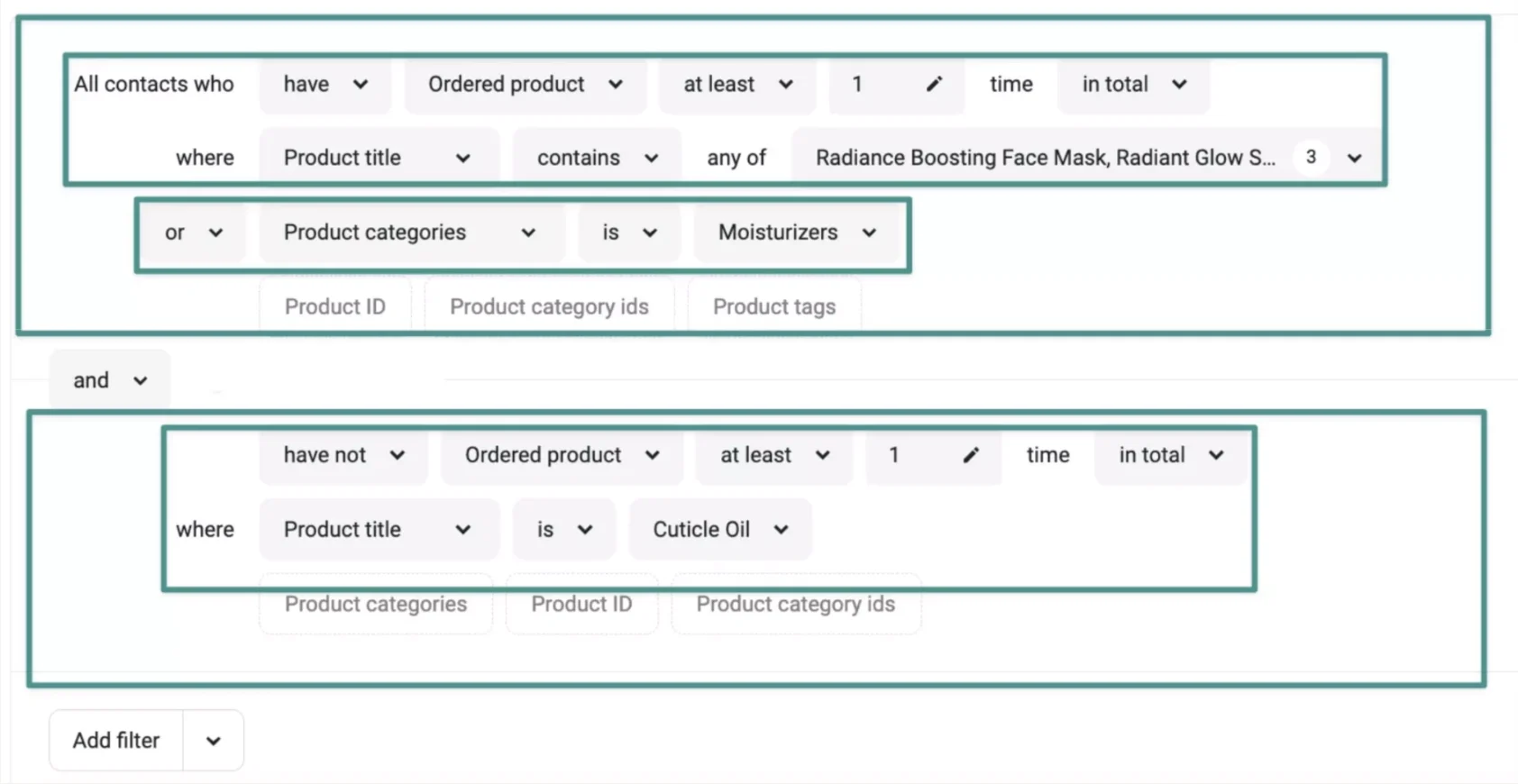
Once sufficient data has been gathered and analyzed, the insights must be converted into practical segmentation rules. This step streamlines the Black Friday segmentation process, making it more manageable. Examples of such rules could include "customers who have purchased product X more than twice in the last year," or "subscribers who have opened the last five emails but made no purchase." Crucially, the implementation of exclusion rules is paramount to ensure message relevance. For example, excluding customers who have made a purchase in the last 24-48 hours from subsequent promotional blasts prevents message fatigue and buyer’s remorse, ensuring that BFCM messaging remains impactful and avoids redundancy. This process is often underpinned by customer lifecycle segmentation, which groups individuals based on their evolving relationship with the brand.
4. Effectively Utilize the Segments in Marketing Platforms
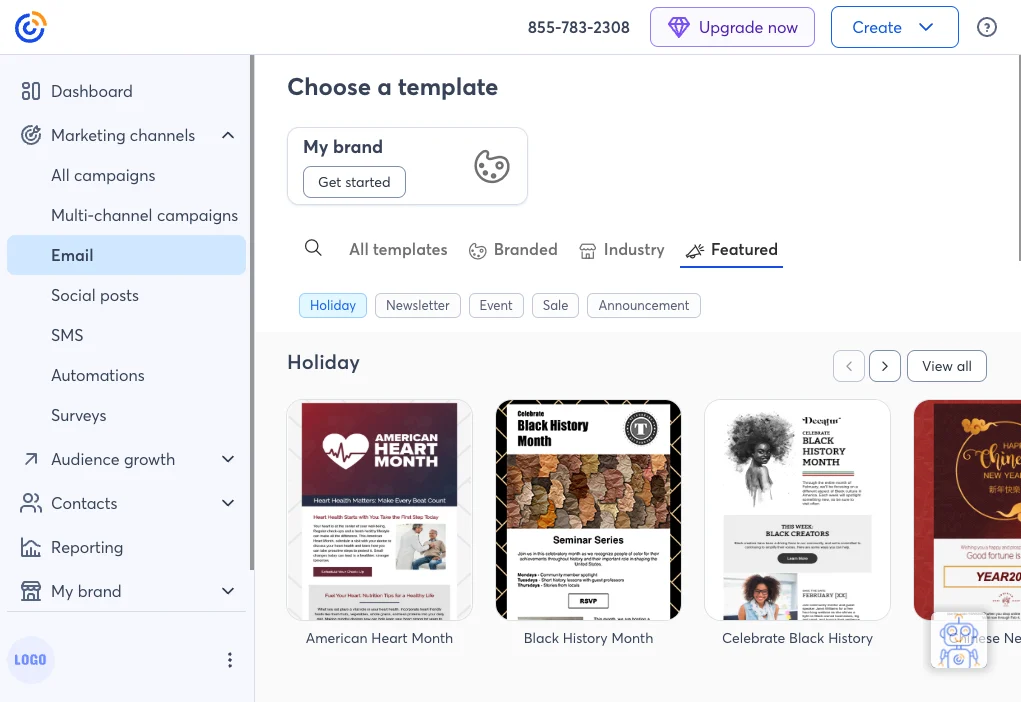
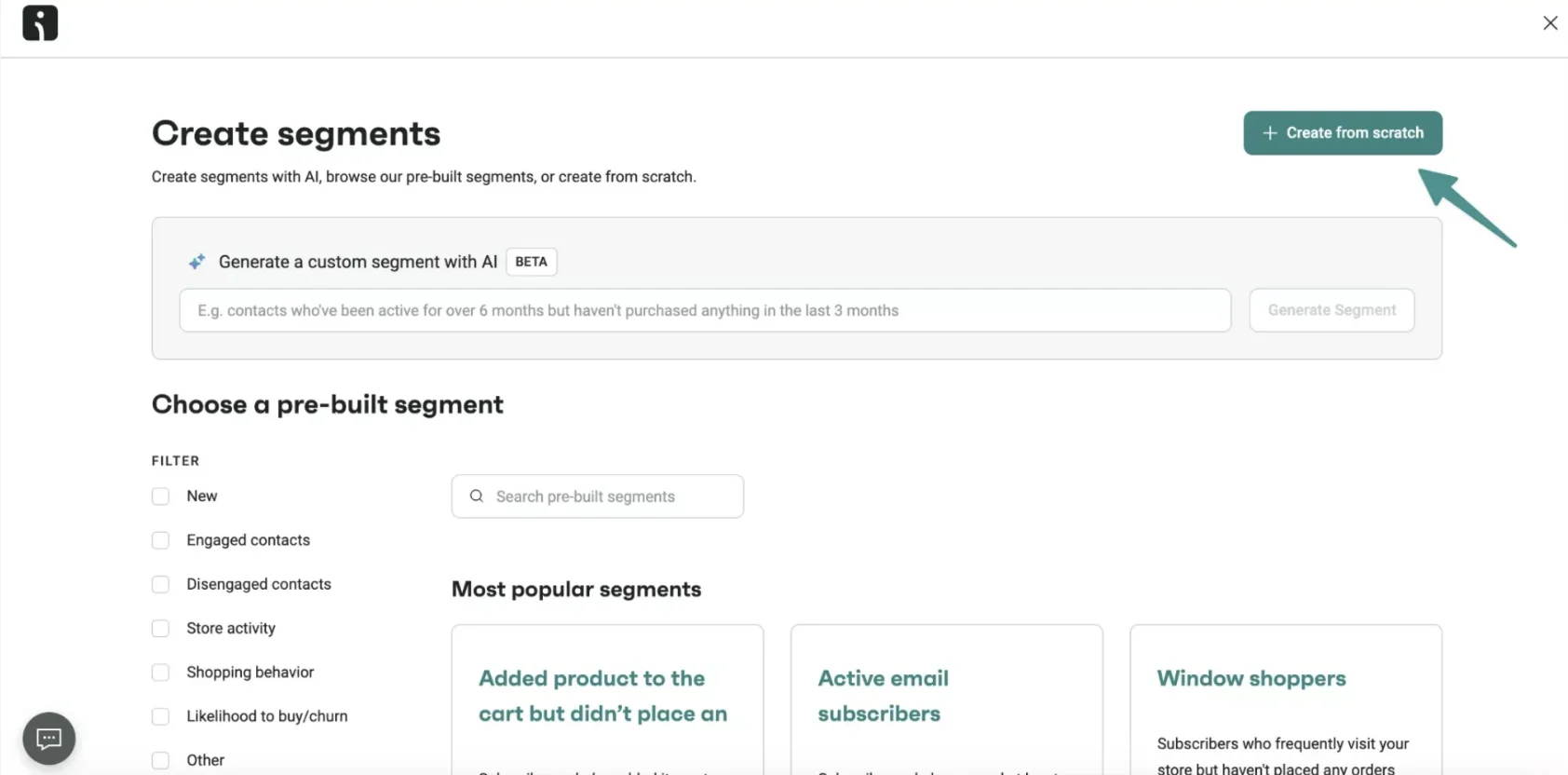
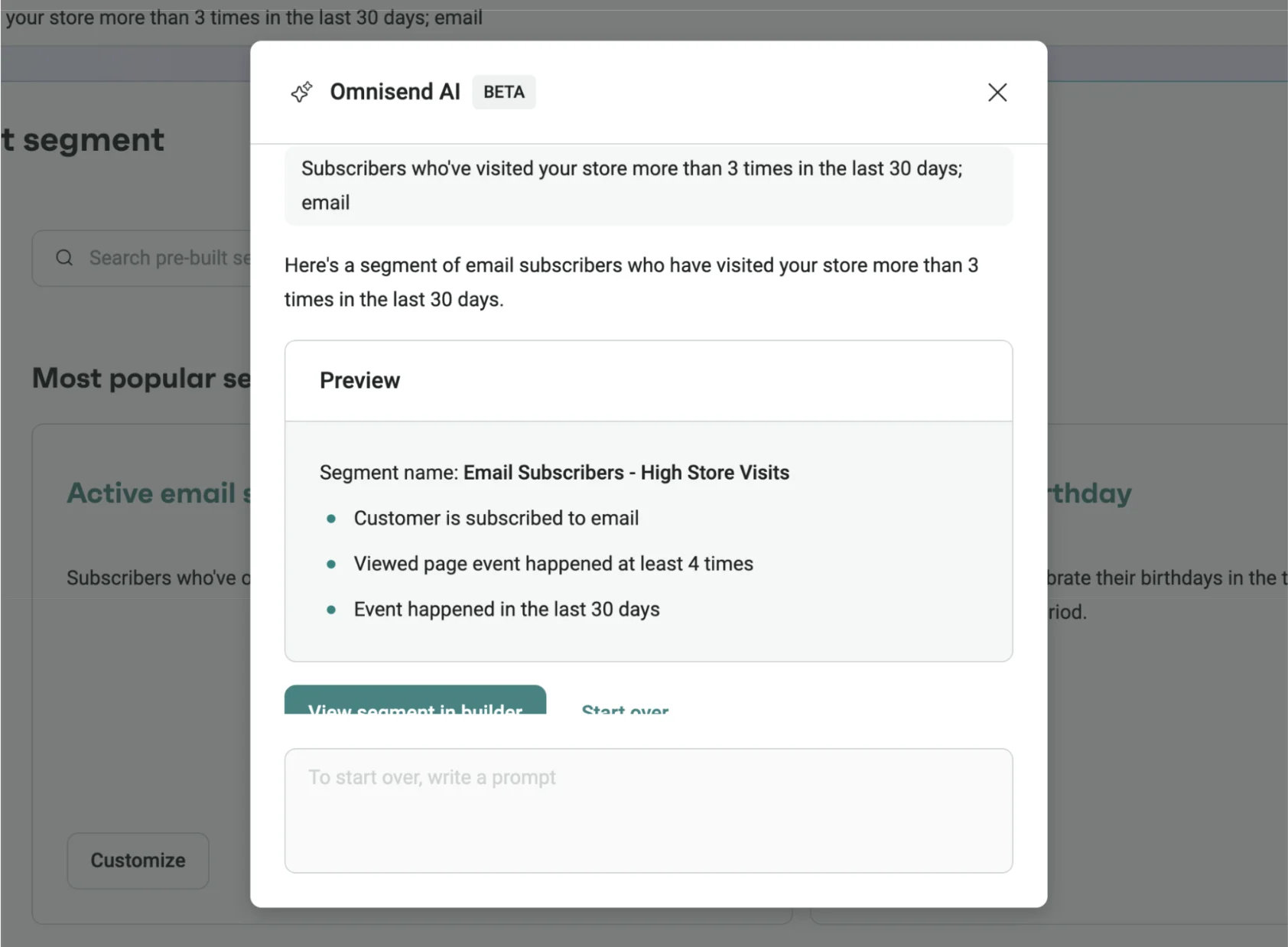
While building highly specific customer segments for a Black Friday campaign might appear laborious, many of these segments are often reusable for other marketing initiatives throughout the year. Marketing automation platforms, such as Omnisend, enable brands to create and save these segments for future events, maximizing efficiency. The process typically involves navigating to an audience management section, choosing to create a new segment, and then applying a series of filters based on the defined rules. Modern platforms also offer advanced tools like AI Segment Builders, which can automatically generate complex segment filters from plain-language descriptions, further accelerating the process and allowing marketers to focus on strategy rather than intricate rule configuration.
High-Impact Black Friday Customer Segments: Detailed Analysis
Effective Black Friday segmentation hinges on isolating specific shopper intent and lifecycle stages. The following 11 segments target customers based on proven buying behaviors and engagement patterns, designed to yield optimal results.
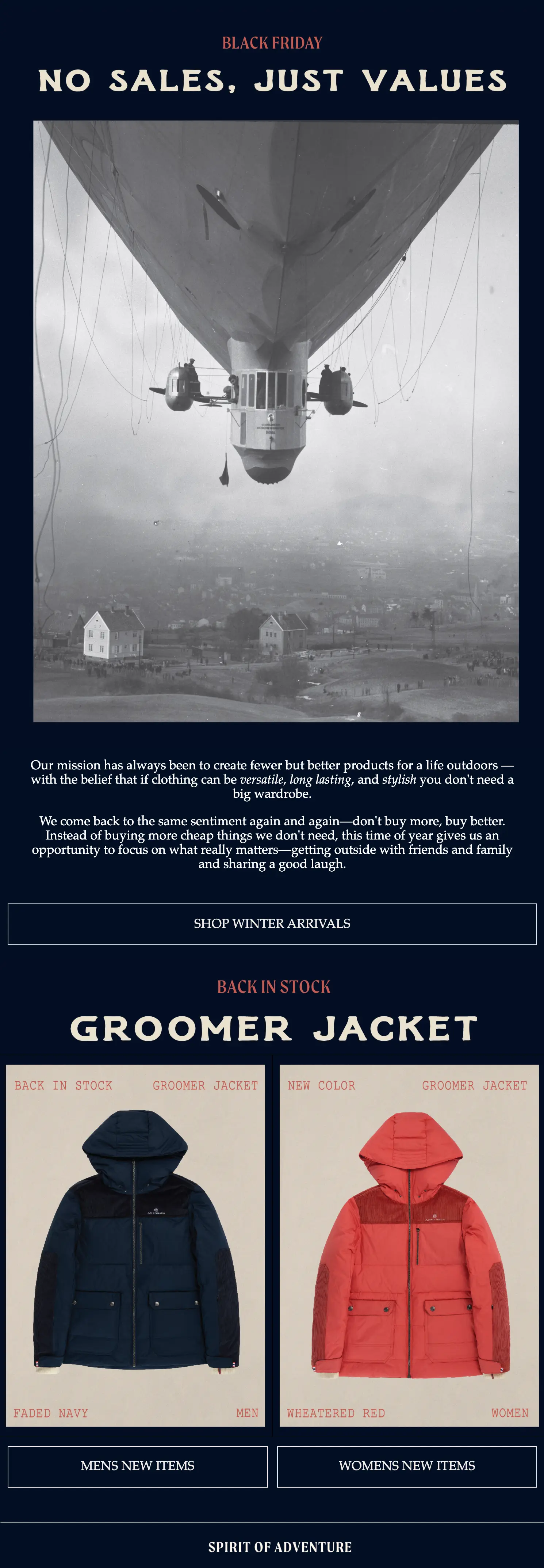
1. Highest-Value Customers: These are typically the top 5-10% of customers by lifetime value, or those who have made multiple purchases within the last year. The strategy here is exclusivity over aggressive discounting, offering early access, priority shipping, or members-only bundles. They should be excluded from generic promotions to preserve their VIP status. This works because these buyers drive the most revenue; special benefits reinforce their premium status and encourage continued loyalty, protecting profit margins. For instance, a brand like Amundsen Sports might forgo discounts, instead emphasizing brand story and new arrivals to its VIPs.
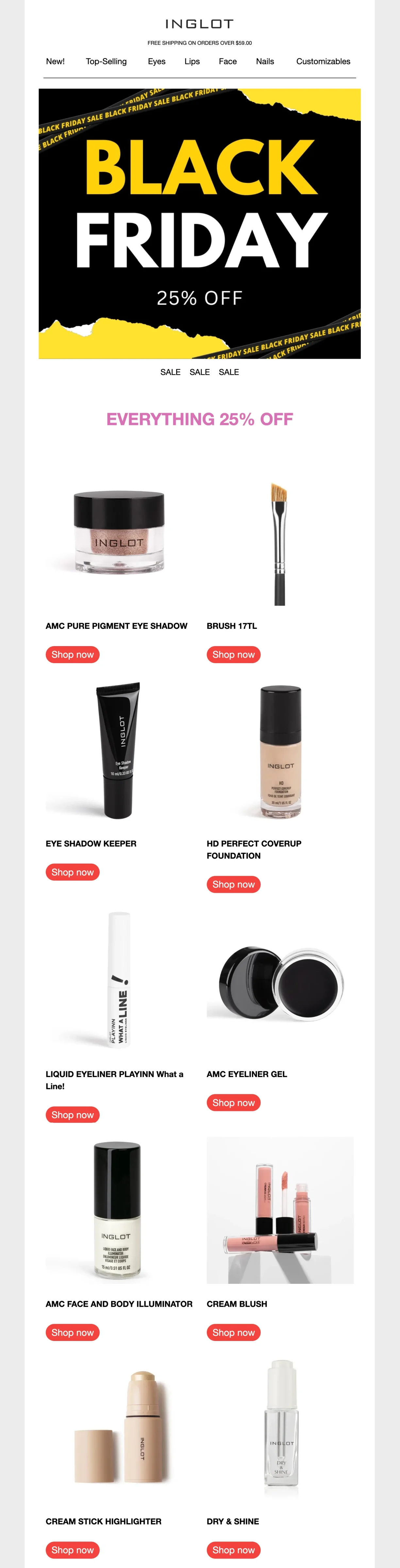
2. Cart Abandoners: Customers who have added items to their cart but not completed the purchase represent a significant opportunity. Messaging should be highly personalized, featuring visuals of the abandoned products to create a sense of continuity. The goal is to remove any lingering doubt, friction, or hesitation. Clear shipping cutoffs, return policies, or a modest incentive (e.g., free shipping for smaller carts, a standard discount for mid-range, or a small gift for high-value carts) can be effective. INGLOT Canada exemplifies this by using clear, sitewide offers in their cart recovery emails, prioritizing action.
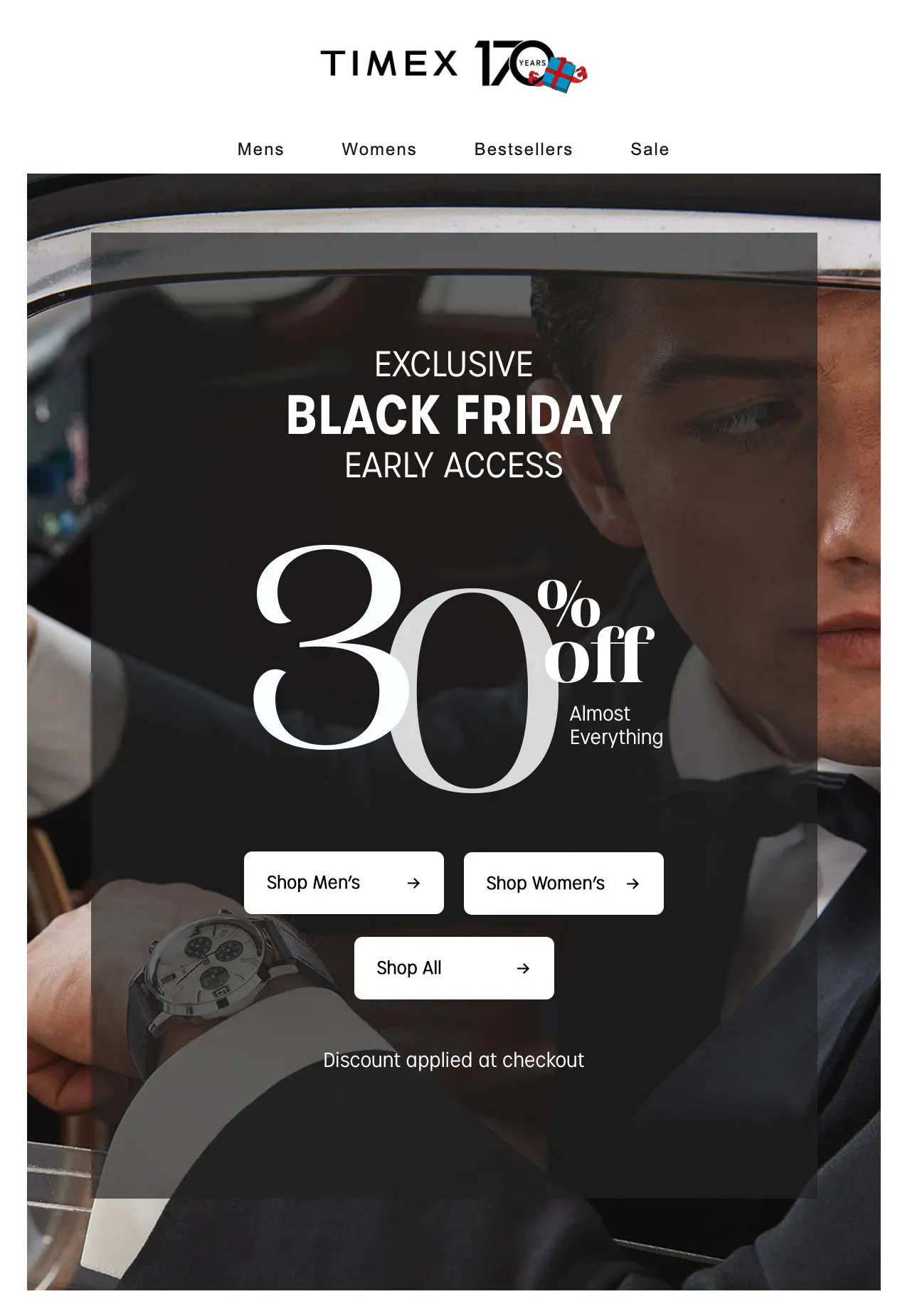
3. Black Friday One-Time Buyers: This segment includes customers who made a single purchase during a previous BFCM but have not returned. The strategy is to reconnect by referencing their previous purchase category and highlighting new relevant products. Social proof and light urgency are more effective than aggressive tactics. This segment works because converting one-time buyers into repeat customers is often more cost-effective than new acquisition. Timex, for example, uses early access to a 30% discount to re-engage these buyers, offering a clear incentive to return.
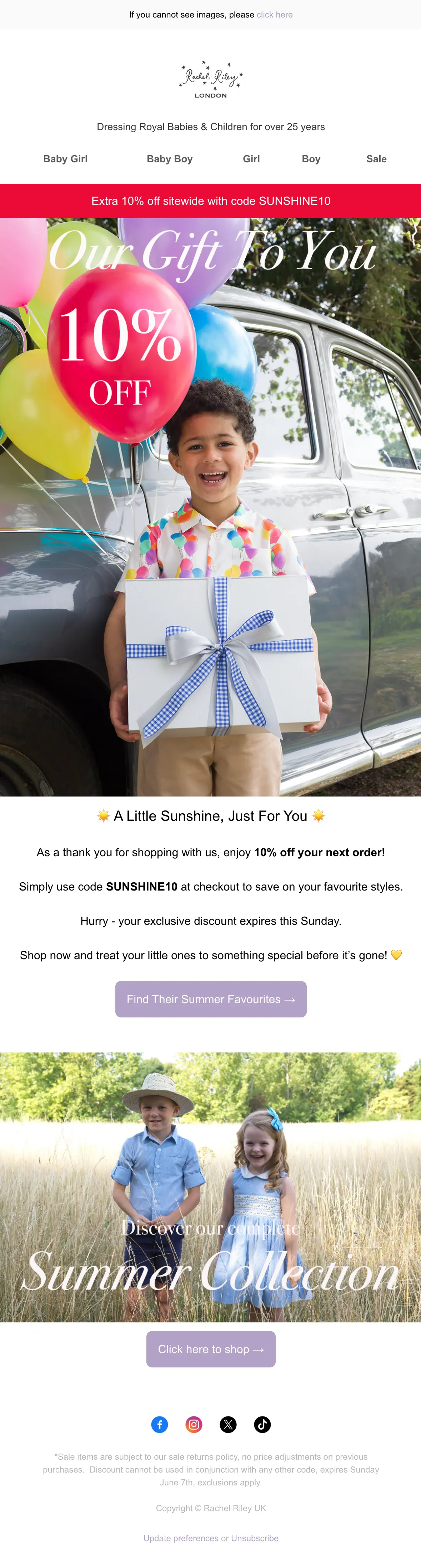
4. Lapsing Customers: These are customers who have previously interacted and purchased from the brand but have since become inactive. The key is a highly personalized win-back strategy, leveraging historical purchase and browsing data to craft tailored offers. This segment is valuable because they already know the brand; re-engagement is about reigniting that connection. Rachel Riley uses a "thank-you" win-back approach, offering a modest discount framed as a gift to encourage their return without relying on a full-blown sale.
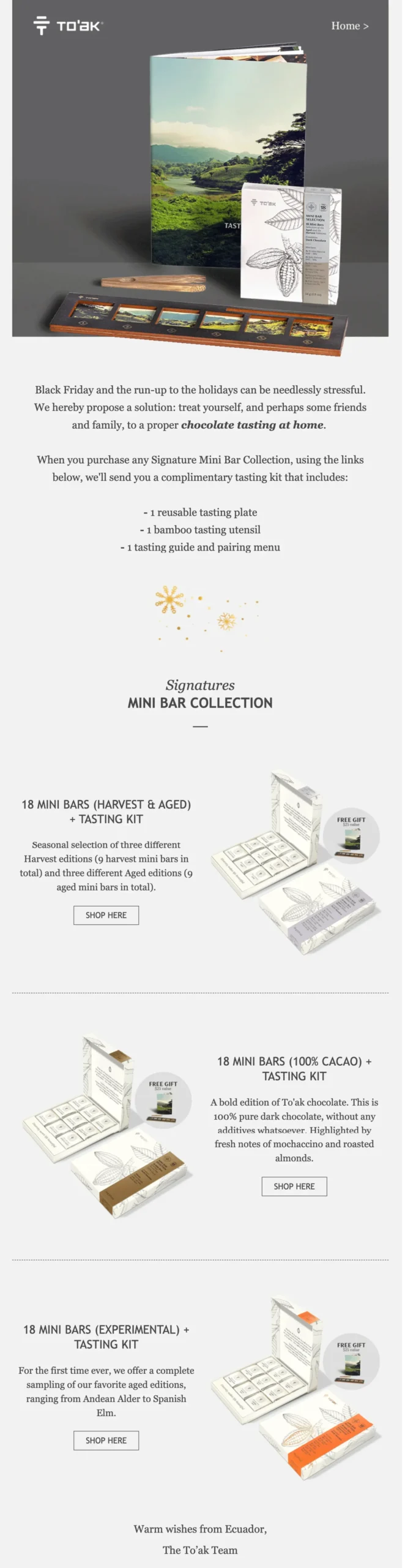
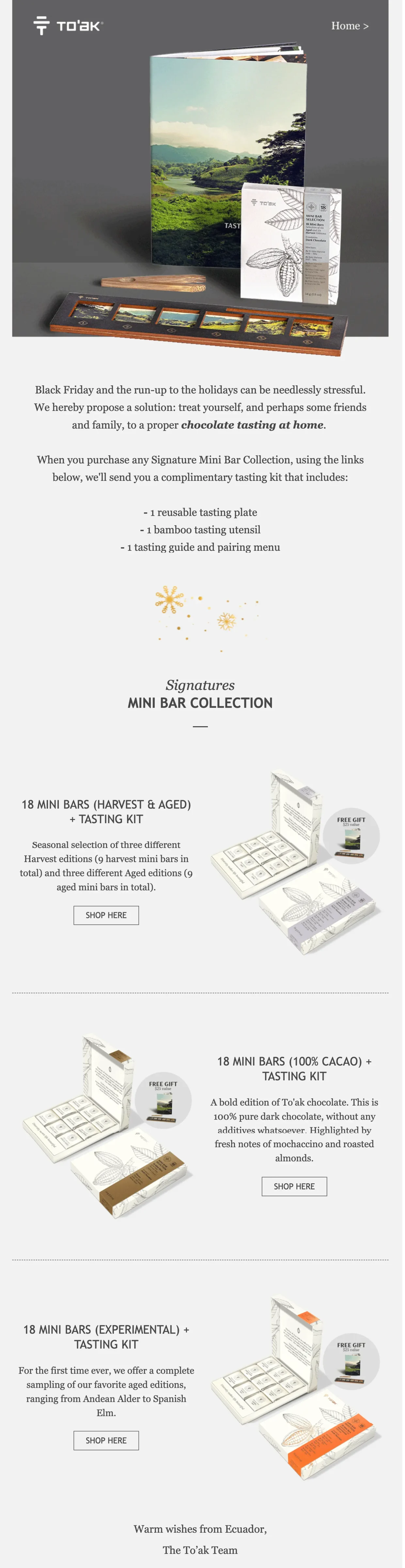
5. Recent Purchasers: Customers who have bought within the last 30 days should be handled carefully. Instead of including them in broad discount campaigns, focus on appreciation and adding value to their recent purchases. This could involve complementary product suggestions, extended return periods, or free shipping on future orders. Excluding them from immediate discounts prevents buyer’s remorse and fosters long-term loyalty. To’ak Chocolate, a luxury brand, offers complimentary tasting kits with purchases, enhancing the customer experience rather than devaluing their product with discounts.
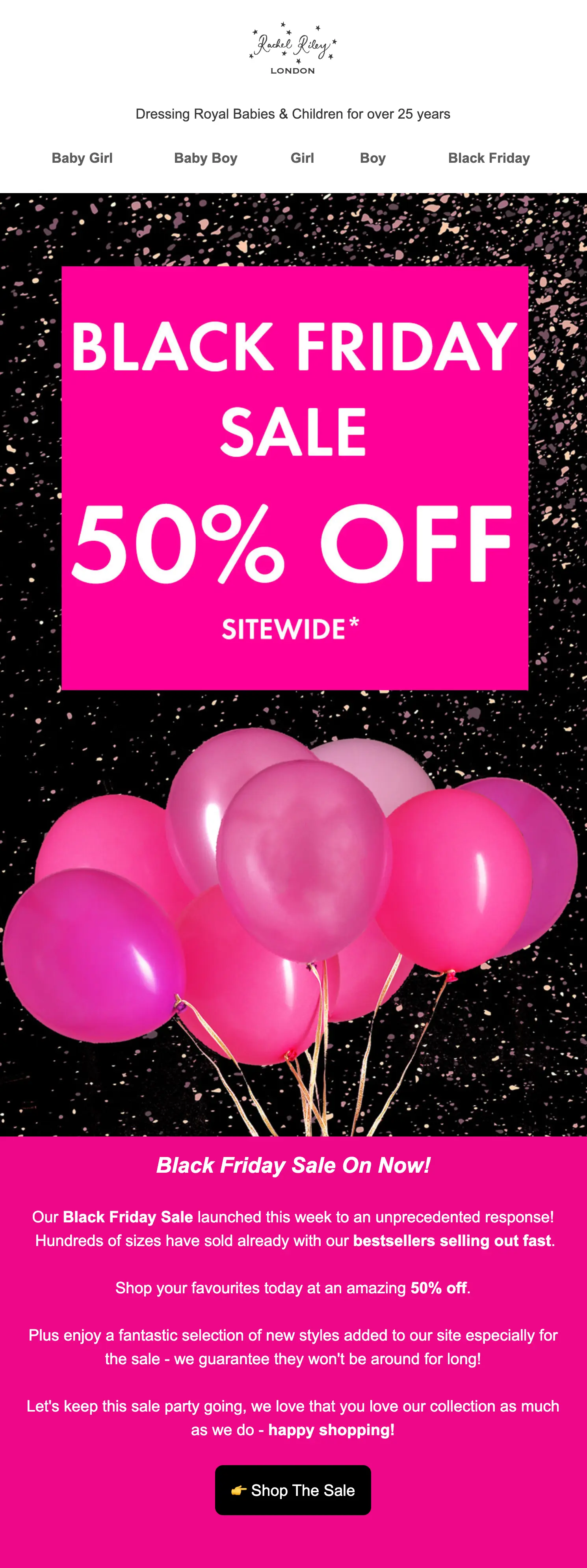
6. Price-Sensitive Buyers: These shoppers are driven by deals and can generate significant revenue during peak season. They can be identified by their frequent use of coupons or engagement with sales. Strategies include tiered discounts (e.g., spend X, get Y% off) or bundle deals connected to specific spending thresholds to increase Average Order Value. This segment works by directly addressing their primary motivation—value—thereby converting their deal-seeking behavior into sales. Rachel Riley effectively uses scarcity-led sales with bold 50% off sitewide messages to engage these buyers.
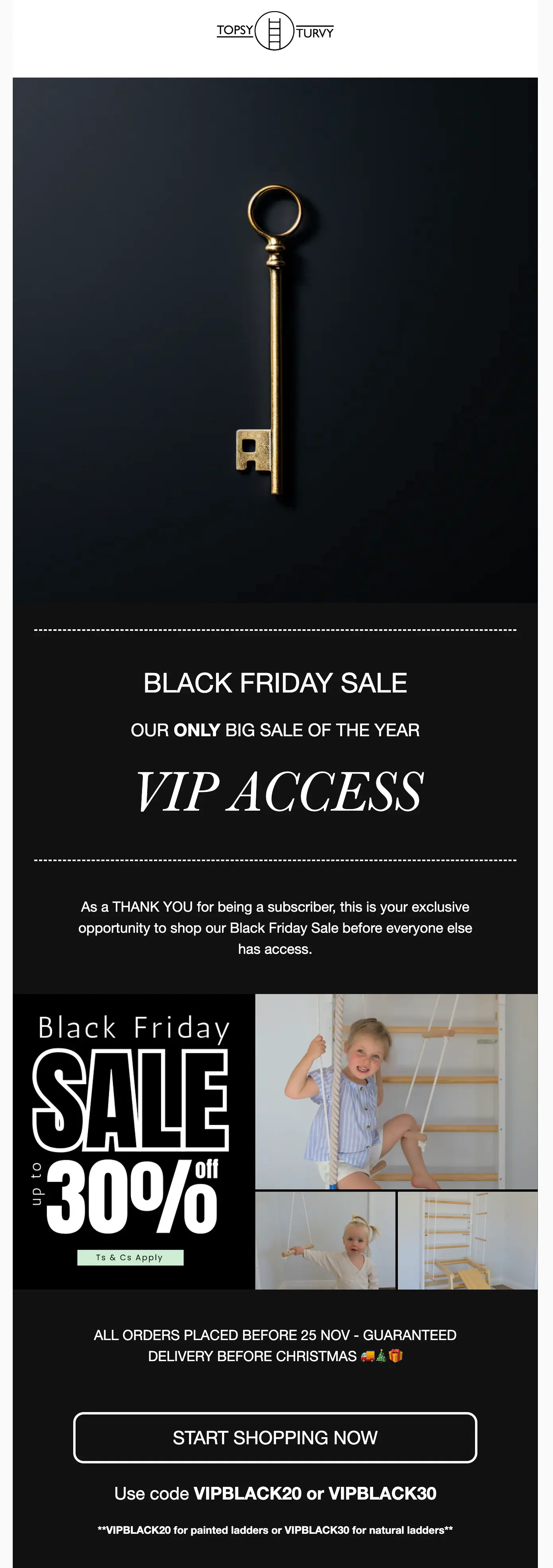
7. Loyal Repeat Purchasers: These customers make regular purchases without needing heavy discounts and often respond well to new product releases. The focus should be on recognition and early access opportunities, rather than training them to expect sales. Offering VIP perks or exclusive sneak peeks at upcoming collections can deepen loyalty while maintaining margins. Studies, such as those by Deloitte, indicate that loyalty programs significantly encourage higher spending. Topsy Turvy, for instance, uses VIP early-access emails with a gold-key visual, prioritizing emotional connection over a basic discount.
8. Engaged Non-Buyers: This segment shows interest in the brand (e.g., frequent browsing, email opens) but has not yet made a purchase. They often need reassurance rather than just a discount. Emphasizing trust signals like verifiable customer reviews, testimonials, and best-seller lists can be highly effective. This approach works by alleviating hesitation and building confidence in the brand’s offerings. Lazartigue, a French brand, highlights its "most-loved best-sellers" with five-star ratings and genuine customer reviews to convert these hesitant shoppers.
9. Category Browsers: These are customers who repeatedly browse specific product categories without making a purchase. The strategy is to build email flows centered around category-specific comparisons, relevant bundles, or new arrivals within their preferred categories. Once they convert, cross-selling related items becomes the next step. Bringing attention to already-liked products shortens the decision-making process. B-Wear uses a tiered category sale, offering different discounts for tees versus hoodies, linking directly to those collections.
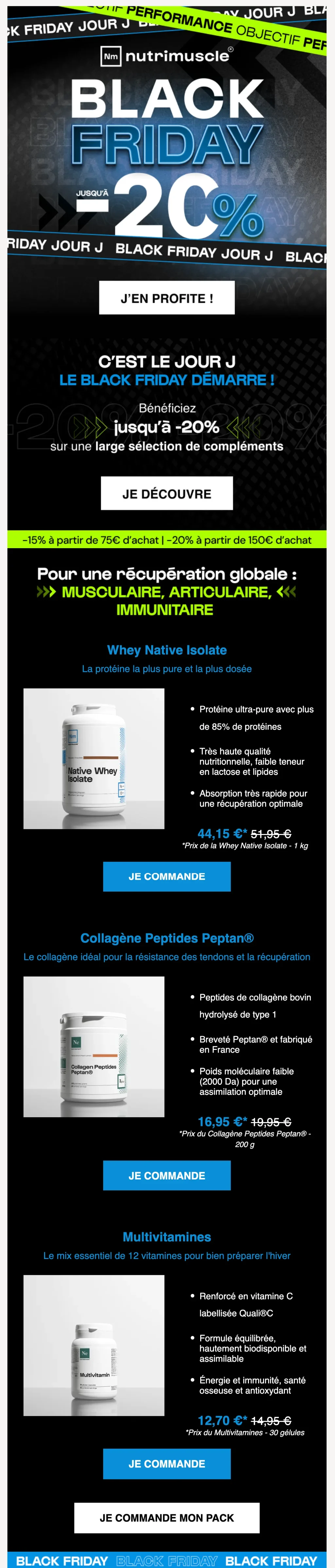
10. Regional Customers: For brands operating in multiple regions, localization is crucial. Grouping customers by location allows for adjustments in timing, currency display, shipping cutoffs, and product focus based on regional preferences and cultural nuances. This segment works because discounting perceptions vary globally; some regions embrace sales, while others might associate heavy discounts with lower quality. Nutrimuscle, a French brand, sends its entire Black Friday campaign in French, with Euro pricing and a seasonal hook relevant to its local market.
11. Gift Shoppers: These individuals are seeking gifts for others, driven by thoughtful intent rather than personal impulse. They often prioritize quality, usability, and presentation over aggressive discounts. Target subscribers who have viewed gift pages or purchased gift cards. Messaging should include gift guides, price-point gift ideas, and gift card offers, positioning value first and discounts as an added benefit. iRobot (Roomba) exemplifies this by leading with gift card offers, tiered by amount, and emphasizing the value proposition for gift-givers.
Multi-Channel Strategy for Black Friday Segments
A comprehensive Black Friday consumer segmentation strategy extends across multiple marketing channels, each serving distinct purposes and timing needs.
Email: Remains the primary channel for delivering detailed product information and compelling visuals to saved segments. Tailoring Black Friday subject lines to each segment’s motivations and interests is critical. Suppressions at send time (e.g., excluding recent purchasers or those already in a specific automation flow) ensure messages remain relevant and prevent customer fatigue.
SMS: Ideal for time-sensitive communications that demand immediate action. Segmentation from email campaigns can be applied here, focusing on urgent messages such as early-access alerts, last-chance reminders, and cart-recovery prompts. Messages must be concise, contain a clear call to action, include the brand name, and provide opt-out instructions to maintain compliance.
Push Notifications: Target website visitors who have opted in for browser notifications. These are effective for immediate website activity-based alerts, such as price drops, low-stock notifications, or browse recovery. Push notifications are best deployed during peak engagement moments to capture immediate attention.
Ads: Syncing high-value segments (VIPs, cart abandoners, engaged non-buyers) to platforms like Meta and Google enables highly effective retargeting campaigns. Excluding recent purchasers from broad promotional ads prevents wasted ad spend. Consistency in messaging between ads and corresponding email campaigns across all touchpoints reinforces the brand message and enhances the customer journey.

BFCM Segment Use Timeline: A Strategic Chronology
Effective timing is paramount for Black Friday customer segmentation campaigns, requiring distinct strategies across different phases of the shopping season. While segments remain consistent, messaging angles and urgency levels must adapt.
Pre-Season (Weeks Leading Up): This period is dedicated to preparation. Brands should clean their segmentation data, build robust consent lists for maximum reach, and run list-cleaning campaigns to remove inactive subscribers who could negatively impact deliverability during high-volume sending. Crucially, this is the time to test small batches of different discount levels on various segments to ascertain which offers drive the highest revenue per recipient without eroding margins.

Black Friday Week: During the main event, messaging should intensely focus on priority segments. VIP customers receive exclusive communications, while price-sensitive shoppers are presented with clear value propositions and tiered spending incentives. It is vital to manage BFCM marketing campaigns and automations meticulously to prevent message collision. Documenting purchase-based exit conditions ensures customers do not receive conflicting messages, and avoiding overlapping touches to the same person within short timeframes is crucial for a positive customer experience. The best time to send emails generally falls during mid-morning when audiences are most likely to check their inboxes.
Cyber Monday: The strategy shifts to sustaining momentum. Brands should leverage real scarcity—actual low stock numbers and definitive shipping cutoffs—avoiding artificial urgency that can damage trust. Close monitoring of list health metrics (e.g., revenue per recipient, unsubscribe rates) is essential. A significant drop in revenue or rise in unsubscribes may necessitate narrowing targeting to only the most engaged segments.
Post-Cyber Monday: Immediately after the main shopping period concludes, the focus must pivot to retention. Sending personalized thank-you messages, cross-selling complementary products, and inviting new customers to join loyalty programs are critical while the positive purchase experience is still fresh. The retention strategy should be tailored by segment: recent purchasers might benefit from usage guides and complementary suggestions, while returning customers could receive "welcome back" messages introducing new product categories.
Conclusion: Driving Action and Future Optimization
Black Friday customer segmentation is an indispensable tool for e-commerce brands, enabling them to drive significant revenue while meticulously protecting profit margins. For brands new to this approach, it is advisable to begin by focusing on the three highest-performing segments rather than attempting to target everyone simultaneously. The selection of segments should directly align with overarching business goals and available resources; for instance, if the objective is rapid inventory clearance, targeting engaged non-buyers and cart abandoners would be a priority.
Crucially, documenting the successes and failures of Black Friday campaigns is vital for continuous improvement. Tracking which segments yield the highest performance metrics allows for the refinement of targeting strategies for subsequent Black Friday events and indeed, for year-round marketing. The insights gleaned from Black Friday consumer segmentation often translate effectively into a brand’s regular email marketing playbook. Customer behaviors that drive results during the peak holiday season frequently remain valid throughout the year, requiring only adjusted messaging and offers to sustain engagement and conversion. By systematically implementing and refining segmentation, brands can transform the chaos of Black Friday into a highly organized, profitable, and customer-centric marketing endeavor.