

The annual Black Friday Cyber Monday (BFCM) shopping period represents a pivotal moment for retailers, often accounting for a significant portion of their yearly revenue. In an increasingly competitive digital landscape, effective email marketing has emerged as a critical differentiator, moving beyond mere discount announcements to sophisticated, multi-channel engagement strategies. The success of future BFCM campaigns, such as those anticipated for 2026, hinges on a nuanced understanding of consumer behavior and the deployment of targeted email sequences designed to build anticipation, convert interest into sales, and foster long-term customer relationships.
The Evolving Landscape of Black Friday Cyber Monday

Black Friday, traditionally a single-day, in-store shopping frenzy following Thanksgiving, has transformed into an extended online event. With the rise of e-commerce, Cyber Monday was introduced to capture digital sales, and the two have largely merged into the "BFCM weekend" or even "Cyber Week," beginning well before Thanksgiving and often extending into the first week of December. This expansion has intensified the competition for consumer attention, particularly in crowded email inboxes. Recent industry analyses, such as those by Adobe Analytics, consistently show record-breaking online sales during BFCM, with billions of dollars spent annually. For instance, in recent years, Cyber Monday has surpassed Black Friday in online sales, underscoring the digital shift. The National Retail Federation (NRF) consistently projects increasing consumer spending during this period, highlighting its immense potential for businesses prepared with robust digital marketing plans.
The sheer volume of promotional emails during BFCM demands that brands employ creative and strategic approaches to stand out. Generic discount codes are no longer sufficient; consumers expect personalized experiences, exclusive offers, and compelling narratives. The most effective campaigns are those that map the entire customer journey across the BFCM period, from the initial build-up to post-event engagement, ensuring that each communication adds value and prompts action.
Chronology of Engagement: A Multi-Phase Email Strategy
Successful Black Friday email marketing campaigns are not isolated sends but rather carefully orchestrated sequences that unfold across several phases. This chronological approach ensures sustained engagement and maximizes conversion opportunities.
Phase 1: Pre-BFCM Hype and Segmentation – Building Anticipation and Rewarding Loyalty
The period leading up to Black Friday is crucial for laying the groundwork, capturing early interest, and segmenting audiences for tailored messaging.
-
1. Tease the Sale Early:
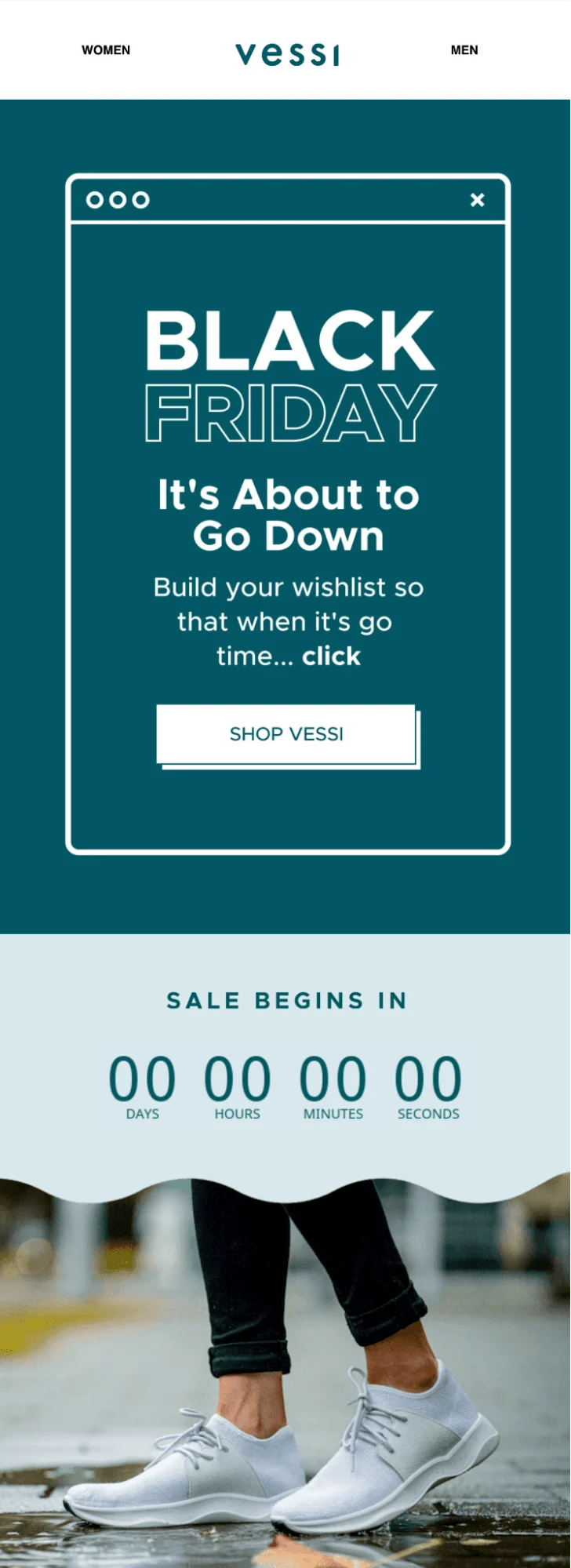
Retailers are increasingly initiating their Black Friday marketing well in advance of the actual event. This strategy aims to cut through the impending clutter and secure early engagement. Brands like waterproof shoe retailer Vessi have successfully deployed countdown emails that build anticipation without immediately revealing discounts. The primary goal is to invite customers to browse and create wishlists, effectively pre-qualifying potential buyers. Subject lines that convey exclusivity, such as "You’re the first to know," can significantly boost open rates by appealing to a customer’s desire for insider access. This tactic helps establish an early affinity with the brand, making subsequent Black Friday emails more likely to be opened and acted upon. By encouraging wishlist creation, brands gather valuable data on consumer intent, which can then inform targeted follow-up communications. Data indicates that early engagement can lead to higher conversion rates when the actual sale begins. -
2. Give Early Access to VIPs and Loyal Customers:
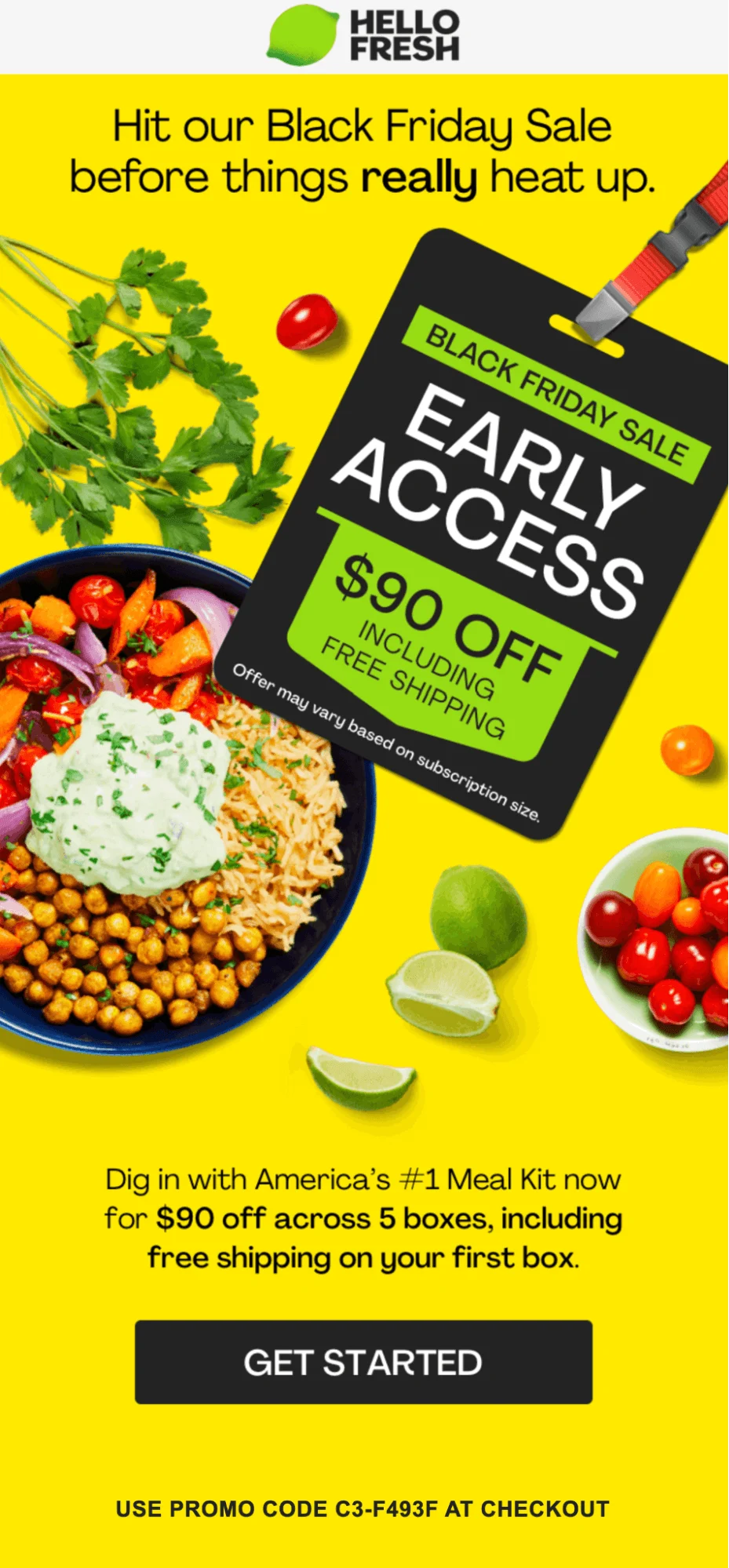
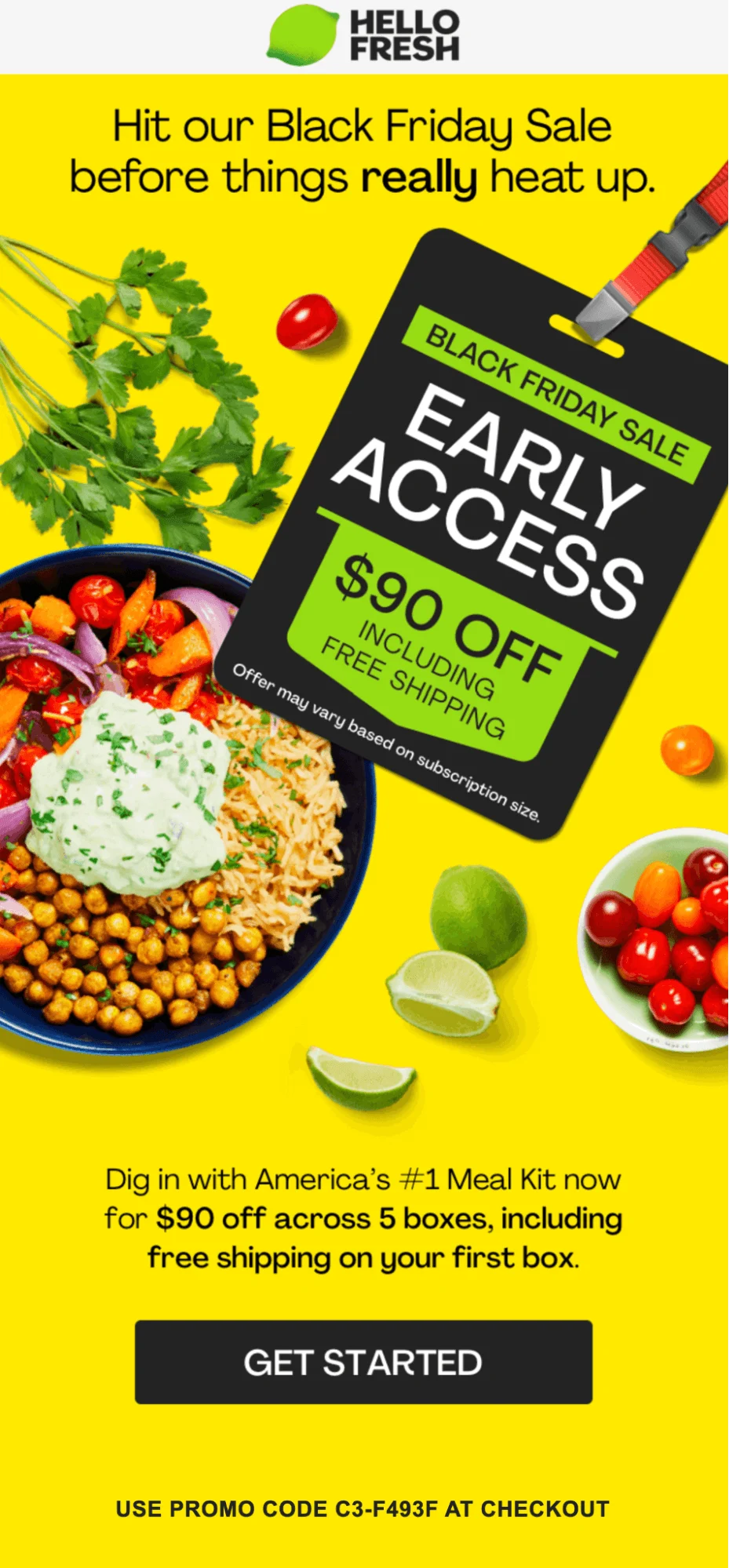
A cornerstone of effective pre-BFCM strategy is recognizing and rewarding existing customer loyalty. Providing early access to sales for VIPs or high-value customer segments is a powerful retention tool. HelloFresh, for example, offers past purchasers exclusive early access to significant discounts, such as "$90 off with free shipping across five meal kits," framing it as a reward rather than just a discount. This approach resonates deeply with customers, making them feel valued and privileged. Previous customers, having already demonstrated trust in the brand, are significantly more likely to make repeat purchases. By segmenting customers based on order value and frequency, retailers can deliver highly personalized offers that bypass the general inbox deluge. The use of phrases like "Black Friday Early Access" in subject lines clearly communicates the exclusive nature of the offer. This strategy aligns with consumer priorities, as 68% of U.S. shoppers report that discounts are their top priority during BFCM. Case studies, such as SM Global Shop achieving a 65% open rate on its VIP emails through subscriber segmentation, underscore the efficacy of this approach in generating substantial engagement from a highly valuable customer base.
Phase 2: During BFCM – Maximizing Conversion and Engagement
Once the sales officially begin, the focus shifts to converting interest into purchases, utilizing various psychological triggers and product presentation techniques.
-
3. Lead with Social Proof and Bestsellers:
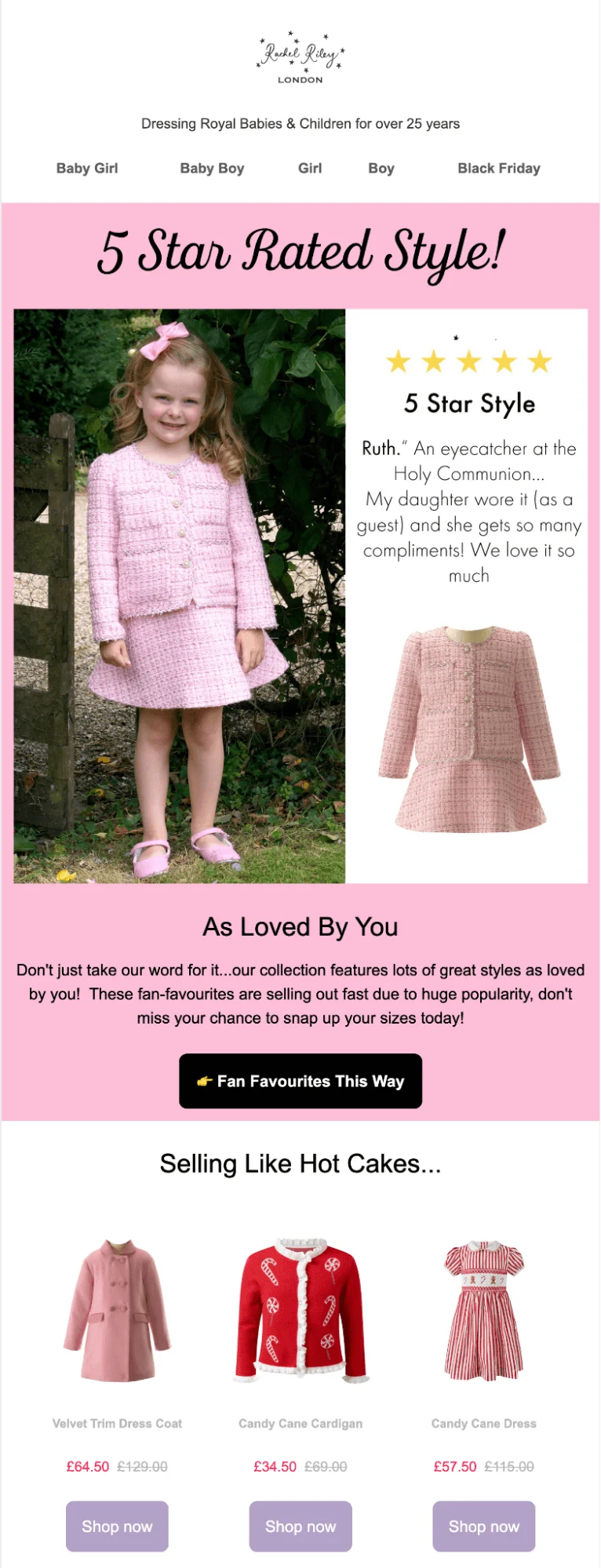
In a crowded market, consumer trust is paramount. Leveraging social proof, such as star ratings and customer reviews, can significantly influence purchasing decisions. Children’s clothing brand Rachel Riley successfully integrates "5 Star Rated Style" headings and authentic written reviews into its Black Friday emails, making reputation a central selling point. The inclusion of lifestyle photos, particularly of children wearing the products, enhances authenticity and relatability. Sections like "As Loved By You" and "Selling Like Hot Cakes" guide customers towards popular items, further reducing purchase hesitancy. For gift-buyers, who may be unfamiliar with the product, the reassurance of positive peer reviews can be more compelling than a percentage off. This strategy capitalizes on the psychological principle that people are more likely to trust recommendations from others. Rachel Riley’s own case study revealed a 77% year-over-year growth in BFCM revenue, with emails contributing 48.1% of total store revenue during the period, demonstrating the potent impact of this trust-building approach. -
4. Run a Gamified or Mystery Offer:
Injecting an element of fun and intrigue into promotions can significantly boost engagement. Gamified offers, such as "spin-to-win" wheels or "click-to-reveal" discounts, tap into a consumer’s curiosity and desire for a unique experience. Swimwear brand Cupshe, for example, used a "Black Friday in July" promotion that concealed its discounts behind question marks, revealing just enough to tease ("$", "%", "OFF") without giving away the full offer. This forces customers to click through to discover their personalized deal, increasing traffic and conversion rates. The addition of secondary incentives, like a $5 coupon for completing a profile, further sweetens the deal. Gamification is a proven tactic for increasing interaction, as it transforms a passive offer into an active engagement, making hesitant shoppers more likely to participate. This strategy can be particularly effective during slower months or to re-engage segments that might be suffering from "deal fatigue."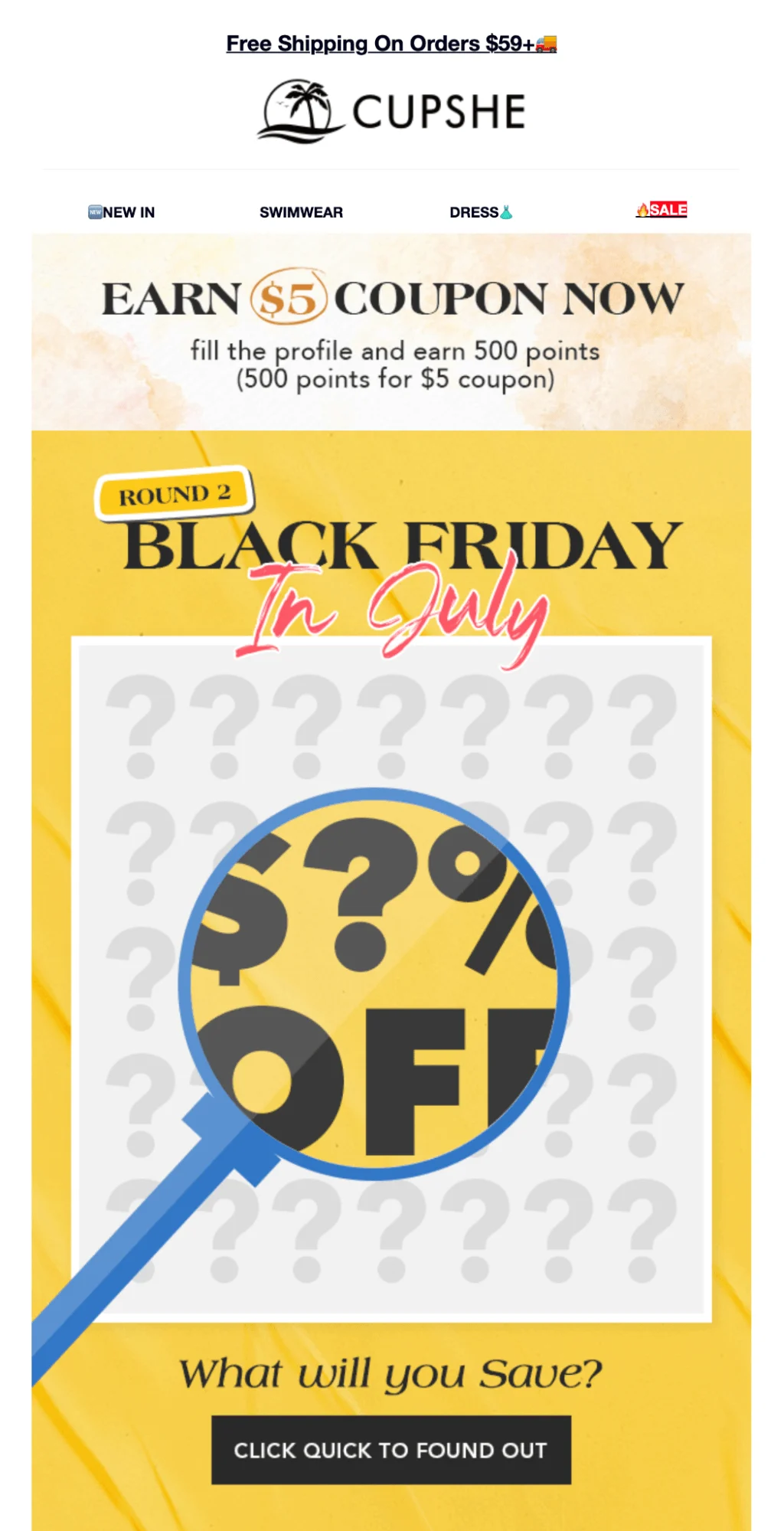
-
5. Offer Bundle or Tiered Deals:
To increase average order value (AOV) and provide greater perceived value, bundle or tiered deals are highly effective. Counter Culture Coffee, for instance, presented multiple bundles in a single email – coffee bundles with "Save up to 30%" badges alongside merchandise. This approach caters to both self-purchasers and gift-buyers, streamlining the shopping experience. The promise of significant savings on bundled products encourages customers to purchase more items than they might have individually. Gift-like imagery and clear "Bundle & Save" calls to action enhance the appeal. This strategy is particularly powerful during BFCM when consumers are often looking to stock up or purchase multiple gifts. It moves beyond simple percentage discounts to offer a more strategic value proposition, making each purchase feel like a smarter investment. -
6. Add a Countdown for Urgency:
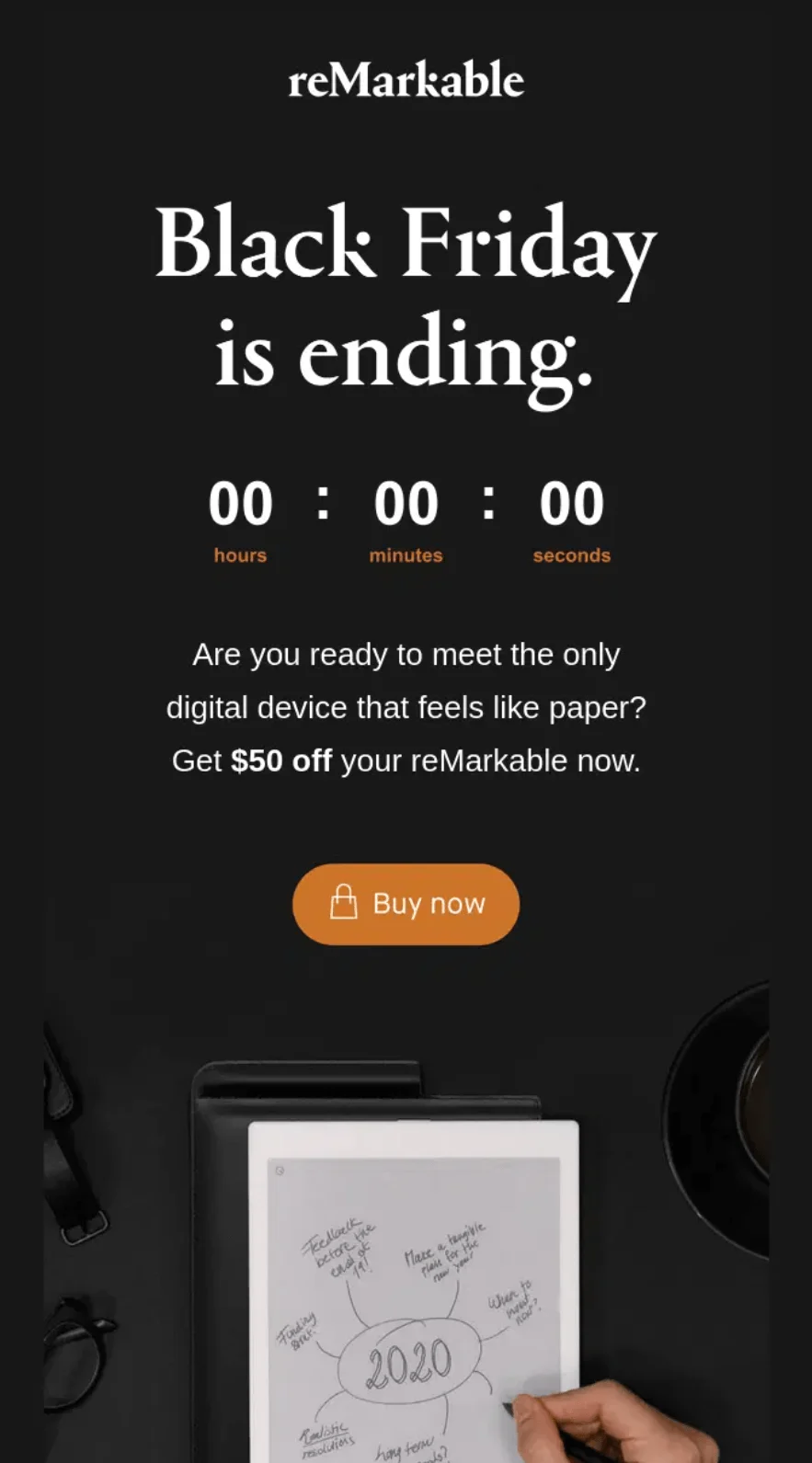
Urgency is a powerful psychological trigger in sales, and live countdown timers are a direct way to implement it. For products like reMarkable paper tablets, last-chance campaigns featuring a prominent countdown clock immediately convey the limited-time nature of an offer. This visual cue, combined with a clear "Buy now" button, prompts hesitant customers to act before the opportunity expires. The simplicity of such emails – often just a logo, heading, countdown, offer description, and CTA – proves their effectiveness. During a high-stakes period like BFCM, where consumers are bombarded with offers, a visible deadline can cut through the noise and drive immediate conversions. It capitalizes on the Fear Of Missing Out (FOMO), a potent motivator in consumer behavior. -
7. Go Anti-Black Friday with a Values Angle:
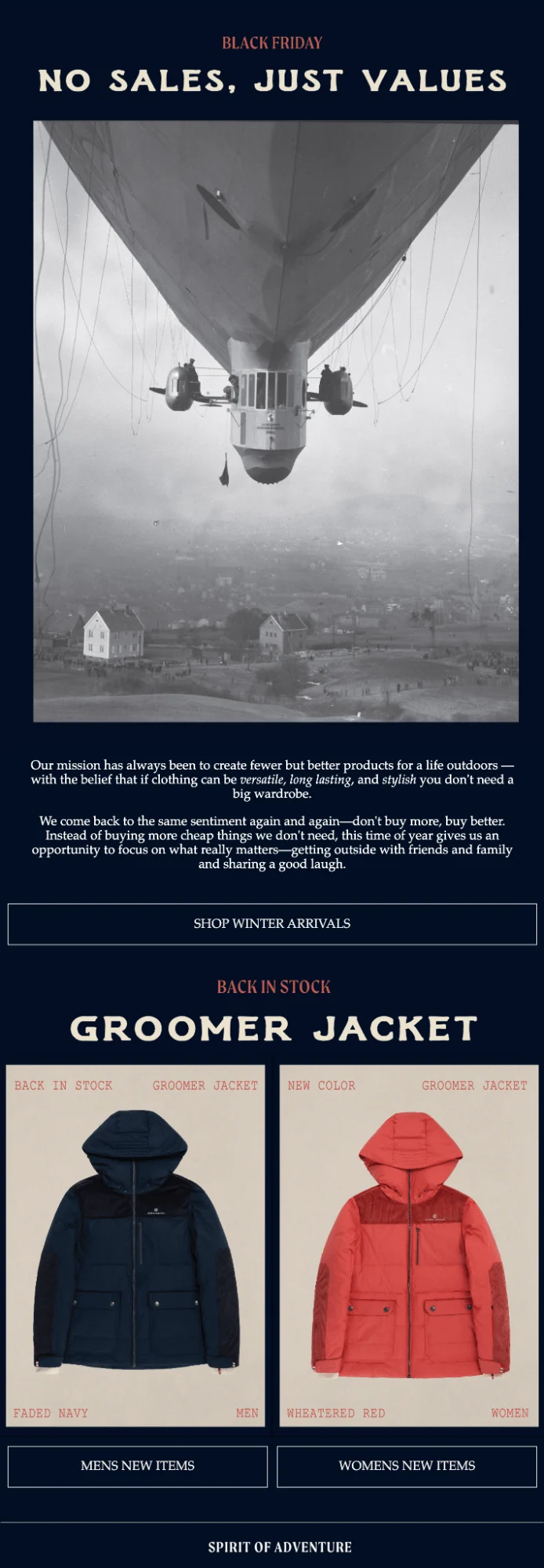
Not all brands benefit from deep discounting. Luxury or premium brands may find that constant sales dilute their brand image and train customers to wait for deals. An "anti-Black Friday" approach can differentiate such brands. Amundsen Sports, for example, used the heading "NO SALES, JUST VALUES" alongside "BLACK FRIDAY" in its email, aligning with its "Spirit of Adventure" positioning. This strategy allows the brand to remain visible during the BFCM period without compromising its premium status. Instead of discounts, these brands can focus on their core values, product quality, or introduce new arrivals. Alternative rewards, such as loyalty points or exclusive content, can be offered instead of price reductions. This approach appeals to a segment of conscious consumers who prioritize brand integrity and sustainable practices over fleeting discounts. Amundsen’s success with its order-confirmation email, generating 16.7% of yearly Omnisend revenue with a 32% click-to-repurchase rate, further demonstrates that strong brand positioning and effective automation can drive significant revenue even without BFCM discounts.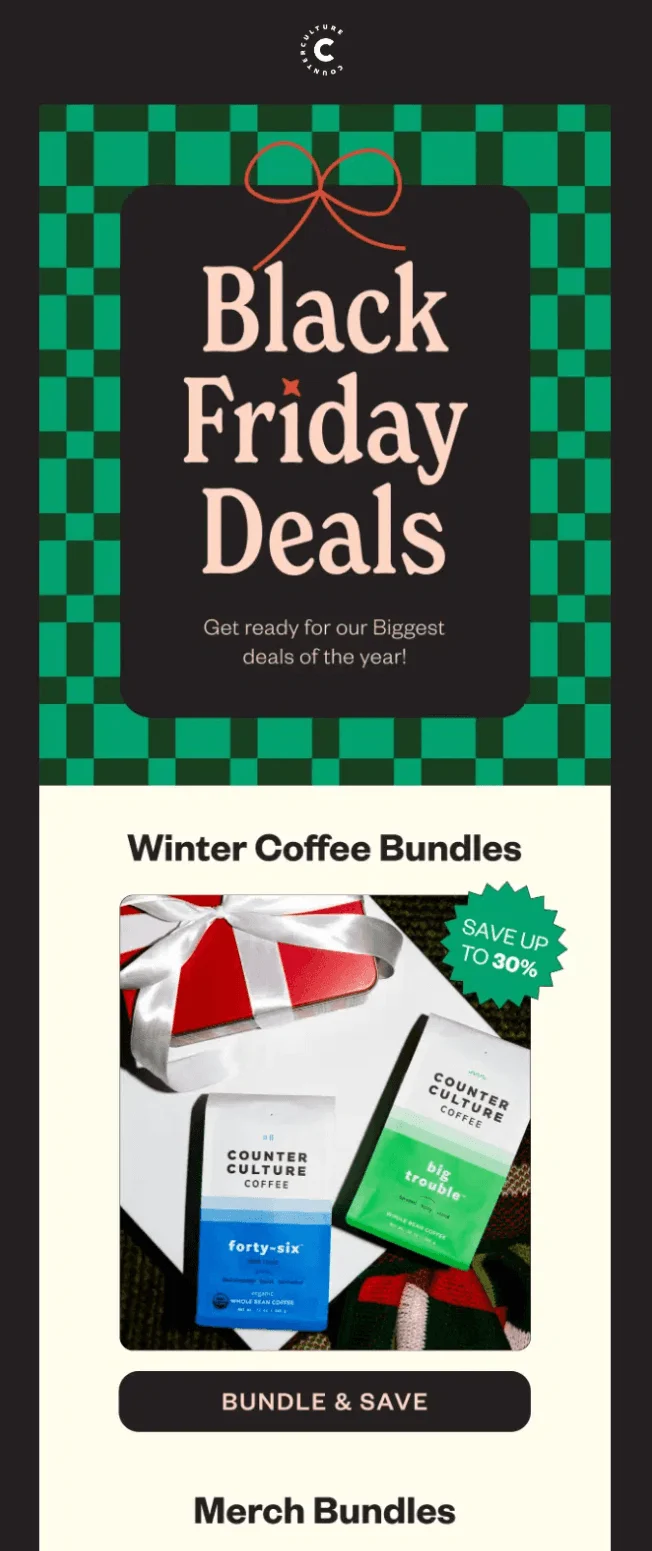
-
8. Curate a Gift Guide:
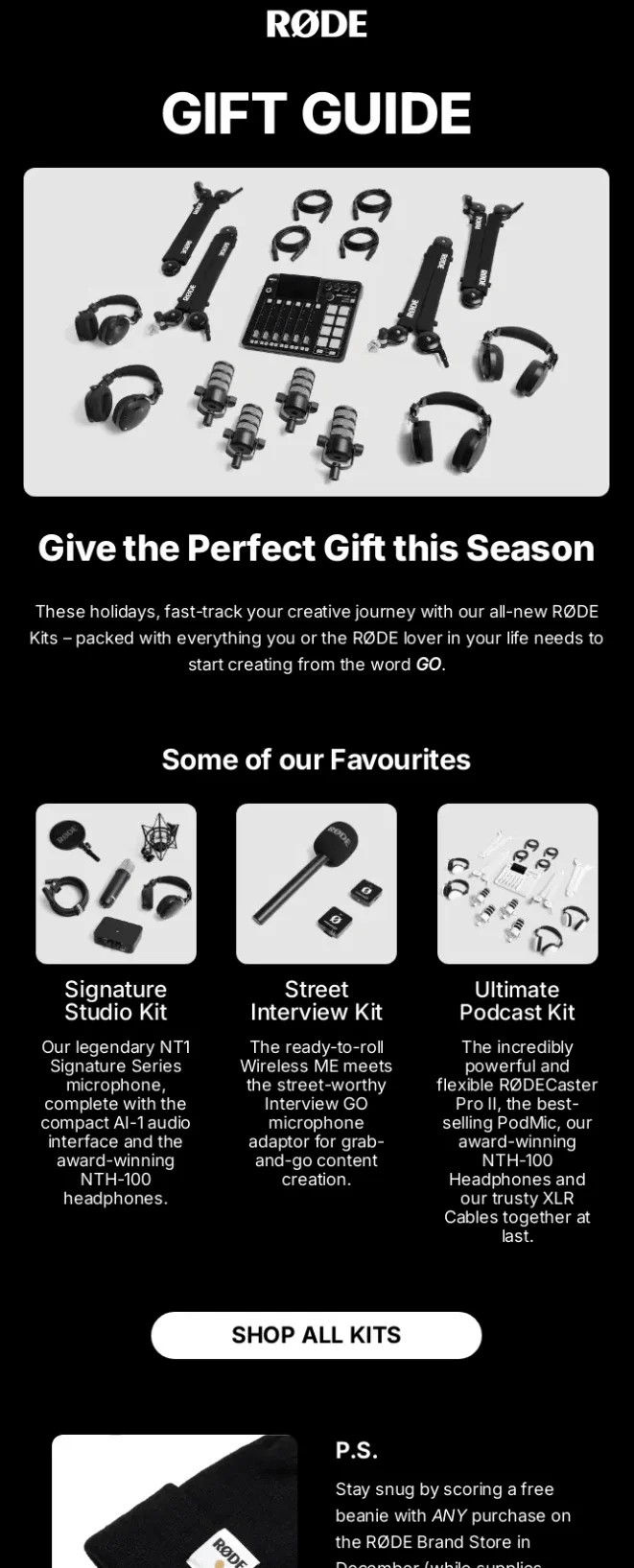
For many, Black Friday is the unofficial start of holiday gift shopping. Gift guides simplify the decision-making process for customers who may be buying for others and are less familiar with specific product categories. Audio brand RØDE’s Black Friday email, for instance, curated its products into distinct "kits" like the "Signature Studio Kit" or "Street Interview Kit," each tailored to a specific type of creator. This approach removes friction by pre-selecting suitable items, transforming a potentially overwhelming browse into a straightforward purchase decision. Clear calls to action, such as "Shop All Kits," and additional incentives, like a free beanie with a December purchase, further encourage immediate conversion. By organizing products by recipient or use case rather than generic category, brands can directly address the needs of gift-buyers, leading to higher conversion rates and customer satisfaction.
Phase 3: Post-BFCM – Sustaining Momentum and Last Chances
Even after Cyber Monday, opportunities exist to capture lingering demand and engage customers who may have missed out.
-
9. Map Out the Weekend with Daily Deals:
The extended nature of BFCM allows for sustained engagement through a series of daily deals. Island Olive Oil Company effectively uses a "Black Friday Weekend Guide" email that lists specific dates, rewards, and savings for each day. This strategy caters to consumers who prefer to plan their shopping rather than rush. By offering different types of deals each day, the brand keeps the offers fresh and provides multiple reasons for customers to return. A festive image and an enthusiastic intro ("Our biggest weekend of the year is here!") set a positive tone for impulse buys and gift-giving. This methodical approach reduces pressure on shoppers, allowing them to engage at their own pace while ensuring the brand remains top-of-mind throughout the extended sales period. Island Olive Oil’s success, with automated emails generating 39% of its total email marketing revenue from only 1.22% of sends, highlights the power of a well-structured campaign. -
10. Extend Past Cyber Monday with a Last-Chance Email:
The shopping fervor often extends beyond Cyber Monday, creating a "Cyber Week" phenomenon. A "last-chance" email targets customers who may have missed initial deals or were holding out for further savings. Coffee brand Intelligentsia implements a post-event strategy by sending tiered discounts (e.g., 10-20% off) to entice these segments. This not only captures additional revenue but also provides a perceived "second chance" for shoppers. Introducing new product releases within these last-chance emails can also generate additional interest and encourage purchases from existing customers who are familiar with the brand’s offerings. By adding a time limitation to these extended sales, urgency is maintained. Tiered discounts are particularly effective as they incentivize larger checkouts, rewarding customers who spend more. This strategy ensures that no potential revenue is left on the table after the main BFCM weekend concludes.
Broader Impact and Implications for Future Campaigns
The shift towards these sophisticated email marketing strategies for BFCM carries significant implications for retailers. Firstly, it underscores the necessity of marketing automation platforms. Managing complex, multi-phase campaigns with audience segmentation, dynamic content, and precise timing is virtually impossible without robust automation tools. These platforms enable personalized experiences at scale, improving efficiency and effectiveness.
Secondly, the focus on customer segmentation and personalization is not merely a trend but a fundamental requirement. Generic blasts are becoming increasingly ineffective. Data-driven insights into customer behavior, purchase history, and engagement patterns allow brands to craft messages that resonate deeply, fostering stronger brand loyalty beyond a single transactional event.
Thirdly, these strategies highlight the importance of customer lifetime value (CLV). While BFCM is a massive revenue driver, the most successful campaigns also lay the groundwork for long-term customer relationships. Early access, loyalty rewards, and value-based messaging all contribute to building a customer base that returns year after year, reducing customer acquisition costs in the long run.
Finally, the increasing competition and consumer fatigue mean that creativity and value proposition are paramount. Brands must continuously innovate their messaging, offers, and presentation to capture and retain attention. This includes everything from engaging visuals and interactive elements to compelling storytelling that aligns with brand values.
Conclusion
The Black Friday Cyber Monday period remains an unparalleled opportunity for e-commerce growth, but success in this hyper-competitive environment demands a meticulously planned and executed email marketing strategy. From building pre-event anticipation with exclusive teasers and VIP access to leveraging social proof, gamified offers, and thoughtful gift guides during the main event, and finally, extending engagement with last-chance deals, each phase plays a vital role. The strategic integration of discounts, urgency, and brand values, supported by advanced marketing automation and data-driven segmentation, is no longer optional but essential. By focusing on a holistic customer journey and prioritizing both immediate revenue and long-term customer retention, retailers can transform the BFCM frenzy into a sustainable engine for growth, ensuring a high-quality customer experience that extends well beyond the holiday shopping season.








