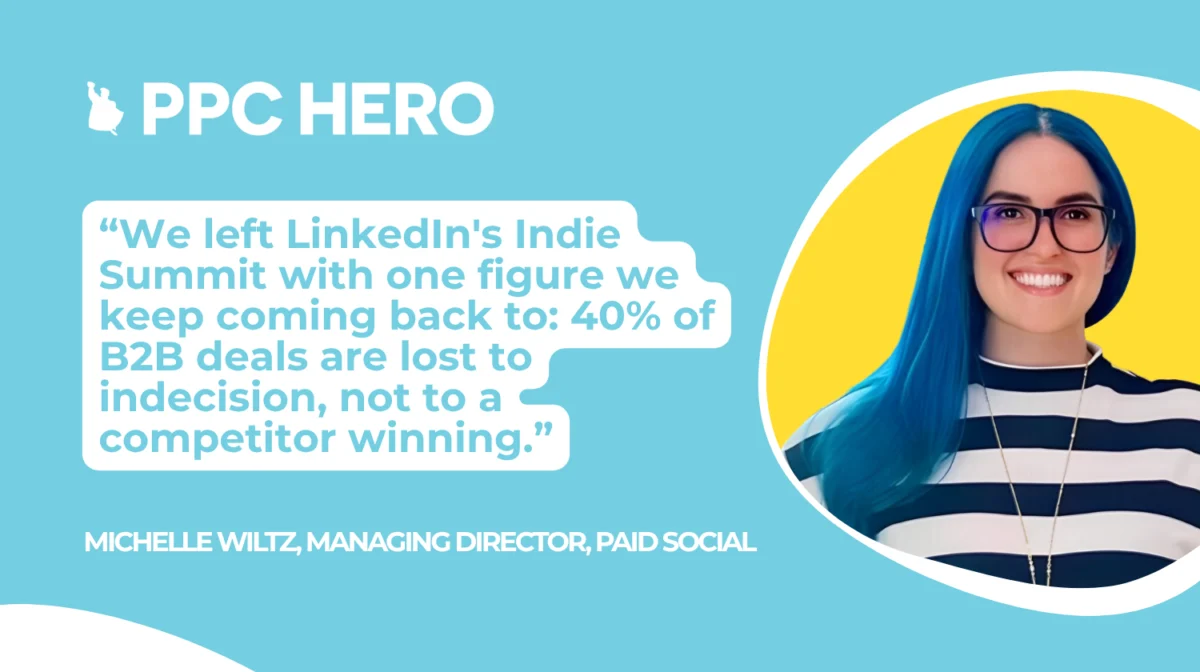
The complex landscape of business-to-business (B2B) sales is increasingly being defined by a pervasive challenge: stalled deals attributed not to competitive losses, but to internal indecision within the prospect organization. This critical insight emerged from LinkedIn’s recent Indie Summit, where a stark statistic underscored the issue: 40% of B2B deals falter due to a lack of consensus, rather than a competitor’s victory. This phenomenon points to a fundamental misalignment between traditional B2B marketing strategies and the evolving reality of modern B2B purchasing committees.
The immediate, and often mistaken, reflex to this statistic is to scrutinize product features or pricing models. However, industry analysts and marketing leaders are increasingly recognizing that the root cause frequently lies deeper, within the intricate dynamics of the B2B buying process itself. Unlike B2C transactions, which can often be driven by a single decision-maker, B2B purchases typically involve a diverse group of stakeholders. This committee can comprise as many as ten individuals, each representing different departments and bringing a unique set of priorities, concerns, and questions to the table. These roles can span from Chief Marketing Officers (CMOs) and Chief Financial Officers (CFOs) to security leads, technical team leaders, and procurement specialists. For a deal to progress, each of these individuals must reach a shared level of confidence and conviction. When no single member actively opposes the proposed solution, but no one is fully convinced either, the deal enters a state of inertia, a silent stall that can be far more damaging than a direct rejection.
This realization necessitates a significant shift in how B2B marketing campaigns are conceived and executed. Historically, many B2B marketing efforts have been engineered with a singular focus: to capture the attention of a primary decision-maker, to articulate a clear competitive advantage, and to propel the prospect towards a definitive conversion. This approach is effective when a single individual holds the ultimate authority. However, it falls critically short when the collective buy-in of ten or more individuals is required. The fundamental question for marketers must evolve from "How do we beat the competition?" to "How do we make it effortless for a group to say ‘yes’?" This paradigm shift impacts every facet of a campaign, from the content created and the platforms where it is distributed, to the very metrics used to measure success.
The Empowered, Pre-Researched Buyer
Adding another layer of complexity to this dynamic is the burgeoning influence of artificial intelligence in the B2B buyer’s journey. LinkedIn’s data further illuminates this trend, revealing that an astonishing 94% of B2B buyers now utilize Large Language Models (LLMs) at some point during their procurement process. This means that the average ten-person buying committee has likely already conducted extensive research before a marketing campaign even reaches them. They have, in essence, deputized AI to compare vendors, analyze market categories, and identify potential solutions. Consequently, they arrive at discussions armed with pre-formed questions and a healthy degree of skepticism, having already navigated much of the initial evaluation phase independently.
This pre-research significantly alters the role and effectiveness of traditional "consideration content." Marketing materials that once focused on positioning a company favorably against its rivals now carry less weight, as the buying group has likely already performed these comparisons without direct vendor input. The true differentiator in today’s B2B landscape is content that directly addresses the specific risks and concerns that are already occupying the minds of these informed buyers. The marketing brief must transition from a narrative of "Here is why we are superior to the alternatives" to a more nuanced and problem-solving approach: "Here is why the specific concern you are currently harboring is not the insurmountable obstacle you might believe it to be." This is a more challenging brief to develop, requiring a deeper understanding of buyer psychology and the intricacies of their decision-making process, but it is the one that accurately reflects how modern B2B purchasing decisions are actually made.
The Strategic Advantage of Video in B2B Engagement
In an environment where building trust and consensus across a diverse group of ten individuals is paramount, and where direct sales interaction may be limited, the need for content that can travel, be revisited, and foster cumulative recognition over time becomes critical. This is where video emerges as a particularly potent tool. LinkedIn’s research provides compelling evidence for video’s effectiveness in this regard. Members who engage with video advertisements are, according to their findings, 1.6 times more likely to complete a lead generation form from the same brand. Furthermore, video content exhibits a remarkable 95% retention rate and is experiencing a growth rate of 60% faster than other content formats on the platform. Anecdotal evidence from agencies indicates a direct correlation between increased investment in video marketing and year-on-year growth, with those leaning into video reportedly achieving 20% growth while their peers remain stagnant. While these figures warrant individual account stress-testing, the overarching trend towards video’s efficacy is difficult to dispute.

The fundamental reason for video’s suitability lies in its inherent ability to disseminate information and build shared understanding. A written asset is typically consumed once, in isolation. In contrast, a video can be easily shared within internal communication channels like Slack, played during team meetings, and viewed by multiple stakeholders simultaneously, including the CFO, team lead, and procurement contact. This shared viewing experience ensures that everyone receives the same context from the same source. This collective exposure is precisely what a buying group striving for alignment requires, a feat that traditional written formats often struggle to achieve.
The Criticality of the Hook: Capturing Attention in a Crowded Feed
However, the potential of video is entirely unrealized if the content fails to be watched. On platforms like LinkedIn, the initial seconds of a video are almost entirely responsible for determining whether engagement occurs. With 86% of members accessing the platform via mobile devices, video advertisements are competing for attention on small screens within a fast-paced and often distracting feed. LinkedIn’s data indicates a significant 36% uplift in click-through rates when a video’s hook opens with a specific number or statistic. Moreover, contrarian statements, questions that directly address a palpable pain point, and content that generates genuine urgency tend to outperform more generic approaches. The common thread uniting these effective hooks is specificity. Generic B2B creative, which could plausibly apply to any product or service, is easily scrolled past. In contrast, content that directly articulates what the viewer is already contemplating or experiencing possesses the power to stop the scroll.
The production value of video content also warrants a strategic re-evaluation. In many instances on LinkedIn, unpolished, lo-fi clips, behind-the-scenes glimpses, and posts showcasing workplace culture have proven more effective than highly polished, professionally produced videos. This may seem counterintuitive, but it aligns with what a cautious buying group is ultimately assessing. They are not solely evaluating the product or service; they are also evaluating the trustworthiness of the vendor. Authenticity, especially for individuals who have already conducted thorough research and are actively seeking reasons to believe, often signals trust more effectively than a high production budget. For those exploring specific formats, LinkedIn’s BrandLink has demonstrated a 130% higher video completion rate compared to standard in-feed video. Additionally, LinkedIn’s Connected TV (CTV) offerings reach 94% of its members, delivering a 2.6 times stronger awareness lift than traditional linear television.
Reframing the Brief: A New Question for Marketers
The challenge of indecision in B2B deal-making is a pervasive and often underestimated obstacle, potentially costing B2B organizations more in lost pipeline revenue than is commonly recognized. Marketing campaigns designed purely to win a competitive comparison are ill-equipped to address this core issue. The strategic deployment of video, distributed in a manner that allows for repeated exposure within the buying group’s context, and crafted with creative that directly confronts real-world risks rather than merely showcasing product features, represents a viable pathway to bridging this critical gap.
Therefore, as B2B marketers prepare their next campaign briefs, a fundamental question must be posed and thoroughly addressed: Are we building this campaign to convince a single individual, or are we designing it to foster the collective comfort and confidence necessary for ten people to move forward? The answer to this question will dictate the strategy, the creative approach, and ultimately, the success of B2B marketing efforts in today’s complex and collaborative purchasing environment.
The implications of this shift are far-reaching. For marketing teams, it signifies a need for deeper buyer persona research that extends beyond individual roles to encompass the group dynamics and collective decision-making criteria. For sales teams, it underscores the importance of providing collateral that supports group-level education and consensus-building, rather than solely focusing on individual stakeholder engagement. For leadership, it highlights the necessity of investing in content strategies that acknowledge and actively address the inherent complexities of B2B buying committees, moving beyond simplistic competitive framing to a more holistic and collaborative approach. The future of successful B2B marketing hinges on this ability to navigate and facilitate group consensus, transforming potential stalls into decisive progress.

 Laily UPN
 Siti Muinah