Adobe Marketo Engage, long a cornerstone for enterprise demand generation, is increasingly facing scrutiny from marketing operations leaders questioning its continued suitability amid a rapidly evolving MarTech landscape. This re-evaluation stems from a confluence of factors, including the rising total cost of ownership, complex operational demands, fragmented data ecosystems, and a perceived slow time to value, prompting a significant market shift towards more integrated and user-friendly marketing automation platforms.
The Shifting Paradigm in Enterprise Marketing Automation
For over a decade, Adobe Marketo Engage has held a prominent position as the go-to platform for large-scale B2B marketing automation. Its robust capabilities in lead nurturing, email marketing, account-based marketing (ABM), revenue attribution, and CRM integration made it an industry standard. However, the foundational design, which often necessitates a separate CRM and a complex integration layer, is increasingly being challenged by modern alternatives that offer unified systems and enhanced agility. As of 2026, nearly half of all marketers report leveraging automation to streamline their processes, underscoring the critical importance of efficient and integrated tools in today’s competitive digital environment. This heightened reliance on automation is fueling an intense competition for market share among platform providers, pushing innovation and driving marketers to seek solutions that promise greater efficiency and a clearer path to ROI.

Key Drivers Behind the Exodus from Marketo
The current trend of enterprises exploring Marketo alternatives is not a sudden phenomenon but rather the culmination of several persistent challenges that have become more pronounced with the accelerating pace of digital transformation and the demand for real-time data insights.
1. High Total Cost of Ownership (TCO)
While Marketo’s licensing fees are substantial, they represent only the initial outlay. The true cost of ownership extends to extensive implementation services, ongoing administrative time, the necessity for numerous third-party integrations, specialized training for staff, and often, expensive add-ons to achieve desired functionalities. Industry estimates frequently place the all-in annual cost of running Marketo at two to three times the base license fee, a figure that often surprises organizations and strains marketing budgets. This comprehensive cost structure makes a compelling case for exploring platforms that offer more transparent and consolidated pricing.
2. Steep Learning Curves and Administrative Dependency
Marketo’s powerful features come with a significant learning curve. Many marketing teams find it challenging to operate the platform independently, often requiring a Marketo-certified administrator or external consulting firms to build campaigns, maintain workflows, and troubleshoot issues. This dependency not only adds to operational costs but also slows down campaign execution and innovation, hindering marketers’ ability to respond swiftly to market changes or new strategic initiatives. The demand for intuitive, marketer-friendly interfaces is now paramount.

3. Fragmented Data Between Marketing and Sales
Despite integrating with leading CRMs like Salesforce, Marketo’s integration often functions as a separate sync layer rather than a unified data environment. This can lead to data sync delays, inconsistencies in lead records, and significant friction in the crucial handoff between marketing and sales teams. In an era where revenue operations (RevOps) demands seamless alignment and a single source of truth, fragmented data is a critical impediment to accurate forecasting, personalized customer experiences, and efficient pipeline management. Modern revenue teams cannot afford such disconnects.
4. Slow Time to Value
Implementation timelines for Marketo are notoriously long, often ranging from three to six months before teams are fully operational and can begin to realize the platform’s benefits. For businesses under pressure to generate pipeline and demonstrate immediate impact, this extended ramp-up period is increasingly unacceptable. The market now favors platforms that offer quicker onboarding and faster deployment, allowing teams to launch campaigns and gather insights in weeks, not quarters.
The Rise of Unified Platforms and AI in MarTech
The broader MarTech landscape is rapidly evolving, driven by the imperative for tighter integration, enhanced user experience, and the transformative power of artificial intelligence. Platforms that offer a unified architecture, combining marketing automation with CRM functionalities, are gaining significant traction. This integrated approach fundamentally addresses the data fragmentation issues inherent in siloed systems, providing a holistic view of the customer journey from first touch to closed deal.
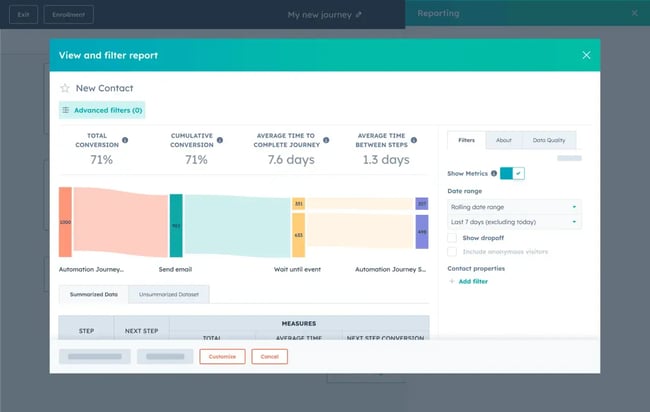
Furthermore, AI is no longer a niche feature but a core component of advanced marketing automation. AI capabilities are being leveraged for predictive lead scoring, automated content generation, personalized email send-time optimization, summarization of complex data, and advanced analytics insights. These intelligent features are empowering marketers to achieve greater personalization, efficiency, and effectiveness without requiring extensive technical expertise, effectively democratizing advanced marketing capabilities.
Leading Marketo Alternatives: A Deep Dive
For B2B marketing leaders, RevOps professionals, and agency principals evaluating a switch, a curated shortlist of alternatives, matched to team size, existing tech stack, and specific use cases, is essential. The following platforms represent strong contenders in the market:
1. HubSpot Marketing Hub + Smart CRM: The Unified Contender
HubSpot stands out as a comprehensive Marketo alternative due to its unified system design. Built from the ground up to integrate marketing automation and CRM, HubSpot eliminates the need for separate CRM and complex integration layers, directly addressing data silos across marketing, sales, and service.
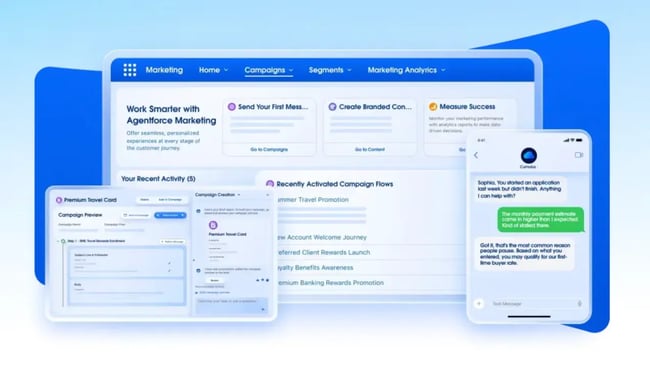
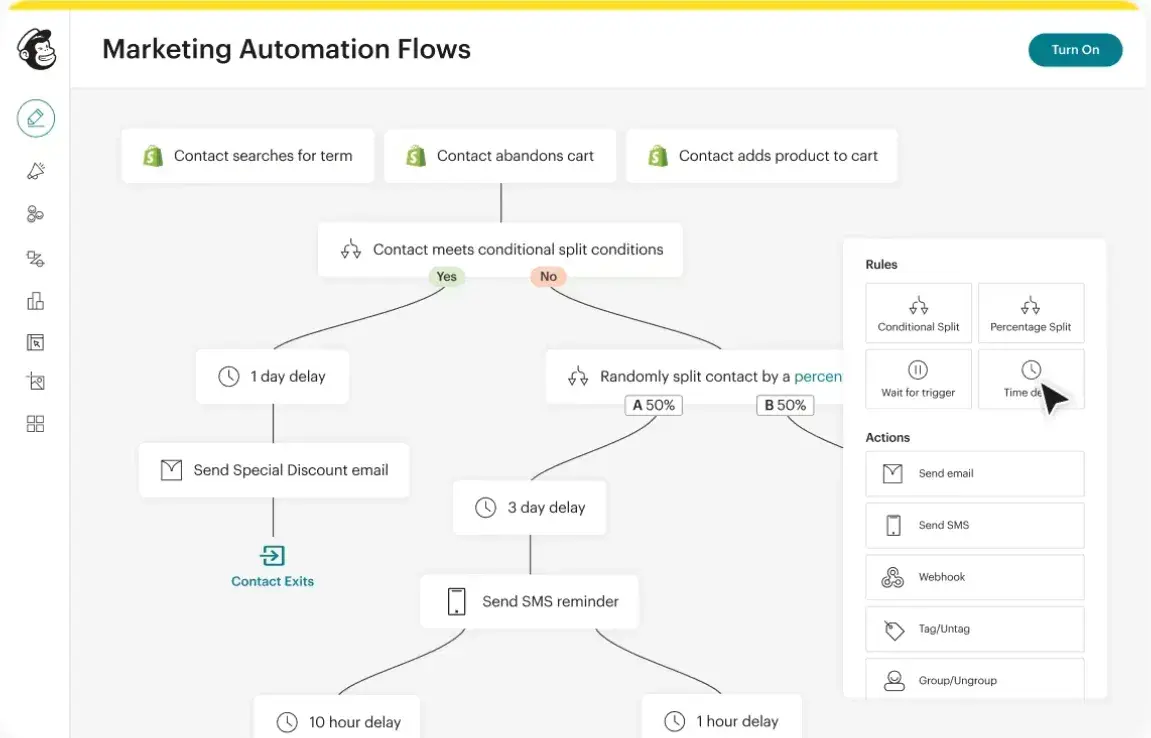
- Marketing Automation: HubSpot’s visual workflow builder allows marketing teams to create lead nurture sequences, trigger-based campaigns, and multi-step automation using a drag-and-drop editor, significantly reducing the reliance on technical experts or IT. Siddharth Deswal, Founder of Enfra and an AI-powered SEO/GEO platform builder, and a long-time HubSpot user, praises its "simplicity, power, and great design all in one package."
- Customer Journey Orchestration: This feature enables end-to-end automation across email, social, and messaging channels, with real-time CRM data triggering each step, ensuring immediate adaptation to contact status changes.
- AI-Powered Lead Scoring: HubSpot’s AI-assisted fit and engagement scoring automatically prioritizes leads based on behavior and Ideal Customer Profile (ICP) data, with scores directly surfacing in the CRM for sales alignment. Deswal notes that HubSpot’s adaptive AI scoring "reduces the manual overhead considerably" compared to Marketo’s often complex configuration.
- Advanced Reporting and Revenue Attribution: Native multi-touch revenue attribution and customer journey analytics allow marketing teams to directly link campaigns to closed revenue without extensive custom reporting setups.
- Marketing Studio: Consolidates campaign planning, content creation, and execution into one AI-powered workspace, reducing coordination overhead.
- AI-Powered Emails: Automates personalized 1:1 email content at scale using live CRM data, eliminating manual segmentation and token-building.
- Contact Management and Smart CRM: Stores every interaction in a unified contact record, providing full context to both marketing and sales. Pricing starts with a free tier, with professional plans beginning at $800/month, scaling with contact volume.
2. Salesforce Marketing Cloud Account Engagement (Pardot): Leveraging Existing Ecosystems
Salesforce Marketing Cloud Account Engagement (formerly Pardot) is a strong option for organizations already deeply embedded in the Salesforce CRM ecosystem. Its native integration ensures seamless flow of contact records, opportunity data, and engagement history.
- Key Features: Includes lead scoring, Salesforce-native sync, and engagement programs. Deswal, having used Pardot, commented on its perceived lack of "intelligence or capabilities for landing page creation that we had become used to in HubSpot."
- Tradeoff: Its value proposition significantly diminishes outside the Salesforce ecosystem, making it less ideal for organizations not using Salesforce as their primary CRM. Pricing starts at $25/month for a Starter plan.
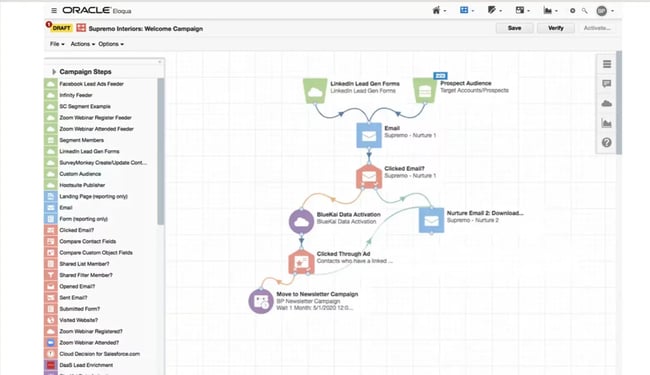
3. Oracle Eloqua: The Enterprise Powerhouse with Caveats
Oracle Eloqua is often compared to Marketo in terms of enterprise scale and complexity, supporting highly sophisticated multi-touch programs, global deployment, and advanced ABM.
- Key Features: Offers advanced segmentation, ABM capabilities, and global scalability. Deswal described Eloqua as "basically an expensive email marketing system with powerful lead management capabilities… It wasn’t a platform built for the modern marketer."
- Tradeoff: Shares similar implementation complexity, high cost profiles, and admin dependency with Marketo, prompting careful evaluation to ensure it genuinely solves root problems rather than just replacing one complex system with another. Pricing is custom and typically in the mid-to-high enterprise range.
4. ActiveCampaign: Agility for Growing Mid-Market Teams
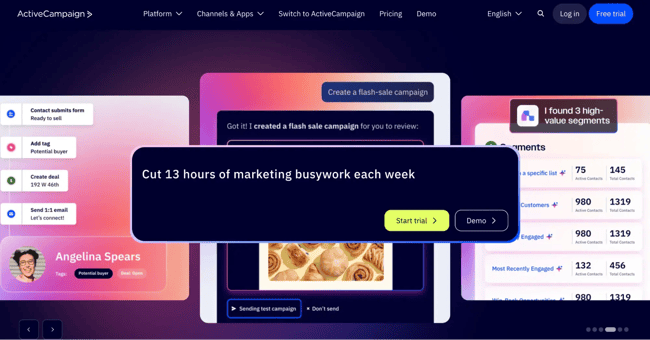
ActiveCampaign targets SMBs and mid-market teams, providing robust email automation without the enterprise pricing or implementation complexity.
- Key Features: Strong email automation, a built-in CRM, and segmentation capabilities. Its accessible automation builder makes it appealing for teams seeking to escape Marketo’s complexity.
- Tradeoff: Reporting and attribution capabilities are lighter compared to Marketo or HubSpot, potentially limiting teams reliant on deep multi-touch attribution analytics. Pricing starts at $15/month.
5. Zoho Marketing Automation: Value within a Holistic Suite
Zoho Marketing Automation is ideal for teams already utilizing the Zoho ecosystem, particularly Zoho CRM. It offers seamless native integration within the Zoho suite.
- Key Features: Email campaigns, landing page creation, and lead scoring. The combined cost of the Zoho suite is highly competitive for budget-conscious teams.
- Tradeoff: Integration options are more limited outside the Zoho ecosystem, and it may feel less robust for teams accustomed to Marketo’s advanced ABM and enterprise segmentation. Pricing starts at $14/month.
6. Microsoft Dynamics 365 Customer Insights: The Microsoft-Centric Solution
For organizations deeply invested in the Microsoft 365 and Dynamics CRM ecosystem, Microsoft Dynamics 365 Customer Insights offers native integration with tools like Teams, SharePoint, and Power BI.
- Key Features: Event marketing, B2B journeys, and Copilot AI for content generation and campaign optimization.
- Tradeoff: Features a complex licensing structure and typically requires significant IT involvement for implementation, making it less suitable for non-Microsoft shops. Pricing starts from $1,700.00/month for the marketing application.
7. Mailchimp: Entry-Level, Not Enterprise-Grade
Mailchimp, while popular for its ease of use and free tier, is generally not a like-for-like replacement for Marketo for complex B2B demand generation.
- Key Features: User-friendly email creation, automation, and audience management. Deswal notes its "very nice email and newsletter designs" but adds that it’s "not all that powerful for sophisticated marketing." He recommends it for "any brand that’s just starting out."
- Best For: Small teams and early-stage companies with straightforward email programs. Not suitable for complex B2B nurture sequences, ABM requirements, or multi-touch attribution needs. Pricing includes a free tier, with paid plans from $13/month.
Strategic Considerations for Transitioning Platforms
Choosing a Marketo alternative requires a strategic approach to avoid simply trading one set of problems for another. Decision-makers must evaluate platforms against their specific needs and future aspirations.
1. Comprehensive Feature Alignment
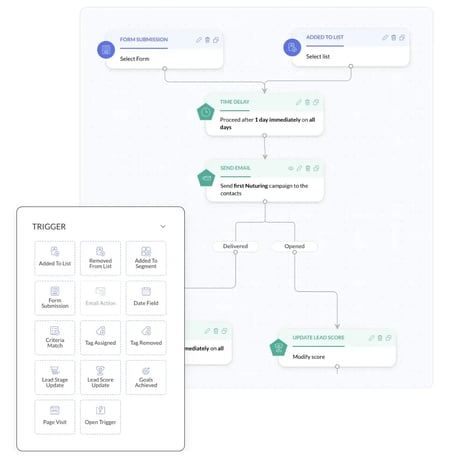
A thorough assessment of marketing automation capabilities is critical. This includes evaluating branching logic, trigger mechanisms, lead scoring methodologies, ABM support, and workflow flexibility. Organizations should map their most critical Marketo programs—such as nurture sequences, lead routing, alert triggers, and scoring—and request vendors to demonstrate how these would be replicated in their platform, focusing on ease of use and reduced complexity.
2. Seamless CRM Integration and Data Governance
The primary motivator for many switches is data fragmentation. Therefore, the depth and nature of CRM integration are paramount. A unified CRM and marketing platform, or one with a robust and genuinely native integration model, can significantly reduce data silos, improve lead handoffs, and provide a single, consistent view of customer data across marketing, sales, and service. This also necessitates evaluating how the new platform handles data hygiene, deduplication, and overall data governance.
3. Evaluating Total Cost of Ownership (TCO)
Beyond license fees, a realistic TCO estimate must encompass implementation services, ongoing administrative costs, required integrations, training, and potential add-ons. Organizations should request a full TCO breakdown from prospective vendors and compare it against their current fully loaded Marketo costs to ensure the switch offers genuine financial benefits.
4. Streamlined Migration and Onboarding Processes
The ease of transition is a significant factor. Vendors should provide clear outlines of their standard migration processes, including data export/import capabilities, content migration tools, and integration mapping. Robust onboarding support and structured training programs are crucial for rapid team adoption and realizing value quickly.
The Migration Imperative: Best Practices for a Smooth Transition
Migrating from Marketo can feel daunting, but a structured, phased approach can mitigate risks and ensure a smooth transition.
- Audit Existing Marketo Usage: Begin by identifying and documenting only the actively used programs, smart lists, scoring rules, and reports that are driving results. Discarding dormant or ineffective programs before migration streamlines the process.
- Data Export and Cleansing: Export all critical data, including contacts, lead scores, activity history, and campaign associations. Crucially, clean this data before migration to avoid transferring duplicate records or bad data, which can exacerbate problems in the new system.
- Map All Integrations: Create an exhaustive list of every tool currently integrated with Marketo (CRM, ad platforms, webinar tools, data enrichment, content tools). Confirm native integration availability or reliable connectors in the target platform before commitment.
- Prioritize Program Reconstruction: Instead of attempting a simultaneous migration of all programs, prioritize high-impact functions first, such as top-of-funnel nurture sequences, lead routing, and sales alert triggers. Get these operational in the new platform before moving to lower-priority content.
- Validate Data Sync Pre-Launch: If the new platform integrates with an external CRM, conduct a parallel test period (2-4 weeks) to verify that contact records, scoring data, and campaign associations sync accurately and without delay. This helps catch errors before live campaigns are affected.
- Plan Go-Live Strategically: Choose a go-live date that avoids peak campaign periods or critical business cycles. A mid-quarter switch often provides sufficient time for stabilization before high-volume activities.
- Invest in Team Training: Allocate dedicated, structured training time for the entire team. Effective onboarding in the initial 4-6 weeks is vital for faster adoption and preventing reliance on old workarounds.
Outlook: The Future of Marketing Automation
The shift away from legacy enterprise platforms like Marketo reflects a broader industry trend towards integrated, intelligent, and user-centric marketing technology. The increasing demand for a unified customer view, agile campaign execution, and demonstrable ROI is reshaping the MarTech landscape. Platforms that can seamlessly connect marketing, sales, and service data, offer intuitive interfaces, and embed AI-driven insights will continue to gain market share. For organizations, the decision to switch from Marketo is not merely a technical upgrade but a strategic move to optimize their entire revenue engine, ensuring they remain competitive in a data-driven, customer-centric world. The opportunity cost of clinging to outdated or overly complex systems is growing, making a thoughtful evaluation of modern alternatives a business imperative.