Commercial email marketing stands as one of the most potent digital marketing channels, consistently generating an impressive return on investment (ROI) ranging from $10 to $36 for every dollar spent. This remarkable efficacy, however, hinges on meticulous execution, ensuring carefully crafted campaigns not only reach their intended audience but also engage them effectively, avoiding the ubiquitous pitfalls of spam folders and rendering inconsistencies, particularly in diverse environments like dark mode. Far from being mere marketing jargon, the distinction between commercial and transactional email is a fundamental factor for legal compliance, deliverability success, and ultimately, a healthy sender reputation. This article aims to demystify these definitions, explore the most impactful types of commercial emails, and outline the technical and strategic best practices that elevate campaigns from spam-folder casualties to inbox champions.
The Foundational Definition and Regulatory Landscape
At its core, a commercial email is defined by its primary purpose: the advertisement or promotion of a product, service, or brand. This definition is not arbitrary; it is legally enshrined by regulations such as the Federal Trade Commission’s (FTC) CAN-SPAM Act in the United States, which provides the bedrock for maintaining campaign compliance and safeguarding a sender’s reputation. Enacted in 2003, the CAN-SPAM Act set forth specific requirements for commercial messages, including accurate header information, a clear and conspicuous unsubscribe mechanism, and a valid physical postal address of the sender. Globally, similar legislation, such as the General Data Protection Regulation (GDPR) in Europe (implemented in 2018) and the California Consumer Privacy Act (CCPA) (effective 2020), further tightens the framework around data privacy and consent, demanding explicit opt-in for commercial communications and transparent data handling practices. These regulations underscore that email marketing is not merely a technical exercise but a legal and ethical one, with significant penalties for non-compliance, including substantial fines and damage to brand credibility.
Commercial vs. Transactional Email: A Critical Distinction
Understanding the nuanced difference between commercial and transactional emails is paramount for marketers. While commercial emails are primarily designed to promote, transactional emails serve a different, equally critical function: facilitating an agreed-upon transaction or relationship. Examples include order confirmations, shipping updates, password reset links, account notifications, or customer service responses. This distinction carries significant legal weight; transactional emails often have different, less stringent compliance requirements than commercial messages, and they typically boast superior deliverability rates due to their expected and often eagerly anticipated nature by recipients.
The "hybrid gray area" emerges when emails blend both purposes. For instance, a purchase receipt that includes a promotional coupon code for a future purchase. In such cases, the FTC applies the "primary purpose test." If the main goal of the email is to confirm a purchase, it’s considered transactional. If, however, the overwhelming intent is to drive another sale, it shifts into the commercial category, subjecting it to the full scope of commercial email regulations. Industry analysts and legal experts consistently advise caution in this gray area, recommending that marketers err on the side of caution by treating hybrid emails as commercial if there’s any ambiguity regarding their primary intent, to ensure full compliance.
Driving Results: Key Types of Commercial Emails
Effective commercial email marketing is a multifaceted discipline, employing various email types to achieve specific business outcomes across the customer lifecycle. Maestros of email marketing understand that each type plays a distinct role, demanding tailored content, design, and timing.
1. The Promotional Blast: These are the high-impact, rapid-fire campaigns designed for immediate conversions. Think of flash sales, seasonal discounts, new product announcements, or limited-time offers. Promotional blasts are the sprint runners of commercial email, built for speed, direct focus, and quick conversions. They typically feature strong calls-to-action (CTAs), compelling visuals, and a sense of urgency. To maximize their impact, segmentation is key, targeting specific customer groups most likely to respond to a particular offer. For example, a clothing retailer might send a targeted promotion for winter coats exclusively to customers in colder climates.
2. The Newsletter: In contrast to the sprint of a promotional blast, newsletters are the marathon. They are designed for long-term engagement and relationship building, delivering valuable content, company news, industry insights, or curated product selections over time. Newsletters foster brand loyalty, position the sender as an authority, and keep the brand top-of-mind without overtly pushing for immediate sales in every edition. They are crucial for nurturing leads, educating customers, and cultivating a community around the brand. Success here relies on consistent quality, relevance, and a balanced mix of informative and subtly promotional content. A tech company, for instance, might send a monthly newsletter featuring articles on new technologies, product updates, and customer success stories.

3. The Retention/Re-engagement Email: These emails are the comeback specialists, designed to win back subscribers who have become inactive, drifted away, or abandoned their shopping carts. They aim to reactivate dormant customers, reduce churn, and recover potentially lost revenue. Strategies include offering exclusive discounts to re-engage, highlighting new features or products, or simply reminding subscribers of the value proposition they might be missing. Effective retention emails require careful timing and personalized messaging, often triggered by specific inactivity periods or behaviors. For example, an online streaming service might send an email to a subscriber who hasn’t logged in for a month, offering personalized recommendations or a special discount on their next billing cycle.
4. The Product Launch/Update: These emails serve as the starting pistol for your latest innovations, signaling that something new and exciting is on the horizon. They build anticipation, generate excitement, and inform customers about new offerings, feature enhancements, or significant updates. Product launch emails often involve a multi-stage campaign, beginning with teasers, moving to detailed reveals, and culminating in purchase opportunities. They are critical for driving early adoption and creating buzz around new developments. A software company, for instance, would send a series of emails leading up to a major version release, detailing new features, benefits, and upgrade instructions.
The Technical Imperative: Mastering Deliverability and Compliance
While strategy sets the course, meticulous execution and technical proficiency win the race in email marketing. The difference between campaigns that yield exceptional ROI and those that languish in spam folders often comes down to adhering to stringent best practices in compliance, deliverability, design, personalization, and testing.
1. Prioritize Compliance: The Legal and Ethical Foundation
Compliance is non-negotiable. Beyond the specific requirements of CAN-SPAM (which mandate a clear physical business address and a one-click unsubscribe mechanism, now also a major requirement for leading mailbox providers like Google and Yahoo), marketers must honor unsubscribe requests promptly, ideally within 48-72 hours, though legally up to 10 business days. Furthermore, the "from" name and subject line must accurately represent the content of the email, avoiding deceptive practices. For global audiences, adherence to GDPR and CCPA is critical, demanding explicit consent for data collection and processing, and providing individuals with rights over their personal data. Compliance isn’t just about avoiding fines; it builds trust with subscribers, which directly translates into improved engagement rates. Transparent and honest email practices signal to recipients and Internet Service Providers (ISPs) that a sender is legitimate and trustworthy, thereby positively impacting sender reputation.
2. Master Deliverability: Reaching the Inbox
Email deliverability is the ability of an email to successfully land in a subscriber’s inbox, bypassing spam filters and blocklists. It’s a complex ecosystem where mailbox providers (MBPs) assign every sender a dynamic reputation score, based on a myriad of signals: engagement rates, complaint rates, bounce rates, list hygiene, and sending volume consistency. This reputation dictates whether an email reaches the inbox, is shunted to spam, or blocked entirely.
To earn a coveted spot in the inbox, authentication is the foundational step. SPF (Sender Policy Framework), DKIM (DomainKeys Identified Mail), and DMARC (Domain-based Message Authentication, Reporting & Conformance) are indispensable protocols that prove to MBPs that the sender is legitimate and authorized to send emails from a particular domain, preventing spoofing and phishing. Recent changes by major providers like Google and Yahoo in early 2024 have made DMARC enforcement mandatory for bulk senders, significantly raising the bar for deliverability.
However, authentication alone is insufficient for a poor sender reputation. What truly moves the needle includes:
- Engagement: Low open and click-through rates are red flags to MBPs, signaling that recipients may not value the mail. Proactive re-engagement campaigns or suppressing inactive subscribers are crucial to maintain a healthy engagement profile.
- Complaint Rates: Every "report spam" action severely damages sender reputation. Rates must be kept below 0.1%. High complaint rates often indicate issues with list acquisition quality (e.g., purchased lists) or sending frequency, rather than content problems.
- List Hygiene: Regular list cleaning is essential. Hard bounces (permanent delivery failures), spam traps (email addresses used by ISPs to identify spammers), and role-based addresses (like info@ or admin@) all detrimentally impact reputation. Validating email addresses and removing chronic non-engagers are critical.
- Send Consistency: Sudden, drastic spikes in email volume appear suspicious to MBPs. For large campaigns or increased sending frequency, a gradual "warming up" process allows MBPs to recalibrate sender reputation at the new volume, preventing throttling or blocking.
- Dedicated IPs/Subdomains: For organizations sending both commercial and transactional emails, using separate subdomains or dedicated IP addresses is a strategic best practice. This isolation ensures that a performance issue with a commercial campaign does not negatively impact the deliverability of critical transactional emails, thereby safeguarding essential customer communications.
3. Design for Every Environment: Accessibility and User Experience
Modern email campaigns must be designed with versatility in mind. The widespread adoption of dark mode across devices and email clients presents a significant challenge; poorly optimized emails can render with invisible text, disappearing logos, or unreadable color contrasts. The fix involves specific CSS techniques and rigorous testing to ensure brand colors, images, and text maintain visibility and aesthetic appeal across both light and dark interfaces.
Equally crucial is mobile responsiveness. With a significant portion of emails opened on smartphones, designs must prioritize mobile-first principles: single-column layouts, large, easily tappable touch targets (at least 44 pixels square), and thumb-friendly button placement. Marketers must test their designs across a multitude of email clients and devices. An email that appears flawless on a desktop in light mode could be entirely unusable on a mobile device in dark mode, underscoring the need for comprehensive testing across every combination relevant to the target audience.
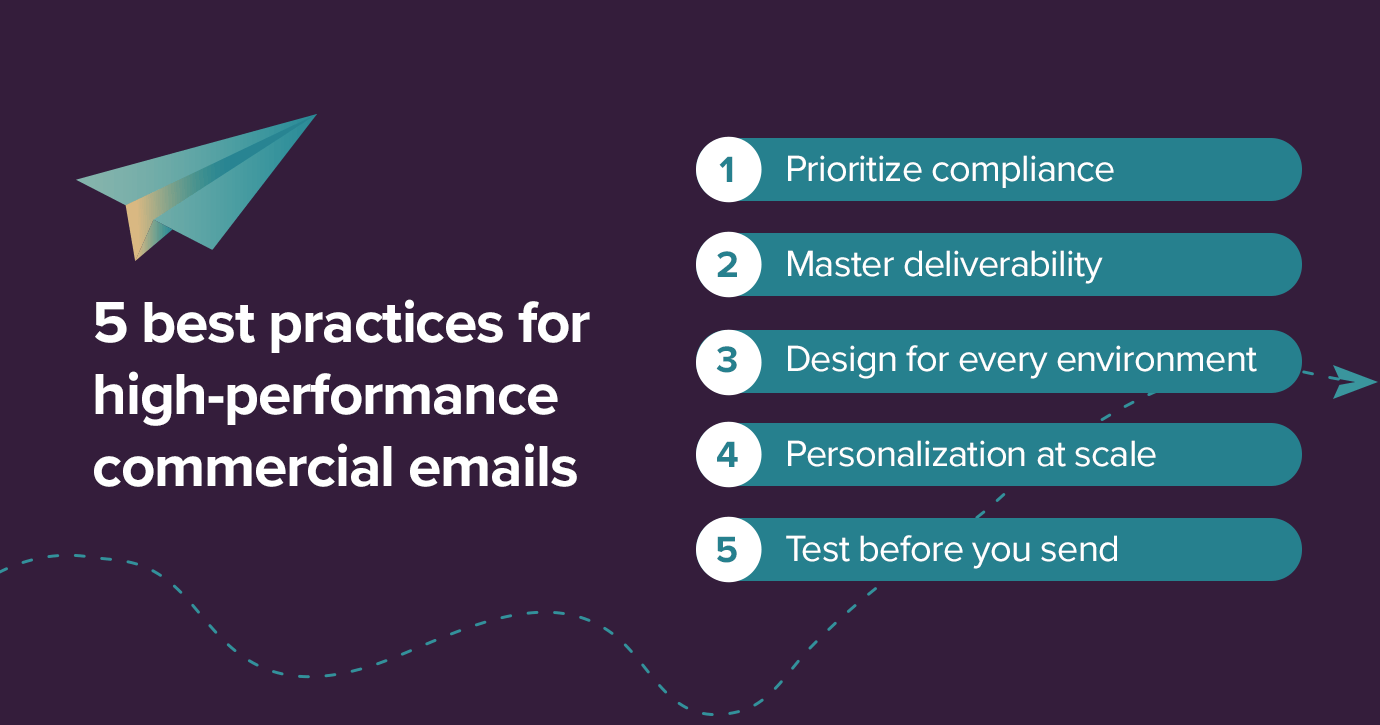
4. Personalization at Scale: Beyond "Hi [Name]"
Basic "Hi [Name]" personalization is no longer sufficient. True personalization at scale involves leveraging dynamic content blocks driven by rich customer data: purchase history, browsing behavior, engagement patterns, demographics, and even geographic location. This allows for the creation of highly relevant and individualized experiences. Advanced personalization might involve showing different product recommendations to frequent buyers versus first-time visitors, adjusting send times based on individual past engagement patterns, or dynamically changing content based on weather conditions in the recipient’s locale.
The key to successful personalization is a phased approach. Start simple with behavioral triggers like abandoned cart emails or welcome series, then progressively expand to more sophisticated segmentation and dynamic content. Data consistently shows that even basic behavioral personalization significantly outperforms demographic segmentation alone, leading to higher open rates, click-through rates, and conversion rates. Industry reports indicate that personalized emails can generate six times higher transaction rates.
5. Test Before You Send: Mitigating Risk and Ensuring Quality
The digital ecosystem of email clients and devices is incredibly fragmented, with over 100 different rendering environments. This fragmentation means that what looks perfect in an email builder can easily break in a subscriber’s inbox, leading to broken links, rendering issues, and formatting disasters. A single technical glitch can undermine brand credibility, frustrate recipients, and negate the entire effort of a campaign.
This risk, however, is entirely manageable through robust pre-send testing. Tools like Litmus allow marketers to preview emails across 90+ clients and devices, catching critical issues like dark mode failures, mobile formatting problems, or unresponsive designs before deployment. Beyond visual rendering, these platforms enable testing of subject lines for spam filter triggers, verification of link functionality, and ensuring Calls-to-Action (CTAs) are clickable and prominent across all environments. Comprehensive testing is not merely a quality assurance step; it is an essential investment in protecting brand reputation and maximizing campaign ROI.
Industry Trends and Future Outlook
The landscape of commercial email marketing is continuously evolving. Emerging trends include the increasing integration of Artificial Intelligence (AI) for advanced segmentation, predictive analytics for optimal send times, and even AI-powered content generation. Enhanced privacy regulations are likely to continue, making first-party data and consent-based marketing even more critical. Interactive emails (AMP for Email) are gaining traction, allowing for richer, app-like experiences directly within the inbox. Despite these technological advancements, the core principles of delivering value, respecting subscriber preferences, and adhering to compliance standards will remain paramount.
Conclusion: Train Like a Champion, Send Like a Pro
Commercial email is unequivocally a powerful revenue driver, but its potential is unlocked only through a commitment to strategic design, meticulous execution, and unwavering adherence to deliverability best practices. Understanding the nuanced definitions, leveraging the right types of campaigns, and implementing rigorous technical and strategic protocols are the hallmarks of successful email marketing. The difference between generating that coveted $36 ROI and seeing campaigns languish in spam folders often boils down to technical execution and comprehensive pre-send testing. As the digital marketing arena grows more competitive, email remains a direct, personal, and highly effective channel. It’s time for marketers to lace up their campaign shoes and sprint toward inbox success, building, testing, and analyzing every campaign with confidence to ensure every message not only reaches its destination but also resonates powerfully with its intended audience.


 Iffa Jayyana
 Pevita Pearce