In the contemporary digital landscape, the distinction between a successful marketing campaign and a failed one often hinges not on the quantity of resources deployed, but on the precision of their integration. As organizations grapple with an increasingly fragmented media environment, the reliance on siloed departments—where social media, public relations, and advertising teams operate independently—has become a liability. Industry experts argue that the modern marketing landscape requires a shift from simple coordination to a fully integrated operating system. This systemic approach is best exemplified through the PESO Model (Paid, Earned, Shared, and Owned media), a framework that, when executed correctly, ensures that every tactical element amplifies the others to drive a singular, measurable objective.
The challenge facing many CMOs and marketing directors today is the "coordination trap." In this scenario, all components of a campaign may launch simultaneously, but they lack a cohesive narrative or a unified technical infrastructure. Much like a recipe that contains premium ingredients but lacks the proper preparation sequence, a marketing strategy that features high-budget paid ads and prestigious earned media placements can still fail to convert if those elements do not guide the audience toward a clear, optimized destination. To achieve a high return on investment (ROI), organizations must move beyond the superficial alignment of schedules and toward the deep integration of strategy.
The Foundations of the PESO Model
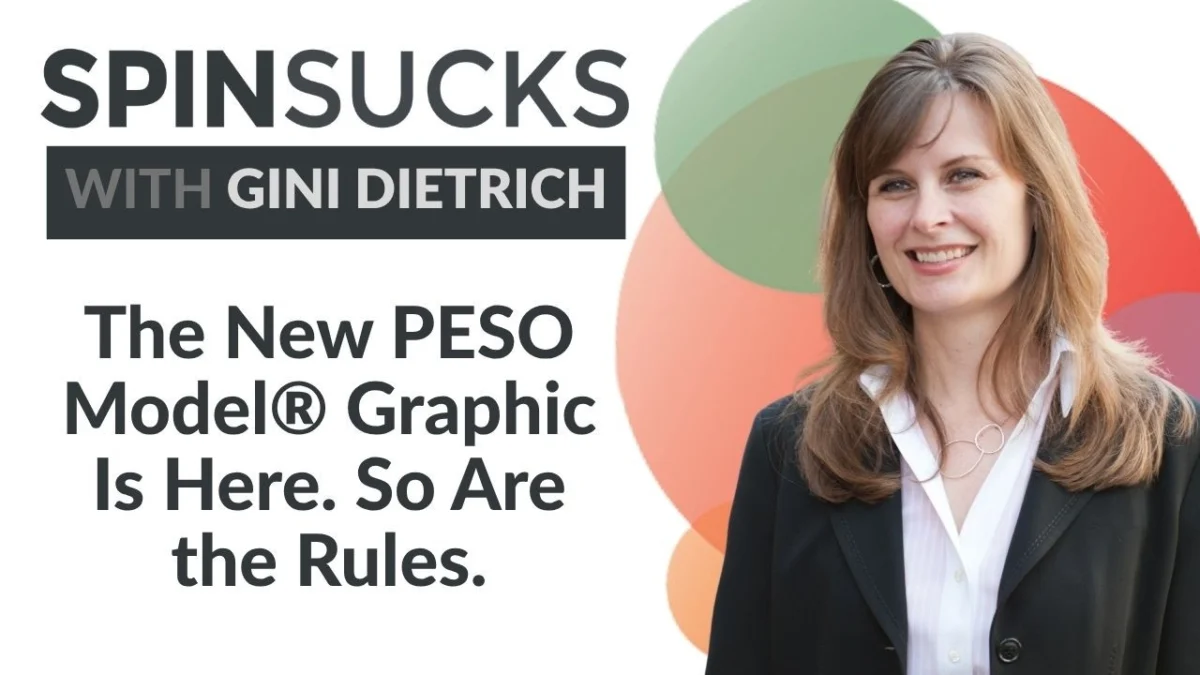
The PESO Model, originally pioneered by Gini Dietrich, has become the industry standard for holistic communication strategy. To understand the necessity of integration, one must first define the four pillars of the framework:
- Paid Media: This encompasses any marketing effort that requires a financial exchange for placement. In the modern era, this extends beyond traditional television or print ads to include social media boosting, sponsored content, search engine marketing (SEM), and influencer partnerships.
- Earned Media: Often referred to as "public relations" in its traditional sense, earned media is the result of building relationships with journalists, bloggers, and industry influencers to secure coverage. It is the most credible form of media because it carries the third-party validation of an objective outlet.
- Shared Media: This involves the social media ecosystem. It is "shared" because the brand does not fully control the platform or the distribution; instead, the audience engages with and redistributes the content. It is the primary vehicle for community building and engagement.
- Owned Media: This refers to the assets a brand controls entirely, such as its website, blog, whitepapers, and email newsletters. Owned media is the ultimate destination for most marketing funnels, as it is where the brand can most effectively convert a lead into a customer.
The failure of many modern campaigns stems from treating these four pillars as separate silos. When the earned media team secures a feature in a major publication like The Wall Street Journal or Allure, but the shared media team fails to promote that article, and the paid media team does not use it as social proof in retargeting ads, the value of that "hit" is significantly diminished.
Coordination vs. Integration: A Critical Distinction
A recurring theme in marketing post-mortems is the confusion between coordination and integration. Coordination is a logistical achievement; it means that the paid, earned, shared, and owned assets all appeared on the same day or during the same week. Integration, however, is a strategic achievement. It means that every piece of content was designed to support the others and lead the consumer through a specific journey.
For instance, a coordinated launch for a new consumer product might see a television ad air on the same day a press release is distributed. While this creates a "noise" effect, it often leads to "leaky" funnels. If the television ad directs viewers to a general homepage while the press release links to a specific product page, the consumer experience is fractured.
In contrast, an integrated campaign ensures that if a consumer sees a "shared" post on Reddit or TikTok, that post contains a link to a "paid" landing page that has been optimized with "earned" media logos to build trust. This creates a compounding effect where the total impact of the campaign is greater than the sum of its individual parts.
Chronology of an Integrated Campaign Launch
To visualize the difference between these two approaches, consider the following timeline of a beauty product launch, contrasting a disjointed effort with a fully integrated strategy.
Phase 1: Pre-Launch and Strategy Alignment
In a disjointed campaign, the PR team begins pitching media while the creative team builds a landing page in a vacuum. In an integrated campaign, the first step is a cross-departmental summit. The teams align on a "Single Source of Truth"—a specific landing page (Owned) that will serve as the destination for all traffic. They determine how the Earned media hits will be used to create "Shared" content and how "Paid" dollars will be used to boost the reach of the most successful "Earned" stories.
Phase 2: The Launch Day Execution
On launch day, a coordinated but non-integrated campaign might see influencers posting content that lacks a call-to-action (CTA) or links to the wrong page. Meanwhile, an integrated campaign ensures that every influencer (Shared) uses a tracked link to the optimized landing page (Owned). As soon as an article is published in a major outlet (Earned), the Paid media team immediately creates "social proof" ads featuring the headline of that article, targeting users who have already engaged with the brand’s Shared content.
Phase 3: Post-Launch Optimization
In the weeks following the launch, a non-integrated team often stops communication once the initial "buzz" dies down. An integrated team, however, looks at the data. They take the most frequently asked questions from the Shared media comments and turn them into a new blog post (Owned), which is then distributed via an email newsletter and used as the basis for a new round of Paid search ads.
Supporting Data and Market Analysis
The move toward integrated marketing is backed by significant industry data. According to a report by Gartner, organizations that utilize integrated marketing strategies see a 30% higher conversion rate than those that rely on siloed tactics. Furthermore, research from HubSpot indicates that 82% of marketers who integrate their PR and SEO efforts report a noticeable increase in brand authority and organic search rankings.
The psychological impact on the consumer is also measurable. The "Rule of Seven" in marketing suggests that a consumer needs to see a brand’s message at least seven times before they take action. When those seven touchpoints are integrated—seeing an ad, reading a news article, seeing a friend’s post, and then receiving an email—the message is reinforced. When those touchpoints are disjointed, the consumer may not even realize they are looking at the same brand, effectively resetting the counter with every interaction.
Official Responses and Industry Sentiment
Leading figures in the marketing space have long advocated for this systemic shift. Gini Dietrich, the creator of the PESO Model, has frequently stated that "the magic happens in the middle." This "middle" refers to the overlap between the four circles of the model. For example, the overlap between Paid and Earned is "Amplified Earned Media," where brands pay to ensure their best press coverage reaches a wider audience.
Agency leaders have noted that the biggest barrier to integration is often internal politics. "Teams are often incentivized by their own specific KPIs," says one senior marketing consultant. "The PR team wants mentions, the social team wants likes, and the paid team wants clicks. Unless the leadership mandates a shared goal—such as ‘revenue generated from this specific landing page’—the integration will always break down at the departmental level."
Implications for the Future of Marketing
As artificial intelligence (AI) begins to play a larger role in content creation and media buying, the need for human-led integration will only grow. While AI can generate a thousand "Shared" posts or optimize a "Paid" bid in milliseconds, it cannot yet architect a complex, multi-channel strategy that requires deep empathy for the consumer journey.
The broader implication for brands is clear: the era of the "generalist" campaign is over. Success in the next decade will belong to the "specialist integrators"—those who understand that a marketing system is an ecosystem. If one part of the ecosystem is neglected or disconnected, the entire system suffers.
In conclusion, the PESO Model is not merely a checklist of tactics to be checked off in isolation. It is a blueprint for a high-performance engine. To avoid "lukewarm" results, marketing leaders must ensure that their teams are not just working at the same time, but working toward the same objective, using each other’s strengths to amplify the brand’s voice. Without intentional collaboration, even the best ingredients will fail to produce a result that satisfies the modern, discerning consumer.