Google has recently unveiled updated documentation for its "Crawling infrastructure," introducing a crucial section titled "Optimize your crawl budget." This comprehensive guide provides website owners and developers with actionable strategies to enhance the discoverability of their pages by Google’s bots. The significance of this guidance lies in the fundamental principle that a page must be successfully crawled by Googlebot to be considered for indexing and subsequent appearance in search engine results pages (SERPs).
The introduction of a "crawl budget" concept acknowledges the immense scale of the global internet and the finite resources Google allocates to crawling. For websites, this translates to a metaphorical allowance of how many pages Googlebot can visit and process within a given timeframe. A poorly organized or technically inefficient website is likely to exhaust its crawl budget more rapidly, leading to fewer pages being indexed and, consequently, reduced visibility in Google Search. This update underscores Google’s commitment to helping publishers manage their online presence more effectively by providing transparent guidelines on how their sites interact with the search engine’s core indexing processes.
Understanding the Crawl Budget: A Foundational Concept
At its core, the crawl budget is the number of URLs Googlebot can and wants to crawl on a website. This budget is not a fixed quota but rather a dynamic allocation influenced by several factors, including the perceived value of the website, the server’s capacity to respond to crawl requests, and the overall health of the site’s infrastructure. The recent documentation aims to demystify this process, offering practical advice to maximize the efficiency of Googlebot’s visits.
Historically, SEO professionals have understood the importance of crawlability, but Google’s explicit guidance on "crawl budget" provides a more structured framework for optimization. It acknowledges that while Google strives to crawl the web comprehensively, certain technical and structural elements can impede this process. By addressing these, website owners can ensure that their most important content receives the attention it deserves from Google’s indexing algorithms.
Key Principles for Optimizing Your Crawl Budget
Google’s newly released guidelines highlight several key principles that website administrators should adhere to in order to improve their crawl budget and, by extension, their site’s indexability and visibility.
Initial Crawl Budget: A Conservative Approach
When a new website is launched, Google assigns it a "conservative" crawl budget. This initial allocation is designed to prevent overwhelming the new site’s servers with excessive crawl requests. It allows Google to assess the site’s stability and responsiveness before increasing the frequency of crawls. The documentation emphasizes that this conservative approach is a safeguard, ensuring that Google can effectively index the site’s crucial content without causing performance issues for the website owner. This initial phase is critical for establishing a positive crawling relationship with Googlebot.
Growth Through Regular Updates and Site Size
The crawl budget is not static; it can and should increase over time as a website demonstrates consistent activity and value. Googlebot is more likely to revisit a site and expand its crawling efforts if it detects regular updates. This is particularly true when new content or changes are reflected in the site’s XML sitemaps, which serve as a roadmap for Googlebot.
The advice to update content gradually is a strategic recommendation. Instead of a sudden influx of hundreds of new products or blog posts, a staggered release—such as adding a few products daily over a month—allows Googlebot to process these changes more efficiently. This consistent, incremental updating signals to Google that the site is actively maintained and provides fresh content, thereby justifying an increased crawl budget. This approach also helps in managing server load and provides a more organic growth pattern for indexing.
Site Performance: A Direct Impact on Crawl Frequency
A fundamental tenet of web performance is that faster websites offer a better user experience. Google has long recognized this, and the updated documentation reinforces that improving a website’s load time can directly influence its crawl budget. Faster loading times mean that Googlebot can retrieve page data more quickly, allowing it to visit more pages within the same timeframe.
Monitoring site performance using tools like Google PageSpeed Insights or WebPageTest is crucial. Addressing identified issues, such as optimizing images, minifying code, or leveraging browser caching, can lead to significant improvements. A site that consistently performs well and loads quickly signals efficiency to Googlebot, encouraging more frequent and thorough crawling.
Popularity and Link Signals: Driving Crawl Prioritization
Pages that are deemed popular by Google tend to receive more frequent crawls. This popularity is often indicated by the number of inbound links a page has, both from external websites and from other pages within the same site. High-quality backlinks from reputable sources suggest that a page contains valuable information, prompting Googlebot to revisit it more often. Similarly, strong internal linking structures help Googlebot discover and prioritize important pages.
Strategies for enhancing link signals include:
- External Link Building: Acquiring backlinks from authoritative and relevant websites.
- Internal Linking: Strategically linking from high-authority pages to important, but perhaps less visible, content. This helps distribute "link equity" and guides Googlebot through the site’s architecture.
These signals collectively contribute to a page’s perceived importance, influencing how frequently Googlebot prioritizes it for crawling and recrawling.
Leveraging Search Console for Crawl Insights
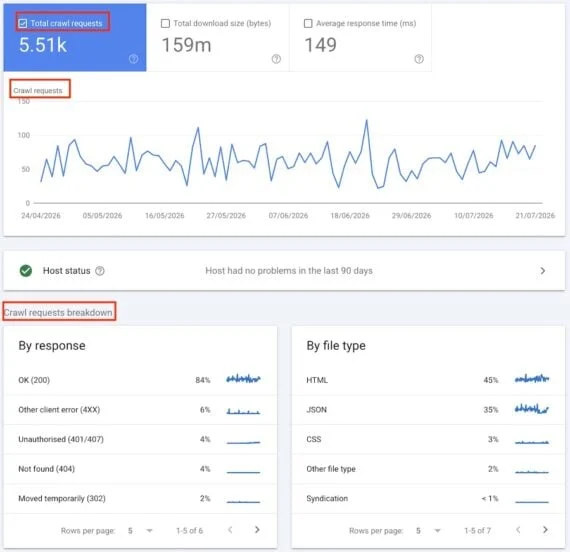
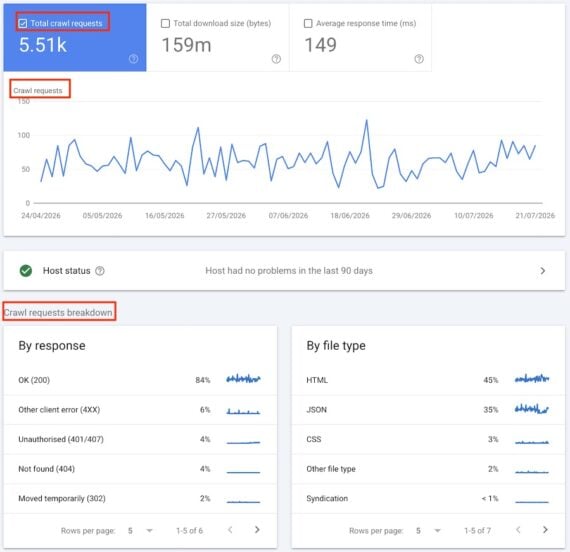
Google Search Console is an indispensable tool for website owners seeking to understand and improve their site’s performance in Google Search. The "Crawl stats" report within Search Console provides invaluable data on how Googlebot interacts with a website. This report reveals key metrics such as the number of requests made by Googlebot, the average response time of the server, and any crawl errors encountered.
The screenshot provided in the original article depicts a typical Crawl stats report. This report can help identify:
- Crawl Frequency: How often Googlebot is visiting specific sections of the site.
- Crawl Rate: The speed at which Googlebot is downloading pages.
- Server Response Times: Any delays or issues in the server’s ability to deliver content.
- Crawl Errors: Problems that prevent Googlebot from accessing or understanding pages (e.g., 404 Not Found errors, server errors).
By regularly analyzing these statistics, website owners can pinpoint areas for improvement and proactively address technical issues that might be hindering their crawl budget.
Navigating the Nuances of URL Caching
A new recommendation within the updated guidelines pertains to "URL caching" and the use of HTTP status codes, specifically the 304 (Not Modified) code. This status code is intended to inform Googlebot that a previously crawled page has not changed since its last visit. In such cases, Googlebot can then reuse its cached version of the page, thereby saving server bandwidth and resources for both Google and the website owner.
While this recommendation appears technically sound, the original author’s commentary introduces a crucial caveat: this strategy should be applied judiciously, particularly for less critical pages. The concern is that by consistently signaling "Not Modified" for a page, Google might de-prioritize its recrawling or, in extreme cases, its index status could be affected. This is because Google’s algorithms interpret the lack of changes as a potential indicator of stale or static content.
For pages that are genuinely dynamic and expected to be updated regularly (e.g., product pages with changing prices, news articles, or blog posts), using 304 codes might inadvertently signal a lack of freshness to Google. This could negatively impact their visibility in SERPs, especially for time-sensitive queries. Therefore, website owners are advised to carefully consider which pages are candidates for 304 responses, prioritizing those that are static and unlikely to require frequent re-evaluation by Googlebot.
Broader Implications for Website Management and SEO
The emphasis on crawl budget optimization by Google has significant implications for how websites are managed and how Search Engine Optimization (SEO) strategies are formulated. It shifts some of the focus from purely on-page content optimization to technical SEO and website architecture.
Strategic Content Prioritization
Understanding the crawl budget encourages website owners to prioritize their content. Not all pages are created equal in terms of their business value or importance to users. By optimizing their crawl budget, they can ensure that Googlebot spends its limited resources on crawling and indexing the most critical pages, such as product pages, category pages, and high-value informational content. Less important pages, like archive pages or very old, unvisited blog posts, might be allowed to be crawled less frequently.
Technical SEO as a Foundation
This update underscores the critical role of technical SEO. Issues like slow page load speeds, inefficient site architecture, broken links, and poor redirect management can directly hinder a site’s crawl budget. Investing in robust technical infrastructure and ongoing maintenance is no longer a secondary concern but a fundamental requirement for achieving and maintaining online visibility.
The Evolving Landscape of Search Engine Interaction
Google’s ongoing efforts to refine its crawling and indexing processes reflect a dynamic search landscape. As the volume of online content continues to grow exponentially, search engines must develop more sophisticated methods to efficiently discover, process, and rank information. The crawl budget concept is a testament to this evolution, providing a framework for publishers to work collaboratively with search engines to ensure their content is discoverable and accessible to users.
User Experience and SEO Intertwined
The renewed emphasis on site performance and load times highlights the inextricable link between user experience (UX) and SEO. A fast, responsive website not only improves user satisfaction but also directly benefits crawlability and indexability. This reinforces the industry-wide understanding that a good user experience is paramount for long-term SEO success.
Conclusion: A Call to Action for Website Owners
Google’s updated "Crawling infrastructure" documentation, particularly the "Optimize your crawl budget" section, offers a valuable and timely resource for anyone managing a website. By understanding and implementing the principles outlined, website owners can significantly enhance their site’s discoverability, ensuring that their most important content is effectively crawled, indexed, and ultimately presented to users searching on Google.
The guidelines provide a clear roadmap, from managing the initial conservative crawl budget to leveraging site performance and link signals for growth. While the advice on URL caching requires careful consideration, the overall message is clear: a well-maintained, technically sound, and regularly updated website is more likely to receive favorable treatment from Googlebot, leading to improved search engine visibility and greater success in the digital realm. As the web continues to expand, proactive crawl budget optimization will remain a cornerstone of effective SEO strategy.