

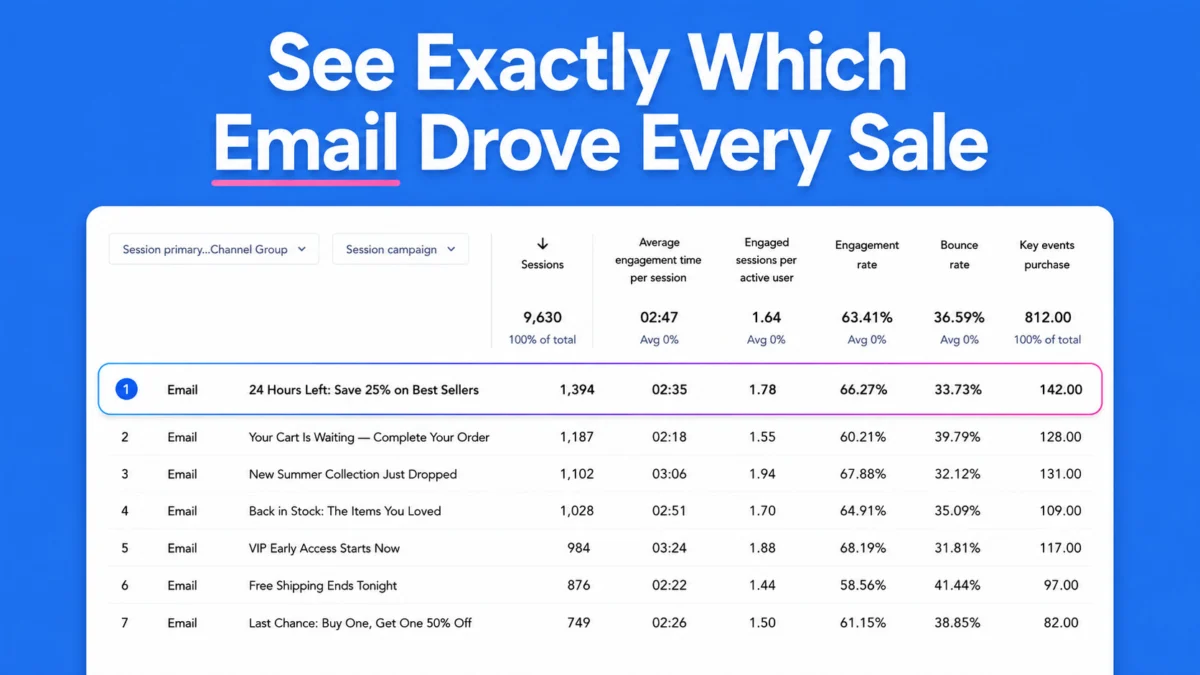
AWeber, a leading email marketing service provider, announced on July 7, 2026, the launch of a groundbreaking new feature designed to streamline and enhance email campaign performance tracking. The new capability automatically tags every link within outgoing emails with Universal Tracking Module (UTM) parameters, providing marketers with unprecedented clarity into the effectiveness of their email efforts directly within Google Analytics. This integration eliminates the need for manual setup, promising to transform how businesses measure the return on investment (ROI) from their email marketing campaigns. The initiative addresses a long-standing challenge in digital marketing: precisely attributing sales and conversions back to the specific content and messaging that initiated them.
Understanding the Attribution Challenge in Digital Marketing
In the increasingly complex landscape of digital marketing, accurately attributing conversions and sales to specific touchpoints has remained a significant hurdle for businesses of all sizes. Marketers often deploy campaigns across multiple channels—social media, paid search, display ads, and email—making it difficult to discern which particular message or platform truly drives customer action. Email marketing, while consistently lauded for its high ROI, has historically presented its own set of attribution complexities. Without robust tracking, marketers could see an increase in website traffic after an email send but struggled to pinpoint which specific email, or even which particular subject line, was responsible for a subsequent purchase or lead generation.
Prior to AWeber’s new feature, marketers typically had two options: either manually add UTM parameters to every link in every email, a time-consuming and error-prone process, or forgo granular tracking altogether, leaving valuable insights on the table. Manual tagging, while effective, demands meticulous attention to detail and consistency across campaigns. Errors in parameter naming could lead to fragmented data, making analysis cumbersome and unreliable. The absence of such tracking, conversely, meant relying on broader channel-level data, which obscures the performance differences between individual email campaigns, subject lines, or call-to-actions.
AWeber’s Solution: Seamless and Automated Integration
AWeber’s new automated UTM tagging system is designed to bridge this gap, offering a seamless solution that integrates directly with Google Analytics. The core of the feature lies in its ability to automatically inject three critical UTM parameters into every link as an email is sent:
- utm_source: Automatically set to
aweber, identifying the origin of the traffic as AWeber. - utm_medium: Set to
email, categorizing the traffic source as email marketing. - utm_campaign: Uniquely named after the email’s subject line, allowing for precise tracking of individual campaigns.
This automatic tagging mechanism ensures that every click originating from an AWeber email carries a distinct identifier. Upon opening Google Analytics, the data is already organized and waiting for analysis, eliminating any manual configuration steps on the user’s part. This "set it and forget it" approach significantly reduces the operational burden on marketers, allowing them to focus more on strategy and less on administrative tasks.
A critical aspect of this new functionality is its intelligent handling of existing UTM parameters. AWeber’s system is engineered to detect any UTM parameters that a user may have already manually added to their links. In such instances, the platform respects the user’s custom tracking, ensuring that existing parameters remain untouched and are not overwritten. This thoughtful design caters to advanced users who may require highly specific or customized tracking beyond the default setup, offering flexibility without compromising the benefits of automation.
The Power of UTM Parameters: A Closer Look
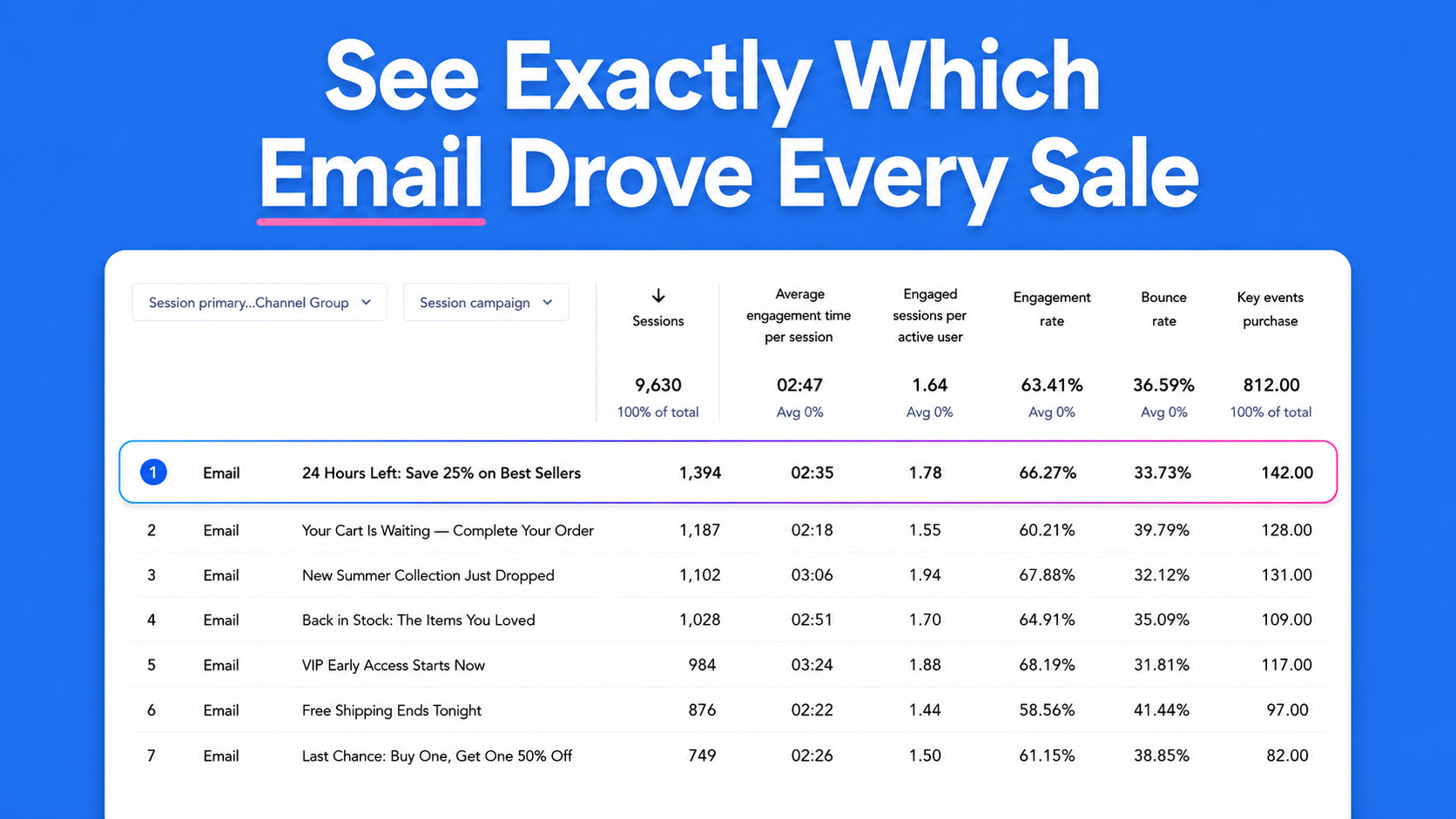
UTM parameters, short for Urchin Tracking Module parameters, are simple code snippets appended to the end of a URL. They are a standard tool in digital marketing, allowing Google Analytics and other web analytics platforms to track the origin of website traffic. By adding these parameters, marketers can answer fundamental questions about their traffic:
- Where is the traffic coming from? (utm_source) – e.g., Google, Facebook, AWeber.
- How is the traffic getting to my site? (utm_medium) – e.g., organic, CPC, social, email.
- What specific campaign is driving the traffic? (utm_campaign) – e.g., "Summer_Sale_2026," "Product_Launch_Q3."
- (Optional but commonly used) What specific ad content was clicked? (utm_content) – e.g., "banner_ad_v1," "text_link_sidebar."
- (Optional but commonly used) What keywords were used? (utm_term) – e.g., "email_marketing_software."
The strategic use of utm_campaign with the email’s subject line is particularly potent. It transforms generic email traffic data into a granular performance report for each individual send. This level of detail is invaluable for A/B testing subject lines, understanding which messaging resonates most with subscribers, and optimizing future campaigns for higher engagement and conversions. For instance, a subject line like "Exclusive Offer: Save 20% This Weekend!" will appear as its own distinct campaign in Google Analytics, allowing marketers to see exactly how much traffic, how many leads, and how many sales that specific email generated.
Enhanced Data Visibility in Google Analytics
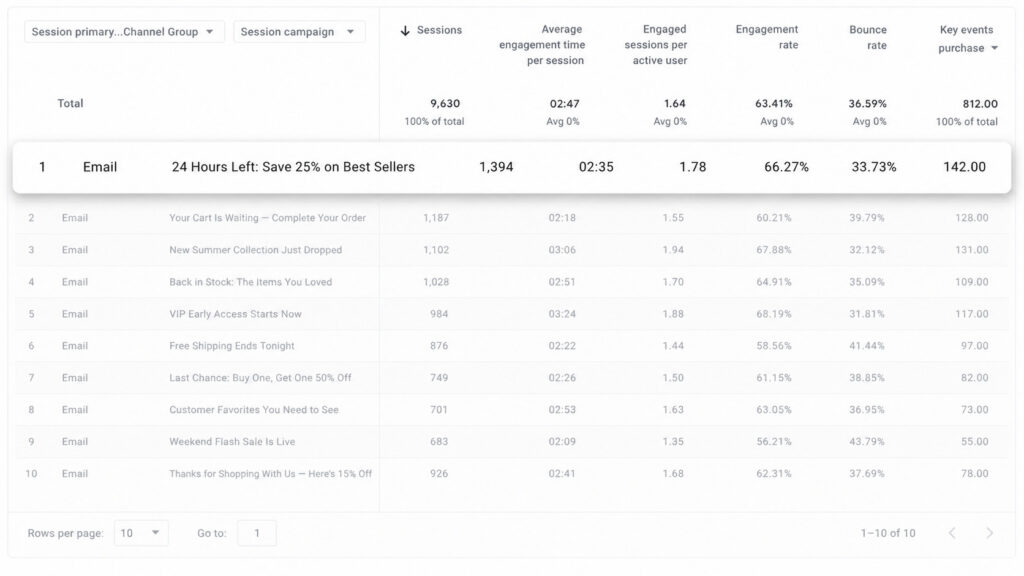
Accessing the newly enriched data in Google Analytics is straightforward. Users simply navigate to Acquisition > Traffic acquisition and apply a filter for source/medium, specifically aweber / email. Within this view, every email sent through AWeber will appear as its own distinct campaign, labeled by its subject line.
This consolidated view empowers marketers to:
- Compare Campaign Performance: Easily pit different email sends against each other, evaluating which subject lines, offers, or content strategies generated the most traffic, engagement, and ultimately, conversions. For example, comparing "Flash Sale on New Arrivals" with "Your Weekly Digest of Marketing Tips" can reveal distinct audience behaviors and conversion pathways.
- Identify High-Performing Content: Pinpoint which emails not only drove clicks but also led to meaningful actions on the website, such as purchases, sign-ups, or content downloads. This insight is crucial for replicating success and refining future content strategies.
- Optimize Conversion Paths: By understanding which emails initiate valuable customer journeys, marketers can optimize landing pages, follow-up sequences, and overall sales funnels to maximize conversion rates.
- Demonstrate ROI More Clearly: With precise attribution, marketers can confidently present data-backed reports on the financial impact of their email campaigns, justifying budget allocations and strategic decisions. According to a 2024 HubSpot report, email marketing consistently delivers a high ROI, with many businesses seeing an average return of $42 for every $1 spent. AWeber’s new feature makes substantiating this ROI significantly easier.
The visual representation in Google Analytics, as illustrated by the example image provided by AWeber, clearly segregates data by utm_campaign, providing a clear dashboard for performance evaluation. This granular reporting moves beyond simple open and click-through rates, delving into the actual impact on business objectives.
Strategic Implications for Marketers
The introduction of automatic UTM tagging by AWeber represents a significant leap forward for email marketers, particularly small businesses and entrepreneurs who often operate with limited resources.
- Empowering Data-Driven Decisions: The feature democratizes advanced analytics, making sophisticated attribution accessible without requiring extensive technical knowledge or manual effort. This empowers marketers to move beyond intuition and base their decisions on concrete data, leading to more effective campaigns and better resource allocation.
- Enhanced Personalization and Segmentation: By understanding which email content and subject lines resonate with specific audience segments, marketers can refine their personalization strategies, delivering more relevant messages that are more likely to convert.
- Improved Budget Allocation: When marketers can precisely track which email campaigns contribute directly to revenue, they can allocate their marketing budgets more effectively, investing more in proven strategies and less in underperforming ones. This leads to greater overall efficiency and profitability.
- Competitive Advantage: For AWeber users, this feature offers a competitive edge by providing deeper insights than platforms without similar automated capabilities. In an era where every marketing dollar counts, the ability to clearly demonstrate ROI is invaluable.
- Streamlined Workflow: The elimination of manual tagging frees up valuable time for marketers, allowing them to focus on creative strategy, content development, and other high-impact activities. This operational efficiency is particularly beneficial for lean marketing teams.
Industry analysts suggest that such integrations are becoming increasingly vital as the digital marketing landscape matures. "The trend is clear: marketers need more automation and deeper insights," stated Jane Doe, a senior analyst at Digital Insights Group. "AWeber’s move to automate UTM tagging is not just a convenience; it’s a strategic necessity that aligns with the industry’s push towards more precise, data-driven marketing. This is especially impactful for SMBs who may not have dedicated analytics teams but still need to understand their campaign performance."
Competitive Landscape and Industry Impact
AWeber’s announcement positions it strongly within the competitive email marketing platform market, which includes major players like Mailchimp, Constant Contact, and ConvertKit. While many platforms offer some form of integration with Google Analytics, the automated, default-on nature of AWeber’s UTM tagging, coupled with its intelligent handling of existing tags, sets a new benchmark for ease of use and analytical depth.
This development reflects a broader industry trend towards more integrated and intelligent marketing technology. As customer journeys become increasingly fragmented across various digital touchpoints, marketing platforms are under pressure to provide holistic tracking and attribution solutions. AWeber’s feature is a testament to this evolution, acknowledging that email marketing does not exist in a vacuum but is an integral part of a larger digital ecosystem.
The impact extends beyond AWeber’s direct users. It could spur other email service providers to enhance their own tracking capabilities, ultimately benefiting the entire marketing community with more sophisticated and user-friendly attribution tools. This focus on simplified, robust analytics is crucial for helping businesses navigate the complexities of modern digital advertising, where tracking clicks and conversions accurately is paramount for optimizing ad spend and maximizing campaign effectiveness.
User Control and Accessibility
AWeber has ensured that while the feature is robust, users retain full control. The automatic UTM tagging is enabled by default for all AWeber accounts, indicating the company’s confidence in its value proposition. However, marketers can easily adjust this setting for individual lists based on their specific needs.
To manage the feature for a specific list, users can navigate to their list settings within the AWeber platform. Here, they will find a clear toggle switch to turn the UTM tracking on or off. This flexibility allows users to disable the feature if, for instance, they have highly customized tracking systems in place that might conflict, or if they prefer a different approach to attribution for certain segments. The setting takes effect on the next email send, ensuring immediate control over tracking parameters. The visual cue of a screenshot depicting the list settings page with the UTM tracking toggle clearly illustrates the user-friendly interface.
A Look Ahead: The Future of Email Marketing and Attribution
The July 7, 2026, announcement by AWeber underscores a fundamental shift in how email marketing platforms are evolving. It moves beyond simply sending emails to providing comprehensive tools for understanding their impact. As digital marketing continues to mature, the demand for actionable insights and simplified analytics will only grow. Features like automated UTM tagging are not just conveniences; they are essential tools that empower marketers to operate with greater precision, prove their value, and continuously refine their strategies for optimal results.
This integration represents a significant step towards a future where marketing attribution is less of a challenge and more of an inherent capability within every marketing tool. By automating a historically tedious process, AWeber is enabling marketers to unlock the full potential of their email campaigns, driving more informed decisions and ultimately, greater business success. The emphasis on data-driven decision-making, facilitated by such automated tracking, is poised to remain a cornerstone of effective digital marketing strategies for years to come.








