A comprehensive analysis of 100 million article headlines by BuzzSumo reveals a dramatic shift in content consumption and engagement patterns on major social media platforms, particularly Facebook and Twitter, between 2017 and 2020. The study highlights a clear evolution away from sensational and emotional clickbait towards more informative, instructional, and concise headline formats, driven by algorithmic changes, audience maturation, and an overwhelming surge in online content.
The Shifting Landscape of Online Engagement (2017 vs. 2020)
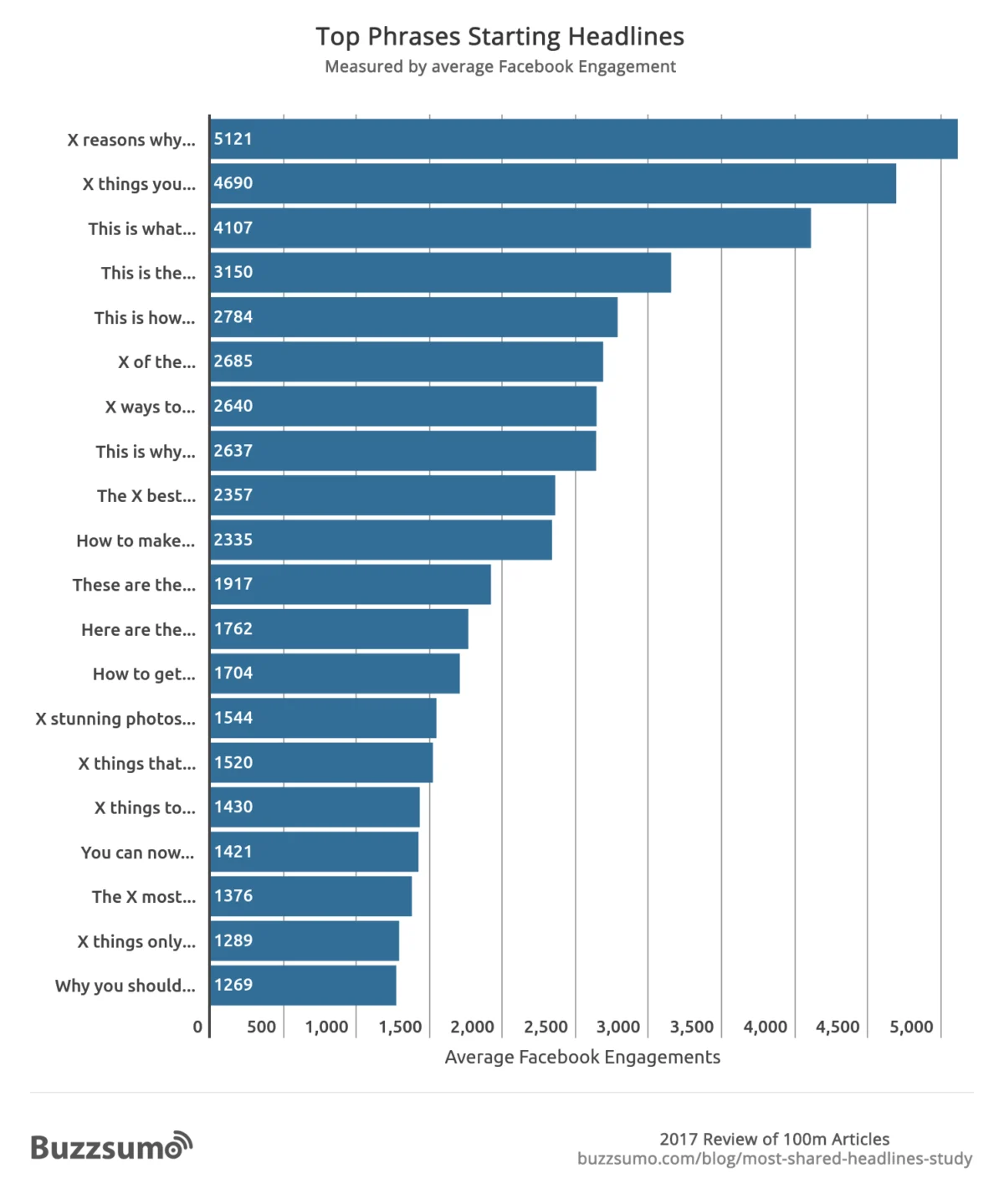
The initial BuzzSumo study in 2017, co-founded by Steve Rayson, underscored the dominance of emotional, curiosity-driven, quiz-based, and tribal headlines on Facebook. Phrases like "will make you," "melt your heart," "are freaking out," "can we guess," and "things only" consistently generated high engagement. These headlines often leveraged strong emotional appeals, a sense of exclusivity, or the allure of self-discovery through quizzes. The ideal headline length then was approximately 15 words and 95 characters, reflecting a tolerance for more descriptive, albeit often sensationalized, titles.
However, the updated analysis for 2019-2020 paints a starkly different picture. The digital ecosystem has undergone significant transformation, rendering many of the previously effective strategies obsolete. On Facebook, there is a 100% difference in the top 20 headline phrases between 2017 and 2020, while Twitter saw only two phrases retain their popularity. This radical change is attributed to several critical factors: the increasing sophistication of social media algorithms, the growing discernment of audiences, and a fundamental shift in the publisher landscape.
Facebook’s Algorithmic Evolution and its Impact
A significant catalyst for this shift was Facebook’s strategic move to combat clickbait. Beginning in May 2017, Facebook announced it would demote headlines that "exaggerate the details of a story with sensational language" or withhold information. This was further refined on January 19, 2018, when the platform declared it would prioritize news content from "trustworthy sources." By June 30, 2020, Facebook further emphasized boosting "original and authoritative news reporting."
These algorithmic adjustments profoundly reshaped what succeeds on the platform. Explicitly emotional or sensational headlines, once kings of engagement, have largely disappeared. The 2020 study found only one overtly emotional phrase, "in love with," within the top 60 trigrams, and its average shares were significantly lower than top phrases from 2017. The prevalence of quiz and tribal headlines also dwindled, indicating a clear rejection by both algorithms and users of content perceived as less substantive or manipulative.
This preferential treatment of news publishers is evident in the domains dominating Facebook’s top-performing headlines. In 2020, established news outlets like cnn.com, dailymail.co.uk, nbcnews.com, washingtonpost.com, cbsnews.com, and time.com featured prominently, a stark contrast to the more diverse, and often less authoritative, mix seen in 2017. This shift provides greater confidence in the reliability of the current headline findings for content creators seeking to engage audiences on Facebook.
Key Findings: The New Rules of Engagement
Headline Length: The Demand for Brevity and Clarity
The era of lengthy, descriptive headlines has receded. The 2019-2020 study identifies the ideal headline length as 11 words and 65 characters for top-performing content on Facebook and Twitter. This is a notable reduction from the 2017 optimum of 15 words and 95 characters. This trend reflects a broader societal demand for "speed to insight," as users navigate a landscape of unprecedented content volume. Online content publication has surged by an astonishing 64% since 2016, leading to content overload and a preference for snappier, more direct titles that quickly convey value.
The Magic Number: 10 Reigns Supreme
Numbers continue to be powerful tools in headlines, particularly for listicles. The number 10 remains the "magic number," driving the most engagement on social media, a consistent finding since 2017. Beyond 10, single-digit numbers (3 through 10) are preferred, taking the top seven positions for most shared headlines. There is no strong preference for odd or even numbers. However, larger double-digit numbers like 15 and 20, which performed well in 2017, have fallen out of favor, further emphasizing the audience’s preference for concise, digestible information over longer lists.
Facebook’s Top Headline Phrases and Themes (2019-2020)
The analysis of three-word phrases (trigrams) on Facebook reveals dominant themes:
- Ranking: "of the year" (e.g., "Person of the Year 2020")
- Newness: "in X years" (often part of "for the first time in X years")
- Hyperbole: "one of the most," "of the best" (used for exceptional content rather than raw emotion)
- Instructional: "you need to," "need to know," "why you should"
- Curiosity: "here are the," "X reasons why," "what is the"
- Guidance: "how to"
- Surprise: Headlines designed to shock or challenge existing views.
- Story: Focused on a person or topic, akin to a case study.
Instructional headlines emerged as particularly potent, with 13 of the top 60 phrases being instructional or part of a common instructional phrase. These phrases engage readers by placing responsibility on them ("you need to"), invoking a sense of FOMO ("Or else…"), or promising concise, critical information ("need to know"). Hyperbolic phrases, though present, are now more focused on referencing genuinely exceptional content rather than raw emotional manipulation.
When examining starting phrases, listicles (headlines beginning with a number) were highly effective, along with instructional and curiosity phrases. "How to" headlines were overwhelmingly popular for guidance. Time-centric phrases, such as those referencing "2020" or "2021," dominated ending headlines, reflecting heightened interest in current events, particularly the effects of the pandemic.
Twitter’s Distinctive Engagement Patterns (2019-2020)
Twitter audiences exhibit slightly different preferences. "The future of" was the most engaging trigram, indicating a strong appetite for forward-looking analysis and predictions. Starting words like "study" and "report" also performed exceptionally well, suggesting that Twitter is a prime platform for sharing research-backed content. Similar to Facebook, immediacy and reactivity are key, with phrases ending in specific years (e.g., "2020") or indicating current developments being highly shared. This points to Twitter’s role as a platform for real-time news and analysis.
Cross-Platform Dynamics: Homogeneity and Discrepancies
A significant finding is the increased homogeneity of successful headlines across platforms. In 2017, only one phrase overlapped in the top 20 for Facebook and Twitter. By 2020, this increased to eight phrases, moving from 2.5% to 20% similarity. This suggests that certain universal appeals, particularly instructional phrases like "need to know" and "what to do," can effectively drive engagement on both networks.
However, notable discrepancies persist. Curiosity and story-driven headlines tend to fare better on Twitter, where users engage more with narratives and unfolding information. Crucially, the study found a massive difference in the scale of engagement: the most shared headline phrase on Facebook garnered 590 times more average shares than its Twitter counterpart. This disparity underscores that while some strategies overlap, content creators must tailor their distribution and headline choices to each platform’s unique audience and algorithmic environment. Furthermore, Twitter shares dropped by 14% between 2017 and 2020, despite relatively stable monthly active users, suggesting a shift in how users interact with shared content on the platform.
Expert Perspectives on the Evolving Landscape
Marketing experts widely acknowledge the profound implications of these findings. Heidi Cohen, Chief Marketing Officer at Actionable Marketing Guide, notes that the report reflects key customer behavior changes due to the pandemic, advising marketers to focus on "core marketing basics" and adapt to evolving customer needs. Julian Shapiro, Founder of Demand Curve, lauded the report as "one of the highest signal-to-noise reports on content marketing."
Rand Fishkin, Founder of SparkToro, emphasizes that the study helps contrast past and present strategies, confirming some long-held beliefs while "mythbusting others." Ross Simmonds, Founder of Foundation, highlights the fascinating adoption of instructional copy like "you need to" and "you should," noting its connection to "human psychology and the human desire of not missing out on information."
Brian Dean, Founder of Backlinko, points out the "huge shift" on Facebook from BuzzFeed-style clickbait to instructional content, indicating that "today’s Facebook users need to know that the content is going to teach them something new." Amanda Milligan, Marketing Director at Fractl, further elaborates on the instructional trend, suggesting it responds to a growing desire to learn from experts and that such language "inherently demonstrates authority."
Implications for Content Creators
The research provides actionable insights for anyone crafting headlines, from journalists to content marketers:
- Prioritize Clarity and Value: Headlines must be specific, reveal enough detail to draw readers in, and clearly communicate the value proposition of the content.
- Embrace Instruction and Utility: Phrases that guide, instruct, or promise useful information (e.g., "you need to know," "how to") are highly effective, particularly on Facebook.
- Be Concise: Aim for approximately 11 words and 65 characters to cater to the demand for quick information consumption.
- Leverage Numbers Strategically: The number 10 remains potent, and single-digit listicles (3-10) drive strong engagement. Avoid overly long lists.
- Adapt to Platform Nuances: While some headline types cross over, tailor content for Facebook’s preference for authoritative, instructional content and Twitter’s appetite for research, future-oriented topics, and current affairs.
- Focus on Authority and Trust: Align with the algorithmic push towards credible sources, especially on Facebook.
- Test and Learn: Continuously test different headline formats and phrases to understand what resonates best with specific audiences and on particular platforms.
The core takeaway is that effective headline writing is no longer about brute-force emotional manipulation but about understanding audience intent, delivering clear value, and adapting to the dynamic algorithmic environments of social media. The days of simply copying viral phrases are over; success now lies in grasping the underlying principles of engagement in a more discerning digital world.