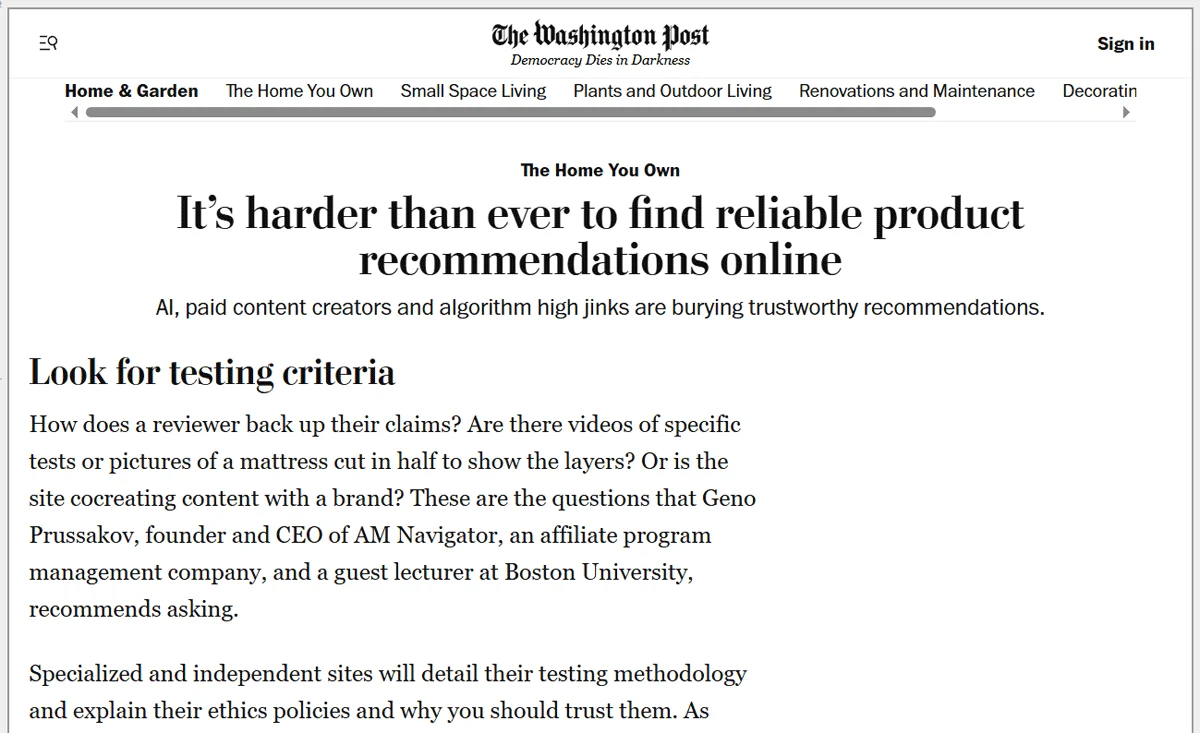
The landscape of digital journalism has undergone a profound transformation over the past decade, shifting from a reliance on traditional display advertising to the integration of "commerce content." This evolution has seen major media outlets—historically known for hard news and investigative reporting—leverage their established brand authority to enter the lucrative world of affiliate marketing. As these organizations publish exhaustive "best of" lists and product roundups, the line between objective editorial recommendation and profit-driven promotion has become increasingly blurred. This shift has prompted a broader discussion regarding the transparency of digital reviews and the mechanisms by which consumers can distinguish between rigorous testing and financially motivated placements.
The Evolution of Commerce Journalism
The integration of product recommendations into mainstream media is not a new phenomenon, but the scale and sophistication of current operations are unprecedented. Traditionally, media companies relied on a "church and state" separation between editorial content and advertising sales. However, as print circulation declined and digital ad-blocking software became more prevalent, publishers sought new revenue streams.
The turning point for many in the industry occurred around 2016, when The New York Times Company acquired Wirecutter, a product-review website, for approximately $30 million. This acquisition signaled to the market that high-quality, service-oriented journalism could be both an editorial asset and a significant revenue driver. Following this lead, other major players established dedicated commerce divisions. Examples include CNN’s "Underscored," Forbes’ "Vetted," and The Wall Street Journal’s "Buy Side." These entities operate by embedding affiliate links within their content; when a reader clicks a link and makes a purchase, the publisher receives a commission from the retailer.
Chronology of the Shift Toward Affiliate Monetization
To understand the current state of online product recommendations, it is essential to trace the timeline of how media monetization has evolved:
- 2000s – Early 2010s: The Banner Era. Publishers focused on high-volume traffic to drive revenue through display ads and pop-ups. Product mentions were often incidental or part of traditional gift guides.
- 2011 – 2016: The Rise of Niche Review Sites. Sites like Wirecutter and Reviewed.com proved that consumers were looking for deep-dive, expert analysis before making purchases.
- 2016 – 2020: The Mainstream Adoption. Major media outlets began acquiring or building internal affiliate teams. During this period, "SEO authority" became the primary currency. Large publishers realized their high domain authority allowed them to rank at the top of Google search results for lucrative terms like "best mattress" or "best credit cards."
- 2021 – Present: The Era of Transparency and Regulation. As the market became saturated, the Federal Trade Commission (FTC) in the United States updated its Endorsement Guides. Simultaneously, Google updated its search algorithms to prioritize "Helpful Content," specifically targeting product reviews that demonstrate first-hand experience and original research.
Supporting Data and Economic Realities
The financial incentives for media companies to engage in affiliate marketing are substantial. According to industry reports, the affiliate marketing industry is valued at over $8 billion in the United States alone. For a major publisher, commerce content can account for 15% to 35% of total digital revenue.
Data from affiliate networks such as Impact and CJ (formerly Commission Junction) suggests that "high-intent" traffic—users searching for specific product recommendations—converts at a significantly higher rate than general news readers. For instance, while a standard display ad might have a click-through rate (CTR) of less than 0.1%, a well-placed affiliate link in a trusted "best of" guide can see conversion rates exceeding 5%.
However, this profitability introduces a potential conflict of interest. While many publishers maintain that their editorial teams are independent of their business teams, the reality of "Placement Fees" and "EPC (Earnings Per Click) Guarantees" creates a complex environment. In some instances, brands may pay a flat fee to be included in a roundup, or they may offer higher commission rates to secure a "Top Pick" status.

Methodology and Editorial Standards
Despite the financial motivations, many top-tier media organizations have implemented rigorous standards to protect their brand equity. If a publisher loses the trust of its audience, the long-term value of its "authority" diminishes. Industry experts, including Geno Prussakov of AM Navigator, note that reputable media outlets typically employ four primary strategies to ensure the integrity of their recommendations:
- Dedicated Testing Labs: Organizations like Consumer Reports and Dotdash Meredith operate multi-million dollar testing facilities where products are subjected to controlled experiments and stress tests.
- Subject Matter Expertise: Rather than using general assignment reporters, commerce divisions often hire specialists—such as professional chefs for kitchen gear or certified trainers for fitness equipment—to evaluate products.
- Conflict of Interest Policies: Many outlets mandate that editorial staff cannot know the specific commission rates of the products they are reviewing, maintaining a wall between the "review" and the "revenue."
- Long-term Field Testing: Unlike "unboxing" videos common on social media, professional commerce journalism often involves using a product for weeks or months to assess durability and long-term performance.
Regulatory Oversight and Official Responses
The rise of commerce content has not escaped the notice of regulators. The FTC has become increasingly stringent regarding how affiliate relationships are disclosed. Current guidelines require that disclosures be "clear and conspicuous," meaning they must be placed where consumers are likely to see them, rather than buried in a footer or a separate "About Us" page.
In response to growing skepticism, some media organizations have published "Ethics Statements" specifically for their commerce divisions. These statements often detail how products are chosen and explicitly state that financial arrangements do not influence editorial rankings. For example, The New York Times’ Wirecutter frequently includes a "Why You Should Trust Us" section in every article, detailing the hours spent researching and the specific methodologies used.
Implications for the Modern Consumer
For the average consumer, the saturation of the "product roundup" market means that due diligence is more necessary than ever. While a recommendation from a major newspaper carries weight, it should not be the sole factor in a purchasing decision. Analysts suggest a multi-step approach for consumers to verify the authenticity of a recommendation:
- Examine the Disclosure: Is the affiliate disclosure prominent? Does it explain how the site makes money?
- Verify the Testing Process: Does the article include original photography of the product being used, or does it rely on stock images provided by the manufacturer?
- Cross-Reference Multiple Sources: If a product is ranked #1 on five different major sites, it is likely a high-quality item. If it is only ranked #1 on a single site that also features heavy branding for that product, caution is warranted.
- Look for Negative Feedback: A truly objective review will almost always include "cons" or reasons why a product might not be right for certain users.
The Future of Trust in Digital Media
As artificial intelligence (AI) begins to play a larger role in content creation, the challenge of maintaining trust in product recommendations will only intensify. AI-generated "reviews" that scrape existing data without performing actual physical testing pose a threat to the business models of legacy media outlets that invest heavily in human-led research.
The broader impact of this shift is a redefinition of "authority." In the coming years, the value of a media brand may not be measured by its reach alone, but by its perceived honesty in an increasingly commercialized digital landscape. The "search engine authority" that many big media players currently enjoy is a fragile asset; if consumers begin to feel that recommendations are purely "pay-to-play," they may migrate toward community-driven platforms or niche experts who offer perceived greater transparency.
Ultimately, the intersection of media authority and affiliate monetization represents a new frontier in the digital economy. While it provides a vital revenue stream that supports the survival of journalism, it requires a constant, delicate balance between the needs of the business and the trust of the public. As the industry matures, the survivors will likely be those who prioritize the consumer’s interests as highly as their own bottom line.