

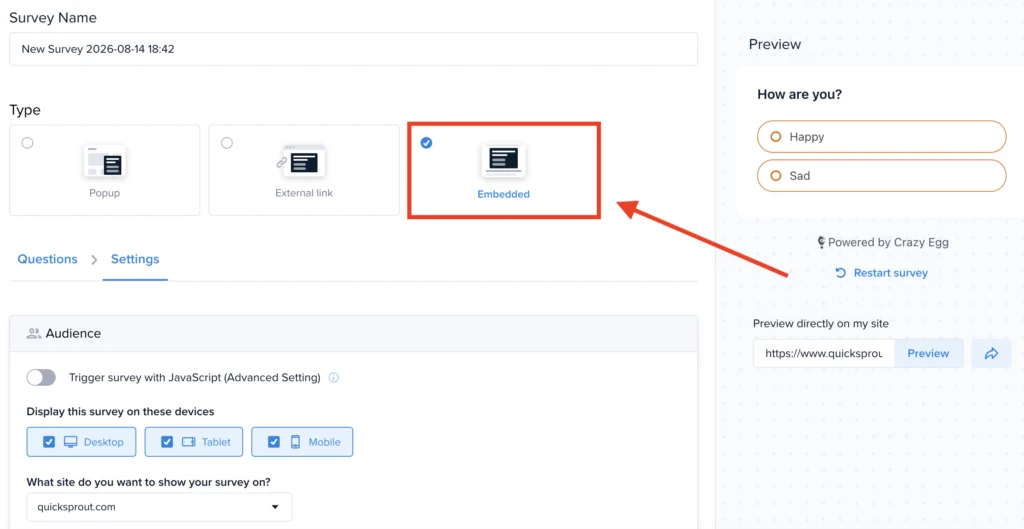
Crazy Egg, a pioneer in the field of website optimization and user behavior analytics, has announced a significant update to its comprehensive toolset with the introduction of inline survey embedding. This new functionality allows website owners and digital marketers to integrate feedback forms directly into their page content, moving beyond the traditional constraints of popup windows and external links. By offering an inline format, Crazy Egg aims to provide a more seamless user experience that aligns with modern web design standards and reduces the friction often associated with data collection. The update is part of the company’s broader strategy to offer high-utility, low-impact tools that assist businesses in gathering zero-party data—information shared directly and intentionally by customers—without compromising site performance or user flow.
The Surveys tool, which is a standard feature included in every Crazy Egg subscription tier, has long been a staple for organizations seeking to understand the "why" behind user actions. While heatmaps and session recordings provide quantitative and visual data on where users click and how they scroll, surveys provide the qualitative context necessary for a holistic view of the customer journey. With the addition of inline embedding, these surveys can now function as native widgets, appearing as a natural extension of a blog post, a product page, or a checkout confirmation screen. This shift is particularly relevant in an era where consumers are increasingly wary of intrusive advertising and disruptive interface elements.
Evolution of the Crazy Egg Survey Ecosystem
Since its inception in 2006 by entrepreneurs Hiten Shah and Neil Patel, Crazy Egg has evolved from a specialized heatmap tool into a multifaceted Conversion Rate Optimization (CRO) platform. The journey of the Surveys tool reflects this evolution. Initially, surveys were primarily delivered via popups—triggered by exit intent, time on page, or scroll depth. While effective, popups have faced increasing scrutiny due to their impact on mobile usability and Google’s "interstitial" penalties.
In response to changing web standards, Crazy Egg introduced external link surveys, allowing brands to send feedback requests via email or social media. However, the latest move toward inline embedding represents the most significant architectural change to the tool in recent years. By allowing surveys to live within the Document Object Model (DOM) of a webpage, Crazy Egg is enabling a "native" feel. This means a survey can be placed between paragraphs of a long-form article to gauge reader sentiment in real-time or positioned at the bottom of a service page to capture lead information without redirecting the user to a separate landing page.
Technical Specifications and Implementation Workflow
The implementation of the new inline feature has been designed for simplicity, requiring no advanced coding knowledge. The process begins within the Crazy Egg dashboard, where users can create a new survey or edit an existing one. The platform provides a variety of question types, ranging from multiple-choice and Net Promoter Score (NPS) scales to open-ended text fields.
To utilize the inline feature, users follow a refined three-step workflow:
- Selection: Within the survey setup interface, the user selects "Embedded" as the delivery format, alongside the existing options for "Pop-up" or "Link."
- Configuration: The user defines the targeting rules, specifying which pages the survey should appear on and whether it should be visible to all visitors or specific segments.
- Integration: Crazy Egg generates a unique snippet of HTML code. This code is then copied and pasted directly into the website’s CMS (such as WordPress, Shopify, or Webflow) at the exact location where the survey should appear.
This "widgetized" approach ensures that the survey inherits the structural integrity of the page while maintaining the analytics backend of the Crazy Egg platform. All responses are captured in real-time and are accessible via the Surveys dashboard, where they can be filtered, exported, and analyzed alongside other behavioral data.
Industry Trends: The Shift Toward Zero-Party Data
The timing of Crazy Egg’s update coincides with a massive shift in the digital marketing landscape. As major browser engines phase out third-party cookies and privacy regulations like GDPR and CCPA become more stringent, businesses are finding it harder to track user preferences through traditional means. This has led to the rise of "Zero-Party Data"—data that a customer proactively and deliberately shares with a brand.
According to a 2023 report by Forrester Research, brands that prioritize the collection of zero-party data see a marked improvement in customer loyalty and conversion rates. Inline surveys are an ideal vehicle for this data collection because they do not feel like a "trap." When a survey is embedded within content that the user is already consuming, the exchange of information feels more like a conversation and less like a surveillance tactic.
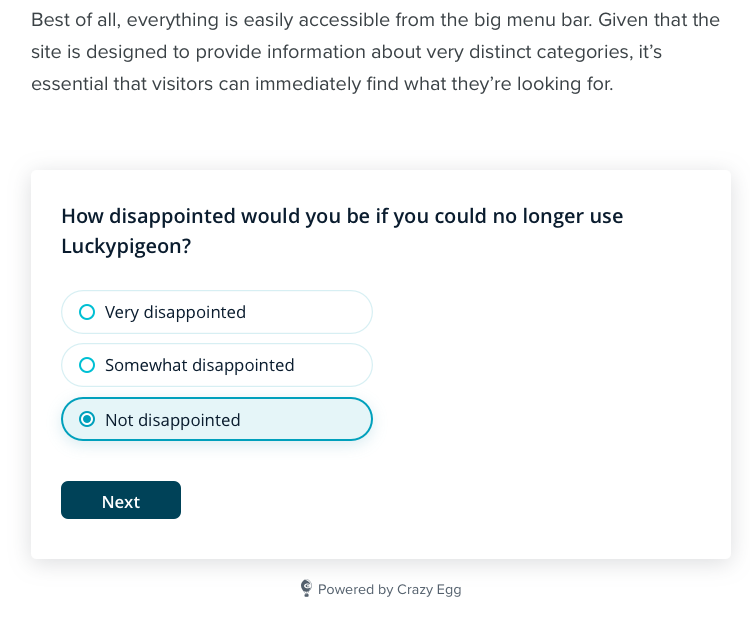
For example, an e-commerce site might embed a survey on a category page asking, "What specific feature are you looking for today?" The data gathered can immediately inform inventory decisions or personalized marketing campaigns, providing a level of insight that a heatmap alone cannot offer.
Comparative Analysis: Popups vs. Inline Widgets
The decision to move toward inline embedding is supported by user experience (UX) research. Industry benchmarks suggest that while popups can have high visibility, they often suffer from "close-button reflex," where users instinctively dismiss the window before reading the content. In contrast, inline forms often see higher quality engagement.
Key advantages of the inline format identified by UX specialists include:
- Reduced Friction: Users do not have to stop what they are doing to interact with the survey.
- Contextual Relevance: The survey can be placed exactly where the user is most likely to have an opinion (e.g., after a price list or a technical specification sheet).
- SEO Benefits: Native content is generally viewed more favorably by search engine crawlers than disruptive overlays that may trigger layout shifts or accessibility issues.
- Mobile Optimization: Popups on mobile devices can be notoriously difficult to close, leading to high bounce rates. Inline surveys flow with the responsive design of the site, ensuring a consistent experience across all devices.
Broader Implications for Digital Marketing and Support
The utility of inline surveys extends beyond simple feedback. Crazy Egg’s update allows for several strategic applications:
- Lead Generation: By embedding a survey on a high-traffic blog post, companies can convert readers into leads by asking for contact information in exchange for a whitepaper or a consultation.
- Customer Support: Support teams can embed a "Was this article helpful?" widget at the end of knowledge base articles, allowing them to identify gaps in documentation instantly.
- Product Development: SaaS companies can use inline surveys on specific feature pages to ask users what improvements they would like to see, creating a direct line between the user base and the product roadmap.
By offering unlimited responses and including the tool for free across all plans, Crazy Egg is positioning itself as a cost-effective alternative to standalone survey platforms like Typeform or SurveyMonkey, which often charge premiums for high response volumes or advanced embedding features.
Market Reaction and Competitive Landscape
While Crazy Egg has not released specific user testimonials regarding this update, the move is seen by industry analysts as a necessary step to remain competitive against rivals like Hotjar and Microsoft Clarity. Hotjar has long offered "on-page" surveys, but Crazy Egg’s focus on "unlimited" usage and seamless integration across its entire suite—including A/B testing—provides a compelling value proposition for small to mid-sized enterprises (SMEs).
Digital marketing agencies have noted that the ability to embed surveys directly into content allows for more creative "micro-conversions." An agency spokesperson, speaking on the condition of anonymity, noted that "the goal of modern web design is to keep the user engaged. Anything that breaks the ‘flow’ is a risk. Inline surveys allow us to gather data while keeping the user in the zone, which is a win-win for both the brand and the visitor."
Conclusion and Future Outlook
The introduction of inline survey embedding by Crazy Egg marks a transition toward more respectful and integrated user data collection. As the internet moves away from disruptive advertising and toward value-driven interactions, tools that facilitate native engagement will become increasingly essential.
By integrating this feature into their existing ecosystem, Crazy Egg has provided its users with a powerful way to bridge the gap between seeing what users do and knowing why they do it. This update suggests that the future of web analytics lies not just in tracking movement, but in fostering a transparent dialogue between websites and their visitors. As businesses continue to navigate the complexities of the post-cookie world, the ability to embed questions directly into the digital experience will likely become a standard requirement for any successful optimization strategy. For Crazy Egg users, this tool is available immediately, signaling a new chapter in the platform’s long-standing commitment to making website optimization accessible and effective for all.







