The current economic climate presents a formidable challenge for demand generation teams, demanding greater efficiency and a sharper focus on measurable outcomes. This reality was a central theme at Hero Conf in April, where marketing professionals from across the industry gathered to discuss strategies for navigating tighter budgets and higher performance expectations. The prevailing sentiment among in-house marketers is a stark acknowledgment that superficial metrics are no longer sufficient; every marketing pound must demonstrate tangible value to justify its allocation.
The Imperative of Data-Driven Decision-Making
In an era where financial scrutiny is at an all-time high, the granular analysis of data has transitioned from a best practice to an existential necessity for demand generation efforts. The principle is straightforward: without continuous evaluation of campaign performance, organizations risk ceding valuable market share to competitors. Data serves as the critical compass, guiding marketers through the complexities of campaign optimization. Tools such as Tableau, for instance, are instrumental in providing multi-faceted views of campaign Return on Investment (ROI) and attribution models, whether employing a last-touch or multi-touch methodology. These insights are fundamental to the iterative process of refining strategies and maximizing impact.
Defining Success: Beyond Vanity Metrics
The efficacy of demand generation is increasingly measured by its contribution to pipeline and revenue, rather than solely by top-of-funnel metrics. While Marketing Qualified Leads (MQLs) remain a critical indicator for many marketing teams and the broader business, particularly in B2B environments, the focus is shifting towards a more holistic understanding of account engagement.
In the B2B landscape, the traditional model of selling to a single buyer is becoming increasingly obsolete. Research consistently indicates that complex B2B purchasing decisions involve a significant number of stakeholders, often ranging from nine to twelve individuals within a decision-making unit. This collective approach necessitates a strategic evolution from simply generating individual leads to cultivating account-level momentum and engagement across the entire buying committee.
The Shift from Lead Generation to Account Penetration

The fundamental disconnect between generating clicks and building a sustainable sales pipeline is a critical realization for modern demand generation. As previously noted, the true drivers of pipeline are not individual ad impressions but rather the engagement and influence within target accounts. Achieving success in this environment hinges on the development and strict adherence to a clear Ideal Customer Profile (ICP). For organizations lacking a defined ICP, its creation should be a foundational priority.
Once an ICP is established, demand generation strategies must pivot. The objective shifts from merely capturing the attention of a broad audience to strategically engaging with the identified stakeholders within target accounts. This involves understanding the typical composition of a buying group, which can often include 15 to 20 individuals with varying roles and influences. Consequently, top-of-funnel strategies must be redesigned to foster account-wide interest and facilitate collective decision-making.
Key Strategic Pillars for Account-Centric Demand Generation:
- Account-Based Marketing (ABM) Integration: A fundamental shift towards identifying and prioritizing high-value accounts for targeted outreach and personalized engagement. This involves deep understanding of each account’s specific needs, challenges, and existing technology stack.
- Persona-Based Content Strategy: Developing content that resonates with the diverse needs and concerns of each stakeholder within the buying group. This requires mapping content to specific personas and their respective stages in the buyer’s journey.
- Multi-Channel Engagement: Orchestrating a coordinated effort across various channels to reach and influence different members of the buying committee. This can include a blend of digital advertising, email marketing, social media, and sales enablement.
- Signal-Driven Engagement: Leveraging intent data and behavioral analytics to identify accounts that are actively researching solutions or exhibiting buying signals. This allows for timely and relevant engagement at critical moments.
The Critical Role of Attribution in Demonstrating Value
The ability to clearly articulate the impact of marketing efforts on pipeline and revenue is paramount for securing and defending budgets. Multi-touch attribution models play a crucial role in this process, offering insights into which touchpoints genuinely contribute to conversions and pipeline progression. This granular understanding enables marketers to refine their strategies, allocate resources more effectively, and demonstrate a clear ROI to leadership.
A Case Study in Strategic Evolution: From Single Persona to Buying Group Impact
A practical example illustrates the operationalization of this strategic shift. An initial demand generation approach heavily emphasized a single technical persona at the top of the funnel, resulting in strong content engagement and a respectable flow of MQLs. However, a critical bottleneck emerged in pipeline progression, with deals stalling despite initial interest. The root cause was identified as a lack of consensus among the broader buying group, insufficient engagement with budget owners, and a deficiency in influencing key account stakeholders.
To address this, the strategy evolved to incorporate content syndication as a means to engage a wider spectrum of decision-making unit personas. This included targeting individuals such as IT Leaders, CX Leaders, Digital Leaders, CISOs/CIOs, and Fraud Leaders. Once initial interest signals were captured, display advertising was activated, not as a general branding exercise, but as a targeted account-level nurture program.

This was complemented by focused LinkedIn campaigns that reinforced themes introduced through content syndication, and strategically aligned Google Ads to support their ongoing research needs. Furthermore, AI-powered email personalization was implemented at scale to maintain engagement across the entire buying group. This approach aimed to keep all stakeholders informed and reinforce the value proposition through relevant case studies and use cases tailored to each persona. The outcome was a shift from isolated MQLs to a palpable buying committee momentum. Consequently, when sales representatives engaged with these accounts, they were met with informed and aligned decision-makers, primed for solution-oriented conversations and product demonstrations.
This comprehensive approach represents a company-wide initiative, focused on building coordinated, persona-led, and signal-driven account progression that extends all the way to pipeline generation.
The "Secret Sauce" of Demand Generation: Discipline and Adaptability
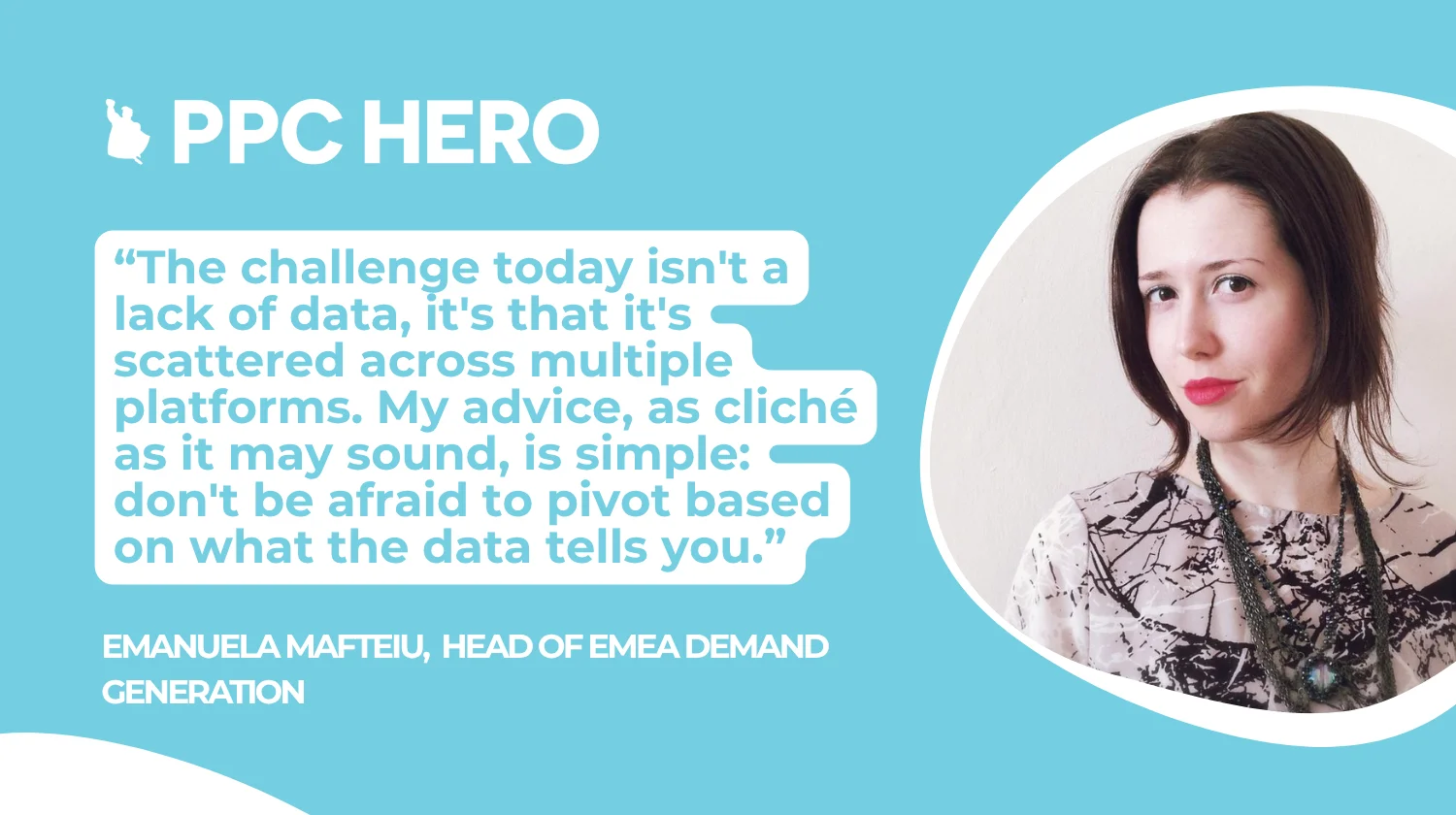
The notion of a singular "secret sauce" for demand generation success is largely a myth. Instead, enduring success is built upon a foundation of disciplined data analysis and a willingness to adapt. The contemporary challenge is not a scarcity of data, but rather its fragmentation across numerous platforms. The most effective advice, though seemingly cliché, is to embrace the insights derived from data and to be unafraid to pivot when the evidence dictates. This is not indicative of chaos, but rather of controlled adaptability.
In situations demanding rapid strategic adjustments, maximizing impact while minimizing wasted expenditure is paramount. It is an accepted reality that not every campaign will achieve its desired outcome, nor will every advertisement reach the intended audience at the optimal moment. Furthermore, the B2B sales cycle can be lengthy, with account conversion timelines extending up to 365 days. This underscores the importance of embracing dynamic budgeting, wherein spend can be flexibly reallocated based on campaign performance.
Underperforming campaigns and channels should be systematically sunsetted, while those demonstrating success should be subject to continuous A/B testing. With an estimated 95% of the market not actively in a buying cycle at any given moment, there exists a valuable window for experimentation. The more audacious the creative, the more authentic the messaging, and the more effectively marketing speaks the customer’s language, the stronger the resulting performance will be.
Finally, maintaining close collaboration with sales teams is indispensable. Sales professionals often possess critical insights and context that can significantly enhance the effectiveness of demand generation campaigns, providing the missing piece of the puzzle for a truly cohesive marketing and sales strategy. This symbiotic relationship is a cornerstone of sustained success in the ever-evolving landscape of demand generation.