Enterprise social media represents the sophisticated practice of orchestrating an organization’s vast social presence across multiple accounts, brands, geographic regions, and internal departments, leveraging integrated systems for content publication, social listening, customer relationship management, robust governance, and comprehensive reporting. This intricate approach stands in stark contrast to the comparatively simpler social media management often undertaken by small businesses, primarily due to the sheer scale and multifaceted requirements inherent in large organizations.
The fundamental distinctions are evident in three critical areas. Firstly, the expansive number of stakeholders involved: enterprise social media draws participation from marketing, communications, customer care, legal, human resources, and diverse regional teams, all converging on the same digital channels. Secondly, the stringent level of control mandated: approvals, granular permissions, and meticulous archiving are not merely desirable but mandatory to ensure compliance and brand integrity. Thirdly, the elevated standard of reporting: leadership within an enterprise demands demonstrable social performance directly correlated with overarching business results, moving far beyond superficial engagement metrics. While a small business might manage a handful of accounts from a single login, a global enterprise could oversee hundreds of accounts spanning dozens of markets, each contending with unique linguistic needs, distinct regulatory obligations, and multiple layers of content approval. This significant operational chasm is precisely why specialized enterprise social media platforms have emerged as indispensable tools. In essence, enterprise social media transcends mere content posting; it is about the precise coordination of social endeavors, executed safely and measurably across a vast organizational structure.
The Strategic Imperative: Why Enterprise Social Media is a Core Business Function
Social media has transitioned from an auxiliary marketing tool to one of the few real-time channels enabling enterprises to observe their market, competitors, and customers with unparalleled immediacy. This shift firmly establishes it as a critical business function, extending far beyond the confines of a marketing department. The sheer volume of global social media activity underscores this evolution. As of early 2025, a staggering 5.24 billion social media user identities were active worldwide, encompassing approximately 63.9% of the global population, according to DataReportal’s Digital 2025 Global Overview Report. At this immense scale, conversations pertaining to a brand are perpetually unfolding, irrespective of whether the organization is actively monitoring them.
Concurrently, the ramifications of mismanaging social presence have escalated dramatically. Reputational crises can erupt publicly and propagate with alarming speed, often exacerbated by fragmented tooling that impedes a synchronized organizational response. When various teams operate disparate platforms, a holistic view of the brand’s social landscape becomes unattainable, leading to delayed or uncoordinated reactions.

When effectively managed, enterprise social media is a powerful engine for achieving outcomes that resonate deeply with executive leadership. These include enhancing brand reputation, fostering customer loyalty, generating qualified leads, improving talent acquisition, driving sales, and facilitating agile crisis management. Critically, these tangible outcomes are precisely how social media teams quantify their return on investment (ROI) and secure sustained funding and resources for their programs. Industry analysts consistently emphasize social media as a pivotal battleground for shaping brand perception and driving customer engagement, underscoring its role in competitive differentiation.
Evolution of Enterprise Social Media Management
The journey of enterprise social media management has been one of continuous adaptation and increasing sophistication. In its nascent stages, social media engagement was often an experimental endeavor, confined to individual marketing departments managing a few brand profiles. As platforms gained traction and user bases exploded in the late 2000s and early 2010s, organizations recognized the need for more structured approaches, leading to the formation of dedicated social media teams. The mid-2010s saw a proliferation of social media management tools, initially catering to smaller businesses but gradually evolving to address the growing complexity of larger enterprises.
The latter half of the decade marked a significant turning point, characterized by increased regulatory scrutiny, the imperative for cross-functional collaboration, and the demand for measurable business impact. This period saw the integration of social media with other core business systems like CRM and customer service platforms. The current era, extending into the mid-2020s, is defined by the integration of artificial intelligence, advanced analytics, and a strategic emphasis on employee advocacy and robust governance, transforming social media into an end-to-end operating system for many enterprises. This chronology highlights a clear trend: as social media’s influence grew, so did the necessity for sophisticated, integrated management solutions.
The Seven Pillars of an Enterprise-Ready Social Platform
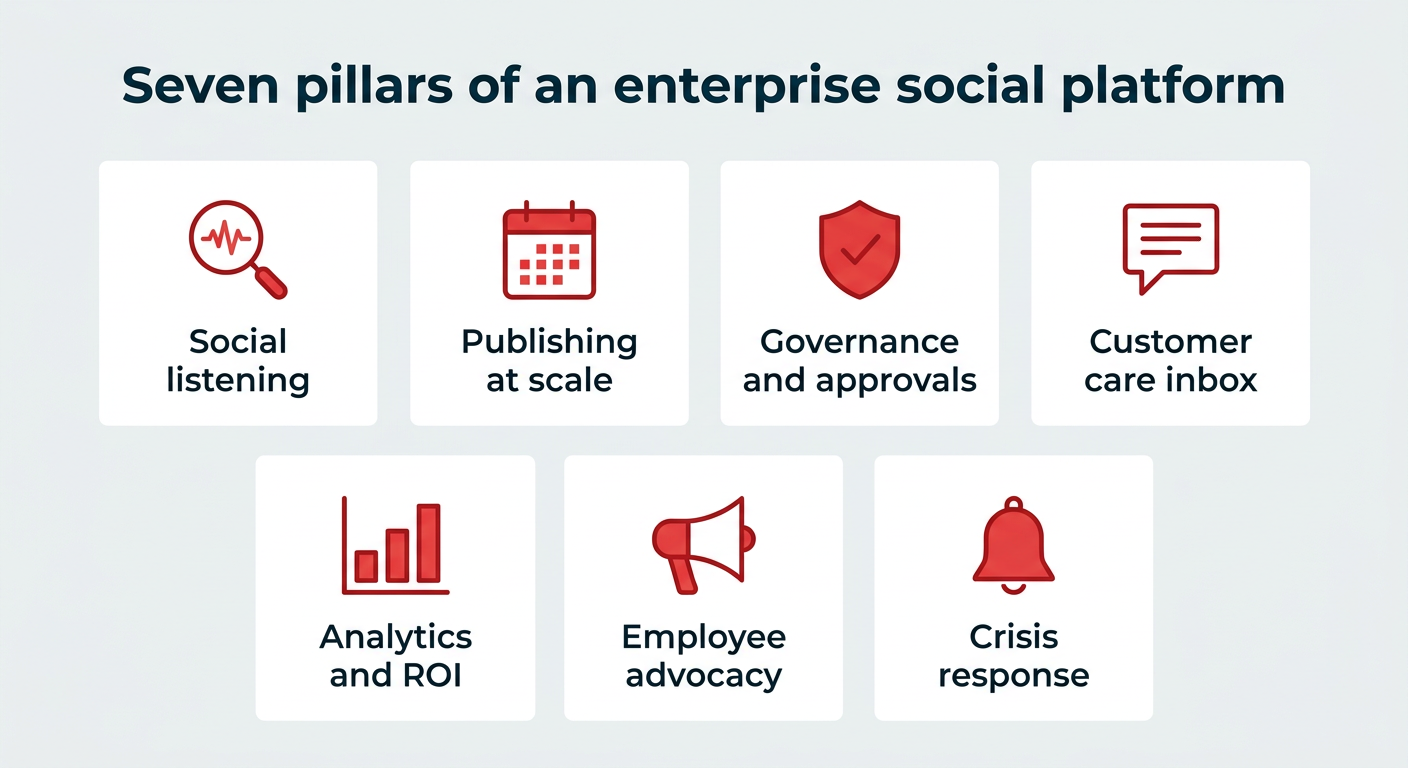
An enterprise social media software is not merely an amplified version of a small-business tool; it is purpose-built to navigate the unique challenges of large teams, multi-layered approvals, stringent compliance mandates, diverse global audiences, and executive-level reporting requirements. The ideal platform imbues this inherent complexity with structure and control, ensuring teams remain anchored to strategic priorities such such as revenue growth, customer retention, and brand trust. If a platform fails to robustly support the following seven critical areas, it may not be genuinely enterprise-ready:

-
Social Listening and Real-time Intelligence: Monitoring direct and indirect brand mentions across dozens of accounts and multiple regions rapidly becomes unmanageable without sophisticated listening capabilities. Enterprise-grade listening transcends mere social networks, encompassing news outlets, blogs, forums, and review sites. It must offer the capacity to search millions of sources in numerous languages, ensuring regional teams gain contextual insights into conversations within their specific markets. Practical applications include proactive reputation management, identifying emerging market trends, competitive intelligence gathering, and early detection of potential crises. Being aware of negative feedback in its nascent stages grants teams invaluable time to formulate a well-considered response rather than reacting belatedly.
-
Content Publishing and Collaboration at Scale: The act of publishing, seemingly straightforward, multiplies in complexity across every brand, market, and team within an enterprise. An enterprise platform must serve as the central hub for the content calendar. Essential features include multi-channel scheduling, a unified content calendar with filters for regions and brands, collaborative drafting tools, integrated digital asset libraries, and clear ownership assignments for every post. Regional teams must possess the agility to localize approved content without the arduous process of rebuilding it from scratch. The ultimate objective is a single source of truth for all outgoing content, specifying its timing and originating account within a multi-team, multi-brand ecosystem.
-
Governance, Compliance, and Approval Workflows: For regulated industries, compliance is non-negotiable. Yet, every enterprise brand faces extensive obligations related to advertising, privacy, and consumer protection on social media, with breaches carrying significant legal and financial repercussions. Proactive management is paramount, commencing with a meticulously crafted and regularly updated social media policy. An enterprise-ready tool must integrate robust security measures, including granular role-based permissions, multi-stage approval workflows, comprehensive audit trails, automatic content archiving, and single sign-on (SSO) integration. These features are crucial for safeguarding the brand while ensuring content flows efficiently. The aim is to strike a judicious balance between operational speed and necessary control, with approvals seamlessly embedded within the workflow to prevent bottlenecks.
-
Customer Care and Social Inbox: For large organizations, social media transcends its role as a marketing channel, evolving into a primary conduit for customer service. Without an appropriate system, crucial messages can be overlooked. An enterprise-grade social inbox consolidates public comments, private direct messages (DMs), mentions, and reactions into a single interface, affording teams complete visibility into every customer interaction. Key functionalities include automated message routing, the ability to assign conversations to specific agents or teams, saved replies for consistent messaging, and integration with CRM systems. These features collectively reduce response times and ensure consistent, high-quality interactions across all customer touchpoints.
-
Analytics, Reporting, and ROI Measurement: Analytics are indispensable for demonstrating the efficacy of social media initiatives, particularly when executives demand tangible impact. Leadership prioritizes metrics such as lead generation, sales conversions, and overall return on investment, moving beyond superficial "vanity metrics." Enterprise software must provide customizable dashboards, the ability to track key performance indicators (KPIs) linked to business objectives, competitive benchmarking, and seamless integration with business intelligence (BI) tools. This empowers teams to substantiate their impact, justify continued investment, and secure additional resources and executive support.
-
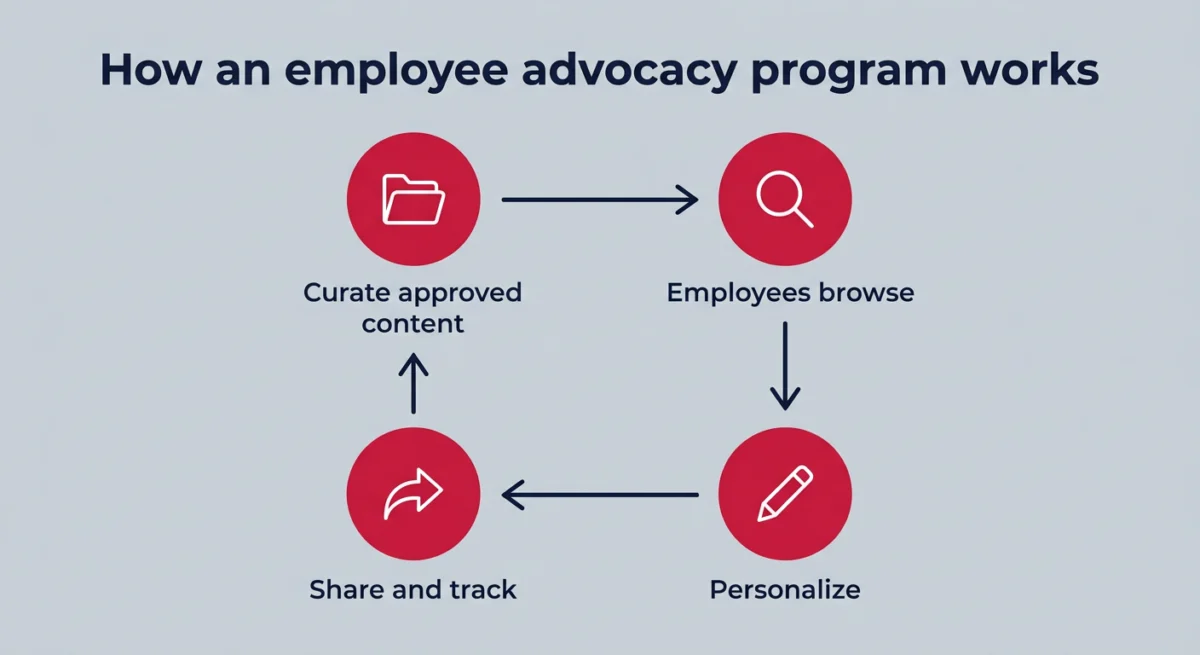
Employee Advocacy and Amplification: An employee advocacy program represents a cost-effective strategy for expanding organic reach. When employees share company updates on professional platforms like LinkedIn, where a significant majority of members drive business decisions, brands access new, authentic audiences. Advocacy tools also aid in employee onboarding by rapidly familiarizing new hires with company initiatives and effectively showcasing the organizational culture to prospective employees and customers. Enterprise tools enhance social media advocacy programs by providing a curated content library, gamification features to incentivize sharing, and comprehensive analytics to measure program impact. This structure transforms disparate employee sharing into a consistent, organized, and measurable effort, simultaneously boosting internal engagement.
-
Crisis Communications and Rapid Response: Most large corporations will, at some juncture, confront a crisis. In such scenarios, social media becomes the fastest distribution channel, enabling real-time responses and agile adaptation as the situation unfolds. However, speed devoid of structure introduces significant risk. A robust platform empowers teams to disseminate updates across all channels concurrently, monitor comments in real-time, track brand sentiment shifts, and deploy pre-approved response templates. Crucially, in a crisis, coordination and preparedness outweigh speed alone in determining the ultimate outcome. Regular tabletop exercises are essential to ensure processes are familiar and effective under pressure.
Crafting a Cohesive Enterprise Social Media Strategy
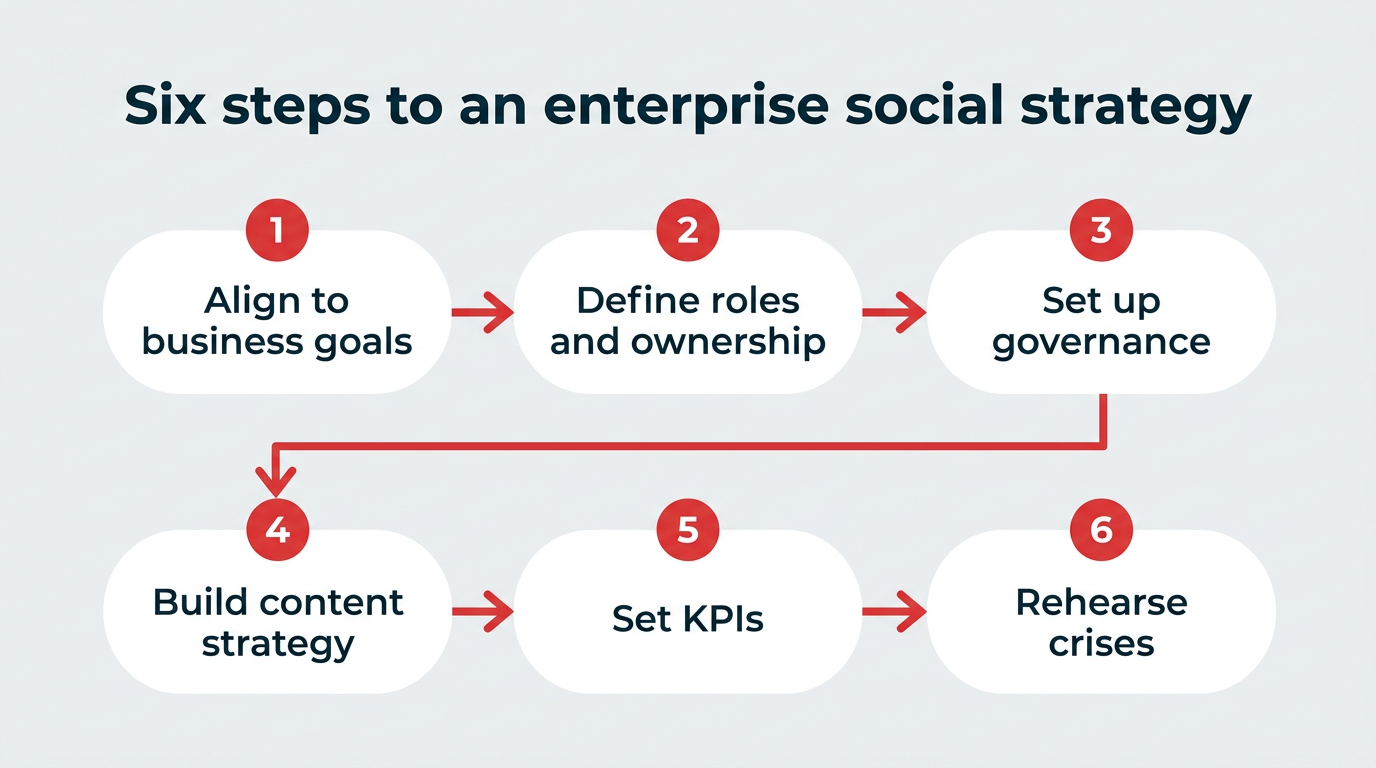
An enterprise social media strategy functions as the operational blueprint, delineating roles, channel assignments, approval hierarchies, and the specific goals against which performance will be measured. The process can be distilled into six fundamental steps:
-
Align Social Objectives to Business Objectives: The foundational step involves correlating every social objective with the overarching corporate goals, whether they pertain to revenue growth, lead generation, customer retention, or brand trust. Any social activity that does not demonstrably contribute to these core business objectives warrants re-evaluation.
-
Define Team Structure, Roles, and Ownership: A clear delineation of responsibilities is vital. Centralized teams typically manage brand standards, paid social strategy, comprehensive listening, and consolidated reporting. Regional teams, conversely, handle content localization, community management, and market-specific campaigns. Documenting who publishes, who approves, and who escalates ensures operational clarity.
-
Establish Your Governance Framework: A comprehensive governance framework mandates documenting social media policies, defining permission levels, establishing approval routes, and outlining archiving requirements. Crucially, these elements must be integrated directly into the platform workflow, rather than existing as external documents, to ensure adherence, particularly under tight deadlines.
-
Build a Content Strategy Across Brands and Regions: Develop a shared content framework that allows for local adaptation. This involves defining core content pillars, establishing the optimal balance between organic and paid social content, and outlining how sales teams will leverage social selling content. A publicly accessible content calendar ensures transparency and coordination across all teams.
-
Set KPIs Tied to Business Outcomes: Select a focused set of metrics for each objective and report them consistently. Key performance indicators such as pipeline contribution, share of voice, sentiment trends, response times, and advocacy reach are highly relevant to executives. Avoid overwhelming leadership with extensive lists of granular platform metrics.
-
Plan and Rehearse Crisis Scenarios: Proactive crisis planning is paramount. This involves drafting response templates, establishing clear approval chains, and defining escalation paths well in advance of any incident. Conducting tabletop exercises once or twice annually ensures the process is well-rehearsed and effective when faced with real-world pressure.
Collectively, these steps transform social media from a series of disparate channel activities into a cohesive, coordinated, and strategically aligned business function.
The Transformative Role of Artificial Intelligence (AI)
Artificial intelligence has rapidly evolved beyond a mere content shortcut, becoming an integral layer that interconnects and optimizes social media workflows across the enterprise. For large teams, AI’s most impactful applications lie not just in generating posts but in intelligently surfacing critical information and routing it to the appropriate personnel. AI is making significant differences in several key areas: enhanced social listening through advanced sentiment analysis and topic detection, automated content optimization for improved engagement, intelligent routing of customer inquiries to the correct support agents, personalized content recommendations for employee advocacy, and predictive analytics for trend forecasting.

The interface for interaction is also transforming. Instead of navigating complex dashboards, teams are increasingly able to pose natural language questions and receive precise answers, often accompanied by the underlying data. The true value derived from AI is contextual intelligence – insights that arrive pre-linked to the specific account, campaign, or conversation they affect. AI does not eliminate the need for human social media teams; rather, it significantly reduces the time spent on information assembly, thereby allowing human strategists to dedicate more focus to strategic judgment calls, creative execution, and nuanced decision-making.
Selecting the Right Enterprise Social Media Platform
The process of choosing an enterprise social media platform commences with a frank assessment of the limitations within the current technology stack. Identifying these gaps first allows for a targeted evaluation of vendors against specific organizational needs, rather than being swayed by extensive feature lists alone. A comprehensive checklist should serve as the evaluation criteria, encompassing capabilities such as multi-brand and multi-region support, advanced social listening, robust publishing and scheduling, integrated customer care, comprehensive analytics and reporting, employee advocacy features, stringent governance and compliance tools, API integration capabilities, and user-friendliness for diverse teams.
Two practical steps can significantly streamline the decision-making process. Firstly, initiating proof-of-concept trials with leading vendors allows for hands-on evaluation of how each platform addresses specific pain points and integrates into existing workflows. Secondly, conducting thorough interviews with current users of potential platforms provides invaluable insights into real-world performance, customer support quality, and scalability. If collaborative efficiency is a primary concern, a dedicated review of social media collaboration tools can further inform the evaluation.
Leading Enterprise Platforms: A Comparative Overview
Managing enterprise social media necessitates tools that standardize processes, fortify brand reputation, and optimize team efficiency. The market offers several leading platforms, each with distinct strengths:

-
Hootsuite Social OS: Recognized for its end-to-end social operating system, Hootsuite is employed by a significant majority of Fortune 1000 enterprises. Its integrated suite – comprising Lumen for insights and listening, Perch for content and publishing, Nest for customer care, Parliament for employee advocacy, and Wisdom and Vigil for AI orchestration and governance – consolidates disparate social functions into a cohesive system. This integrated approach eliminates the manual stitching together of insights and actions, offering advanced analytics, robust governance, and extensive integration with CRM (e.g., Salesforce), marketing automation (e.g., Adobe Marketo Engage), and collaboration tools (e.g., Slack).
-
Sprinklr: This platform provides a broad customer experience management suite encompassing social publishing, listening, care, and advertising. Its extensive breadth is a primary advantage for very large organizations seeking a single vendor across marketing, customer care, and research functions. However, its comprehensive nature often necessitates dedicated operational resources for configuration and ongoing maintenance.
-
Brandwatch: Strongest in consumer intelligence, Brandwatch excels in deep listening, market research, and audience analysis. While it offers some publishing and customer care functionalities, these are generally less central to its core product offering. It is an ideal fit for insights and research teams requiring profound analytical depth over comprehensive workflow management.
-
Khoros: Khoros specializes in community management and social customer care for large brands, featuring robust case handling and moderation capabilities. While it includes capable marketing publishing and analytics, these are secondary to its focus on managing owned online communities alongside social customer service channels.
Each platform caters to specific enterprise priorities, existing technological ecosystems, and operational scales, underscoring the importance of a tailored selection process.
Common Challenges in Enterprise Social Media Management

Most enterprise social media challenges stem not from the quality of individual content pieces but from systemic coordination issues, manifesting in predictable operational hurdles. These include fragmented teams operating in silos, leading to inconsistent brand messaging across channels; protracted and complex approval processes that hinder agility; fragmented data across disparate platforms, impeding a unified view of social performance; difficulties in demonstrating tangible ROI to executive stakeholders; and the perennial challenge of managing brand reputation and responding effectively to crises across a multitude of channels. None of these challenges are resolved with a one-time fix; they demand continuous management, underscoring why a robust operating model, supported by an integrated platform, is more crucial than any single campaign.
In conclusion, running social media at the enterprise level is an increasingly complex but strategically vital undertaking. It necessitates a holistic approach that integrates advanced technology, well-defined processes, and clear organizational structures. By focusing on comprehensive strategy, robust governance, the judicious application of AI, and the selection of an enterprise-ready platform, organizations can transform their social media presence into a powerful engine for achieving critical business objectives and navigating the dynamic digital landscape with confidence.