The increasing reliance on Google’s Smart Bidding strategies across its advertising ecosystem, particularly on YouTube, necessitates a deeper understanding of its intricacies for advertisers aiming to achieve tangible business outcomes. While familiarizing oneself with the available options is the foundational step, the true differentiator lies in adeptly configuring campaigns to maximize the potential of these automated bidding systems. This article delves into the nuances of YouTube Smart Bidding, offering practical insights and strategic recommendations for advertisers seeking to optimize their performance.
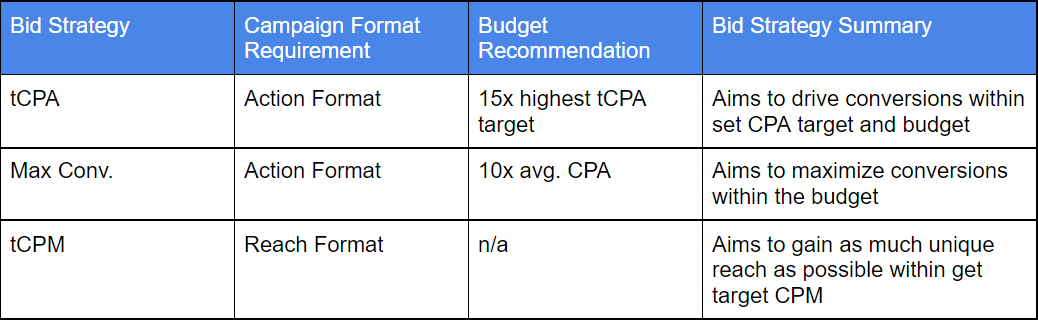
Smart Bidding on YouTube is primarily designed to drive specific conversion actions, such as sales, leads, or sign-ups. Consequently, its application is most robust within "Action Format" campaigns, including Target CPA (tCPA) and Maximize Conversions. These formats are engineered to identify and engage users most likely to complete a desired action. However, a notable exception exists for "Reach Formats," such as bumper ads, where Smart Bidding can be employed to achieve broader awareness objectives, albeit with a different underlying goal. Understanding this fundamental distinction is crucial for selecting the appropriate bidding strategy aligned with campaign objectives.
Understanding YouTube Smart Bidding Options
At its core, Smart Bidding leverages machine learning to optimize bids in real-time, aiming to achieve specific performance goals within a defined budget. For YouTube, the primary Smart Bidding strategies available are:
- Maximize Conversions: This strategy automatically sets bids to help get the most conversions possible within your budget. It’s an excellent starting point for new campaigns as it helps establish a baseline cost per acquisition (CPA) by exploring various user segments and creative combinations.
- Target CPA (tCPA): Once a campaign has gathered sufficient conversion data and a stable CPA has been established, advertisers can transition to tCPA. This strategy allows advertisers to set a desired average cost per conversion, and Google’s algorithms will adjust bids to try and achieve that target. This offers greater control over the cost of acquiring a conversion.
- Maximize Conversion Value (and Target ROAS – Return on Ad Spend): While not explicitly detailed in the provided snippet, it’s important to note that for e-commerce and businesses focused on revenue generation, strategies like Maximize Conversion Value and Target ROAS are also critical components of Smart Bidding on YouTube. These focus on optimizing for the monetary value of conversions rather than just the volume.
The visual representation of these options within the original content, while basic, underscores the strategic choices available to advertisers. The image depicting the Smart Bidding options on YouTube serves as a reminder of the core functionalities available, highlighting the shift from manual control to algorithm-driven optimization.

Strategic Budgeting for Smart Bidding Success
A critical, often overlooked, aspect of successful Smart Bidding implementation on YouTube revolves around budget allocation. Google’s recommendations for budget setting are not arbitrary; they are rooted in the need to provide the algorithms with sufficient data and flexibility to operate effectively.
Google advises setting daily budgets that are between 10 to 15 times the desired or current cost per conversion (CPA). This recommendation stems from the understanding that Smart Bidding requires a certain volume of opportunities to learn and optimize. If a budget is too restrictive, the system may be unable to explore the full spectrum of potential users and placements, leading to underperformance or a "Limited by Budget" status.
For instance, if an advertiser aims for a tCPA of $85, a recommended daily budget would range from $850 (10x CPA) to $1,275 (15x CPA). Similarly, for a Maximize Conversions campaign where the initial CPA is estimated at $85, the budget should be at least $850. While these figures might initially seem substantial, the empirical evidence suggests their necessity for fostering campaign success.
Recommendation for Initial Campaign Setup:
A common and effective approach is to initiate campaigns on "Maximize Conversions." This allows the system to gather a robust dataset and identify a sustainable CPA without the constraint of a specific target. Once a stable CPA is observed over a reasonable period (typically a few weeks), transitioning to "Target CPA" becomes a more informed and effective strategy. This phased approach mitigates the risk of setting an unrealistic tCPA from the outset, which could hinder performance.

Case Study: The Impact of Budget Adjustments
The provided mini-case study vividly illustrates the tangible benefits of adhering to Google’s budget recommendations for Smart Bidding.
Situation: A campaign employing tCPA was experiencing performance limitations, being flagged as "Limited by Budget" (LBB). This status indicates that the campaign’s budget is preventing it from reaching its full potential in terms of conversions.
Initial Bid-to-Budget Ratio: The campaign’s budget was set at approximately 10 times its current CPA. While this meets the minimum recommended ratio, it was not sufficient in this specific instance to overcome the budget constraint.
Strategic Update: The decision was made to increase the campaign budget to 15 times its current CPA. This adjustment provided the Smart Bidding algorithms with significantly more flexibility and opportunity to optimize.
Results: Following this budget increase, and after accounting for the standard two-week learning period inherent in most Smart Bidding strategies, the campaign demonstrated both significant growth in conversion volume and improvements in efficiency. The accompanying visual data, though not detailed with specific metrics here, clearly depicts a positive shift in performance post-budget adjustment, reinforcing the adage that sufficient budget is a critical enabler of Smart Bidding success. This case study underscores that the recommended budget ratios are not merely guidelines but often essential prerequisites for achieving optimal results, especially when overcoming budget limitations.
Broader Implications and Strategic Considerations
The effectiveness of Smart Bidding on YouTube is not solely dependent on the chosen strategy or budget. Several other factors play a crucial role in maximizing its potential:
- Data Quality and Volume: Smart Bidding thrives on data. The more high-quality conversion data a campaign generates, the more effectively the algorithms can learn and predict user behavior. This means ensuring robust conversion tracking is in place and that the campaign is reaching a sufficient audience to generate meaningful data points.
- Audience Targeting: While Smart Bidding automates bid adjustments, the initial audience targeting remains a critical human element. Advertisers must define and refine their target audiences based on demographics, interests, in-market segments, and custom audiences to ensure the algorithms are optimizing for the right users.
- Creative Assets: The performance of YouTube ads is heavily influenced by the creative. Engaging, relevant, and well-produced video assets are essential for capturing user attention and driving conversions. Smart Bidding can optimize delivery, but compelling creative is fundamental to the campaign’s success.
- Campaign Structure: A well-organized campaign structure with clear objectives and appropriate segmentation allows for more precise control and analysis. This includes grouping similar products or services, aligning creative with specific audiences, and setting up distinct campaigns for different performance goals.
- Conversion Window: The conversion window defines the period after a user has interacted with an ad during which a conversion is attributed. A carefully considered conversion window ensures that all relevant conversions are captured and that the Smart Bidding algorithms have an accurate picture of campaign performance. For example, for products with longer consideration cycles, a longer conversion window might be appropriate.
- Exclusions: Just as important as targeting is exclusion. Implementing negative keywords, excluding irrelevant placements, and refining audience exclusions can prevent wasted ad spend and ensure that budgets are directed towards the most valuable prospects.
The landscape of digital advertising is in a perpetual state of evolution, driven by advancements in machine learning and the increasing sophistication of user behavior. YouTube, as a dominant video platform, represents a significant opportunity for advertisers to connect with audiences at scale. Smart Bidding strategies, when implemented thoughtfully and with a comprehensive understanding of their underlying mechanisms, offer a powerful pathway to achieving demonstrable business results.
The advice to consult with experienced professionals, as suggested by the call to action in the original content, is sound. Navigating the complexities of programmatic advertising and automated bidding requires expertise and a strategic approach. For businesses looking to harness the full potential of YouTube advertising, a partnership with a seasoned agency or a commitment to continuous learning and adaptation is paramount. The future of YouTube advertising for performance-driven advertisers will undoubtedly be shaped by their ability to effectively leverage and integrate Smart Bidding strategies into their broader marketing objectives, ensuring that every dollar invested contributes meaningfully to business growth.


 Basiran
 Lina Irawan