The digital commerce landscape has undergone a seismic shift since Adobe’s $1.68 billion acquisition of Magento in 2018, transforming the platform into what is now known as Adobe Commerce. As enterprise-level retailers strive to capture a larger share of the global e-commerce market—projected to exceed $6.3 trillion in 2024—the necessity for rigorous, data-driven experimentation has never been higher. However, the architectural complexity of Magento Enterprise often serves as a double-edged sword: while it provides unparalleled scalability and customization, it introduces technical hurdles that render standard A/B testing methodologies ineffective. For many organizations, the result is a testing program that appears functional on the surface but delivers corrupted data, inconsistent user experiences, and skewed analytics.
The Evolution and Technical Architecture of Magento Enterprise
To understand why experimentation on Magento requires a specialized approach, one must first look at the platform’s evolution. Since its rebranding to Adobe Commerce, the software has integrated more deeply with the Adobe Experience Cloud, offering cloud-native hosting and advanced enterprise features. Despite these modernizations, the core codebase remains rooted in a template-driven architecture designed for high-performance caching.
The primary differentiator for Magento Enterprise is its reliance on a sophisticated caching layer, typically involving Varnish. Varnish acts as a reverse proxy cache that sits in front of the web server, intercepting incoming requests and serving pre-rendered HTML. This mechanism is essential for maintaining site speed during high-traffic periods, such as Black Friday or major product launches. However, because Varnish serves identical cached pages to all users without interacting with the application layer (PHP), it remains "blind" to visitor-level data. When a testing tool attempts to bucket a user into a specific variant, the caching layer may inadvertently serve the original version of the page, leading to a "flicker" effect or, worse, inconsistent data where a single user sees multiple variations during a single session.
Strategic Data and the Financial Impact of Optimization
The stakes for successful optimization on Magento are remarkably high. Industry data suggests that the average global e-commerce cart abandonment rate stands at approximately 70.22%. For enterprise brands generating hundreds of millions in annual revenue, even a 1% reduction in abandonment through A/B testing can translate into millions of dollars in recovered sales. Furthermore, research from Google indicates that a one-second delay in mobile load times can impact conversion rates by up to 20%. Because poorly implemented A/B testing scripts often increase "Time to Interactive" (TTI), the technical execution of these tests is directly tied to the brand’s bottom line.
Core Technical Challenges in Magento Experimentation
The complexity of Magento’s multi-storefront architecture adds another layer of difficulty. Enterprise accounts often manage dozens of storefronts across different geographical regions, each with its own currency, language, and session handling configurations. If a test is not scoped correctly at the "Store View" level, an experiment intended for a North American audience might inadvertently leak into European or Asian storefronts, corrupting the global data set and confusing international customers.
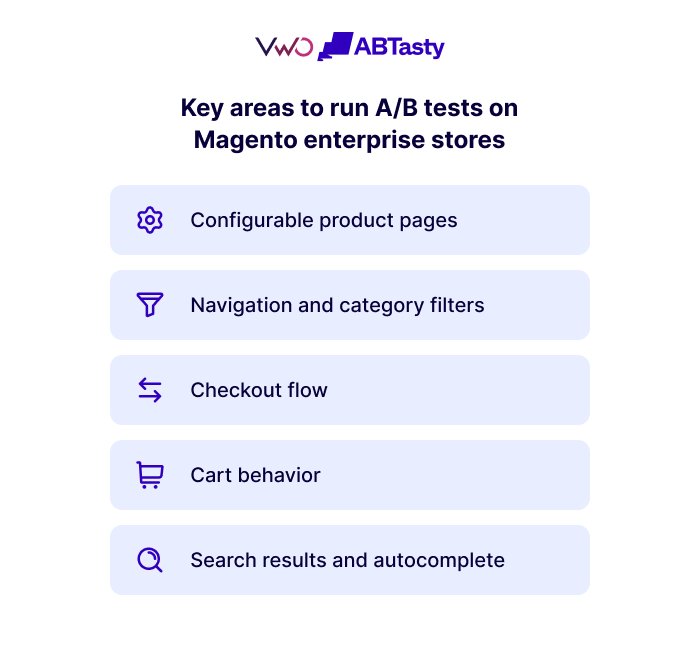
Another significant hurdle is the phenomenon of "client-side flicker." Because most A/B testing tools are JavaScript-based, they execute after the initial HTML has been rendered by the browser. On a heavily cached Magento site, the browser may display the original "Control" page for a fraction of a second before the JavaScript modifies the Document Object Model (DOM) to show the "Variant." This flicker not only disrupts the user experience but can also alert the user that they are part of an experiment, introducing "Hawthorne Effect" bias into the results.
Methodological Framework for Reliable Testing
To build a reliable testing program, enterprise teams must adopt a rigorous framework that accounts for Magento’s specific constraints. This process begins with the synchronization of the staging and production environments. A common failure point in Magento testing is conducting Quality Assurance (QA) on an uncached staging environment. When the test is moved to production where Full-Page Cache (FPC) and Varnish are active, the test fails. Therefore, best practices dictate that all QA must be performed with FPC enabled to mirror the live environment exactly.

Furthermore, the deployment of testing scripts must be handled with surgical precision. Loading scripts asynchronously is the standard for performance, but it must be paired with a "pre-hiding snippet" placed high in the <head> tag. This snippet suppresses page content until the variant is ready to be displayed, effectively eliminating flicker.
High-Leverage Testing Areas for Adobe Commerce Stores
Given Magento’s template-driven nature, certain areas of the site offer disproportionate returns on experimentation:
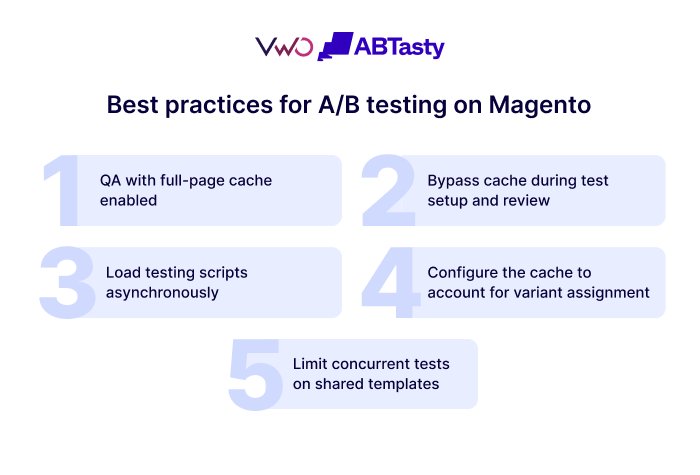
- Configurable Product Pages: Magento’s native support for configurable products allows for complex experiments regarding attribute selection (e.g., color swatches vs. dropdown menus) and dynamic price updates.
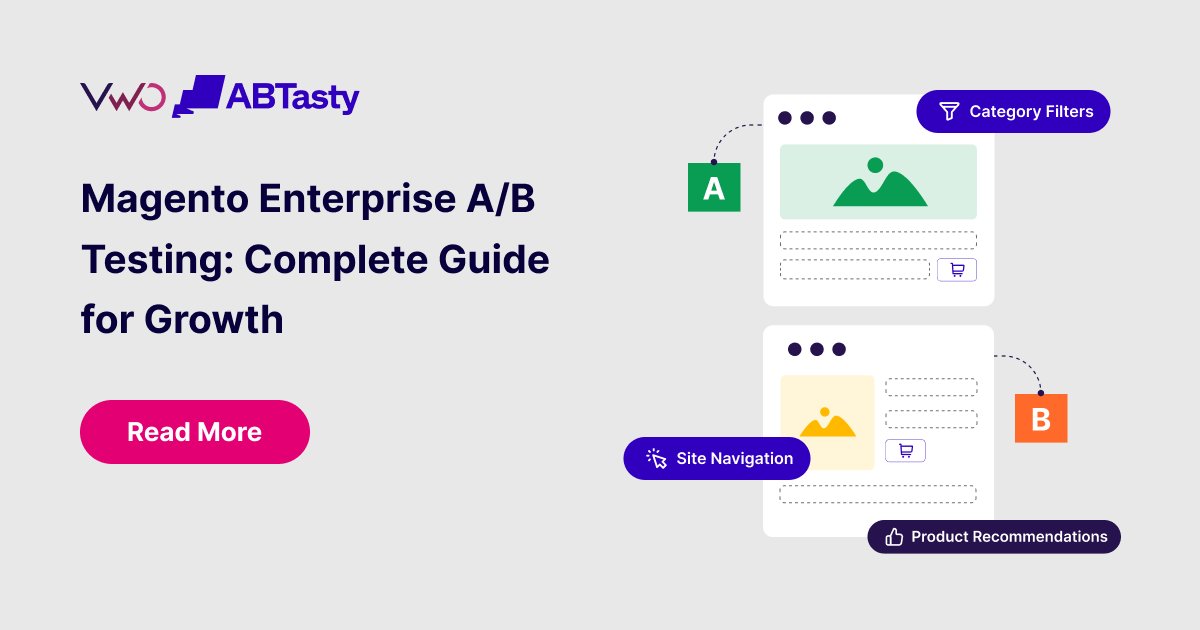
- Layered Navigation and Filters: For stores with large catalogs, the order and presentation of category filters are critical. Testing whether filters should be expanded by default or how "Clear All" functions can significantly impact the user’s ability to discover products.
- Checkout Flow Optimization: Unlike many SaaS platforms that offer a "black box" checkout, Magento allows for deep customization of the multi-step checkout process. Testing the sequencing of shipping and payment information or the visibility of order summaries can drive substantial lifts in completion rates.
- B2B Buying Flows: Magento’s robust B2B suite, including quote requests and shared catalogs, provides a unique frontier for testing. Optimizing the "Request a Quote" workflow is often more valuable for B2B enterprises than traditional "Add to Cart" optimizations.
The Tooling Landscape: VWO, Kameleoon, and Optimizely
Selecting the right tool is a strategic decision that depends on the organization’s technical maturity. VWO (Visual Website Optimizer) has become a popular choice for Magento environments due to its SmartCode integration, which allows for per-store-view scoping and robust handling of client-side delivery. Additionally, VWO’s integration of qualitative tools like heatmaps and session recordings allows teams to form hypotheses based on actual user behavior rather than guesswork.
Kameleoon is often favored by high-traffic enterprises that require variant assignment earlier in the request cycle, which can be particularly effective when cache configurations are difficult to modify. Optimizely, meanwhile, remains a staple for large-scale organizations that require a unified platform for A/B testing, content management, and deep personalization across multiple digital touchpoints.
Expert Perspectives on Resource Allocation
The success of a Magento testing program is as much about people as it is about technology. Garret Cunningham, Director of Global Optimization at Columbus Global, notes that organizations that dedicate specific design and development resources to experimentation consistently outperform those that rely on shared teams. "Running more experiments isn’t simply a matter of having ideas—it’s a matter of having the resources to execute them," Cunningham stated in a recent industry podcast.
Similarly, Ilan Hurwitz, a prominent figure in the commerce optimization space, emphasizes the importance of stakeholder alignment. For enterprise businesses, the primary challenge is often securing the necessary internal support to allow for "failing fast" and iterative learning. Building trust through transparent reporting and statistically significant data is the only way to sustain a long-term optimization program.

Analysis of Long-Term Implications
As Adobe Commerce moves toward a more "headless" or composable commerce future, the nature of A/B testing will continue to evolve. In a headless setup, where the frontend (Vue.js, React, etc.) is decoupled from the Magento backend, testing moves closer to the server side. This shift will likely reduce the reliance on client-side JavaScript and mitigate many of the caching issues currently plaguing traditional Magento setups.
Furthermore, the integration of Artificial Intelligence (AI) into testing platforms—such as VWO’s "Wandz" agentic optimization system—is beginning to automate the hypothesis generation process. For Magento store owners, this means the bottleneck will shift from "what to test" to "how to technically implement" at scale.

Conclusion and Future Outlook
Building a reliable A/B testing program on Magento Enterprise is an exercise in technical discipline. By understanding the nuances of the Varnish caching layer, correctly scoping experiments across multi-storefront architectures, and utilizing advanced script delivery methods, organizations can turn a complex platform into a powerful engine for growth. As the e-commerce sector becomes increasingly competitive, the ability to derive reliable, data-backed insights from every visitor interaction will be the defining characteristic of the market leaders in the Adobe Commerce ecosystem. The transition from reactive site maintenance to proactive, experiment-led optimization represents the next frontier for the modern digital enterprise.