


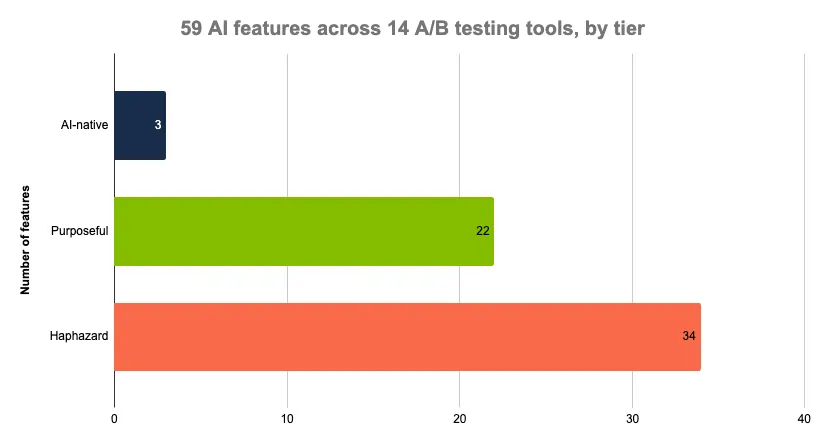
The global experimentation landscape has reached a critical inflection point as of mid-2026, characterized by a significant divergence between how software vendors position artificial intelligence and the actual utility those features provide to end-users. A comprehensive audit of 14 leading A/B testing platforms, conducted in June 2026, reveals that while 71% of these tools prominently feature AI in their primary marketing collateral, the majority of the integrated technology remains superficial. The study, which tagged 59 distinct AI features by their underlying capabilities, found that 58% are merely "chat wrappers" designed to simplify existing actions, 37% offer genuinely new capabilities through domain-specific models, and only 5% represent a fully agentic, AI-native approach to optimization.
This phenomenon draws a sharp historical parallel to the "Smart TV" era of 2014. During that period, the label "smart" was applied indiscriminately to hardware ranging from fully integrated operating systems to televisions with a single HDMI port for an external streaming stick. In 2026, "AI-powered" has become a similarly nebulous term in the SaaS sector, often failing to distinguish between a sophisticated machine learning architecture and a simple API connection to a third-party large language model (LLM).
The Audit Methodology and Marketing Discrepancies
To understand the current state of the market, researchers analyzed the official documentation and public-facing websites of 14 major vendors. The investigation mapped every instance of the term "AI" across headlines, product descriptions, and technical manuals. The findings highlight a aggressive "AI-first" marketing strategy: 71% of tools feature AI in homepage headlines or dedicated product pages, yet only 43% place AI at the center of their value proposition.

The audit also identified significant inconsistencies in branding. One major tool avoids the "AI" label entirely, opting for terms like "smart" or "hybrid statistics" to describe its adaptive traffic allocation algorithms. Conversely, another platform, recently acquired, continues to use an "AI-native" claim in its acquisition banner despite the absence of such terminology in its actual product documentation. This "positioning gap" suggests that for many vendors, AI is a defensive marketing requirement rather than a core architectural shift.
The Three Tiers of AI Integration
The 59 features identified in the audit were classified into three distinct tiers based on a "mechanism test" designed to determine the depth of the integration.
1. Haphazard AI: The Interface Layer
Comprising 58% of all features, Haphazard AI consists of chat interfaces layered on top of existing software. These tools translate natural language prompts into commands that the platform could already execute. For instance, a user might ask a chatbot to "create a variant for mobile users," which the AI then performs by navigating the software’s existing API. While this reduces the number of clicks required and lowers the barrier to entry for novice users, it does not provide the platform with new capabilities. If the chat box were removed, the core product remains unchanged.
2. Purposeful AI: The Capability Layer
Representing 37% of the features, Purposeful AI involves domain-specific models trained on the platform’s proprietary behavioral data. These features allow the software to do things it previously could not, such as predictive visitor scoring or emotion-based segmentation. Because these models rely on historical data unique to the vendor, they cannot be easily replicated by a generic LLM subscription. This tier represents the "moat" for established vendors, as the value is derived from the dataset rather than the prompt.
3. AI-Native: The Agentic Layer
The most advanced tier, accounting for only 5% of features, is the fully agentic model. In this tier, the experimentation loop is entirely autonomous. The AI observes traffic, identifies friction points, proposes hypotheses, launches tests, and rolls out winning variants without human intervention. This is not just an added feature but the core identity of the product.
Detailed Analysis of Market Leaders and Innovations
The audit highlights several key players who are defining these tiers through specific product releases and architectural choices.
Chat-Based Experimentation (VWO, Kameleoon, Optimizely)
VWO Copilot and Kameleoon’s Prompt-Based Experimentation (PBX) are leading the Haphazard tier by integrating enterprise-grade OpenAI and Gemini models. These tools allow users to generate image variations, summarize session recordings, and draft audience segments through natural language. Optimizely’s "Opal" takes this further by deploying specialized agents for different functions, such as reviewing statistical viability or drafting hypotheses. According to Optimizely’s 2025 Opal AI Benchmark Report, users of their AI features run 78.7% more experiments than those who do not, suggesting that even "Haphazard" layers can significantly increase operational velocity.
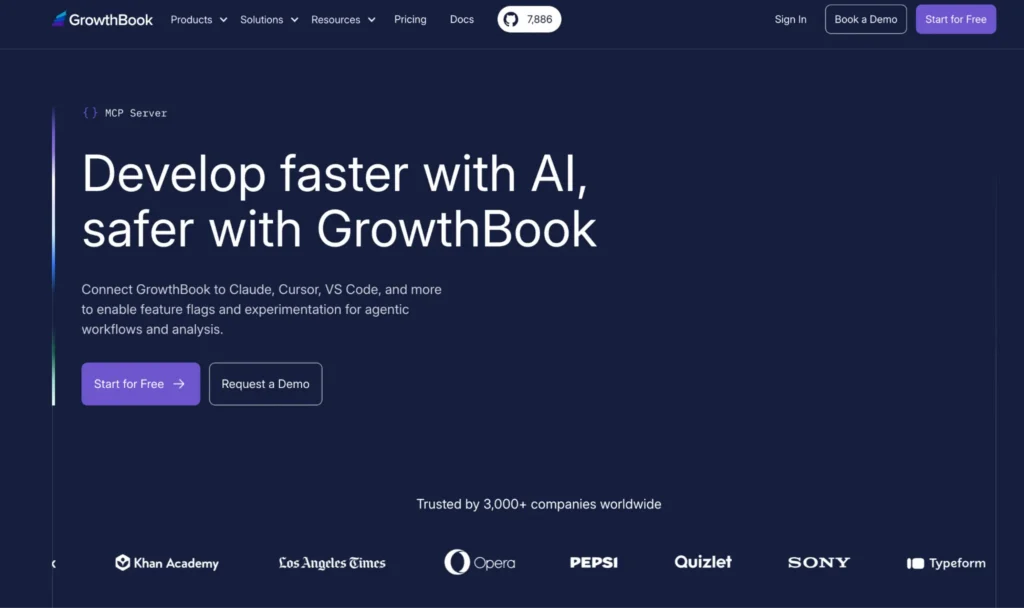
The Rise of MCP Servers (Statsig, GrowthBook, Convert)
A major technical shift in 2025 and 2026 has been the adoption of the Model Context Protocol (MCP). This allows external AI clients like Claude Code or Cursor to communicate directly with experimentation platforms. GrowthBook and Statsig have pioneered this "headless AI" approach. By exposing gates, experiments, and metric definitions through an MCP server, these vendors meet developers in their own environments. However, GrowthBook’s engineering team has noted that conversational AI still struggles with complex, multi-step experiment setups, often skipping crucial sequences if not monitored.

Predictive Intelligence (AB Tasty, Adobe Target, Webtrends Optimize)
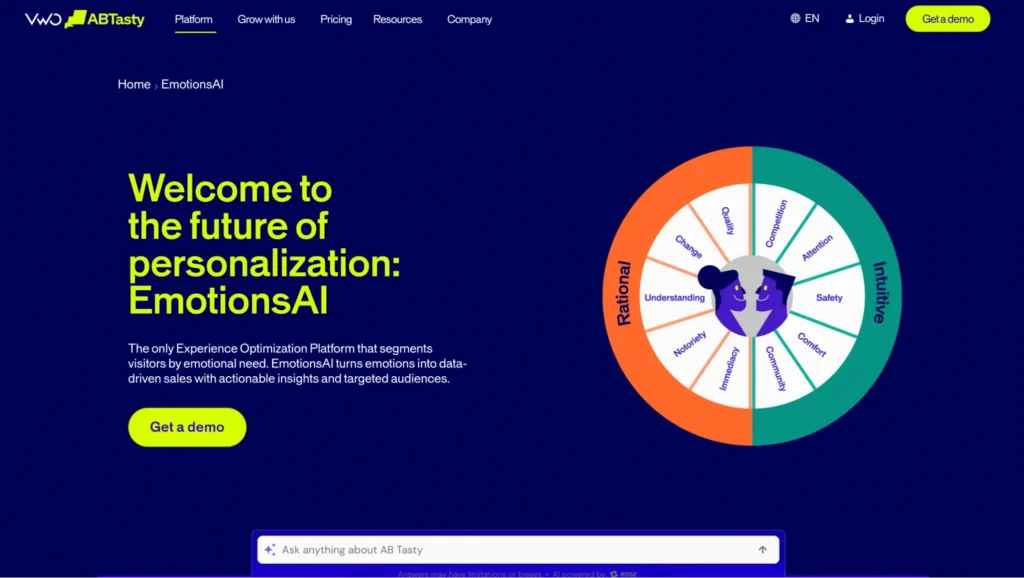
In the "Purposeful" tier, AB Tasty’s EmotionsAI segments anonymous visitors into emotional cohorts within 30 seconds of landing, reportedly driving a 5-10% revenue lift. Adobe Target continues to utilize Adobe Sensei for automated personalization, allocating traffic based on classical machine learning scores.
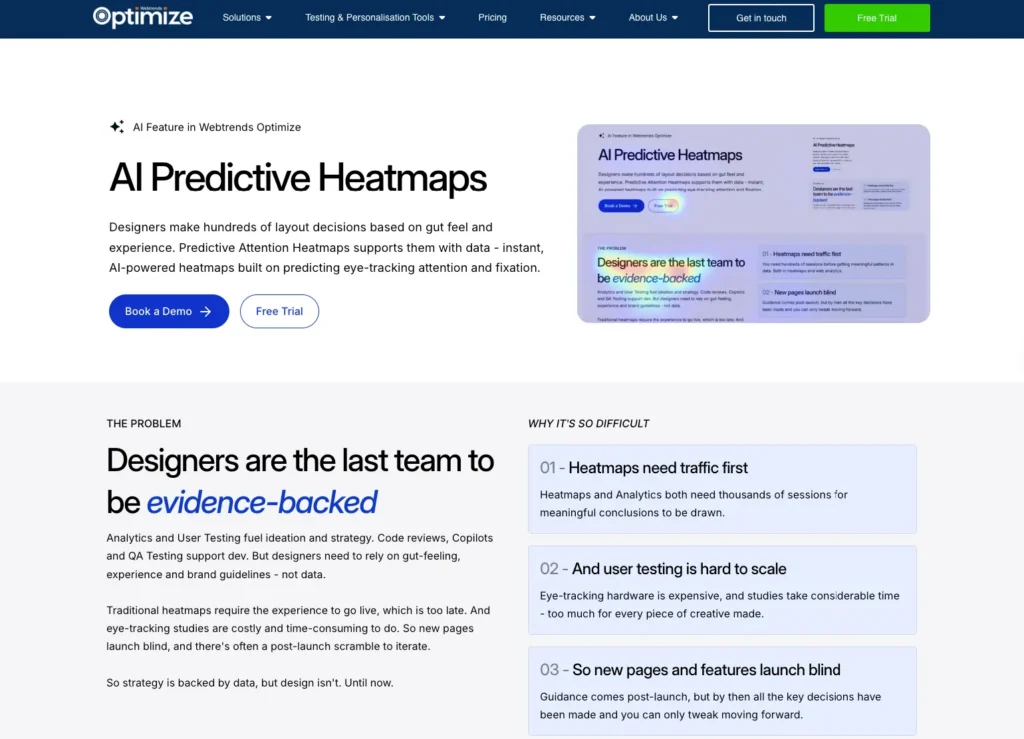
A notable outlier is Webtrends Optimize, which markets "Sovereign AI." Unlike competitors who send data to external LLMs, Webtrends runs local models on its own hardware. This approach addresses the growing concern of data sovereignty, as many enterprise clients are becoming wary of the privacy risks associated with third-party API calls.
The Disruptor: Runner AI
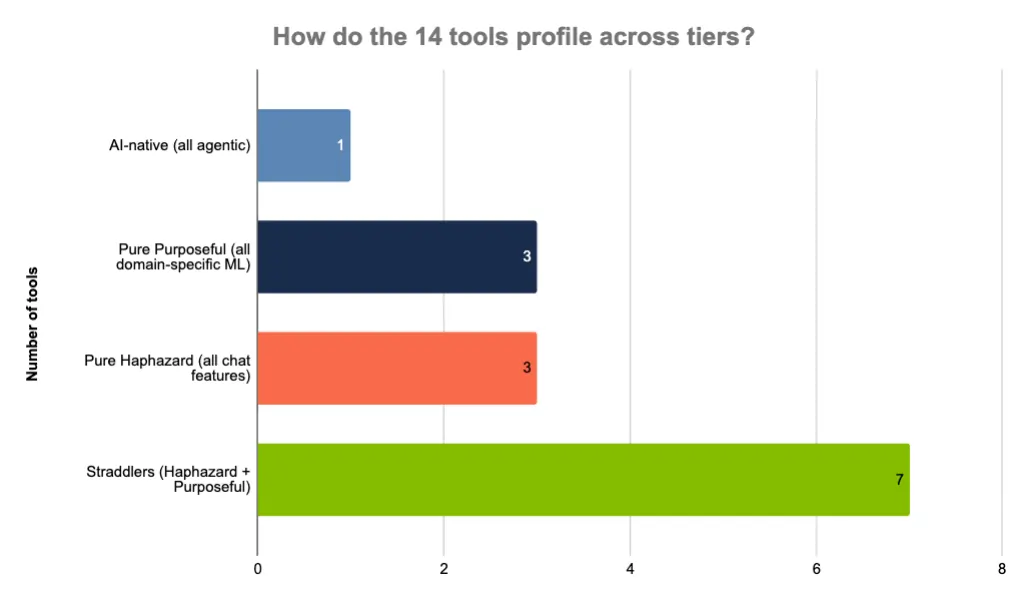
Launched in January 2026 by former Google DeepMind engineers, Runner AI represents the "AI-native" tier. The platform functions as an autonomous storefront agent that identifies friction and runs continuous multivariate tests on layout and promotions without manual triggers. This marks a shift from "tools for testers" to "autonomous optimization engines."
Market Consolidation and the M&A Wave
The experimentation industry is currently undergoing a period of rapid consolidation, which has direct implications for AI roadmaps. In the past year, four of the 14 audited tools have changed hands:
- VWO and AB Tasty merged under the Wingify umbrella (Everstone Capital).
- Eppo was acquired by Datadog to form Datadog Experiments.
- SiteSpect was rebranded as Monetate Maestro following its acquisition by Monetate.
- Convertize was acquired by Glassbox.
This consolidation suggests that AI features are increasingly being folded into broader "experience platforms." For practitioners, the risk is that distinct AI capabilities may be absorbed into larger, more expensive suites, or that independent roadmaps may be deprioritized in favor of ecosystem integration.
The Foundation for Trustworthy AI
As the industry moves toward agentic experimentation, the importance of "plumbing"—the underlying infrastructure—cannot be overstated. Convert Experiences, one of the audited vendors, has taken a public stance against "vibe coding" (releasing AI features without robust foundations).

Industry experts argue that before an AI agent can be trusted to modify a live website, the platform must have:
- Granular Version Control: A "diff view" to track every change made by an AI.
- Approval Workflows: Human-in-the-loop gates for experiment requests.
- Audit Trails: Comprehensive logs of which agent made what change and when.
Without these safeguards, agentic AI poses a significant risk to site stability and brand consistency. The audit suggests that the vendors who prioritize these "un-glamorous" features will likely be the ones that enterprises trust with autonomous optimization in the long term.

Broad Impact and Future Implications
The stratification of AI in A/B testing is happening faster than marketing departments can keep up with. As MCP servers commoditize the "chat layer," the value of a vendor’s proprietary chat box is rapidly diminishing. The real competitive advantage in 2027 and beyond will lie in the quality of a vendor’s data and the sophistication of their domain-specific models.
For organizations choosing an experimentation partner, the "mechanism test" provides a vital framework. If a tool’s AI value proposition disappears when the chat box is removed, it is a productivity enhancer, not a fundamental shift in capability. Conversely, tools that offer predictive insights based on years of accumulated behavioral data provide a moat that generic AI cannot easily cross.

The emergence of fully agentic tools like Runner AI signals the beginning of a new category. While currently representing only 5% of the market, these AI-native platforms represent the logical conclusion of the current technological trajectory: a move from "human-led, AI-assisted" testing to "AI-led, human-supervised" optimization. As the industry moves toward the latter half of the decade, the ability to manage, audit, and trust these autonomous agents will become the primary challenge for digital growth teams worldwide.







