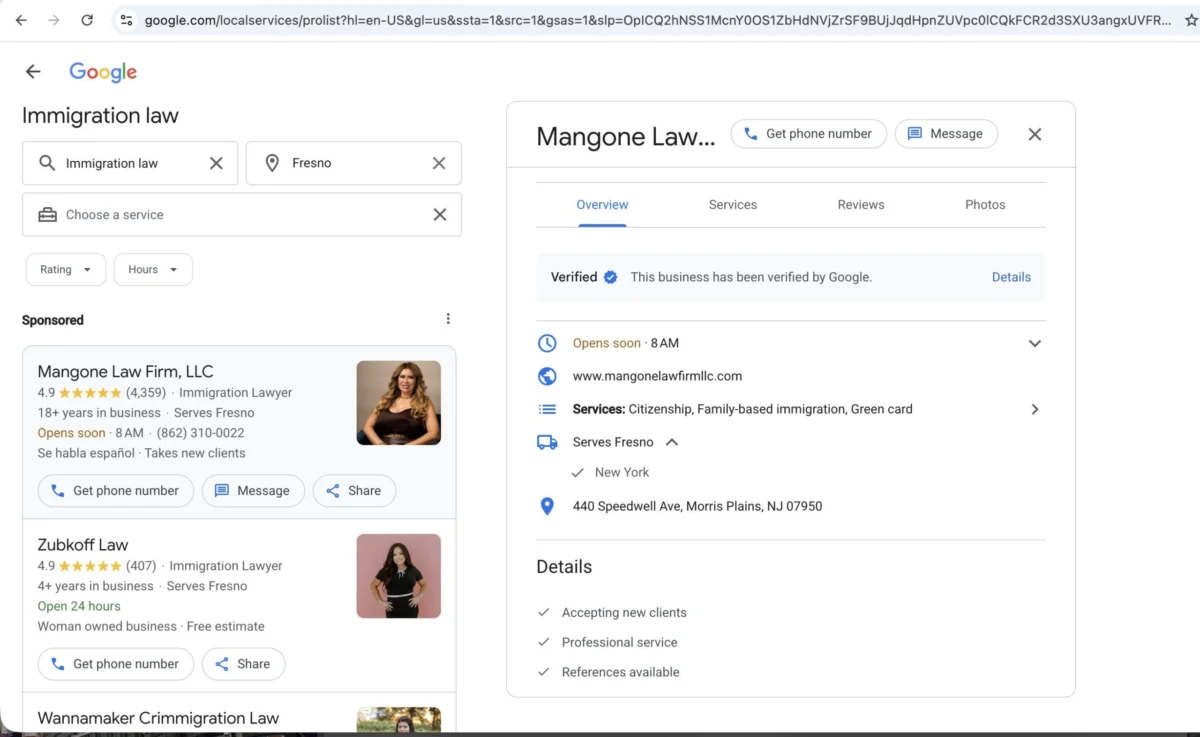
The long-held understanding that Google’s primary web crawlers, collectively known as Googlebot, originate predominantly from Mountain View, California, has been definitively clarified by Google officials, revealing a more complex and globally distributed reality. While Google often declares its bots as hailing from its California headquarters, the actual egress points, or the physical locations from which these crawlers access websites, vary significantly across its extensive global data center network. This nuanced explanation underscores the sophisticated infrastructure underpinning Google’s indexing operations and has significant implications for webmasters, SEO professionals, and those seeking to understand the mechanics of global web crawling.
Understanding Googlebot: The Engine of the Web
Googlebot is the generic name for Google’s web crawling software. It systematically discovers and scans web pages, collecting information that is then used to build Google’s searchable index. Without Googlebot, new content would remain undiscovered, and the vast majority of the internet would be invisible to search engines. Its role is fundamental to the internet’s functionality, ensuring that information is organized and accessible. Google operates several types of crawlers, including Googlebot Smartphone (for mobile content), Googlebot Desktop (for desktop content), and specialized crawlers for images, videos, and news. Each plays a critical part in maintaining the freshness and comprehensiveness of Google’s index.
For many years, Google has advised webmasters that its crawlers would typically identify themselves as originating from Mountain View, California. This declaration, often found in User-Agent strings and IP geolocation lookups, served as a consistent identifier. However, the sheer scale of the internet and Google’s ambition to index it efficiently necessitated a globally distributed infrastructure. Google maintains numerous data centers and network points of presence (PoPs) worldwide, designed to reduce latency, improve redundancy, and handle the immense processing load required to crawl billions of pages daily.
The Discrepancy Explained: Declared vs. Actual Egress Points
The clarification regarding Googlebot’s true origin came during an exchange on Bluesky, a decentralized social network, involving prominent Google representatives John Mueller and Gary Illyes. When questioned about the physical location of Googlebot, John Mueller initially noted that it likely varies, asking what kind of issues the inquirer was observing. Following up, the questioner asked if the majority of bots still came from California, with only some testing or originating from other locations.
Gary Illyes, a Search Relations analyst at Google, provided the definitive answer. He explained that "IP location is declared (this is just a text bit you can set for the IPs you manage) to be US, Mountain View, in most cases, but the actual egress points vary." He offered a clear example: "if the IP is assigned to a cluster in ATL [Atlanta], the egress point will be ATL." This statement highlights a crucial distinction: the declared origin is a configuration setting or a label Google applies to its IP addresses for identification purposes, while the egress point is the actual physical location from which the crawler’s request originates.
The Nuance of IP Geolocation and Anycast Networks
Illyes further elaborated on the technical complexities of IP addresses, stating, "IP addresses don’t have a ‘geographic location’. They typically default to whatever the registrant’s location is, or they’re defaulted to some location based on BGP anycast routes." He drew parallels to well-known public DNS resolvers like 1.1.1.1 or 8.8.8.8, questioning, "Where do you put these on a map? They’re technically everywhere…"
This explanation delves into the intricacies of internet infrastructure. IP geolocation services attempt to map IP addresses to physical locations, but their accuracy can vary. They often rely on databases that associate IP blocks with registered owners and their declared addresses, or with network routing information. For large global entities like Google, with vast IP address ranges, the registered location might be their corporate headquarters (Mountain View), even if the specific IP is being used in a data center thousands of miles away.
Anycast routing, as mentioned by Illyes, is a networking technique where multiple servers or services can share the same IP address. When a client attempts to connect to an anycast IP, the network routes the request to the nearest available server hosting that IP. This dramatically improves performance and resilience, as requests are served from the closest geographical point, and failures in one location can be seamlessly rerouted to another. For Googlebot, this means that an IP address associated with "Mountain View" could, through anycast, effectively be "everywhere" and served from whichever Google data center is closest or most efficient for a given crawl request. This technical setup is crucial for Google to maintain its operational efficiency and global reach, allowing it to crawl the web with minimal latency and maximum throughput.
A Brief History of Google’s Crawling Infrastructure
Google’s crawling operations have evolved dramatically since its inception in the late 1990s. In the early days, Google’s infrastructure was comparatively simpler, likely centered around its initial base in California. As the web grew exponentially, so did the demands on Google’s crawling and indexing systems.
-
Early Operations and the Rise of Global Data Centers: The need for speed, redundancy, and local relevance quickly pushed Google to establish a global network of data centers. These facilities, strategically located across continents, allowed Google to process vast amounts of data closer to its source and serve users more efficiently. Each data center acts as a node in Google’s distributed computing network, hosting servers, storage, and networking equipment essential for tasks like web crawling, indexing, search query processing, and hosting services like Gmail and YouTube. The expansion of this physical footprint directly enabled the distributed nature of Googlebot.
-
Localized Crawling and Specific Regional Observations: Over time, Google introduced the concept of "localized crawling," meaning that Googlebot could initiate crawls from specific geographical regions to better understand local content and provide more accurate geo-targeted search results. This was particularly evident in cases where a website might serve different content based on the user’s location. In 2011, for instance, observations indicated Googlebot crawling from China, a notable instance given the unique internet regulations in that country. While the precise reasons for such localized crawls can vary (e.g., technical efficiency, content relevance, or even regional legal requirements), it further solidified the idea that Googlebot was not a monolithic entity confined to a single geographic point. This localized crawling capability is distinct from the general egress point variability discussed by Illyes, though both contribute to the global distribution of Googlebot’s activity.

Why Does Googlebot’s Location Matter? Implications for Webmasters and SEO
The revelation about Googlebot’s true geographic distribution carries several implications for webmasters, SEO professionals, and website administrators.
-
Implications for Geotargeting and SEO: Many websites implement geotargeting strategies, serving different content or redirecting users based on their perceived geographic location. If a website attempts to block or serve specific content based on an IP’s presumed California origin, it might inadvertently misinterpret Googlebot’s intent or even block it entirely. Google’s ability to crawl from various global locations means that webmasters should not rely solely on the perceived IP origin of Googlebot to determine geographic relevance. Instead, Google relies on other signals for geotargeting, such as:
- Top-level domains (TLDs): Country-code TLDs like
.defor Germany or.jpfor Japan strongly indicate geographic targeting. hreflangannotations: These HTML attributes explicitly tell Google which language and region a specific page is intended for.- Google Search Console geotargeting settings: Webmasters can specify a target country for generic TLDs like
.com. - Content and language: The language used on a page and local references within the content itself provide strong signals.
- Local business schema markup: For businesses with physical locations, structured data can help Google understand their geographic relevance.
- Top-level domains (TLDs): Country-code TLDs like
-
Server Logs and Security Considerations: Web server logs record the IP addresses of visitors, including crawlers. Webmasters often analyze these logs to identify legitimate Googlebot traffic. The knowledge that Googlebot IPs, while often declared as Mountain View, can originate from various global egress points, means that a simple IP-to-location lookup might not always confirm the crawler’s true origin or even its legitimacy. It’s crucial for webmasters to verify Googlebot by conducting reverse DNS lookups, which should resolve to
googlebot.comorgoogle.com, rather than relying solely on the perceived geographic location of the IP. This practice helps differentiate legitimate Googlebot from malicious bots that spoof Googlebot’s user agent string. -
The Criticality of Not Blocking Googlebot: A consistent message from Google has been the severe consequences of blocking legitimate Googlebot traffic. As previously reported, blocking US traffic would inevitably cause "big problems" for Google crawling, as a significant portion of its declared IP range is associated with the US. Even if the egress point is in Europe or Asia, the declared identity might still tie back to the US. Blocking traffic based on generalized geographic IP ranges without specific verification could inadvertently block Googlebot, leading to de-indexing and a complete loss of search visibility. Google has also emphasized that if webmasters block US users, they must also block Googlebot, implying that Googlebot will respect these geo-restrictions if properly implemented and identifiable. However, this is a delicate balance, and outright blocking based on perceived origin is fraught with risk.
Official Commentary and Community Dialogue
The exchange on Bluesky served as a critical clarification from Google itself. John Mueller’s initial query about "issues" highlights Google’s understanding that webmasters might encounter problems or misconceptions related to crawler identification. Gary Illyes’s detailed explanation then provided the necessary technical context, moving beyond the simple "Mountain View, California" declaration to explain the underlying network architecture.
This dialogue underscores Google’s ongoing effort to be transparent about its complex operations, albeit within the bounds of its proprietary systems. The webmaster community, frequently scrutinizing every detail of Google’s behavior, benefits immensely from such clarifications. Without this information, many might continue to misinterpret server logs or implement geotargeting strategies based on an incomplete understanding of Googlebot’s global footprint.
Broader Impact and Strategic Considerations
The distributed nature of Googlebot is not merely a technical detail; it is a strategic imperative for Google. It enables:
-
Efficiency and Freshness: Crawling from geographically diverse locations reduces network latency, allowing Googlebot to discover and index new and updated content more quickly. This is vital for maintaining a fresh and relevant search index.
-
Resilience: A distributed system is inherently more resilient. If one data center or network path experiences issues, Googlebot can seamlessly shift its operations to another egress point, ensuring continuous crawling.
-
Localized Relevance: While content and
hreflangare primary signals for geo-targeting, the ability to crawl from a local region can provide additional context or uncover locally hosted content that might otherwise be missed. -
Beyond IP: How Google Understands Geographic Relevance: It is important to reiterate that while Googlebot’s egress point varies, Google’s ability to understand the geographic relevance of content is highly sophisticated and goes far beyond the originating IP of its crawler. Google employs a multitude of signals, including:
- Domain-level targeting: Country-code top-level domains (ccTLDs) are strong signals.
- Language and content: The language used, local place names, currencies, and cultural references within the text.
- Links: Inbound links from local websites.
- Google My Business profiles: For local businesses, this provides explicit geographic information.
- User location signals: For actual search results, Google often uses a user’s IP address, device location, and search history to personalize results, which is separate from how Googlebot crawls.
-
Best Practices for Webmasters: Given this clarification, webmasters should adhere to the following best practices:
- Verify Googlebot: Always use reverse DNS lookups to confirm that a crawler’s IP address resolves to
googlebot.comorgoogle.com, rather than relying on IP geolocation services. - Use
hreflangand GSC geotargeting: For websites targeting specific regions or languages, implementhreflangtags and configure geotargeting in Google Search Console appropriately. These are Google’s preferred methods for understanding geographic intent. - Avoid IP-based geo-blocking for Googlebot: Do not implement blocking or content serving rules solely based on the perceived geographic origin of Googlebot’s IP address. This can lead to unintended consequences.
- Monitor server logs for anomalies: Regularly review server logs to identify unusual crawling patterns or suspicious IP addresses that might be spoofing Googlebot.
- Understand the User-Agent string: While the IP origin is complex, Googlebot’s User-Agent string (e.g.,
Mozilla/5.0 (compatible; Googlebot/2.1; +http://www.google.com/bot.html)) remains a consistent identifier.
- Verify Googlebot: Always use reverse DNS lookups to confirm that a crawler’s IP address resolves to
In conclusion, the clarification from Google’s Gary Illyes regarding Googlebot’s declared versus actual location provides invaluable insight into the highly distributed and efficient nature of Google’s web crawling operations. While Googlebot may consistently declare its origin from Mountain View, California, its true physical egress points are dynamically determined by Google’s global network infrastructure, leveraging technologies like anycast routing to optimize performance and resilience. For webmasters and SEO professionals, this means a shift away from relying on simplistic IP geolocation and towards a more sophisticated understanding of how Google identifies, crawls, and indexes content across the globe. Adhering to Google’s recommended best practices for geotargeting and crawler verification remains paramount to ensuring optimal search visibility.