The digital landscape is undergoing a profound transformation, driven primarily by the relentless advancement of artificial intelligence. This shift formed the core of the May 2026 SEO Update by Yoast, where industry experts Carolyn Shelby and Alex Moss dissected Google’s latest AI-driven changes, the far-reaching impact of AI on content creation, and the critical understanding that merely publishing more content is not only insufficient but potentially detrimental. This comprehensive recap delves into the key highlights, providing essential context, actionable insights, and an analysis of the broader implications for publishers, marketers, and businesses navigating this rapidly evolving ecosystem.
Google’s Strategic Embrace of Preferred Sources Boosts Publishers
A significant development highlighted in the update was Google’s release of a new guide to preferred sources in Google Search for web publishers. This innovative feature empowers users to explicitly signal their preference for specific news outlets, thereby influencing the visibility of content from those sources in their search results. For publishers heavily reliant on advertising revenue, this represents a crucial opportunity to stabilize and potentially increase impressions from their most loyal readers.
This initiative comes amidst a challenging period for many news organizations, which have grappled with fluctuating ad revenues and the increasing dominance of platforms in content distribution. Google’s move can be seen as a strategic effort to foster a healthier content ecosystem by rewarding established, trusted brands. In an era where misinformation is a persistent concern, enabling users to prioritize credible sources aligns with broader industry calls for greater transparency and authority in information delivery. Industry analysts have long pointed to the decline in direct traffic for many news sites, with aggregators and social media platforms capturing a larger share of user attention. This "preferred sources" mechanism could offer a counterbalance, encouraging direct engagement and reinforcing brand loyalty. The implication is clear: for businesses whose monetization model is tethered to ad revenue generated from search traffic, actively encouraging users to mark them as a preferred source could be a vital component of their long-term sustainability strategy. It emphasizes the enduring value of brand trust and direct audience relationships in an increasingly fragmented digital environment.
Universal Checkout Protocol (UCP) Expands for AI Agents
Another pivotal discussion point centered on the expansion of Google’s Universal Checkout Protocol (UCP), an open standard designed to enable AI agents to complete purchases seamlessly on behalf of users. The integration of UCP by major e-commerce platforms like Shopify signifies a significant leap towards a future where AI-driven transactions are not just a possibility but a routine part of the consumer experience.
UCP is Google’s answer to the burgeoning trend of conversational commerce and ambient shopping, where user intent is detected, and purchases are facilitated through voice commands, AI assistants, or even automated recommendations, without the need for manual navigation through traditional e-commerce interfaces. This protocol streamlines the buying process, reducing friction and potentially boosting conversion rates by allowing AI agents to handle the entire transaction from discovery to payment. The move by Shopify, a giant in the e-commerce space powering millions of online stores, to adopt UCP signals widespread industry acceptance and the growing imperative for online retailers to adapt. Data from market research firms consistently indicate a year-over-year increase in AI-assisted purchases, with projections suggesting that a substantial portion of online transactions will involve AI agents within the next few years. This technological advancement presents both an opportunity and a challenge. While it promises enhanced convenience for consumers and potentially higher sales for businesses, it also necessitates that e-commerce sites ensure their systems are compatible with UCP. Failure to integrate could mean missing out on a rapidly growing segment of AI-driven conversions, effectively rendering a portion of their product catalog inaccessible to the next generation of digital shoppers. Businesses must now prioritize their API readiness and checkout process optimization for AI agents, understanding that the path to purchase is becoming increasingly automated and personalized.
Search Indexing vs. Grounding Indexing: A Critical Distinction for AI
Bing’s clarification regarding the difference between traditional search indexing (for human users) and grounding indexing (for AI agents) illuminated a critical technical nuance with profound implications for content visibility. Grounding indexing, unlike its traditional counterpart, occurs at inference time, meaning AI models scrape and process only the visible text on a page, without necessarily interacting with JavaScript or hidden elements.
This distinction highlights how AI models, particularly large language models, consume information. While a traditional search engine crawler might execute JavaScript to render a page and index content hidden behind accordions, tabs, or click-to-reveal sections, an AI agent performing grounding indexing may bypass these dynamic elements. This means content that is technically "indexed" by a search engine for human consumption could remain "unseen" by an AI agent if it’s not immediately visible on the initial page load. The implications for content strategy are significant. Historically, web developers and SEOs have often used accordions or tabs to improve user experience on mobile devices or to condense large amounts of information. However, with the rise of AI agents directly synthesizing answers, content hidden in such structures might simply not be factored into the AI’s understanding or response generation. This mandates a re-evaluation of content architecture. SEO professionals and content creators must now prioritize direct visibility of key information, ensuring that critical data, FAQs, or important explanatory text is immediately accessible to AI models during their grounding indexing process. This shift isn’t about abandoning good UX principles but rather about optimizing content for both human and artificial intelligence consumption, recognizing their distinct methods of processing information. The actionable takeaway here is to audit existing content structures and ensure that vital information is presented in a way that is readily "scraped" by AI agents, potentially by moving it higher on the page or integrating it more directly into the main content flow.
Google Drops FAQ Rich Results (Again): Adapting to Evolving SERP Features
In a move that underscores Google’s continuous refinement of its Search Engine Results Pages (SERPs), the company has once again ceased supporting FAQ rich results. While these rich snippets may still appear for highly authoritative domains, particularly in specialized fields like medical or government information, their general availability has been significantly curtailed.

This decision reflects Google’s ongoing efforts to streamline the SERP experience and potentially integrate FAQ-like answers directly into its generative AI features, rendering dedicated FAQ snippets redundant in many cases. The initial introduction of FAQ rich results was met with enthusiasm by SEOs, as they provided increased visibility and click-through opportunities by expanding the search listing. Many websites invested significant resources in implementing FAQ schema to capitalize on this feature. However, Google has a history of introducing, modifying, and occasionally deprecating SERP features based on user behavior, evolving search capabilities, and its overarching strategic direction. The current move suggests that Google’s AI models are becoming sophisticated enough to extract and synthesize answers to common questions directly from page content, obviating the need for a separate rich result type. While the immediate impact is a loss of visibility for sites that heavily relied on these snippets, it doesn’t necessarily render FAQ schema entirely useless. Experts suggest that structured data, including FAQ schema, may still play a role in helping AI models understand content context and could contribute to the quality of AI-generated responses or influence future, as-yet-unreleased search features. The key takeaway for SEOs is to diversify their visibility strategies, moving beyond reliance on single rich snippet types and focusing on comprehensive schema implementation and high-quality, clearly structured content that can be understood by both traditional search algorithms and advanced AI models.
The Decline of the "Ultimate Guide" and Commodity Content
Rand Fishkin’s influential research, highlighted in the Yoast update, provides a stark warning: the era of the long-form "ultimate guide" and low-value listicles is rapidly drawing to a close. As AI models become increasingly adept at synthesizing information directly from various sources, the effectiveness of generic, high-volume content is diminishing. Google and other AI systems are increasingly prioritizing authoritative, structured, and genuinely differentiated content.
This shift marks a significant evolution from the "content is king" mantra that fueled an explosion of long-form articles in the past decade. The strategy of simply producing more content, or longer content, to cover every possible keyword variation is no longer sustainable. AI models can quickly distill the core information from dozens of such guides, providing a concise answer directly to the user, thereby bypassing the need for a click to the original article. This has led to a phenomenon often termed "content shock," where the sheer volume of new content makes it exceedingly difficult for any single piece to stand out, especially if it merely regurgitates existing information. The implications for content marketers are profound. The focus must pivot from quantity to quality, from breadth to depth, and from generic information to unique insights. Content must embody true expertise, experience, authoritativeness, and trustworthiness (E-E-A-T). Publishers and brands need to invest in original research, unique perspectives, and proprietary data to create content that AI models cannot easily replicate or synthesize. This might involve deep-dive analyses, exclusive interviews, case studies, or highly specialized instructional content. The actionable takeaway is to critically evaluate existing content strategies, sunsetting or significantly overhauling commodity content, and dedicating resources to creating fewer, but more impactful, genuinely valuable pieces that offer a distinct advantage in an AI-dominated search environment.
Gemini Intelligence Expands on Android: The Rise of Proactive AI
Google’s continued integration of Gemini Intelligence into the Android ecosystem signals a profound shift from reactive search to proactive, AI-driven assistance. This expansion enables Gemini to perform a wider array of functions, such as booking appointments, making purchases, and managing tasks directly from search results or within applications, often without the user needing to visit a traditional website.
This development aligns with Google’s vision of an ambient computing environment where AI anticipates user needs and facilitates actions seamlessly. For instance, a user might ask Gemini to "find a restaurant for dinner tonight" and, with a few follow-up prompts, the AI could book a table, handle the payment, and even integrate it with their calendar, all within the Google ecosystem. This paradigm shift profoundly impacts traditional web traffic and advertising revenue models. As AI agents fulfill user intent directly, the necessity for users to click through to a website diminishes, leading to what some call "zero-click conversions." Data from earlier AI assistant integrations already indicated a trend of reduced website visits for routine tasks. For publishers and businesses, this means adapting to a new model of AI-driven discovery and interaction. The focus shifts from optimizing for clicks to optimizing for actions and data provision for AI agents. This includes ensuring business information is accurately structured, services are clearly defined, and, crucially, that businesses are integrated with Google’s various AI platforms and APIs. The actionable takeaway is to prioritize optimization for AI agents and conversational interfaces, rather than solely relying on traditional website visits for engagement and conversion. This necessitates a deep understanding of how AI interprets and acts upon information, and a proactive approach to integrating with these emerging platforms.
Google’s AI Optimization Guide: Navigating the New Content Frontier
In response to the proliferation of AI-generated content, Google released a comprehensive guide on optimizing for generative AI features. This guide provides crucial directives, particularly advising against practices such as automatically generating vast amounts of content without human oversight, creating content primarily for search engines rather than users, and using AI to manipulate rankings.
Google’s guidelines underscore its commitment to maintaining the quality and relevance of its search results, extending its long-standing fight against spam and low-value content to the realm of artificial intelligence. The rapid development and accessibility of AI writing tools have led to a surge in automated content creation, raising concerns about the potential for a flood of generic or misleading information. Google’s explicit warnings aim to curb such practices and ensure that AI-assisted content still adheres to high standards of quality, accuracy, and usefulness. It’s important to note that these guidelines are specific to Google’s ecosystem. Other AI models and platforms, such as Perplexity AI or Claude, may have different indexing or content consumption methodologies. Some, for instance, might still derive significant benefit from highly structured data, even if Google’s generative AI features are moving away from certain explicit schema types. The "why it matters" here is multifaceted: it reinforces Google’s emphasis on E-E-A-T (Expertise, Experience, Authoritativeness, Trustworthiness) for all content, regardless of its creation method. It also highlights the strategic need for content creators to use AI as a tool to enhance human-driven creativity and insight, rather than a replacement for it. The actionable takeaway is to adopt a "human-in-the-loop" approach to AI content generation, ensuring thorough review, editing, and enhancement by human experts to guarantee originality, accuracy, and genuine value, while also understanding that different AI models may respond to structured data in varying ways.
Conde Nast’s Proactive Stance: Diversifying Revenue Beyond Programmatic Ads
A significant industry development, underscoring the broader implications of AI’s impact on digital publishing, was the announcement from Conde Nast, publisher of iconic brands like Vogue and The New Yorker. The company’s CEO advised stakeholders to "plan as if programmatic ad revenue from search traffic will decline to zero." This bold statement reflects a pragmatic assessment of the future digital monetization landscape and serves as a powerful wake-up call for the entire publishing industry.
Conde Nast’s strategy is rooted in the understanding that as AI agents increasingly synthesize answers and facilitate transactions directly, the traditional click-through model that drives programmatic ad revenue will diminish. This shift will inevitably reduce the volume of page views and impressions, directly impacting ad-dependent publishers. The company’s directive is a clear signal to prioritize diversification of revenue streams. This includes accelerating investment in subscriptions, direct-to-consumer commerce, affiliate marketing, branded content partnerships, events, and other direct audience monetization strategies. The move by a major, established publisher like Conde Nast holds immense weight, indicating that these are not speculative fears but concrete strategic shifts already underway at the highest levels of media. Data from various industry reports have already shown a plateauing or decline in programmatic ad rates for many publishers, coupled with the rising challenge of ad blockers and user preferences for ad-free experiences. The actionable takeaway for all publishers, regardless of size, is to immediately audit and re-strategize their revenue models. Building strong, direct relationships with audiences, cultivating subscriber bases, and exploring innovative commerce and content licensing opportunities are no longer optional but essential for survival in an AI-first world where traditional ad models are under severe pressure.
Google I/O 2026: AI Agents, Personalization, and Unified Commerce
The key takeaways from Google I/O 2026 provided a consolidated vision of the company’s future, firmly centered on AI. Sundar Pichai’s address underscored Google’s commitment to developing sophisticated AI agents, hyper-personalization across all services, and the establishment of a unified commerce ecosystem.
The event showcased advancements in several critical areas:
- AI Agents for Everything: Demonstrations highlighted AI agents capable of handling complex multi-step tasks, from planning entire trips to managing personal finances, often integrating information and actions across various Google products and third-party services.
- Deep Personalization: Google emphasized the continuous evolution of its AI to understand individual user preferences, habits, and contexts at an unprecedented level, delivering highly tailored experiences and recommendations. This extends beyond search results to proactive suggestions and automated task completion.
- Unified Commerce: The vision of UCP was further fleshed out, demonstrating how Google intends to create a seamless, integrated shopping experience where users can discover, evaluate, and purchase products directly through AI interactions, eliminating friction and consolidating the transaction process within the Google ecosystem.
- Multi-modal AI: Significant progress was shown in AI’s ability to understand and generate content across various modalities – text, image, audio, and video – blurring the lines between different types of information and interaction.
- Ethical AI Development: Google reiterated its commitment to responsible AI development, focusing on safety, fairness, and transparency, acknowledging the growing societal impact of these powerful technologies.
These announcements solidify Google’s strategic pivot from being primarily a search engine provider to becoming an AI-driven operating system for daily life. The implications for content creators, marketers, and businesses are immense. The focus shifts from merely optimizing for keywords to optimizing for actions, understanding user intent in a deeply personalized context, and integrating into a unified commerce flow. Users will increasingly interact with AI agents rather than directly with websites, making visibility within Google’s AI ecosystem paramount. Businesses must rethink their digital presence, moving beyond static websites to dynamic, API-driven integrations that can communicate effectively with AI agents and participate in personalized, unified commerce experiences.
Yoast News: Empowering Content Creators with the AI Content Planner
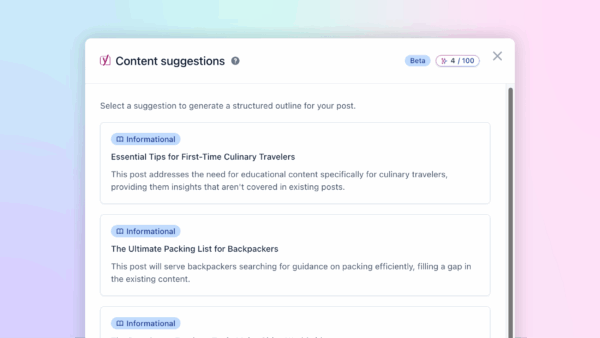
Amidst these seismic shifts in the SEO and AI landscape, Yoast shared exciting news: the launch of the Yoast AI Content Planner. This innovative tool is designed to empower users to overcome writer’s block and streamline the creation of structured, high-quality content effortlessly. The AI Content Planner transforms a blank page into a structured draft in seconds, offering intelligent topic suggestions, outline generation, and integrated SEO optimization tips.
The Yoast AI Content Planner represents a timely solution for content creators grappling with the evolving demands of an AI-first world. As the emphasis shifts from quantity to quality and unique value, content creation becomes more demanding. This tool leverages AI to assist, not replace, human creativity, providing a framework that ensures content is well-organized, comprehensive, and optimized for both search engines and AI models. It addresses common pain points like staring at a blank screen, struggling to structure complex ideas, or ensuring all relevant SEO elements are considered. By automating the initial drafting and outlining process, it frees up content creators to focus on injecting their unique expertise, voice, and insights. For Yoast Premium users, this feature is readily available within the WordPress editor, allowing for immediate experimentation with AI-driven content creation workflows. The introduction of tools like the AI Content Planner underscores a broader industry trend: AI’s role in content is increasingly moving towards augmentation, enabling human creators to produce better, more efficient, and more impactful content, rather than simply generating generic text. It’s a strategic move to help users adapt to Google’s new guidelines emphasizing structured, authoritative, and user-centric content.
Conclusion: Navigating the AI Frontier
The May 2026 SEO Update by Yoast provided a comprehensive look at the accelerating impact of artificial intelligence on search, content, and digital commerce. From Google’s strategic moves with preferred sources and UCP, to Bing’s technical clarifications on grounding indexing, and the broader industry shifts exemplified by Conde Nast’s revenue diversification, the message is unequivocal: the digital world is rapidly transforming. The decline of generic content, the rise of proactive AI agents like Gemini, and Google’s explicit AI optimization guidelines all point to a future where value, authority, and seamless integration with AI ecosystems will be paramount. Tools like the Yoast AI Content Planner emerge as essential aids for content creators seeking to adapt and thrive in this new landscape, empowering them to produce the high-quality, structured content that both human users and AI models demand. The journey ahead requires continuous learning, strategic adaptation, and a proactive embrace of AI as both a challenge and an unparalleled opportunity.
The next SEO Update by Yoast is scheduled for June 30, 2026, at 4:00 PM CET (10:00 AM EST), promising further insights into this dynamic field.
About the Author:
Edwin Toonen is an experienced strategic content specialist. Before joining Yoast, he worked for a top-tier web design magazine, where he developed a keen understanding of how to create great content.