As the calendar pages turn from the back-to-school rush to the crisp air of autumn, online retailers are not merely observing the shift; they are actively strategizing for the monumental sales period ahead: the 2026 holiday season. This critical juncture, encompassing the Thanksgiving weekend’s "Cyber 5" and extending through Halloween and beyond, demands a proactive approach. Decisions made in the preceding months and years will significantly influence end-of-year financial outcomes. A comprehensive new report, "Ecommerce Trends Shaping the 2026 Holiday Season," from Digital Commerce 360, delves into the key priorities and strategic trade-offs being considered by ecommerce leaders across marketing, artificial intelligence (AI), and fulfillment. These insights, bolstered by new online holiday shopper survey results for 2026, paint a clear picture of how companies are positioning themselves for success.
This year’s preparations are informed by a wealth of lessons learned from both the immediate past and previous holiday shopping cycles. Online retailers are deploying a multi-pronged approach to maximize conversion rates as shoppers navigate their digital storefronts. Three pivotal strategies are emerging as crucial for capturing consumer attention and driving sales during this high-stakes period.
Proactive Planning: Extending the Holiday Runway Beyond Inventory
A fundamental shift in holiday readiness is the move away from last-minute preparations. Online retailers are no longer waiting for November to initiate their holiday planning; this strategic runway now encompasses far more than just inventory management. Marketing campaigns, promotional calendars, and customer engagement strategies are being meticulously crafted months in advance. This foresight is particularly critical for businesses dealing with complex fulfillment processes, such as made-to-order items.
Garrett McMartin, founder of Draco Diamond, a Canada-based jewelry seller specializing in custom pieces, highlighted the logistical challenges inherent in his business model. "For us, lead times are paramount," McMartin explained. "If we’re crafting a unique piece for a holiday gift, we need to account for the production time, shipping, and potential for unforeseen delays. Launching our holiday-themed promotions and ensuring our website clearly communicates these timelines well before the Cyber 5 is essential. Our goal is to deliver every order on time and ensure our customers have a positive, stress-free gifting experience."
This proactive stance allows businesses to manage customer expectations effectively, especially for bespoke or customizable products. By making holiday promotion pages live significantly in advance of peak shopping days, retailers can guide consumer behavior, encourage early purchasing, and mitigate the risk of disappointing shoppers with delayed deliveries. This strategy not only smooths out the logistical complexities for the retailer but also builds trust and satisfaction among consumers, who are increasingly seeking a seamless and reliable shopping journey. The early activation of marketing efforts also allows for more targeted campaigns, leveraging data from previous years to identify high-value customer segments and tailor messaging for maximum impact.
Harnessing the Power of AI: Optimizing for Emerging Traffic Sources
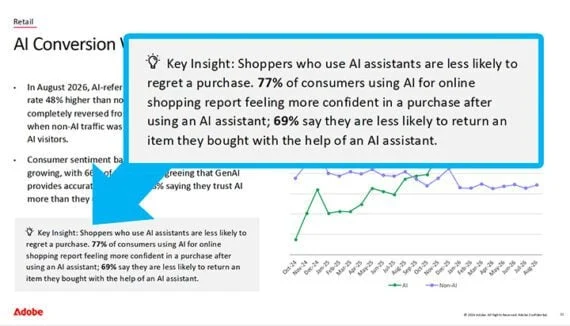
The landscape of online discovery and purchasing is rapidly evolving, with Artificial Intelligence (AI) playing an increasingly significant role. Adobe Digital Insights reported a notable trend in 2025: a rise in traffic originating from AI-powered platforms such as ChatGPT and Perplexity. Critically, this trend was accompanied by an observed improvement in conversion rates for this AI-driven traffic during the first quarter of 2026. While the long-term sustainability of this trend through the holiday season remains to be seen, merchants are actively recognizing AI platforms as valuable referral sources and are implementing strategies to convert these visitors at higher rates.
The approach to optimizing for AI traffic involves a two-pronged strategy. Firstly, retailers are focusing on enhancing their catalog data and website content. This ensures that when AI platforms scour the web for product information and gift ideas, they can accurately and effectively surface relevant products to the right shoppers. This includes ensuring product descriptions are rich with keywords, specifications are detailed and accurate, and imagery is high-quality and representative.
Secondly, there is a growing emphasis on understanding the behavioral patterns of shoppers who rely on AI recommendations. By analyzing the types of queries shoppers make, the products they discover through AI, and their subsequent browsing and purchasing behavior, retailers can gain valuable insights into emerging consumer preferences and purchase journeys. This understanding allows for more personalized website experiences and targeted marketing efforts.
Ayden Lin, founder of Povison, an online furniture retailer, shared his company’s perspective on this evolving channel. "AI-associated traffic currently accounts for approximately 5% of our inbound referrals," Lin stated. "We anticipate this share could grow to 10% by 2027, and it’s imperative that we develop effective strategies to translate these referrals into tangible sales. This involves not only optimizing our product listings for AI discovery but also understanding the unique journey these shoppers take once they arrive on our site."
Draco Diamond’s Garrett McMartin also noted the unique engagement patterns of AI-referred traffic. "We often see AI users discover our brand and then engage in further research across multiple visits," he observed. This suggests that AI is acting as an initial discovery tool, prompting deeper investigation and consideration from potential customers. Retailers are therefore investing in nurturing these longer-term engagement cycles, recognizing that AI can initiate a valuable customer relationship that extends beyond a single click. The implications of this trend are substantial; as AI becomes more sophisticated in understanding consumer intent, it has the potential to become a dominant force in product discovery, necessitating a dedicated focus from online retailers to capture this burgeoning segment of the market.
Enhancing Omnichannel Conversion: The Power of Visible In-Store Stock
For retail chains with a physical presence, the integration of online and offline operations remains a cornerstone of effective conversion strategies. Digital Commerce 360’s research consistently identifies visible in-store stock statuses as one of the most impactful features for driving omnichannel conversions. Data from the Top 1000 Database, which ranks leading online retailers, revealed that in 2025, retail chains with this feature on their e-commerce sites achieved an elevated conversion rate of 3.1%, compared to the average conversion rate of 2.9% for all retail chains in the database.
This data underscores a critical consumer preference: the desire for flexibility and speed in fulfillment. When holiday shoppers can easily ascertain that an item is available for in-store pickup or can be fulfilled and delivered from a nearby physical store, their purchasing decisions are often accelerated. This immediacy can be a significant differentiator, especially during the hectic holiday season when time is of the essence for gift-givers.
The ability to check local inventory empowers consumers to bypass the uncertainties of shipping delays and opt for a more predictable and often faster fulfillment method. This is particularly relevant for last-minute gift purchases or for shoppers who prefer the tactile experience of picking up an item themselves. For retailers, enabling this visibility not only boosts conversion rates but also drives foot traffic to physical stores, fostering a more integrated and synergistic retail ecosystem.
The implications of this omnichannel capability extend beyond immediate sales. It contributes to a more satisfying customer experience, reducing friction points and building loyalty. As consumer expectations continue to rise, the seamless integration of online browsing with the tangible benefits of physical retail presence will become an increasingly vital component of holiday season success. Retailers who effectively leverage their physical footprints to enhance the online shopping experience are likely to see a significant competitive advantage.
The Broader Context: Navigating a Dynamic Ecommerce Landscape
The strategies outlined above—early planning, AI optimization, and omnichannel integration—are not isolated tactics but rather interconnected components of a larger, evolving ecommerce ecosystem. The 2026 holiday season is poised to be a testament to the agility and adaptability of online retailers. The insights derived from Digital Commerce 360’s comprehensive report, "Ecommerce Trends Shaping the 2026 Holiday Season," and the accompanying 2026 online holiday shopper survey, provide a critical roadmap for businesses navigating this complex terrain.
The increasing sophistication of AI, coupled with evolving consumer behaviors and the persistent demand for seamless omnichannel experiences, presents both challenges and opportunities. Retailers who proactively invest in understanding and leveraging these trends, while drawing upon lessons from past performance, are best positioned to not only meet but exceed their sales targets during the crucial 2026 holiday period. The race to capture the holiday shopper has effectively begun, and strategic foresight is proving to be the ultimate competitive advantage.
For those seeking a deeper dive into the data, trends, and strategic analyses shaping the future of online retail, accessing the full report "Ecommerce Trends Shaping the 2026 Holiday Season" is highly recommended. It offers a wealth of information, including detailed charts and reporting, to guide businesses in their pursuit of holiday season success.
Editor’s Note: To ensure you receive every edition of Ecommerce Trends, subscribe to our retail newsletter. Stay ahead of the curve in the dynamic world of online retail by subscribing to Digital Commerce 360 Retail News.
Are you featured in our databases? Submit your data to be considered for inclusion in our upcoming global e-commerce rankings.
Stay informed about the latest developments in the online retail industry. Sign up for a complimentary subscription to Digital Commerce 360 Retail News. Follow us on LinkedIn, TikTok, X (formerly Twitter), Facebook, and YouTube to be the first to know when new content is published.