

The definition of a successful digital presence has undergone a radical transformation as the industry moves through 2026. Historically, website analysis was a straightforward exercise in monitoring traffic volume, keyword rankings, page load speeds, and baseline conversion rates. However, the rise of sophisticated artificial intelligence and a shift in user discovery patterns have rendered these traditional metrics insufficient. In the current landscape, a consumer’s journey may begin with a query in ChatGPT, progress through a comparison on Perplexity, and involve a brand summary generated by a Google AI Overview before a user ever interacts with a proprietary web interface. Consequently, modern website analysis must now encompass discoverability, machine readability, credibility, and the reduction of conversion friction across multiple platforms.
The Paradigm Shift: Why Traditional Analysis Is No Longer Sufficient
The digital ecosystem is currently navigating what analysts describe as the "Zero-Click" era. The fundamental shift lies in how information is synthesized and delivered. In previous years, search engines acted as directories, pointing users toward external links. Today, they act as engines of synthesis, providing immediate answers that often satisfy the user’s intent without requiring a click-through.
Supporting data from Gartner highlights the severity of this transition, predicting that traditional search engine volume will decline by approximately 25% by the end of 2026. This migration toward AI chatbots and virtual agents suggests that websites can no longer rely solely on human visitors to gauge success; they must also optimize for the "machine crawlers" that feed these AI models. Furthermore, research conducted by the Pew Research Center indicates a significant change in user behavior: when an AI summary appears in search results, the likelihood of a user clicking on a traditional link drops from 15% to 8%. This nearly 50% reduction in click-through rates (CTR) necessitates a more nuanced approach to evaluating a website’s "visibility."
A Chronology of the Search Evolution
To understand the current requirements for website analysis, one must look at the timeline of search evolution:
- 2022–2023: The emergence of Large Language Models (LLMs) like ChatGPT initiated a shift from keyword-matching to intent-based conversational search.
- 2024: Major search engines integrated Generative AI (SGE and AI Overviews), leading to the first significant drops in organic traffic for informational queries.
- 2025: "Generative Engine Optimization" (GEO) became a standard industry term, as marketers realized that being "cited" by an AI was as important as ranking on Page 1.
- 2026: The current standard requires a 360-degree audit that treats the website as both a destination for humans and a data source for AI.
The Five Pillars of Modern Website Analysis
For an organization to remain competitive, its website analysis must be structured around five critical areas of evaluation.
1. Search and AI Visibility
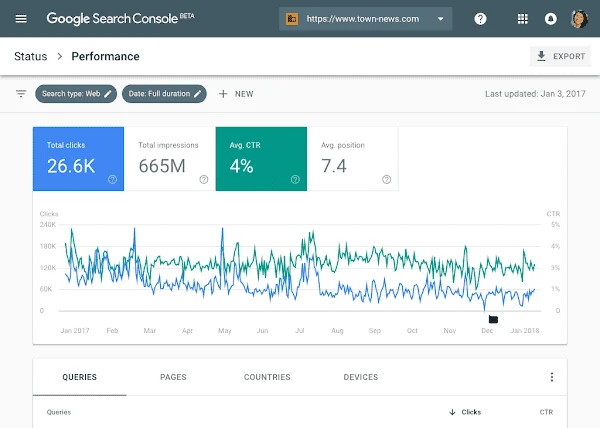
Before assessing user behavior on-site, a business must determine if its brand is discoverable in the AI-mediated environment. This involves more than checking Google Search Console (GSC). While GSC remains vital for monitoring technical indexing and traditional impressions, manual audits of AI tools like Gemini, Claude, and Perplexity are now mandatory.
Analysts suggest asking two primary questions:
- Does our brand appear when users ask for recommendations in our category?
- Is the information synthesized by AI accurate and reflective of our current value proposition?
The analysis should include a deep dive into the GSC "Performance" report, comparing three-month intervals to identify declining clicks or high-impression queries that fail to convert to traffic. This often signals that an AI summary is satisfying the user’s query on the search results page itself.
2. Technical Health and Performance
Technical analysis has evolved beyond simple "up-time" monitoring. It now focuses heavily on Core Web Vitals—specifically Largest Contentful Paint (LCP), Interaction to Next Paint (INP), and Cumulative Layout Shift (CLS). In 2026, technical health also includes "machine readability." If a site’s schema markup is broken or its robots.txt file inadvertently blocks AI scrapers, the brand risks being omitted from AI-generated recommendations, effectively making it invisible to a significant portion of the market.
3. User Behavior and the Psychology of Conversion
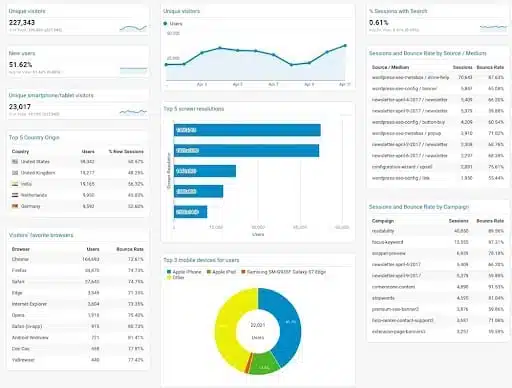
Conversion Rate Optimization (CRO) analysis now requires a blend of quantitative and qualitative data. Quantitative data provides the "what"—numerical values such as session duration and bounce rates. Qualitative data provides the "why"—the underlying motivations behind user actions.
Tools like Google Analytics 4 (GA4) are used to track the "what," while behavior-tracking tools like FigPii allow for the examination of heatmaps and session recordings. A critical component of this analysis is "messaging resonance." Because users often arrive at a site after interacting with an AI summary, the on-page copy must immediately validate the information the user has already received. Discrepancies between AI-generated summaries and actual website content are a leading cause of high bounce rates in 2026.
4. Usability and Functional Integrity
Usability analysis evaluates the interface through which the user interacts with the brand. This is typically conducted via functionality assessments and expert reviews, often referred to as heuristic analysis. Based on the foundational work of Jakob Nielsen, an expert review looks for violations of ten key principles:
- Visibility of system status: Users should always know what is happening.
- Match between system and the real world: Using language and concepts familiar to the user.
- User control and freedom: Providing "emergency exits" for mistaken actions.
- Consistency and standards: Adhering to platform conventions.
- Error prevention: Designing to minimize mistakes.
- Recognition rather than recall: Minimizing the user’s memory load.
- Flexibility and efficiency of use: Catering to both novice and expert users.
- Aesthetic and minimalist design: Removing irrelevant information.
- Help users recognize, diagnose, and recover from errors: Using plain language to explain problems.
- Help and documentation: Providing easy-to-search assistance.
5. Content Quality and Trust Signals (E-E-A-T)
Content is no longer judged merely by its length or keyword density. In 2026, Google and other AI models prioritize Experience, Expertise, Authoritativeness, and Trustworthiness (E-E-A-T). Website analysis must include a content audit to ensure that articles are informative, original, and include verifiable trust signals such as author biographies, citations, and transparent business information.
Strategic Implementation: How to Conduct a Comprehensive Audit
To execute a successful analysis, organizations should follow a structured roadmap:
Step 1: Define Clear Objectives. An audit without a goal is a waste of resources. Organizations must identify specific pain points, such as a drop in organic rankings or an increase in cart abandonment.

Step 2: Selection of the Tool Stack. A modern stack typically includes:
- SEO/AI Tools: Google Search Console, Ahrefs, Semrush, and iSpionage.
- CRO/Behavior Tools: FigPii, Hotjar, or Microsoft Clarity.
- Analytics: Google Analytics 4 or Piwik PRO.
- Usability Tools: UX Check, Heurix, or UserTesting.
Step 3: Data Collection and Gap Analysis. This involves mapping the ideal customer journey and comparing it against actual user data. Analysts look for "leaks" in the funnel—specific pages or interactions where users consistently drop off.
Step 4: Iterative Optimization. Analysis is not a one-time event. The most successful brands in 2026 have made website analysis a recurring habit, allowing them to pivot quickly as search algorithms and AI models update.
The Role of Competitive Analysis
There is an ongoing debate among digital strategists regarding the importance of competitor analysis. While some argue that internal focus is paramount, the consensus in 2026 is that competitive intelligence is a strategic necessity. By analyzing a competitor’s organic traffic, customer demographics, and Pay-Per-Click (PPC) strategies, a business can identify underserved market segments. For instance, if a competitor is bidding heavily on a specific keyword but has a poor user experience on the landing page, a rival can capitalize on that friction by providing a superior alternative.
Implications and Broader Impact
The implications of this new era of website analysis are profound for the broader economy. Small and medium-sized enterprises (SMEs) that fail to adapt to AI-driven discoverability risk being "de-indexed" from the modern consumer’s consciousness. Conversely, companies that master these five pillars of analysis will find themselves with a significant competitive advantage.
Industry experts suggest that the future of the web belongs to those who view their website not as a static brochure, but as a dynamic data node. As AI agents become more autonomous in their decision-making—eventually moving from recommending products to purchasing them on behalf of users—the technical and credibility signals identified during website analysis will become the primary factors in commercial success.
In conclusion, website analysis in 2026 is an integrated discipline that merges technical SEO, psychological behavior analysis, and AI-readiness. By maintaining a rigorous audit schedule and leveraging the right combination of quantitative and qualitative tools, businesses can ensure they remain visible, credible, and profitable in an increasingly automated world.







