The burgeoning landscape of artificial intelligence-powered search is fundamentally reshaping how businesses achieve online visibility. While many organizations are diligently focusing on optimizing their websites—tinkering with copy, expanding FAQ sections, and exploring schema markup—this effort represents only a fraction of what influences generative AI’s decision-making process. Experts now emphasize that a business’s digital footprint extends far beyond its primary website, encompassing a broader spectrum of online presence that AI systems meticulously evaluate. This comprehensive assessment, often referred to as Generative Engine Optimization (GEO), requires a strategic approach that leverages a diverse set of trust signals to ensure businesses are discoverable in the evolving AI search ecosystem.
Generative AI systems operate by processing the entirety of the web’s perception of a business. This includes the myriad places a company’s name has appeared, the narratives spun by third-party sources, how the business has presented itself across various platforms, and crucially, the consistency of these self-descriptions. A well-optimized website is undeniably a significant input, but for many small and medium-sized businesses (SMBs), it is the only input they actively consider. The businesses that consistently surface in AI-generated answers typically possess active profiles on platforms frequented by their target customers, have their names featured in third-party content, and maintain a coherent information flow across all digital touchpoints. This convergence of corroborated and consistent data provides AI systems with the confidence needed to cite them as authoritative sources.
This article delves into five critical AI search trust signals that many business owners overlook or underinvest in when pursuing GEO. By understanding and actively cultivating these signals, businesses can significantly enhance their visibility and ensure they are not left behind in the AI-driven search revolution.
The 5 Overlooked AI Search Signals for Businesses
The transition to AI-powered search necessitates a recalibration of digital marketing strategies. While traditional SEO remains relevant, the emergence of generative AI introduces new layers of complexity and opportunity. Understanding these five key signals can empower businesses to proactively adapt and thrive.
1. Earned Media: Amplifying Your Voice Beyond Your Own Platform
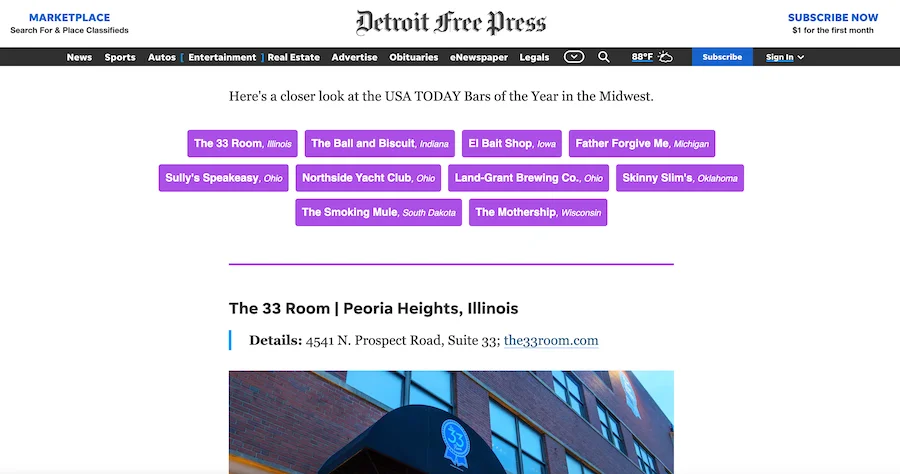
In the context of AI search, "earned media" transcends traditional public relations victories like securing a feature in a major publication. For SMBs, it fundamentally refers to any instance where a business’s name, expertise, or opinions are featured on a platform or property not owned by the business itself. This encompasses a wide array of online mentions, from local news articles and industry blog posts to guest appearances on podcasts and mentions in online reviews.

The power of earned media for AI search lies in corroboration. While a business can claim expertise on its own website, AI systems place greater weight on external validation. When multiple independent sources mention a business in a specific context—for example, a roofing company consistently cited in articles about "best roofing contractors in [city]" or "solutions for storm damage"—it creates a much stronger signal of authority and relevance. This multi-faceted validation builds confidence within AI algorithms, making them more likely to surface that business in response to related queries.
Consider a dental practice owner in Austin who contributes an expert opinion to a local parenting blog discussing common dental concerns for children. If this article is published on a reputable third-party domain, explicitly names the dentist, details her specialty, and includes a link back to her practice, it serves as a potent GEO signal. Such an instance of earned media can often contribute more significantly to AI search visibility than numerous optimized service pages on the practice’s own website. The accessibility of earning such media is often underestimated; it doesn’t necessarily require a substantial PR budget or established media connections, but rather a willingness to share expertise and make oneself available to relevant platforms.
Examples of accessible earned media opportunities include:
- Guest blogging: Contributing articles to industry-specific blogs or reputable local news outlets.
- Podcast interviews: Participating as a guest expert on relevant podcasts, sharing insights and experiences.
- Online directory inclusions: Ensuring accurate and comprehensive listings in reputable online directories, especially those with editorial oversight.
- Community involvement: Highlighting participation in local events, sponsorships, or charitable activities on community forums or local news sites.
- Expert quotes: Offering commentary or insights to journalists or bloggers researching topics within your industry.
To actively cultivate earned media, businesses should focus on making themselves accessible and valuable to external content creators. This can involve actively monitoring industry news for opportunities to provide expert commentary, reaching out to relevant publications with unique story angles, and building relationships with local journalists and bloggers. The goal is to generate a consistent stream of mentions across diverse, credible third-party platforms, thereby fortifying the AI’s perception of the business’s authority and relevance.
2. LinkedIn: The Professional Hub for AI Citations
Many local and service-based businesses either overlook LinkedIn entirely or utilize their company pages as mere bulletin boards for announcements, an approach that fails to generate significant GEO signals. However, recent analyses reveal LinkedIn’s substantial role in AI-generated answers. Data indicates that LinkedIn is the second-most cited domain across major AI platforms like ChatGPT, Google AI Mode, and Perplexity, trailing only Reddit. This suggests that AI systems actively mine LinkedIn for information, particularly for professional and local service-related queries, where it often ranks as the top-cited platform.
Two primary facets of LinkedIn contribute to its GEO value:
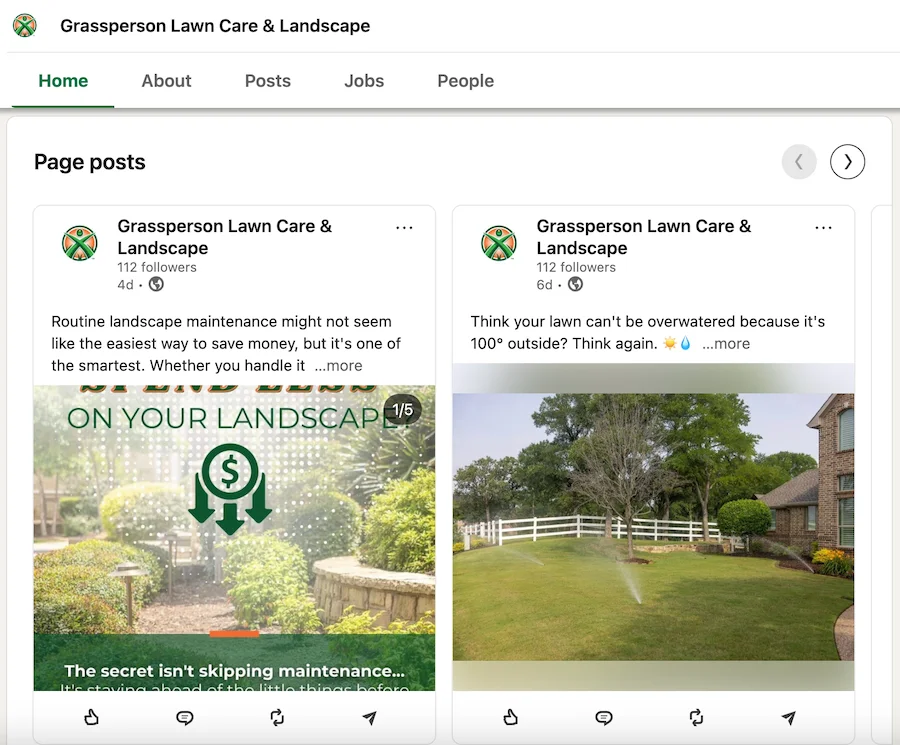
- Company Pages: A well-maintained and active LinkedIn company page serves as a foundational element. This involves not just basic information but also consistent posting that offers genuine insights into the company’s work, industry trends, or client success stories. The emphasis is on providing value and demonstrating expertise, rather than purely promotional content.
- Personal Profiles of Key Employees: The professional profiles of business owners and key employees are equally, if not more, critical. These profiles, when actively managed and showcasing relevant experience, skills, and contributions, act as extensions of the business’s expertise. When employees share company updates, industry news, or their own professional insights, it amplifies the business’s presence and credibility.
The notion of "active" on LinkedIn does not necessitate daily posting or chasing viral trends. Instead, it implies a complete and up-to-date profile, a few strategic posts per month that offer specific value related to the business’s operations, and a genuine perspective that resonates with professional audiences. A Semrush analysis of LinkedIn URLs cited in AI search revealed that a significant majority of authors whose content is frequently cited post at least five times within a four-week period. Furthermore, follower count appears to be less impactful than consistency and demonstrated expertise. A local plumber with a modest follower count who regularly shares practical, job-specific advice is more likely to be cited by AI than a competitor with a larger following who posts infrequently.
To leverage LinkedIn effectively for GEO, businesses should:
- Optimize Company Pages: Ensure all sections are complete, including a clear description of services, contact information, and a professional logo.
- Develop a Content Strategy: Post regularly (e.g., 2-4 times per month) with content that showcases expertise, shares industry insights, highlights company culture, or discusses client successes.
- Encourage Employee Engagement: Foster a culture where employees are encouraged to share company updates and their own professional insights on their personal LinkedIn profiles.
- Engage with the Community: Participate in relevant industry groups and discussions, offering thoughtful contributions.
By treating LinkedIn not just as a social network but as a critical professional hub, businesses can significantly enhance their AI search visibility.
3. Google Business Profile: The Under-Exploited Local Powerhouse
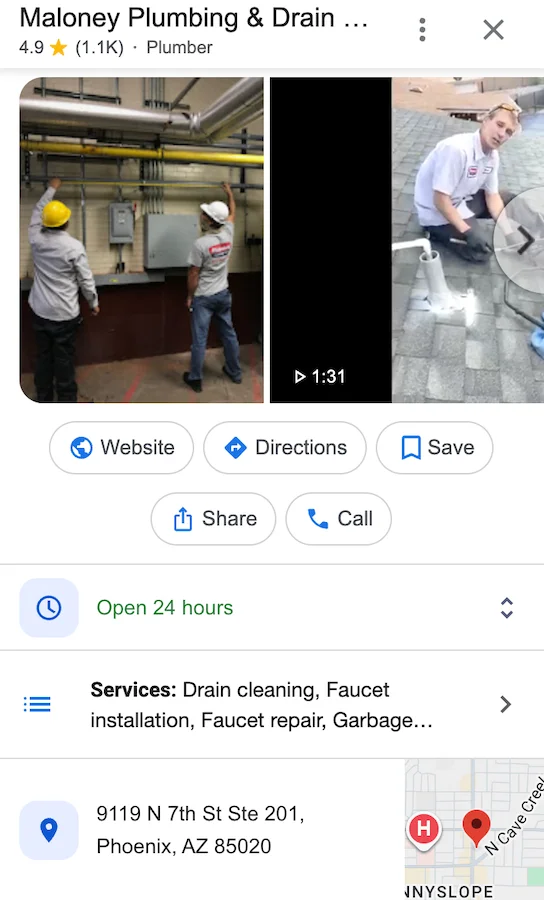
Google Business Profile (GBP) is a well-known signal for most SMBs, yet it is frequently underutilized beyond initial setup. While claiming and verifying a profile is a crucial first step, many businesses cease their efforts thereafter, treating it as a one-time task. This oversight misses a wealth of opportunities to signal relevance and activity to AI systems.
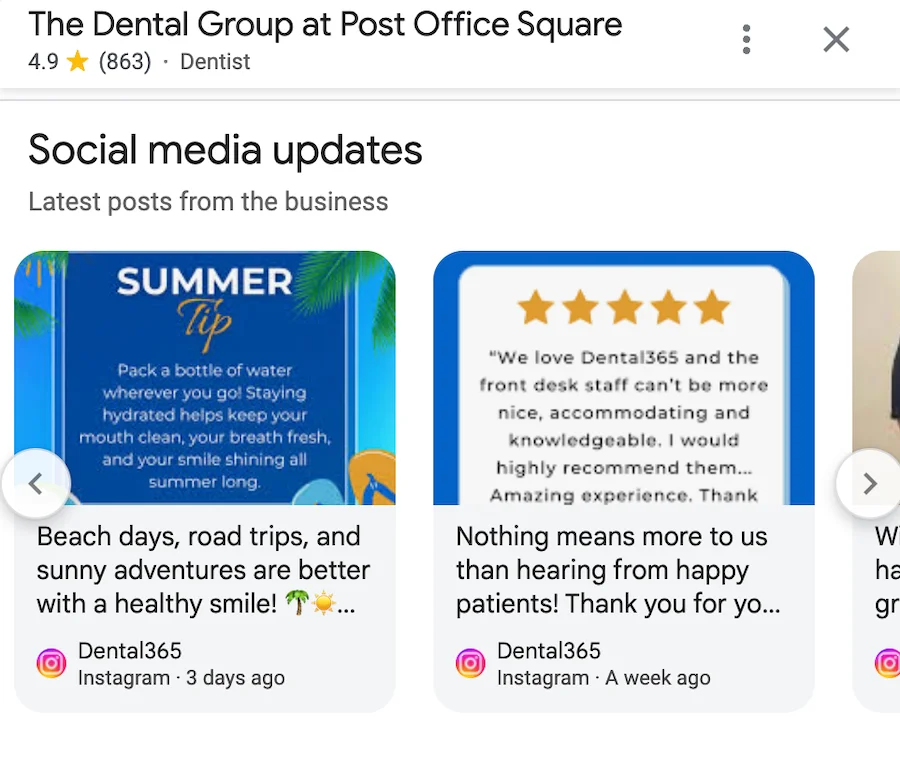
Google Posts, short updates that appear directly on a business’s profile, are a prime example of an underused feature. Most SMBs post once upon launching their profile and then abandon it. Consistent posting, even as infrequently as once a week, signals to both users and AI that the business is active and engaged. These posts contribute to the topical record of the business’s offerings and current activities.
The recency and relevance of photos and videos on a GBP are also more impactful than many business owners realize. A profile featuring current, high-quality images of recent work or the business premises communicates to AI systems that the business is actively operating and current. For instance, an HVAC company uploading photos of a recent installation job provides more compelling and up-to-date information than a competitor relying on generic stock photos from several years prior.
Categories and service descriptions within GBP are often set during the initial setup and rarely revisited. A plumber listed solely under the broad category of "Plumber" misses opportunities to be found for specific services such as "Water Heater Installation," "Drain Cleaning," or "Emergency Plumbing." Each unlisted service represents a missed citation opportunity, limiting the AI’s ability to connect the business with precise user queries.
Reviews and their corresponding responses on GBP serve as an underutilized vocabulary signal. The language customers use in their reviews expands the lexicon AI associates with a business. Responses that thoughtfully address specific service mentions add structured textual data to the business’s GBP record. For example, a dental practice whose responses to reviews frequently mention "Invisalign treatment" or "root canal procedures" actively builds topic associations that AI can recognize and utilize.
To maximize the GEO potential of Google Business Profile, businesses should:
- Post Regularly: Utilize Google Posts weekly to share updates, offers, or relevant industry news.
- Keep Photos and Videos Current: Upload fresh, high-quality visuals that showcase recent work, the team, or the business premises.
- Optimize Categories and Services: Regularly review and update service listings to accurately reflect all offerings, aligning with customer search terms.
- Encourage Reviews and Respond Thoughtfully: Actively solicit customer reviews and respond to each one, incorporating specific service language where appropriate.
By treating GBP as a dynamic platform rather than a static listing, businesses can generate a substantial volume of GEO signals.
4. YouTube: The Underestimated Video Engine for AI Discovery
YouTube is arguably the most underestimated GEO signal on this list. Its perceived production demands often deter small businesses, leading them to forgo this powerful platform. However, this assumption comes at the cost of significant visibility. As the second-largest search engine globally and owned by Google, YouTube is extensively cited across AI search platforms, reportedly more than 200 times greater than its nearest video competitor.
The underlying reason for YouTube’s prominence in AI search extends beyond mere distribution; both OpenAI and Google have trained their AI models on YouTube transcripts. This means that the textual data embedded within videos—titles, descriptions, and transcripts—is readily digestible by AI systems. When a user asks an AI how to determine if their roof needs replacement, and a local roofing contractor has a concise video explaining precisely that, it creates a powerful citation opportunity that a static website service page cannot replicate.
Businesses that consistently appear in AI-generated answers, particularly for local and trade-related queries, often employ a straightforward production approach: phone-shot footage, natural lighting, and minimal scripting. The key is specificity. A lawn care company posting a video titled "Why Your Lawn Has Yellow Patches in July," filmed on an actual client’s property, carries more weight as a trust signal than a highly polished brand video lacking specific, actionable information.
Businesses can leverage YouTube for GEO by creating content that addresses common customer questions and demonstrates expertise. Consider what types of content are well-suited for video:
- "How-to" guides: Explaining common tasks or troubleshooting steps related to your services.
- Product or service demonstrations: Showcasing how your offerings work in practice.
- Client testimonials or case studies: Highlighting successful projects and customer satisfaction.
- Expert Q&A sessions: Answering frequently asked questions from customers.
- Behind-the-scenes glimpses: Offering a transparent look at your operations and team.
A solo electrician in Nashville, for instance, could create a five-minute video explaining the difference between a failing circuit breaker and a wiring issue, filmed on a smartphone in a client’s garage. When this video is indexed on YouTube with a specific title and detailed description, it becomes a citable answer for AI systems handling electrical troubleshooting queries in that region. The equivalent information on the electrician’s service page might not be as readily discoverable by AI.
5. Platform Consistency: The Unifying Force for AI Trust
Every GEO signal discussed thus far is significantly weakened if the information presented across different online platforms is inconsistent. This consistency acts as the connective tissue, transforming a collection of disparate profiles into a coherent and trustworthy digital presence that AI systems can confidently cite.
AI algorithms prioritize corroboration. A Google Business Profile listing one city while a LinkedIn profile indicates another creates ambiguity. A website phone number that doesn’t match the number on a local directory listing is a discrepancy. When faced with contradictory signals, an AI system will exhibit less confidence in citing a business compared to one whose information is uniform across all digital surfaces.
Consistency extends beyond the fundamental NAP (Name, Address, Phone number) details, although their accuracy remains paramount. It encompasses how a business describes its services and specialties across platforms like GBP, LinkedIn, Yelp, and industry-specific directories. Consistent business hours, the use of the same logo, and similar branding elements across all profiles contribute to a unified brand identity.
A brief audit of a business’s online presence often reveals numerous subtle inconsistencies that may seem minor individually but collectively introduce doubt into AI queries. Examples include:
- Outdated business hours: Listed differently on a website versus a social media profile.
- Variations in business name: Using abbreviations or slightly different naming conventions.
- Inconsistent service descriptions: Detailing services differently across platforms.
- Disparate contact information: Different phone numbers or email addresses listed in various directories.
- Mismatched logos or branding: Using older or different versions of a logo on older listings.
To ensure platform consistency, businesses should:
- Conduct a Comprehensive Audit: Regularly review all online listings and profiles for accuracy and uniformity.
- Establish a Centralized Data Source: Maintain a master document with all correct business information (NAP, hours, services, descriptions) to serve as a reference point.
- Implement a Update Protocol: Develop a system for updating all relevant platforms simultaneously whenever business information changes.
- Utilize Citation Management Tools: Employ services that help manage and update listings across numerous directories.
By prioritizing consistency, businesses build a strong foundation of trust that empowers AI systems to confidently identify and cite them as reliable sources of information.
Conclusion: Building AI Search Authority for the Future
The emergence of AI-generated answers is not a fleeting trend but a fundamental shift in how users interact with search engines. The signal footprint a business builds today across earned media, LinkedIn, Google Business Profile, YouTube, and through unwavering platform consistency directly determines its ability to be cited by AI tomorrow.
The businesses that consistently appear in AI-generated answers are those that have provided AI systems with sufficient, coherent, and specific information to warrant confident citation. While a well-optimized website remains a vital component, it represents only one piece of the puzzle. The trust signals detailed herein constitute the remaining, often overlooked, elements crucial for Generative Engine Optimization.
Crucially, cultivating these GEO signals does not necessitate extensive marketing teams or substantial budgets. It requires a commitment to consistency, specificity, and a deep understanding of one’s own operations and expertise. Small business owners, with their intimate knowledge of their work, are often uniquely positioned to deliver this level of detail and coherence more effectively than larger, more diffused organizations. By strategically investing in these often-neglected digital touchpoints, businesses can ensure they are not only discoverable but also authoritative in the rapidly evolving landscape of AI-powered search.