The burgeoning importance of Smart Bidding across Google’s advertising ecosystem, particularly on YouTube, necessitates a comprehensive understanding of its intricacies. Moving beyond mere awareness of available options, advertisers must strategically configure their campaigns to harness the full potential of these automated bidding strategies. This article delves into the nuances of YouTube Smart Bidding, offering practical guidance and data-backed insights for optimizing campaign performance and achieving key business objectives, from sales and lead generation to brand awareness.
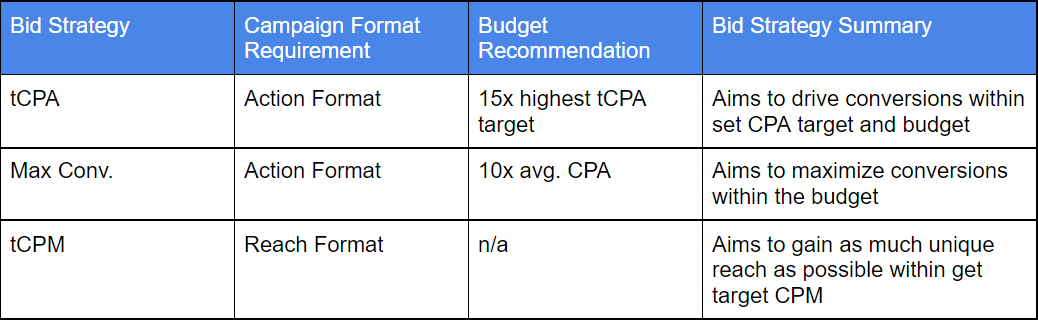
Smart Bidding on YouTube primarily serves Action Format campaigns, including Target CPA (tCPA) and Maximize Conversions, which are designed to drive tangible outcomes such as sales, leads, or sign-ups. These campaigns leverage machine learning to automatically adjust bids in real-time, aiming to achieve specific conversion goals within a defined budget. For advertisers focused on building brand visibility, there’s also a dedicated option for Reach formats, such as bumper ads, which are optimized for generating broad awareness.
Understanding YouTube’s Smart Bidding Arsenal
Google’s Smart Bidding suite offers advertisers a powerful set of tools to automate bidding decisions. On YouTube, the core offerings for conversion-focused campaigns are:
- Target CPA (tCPA): This strategy allows advertisers to set a desired cost per acquisition. Google’s algorithms then work to achieve as many conversions as possible at or below the specified target CPA. This is ideal for advertisers who have a clear understanding of their customer acquisition cost and wish to maintain a predictable spending pattern relative to conversions.
- Maximize Conversions: This strategy aims to get the most conversions possible within your set budget. Unlike tCPA, it does not have a specific CPA target. Instead, it focuses on maximizing the volume of conversions, allowing the CPA to fluctuate based on campaign performance and market dynamics. This is often recommended as a starting point for new campaigns to establish a baseline CPA.
Beyond these conversion-centric options, advertisers focused on audience reach and brand recall can utilize Smart Bidding for:

- Maximize Reach: This strategy is designed for campaigns primarily focused on brand awareness. It aims to show your ads to the largest possible audience within your budget, prioritizing reach and frequency over specific conversion actions. This is particularly effective for video ad formats like bumper ads and skippable in-stream ads where the primary objective is to maximize impressions and views across a broad demographic.
The selection of the appropriate Smart Bidding strategy hinges on the campaign’s overarching objective. For instance, a direct-to-consumer e-commerce brand aiming to drive online sales would likely benefit most from tCPA or Maximize Conversions. Conversely, a new product launch aiming to generate widespread brand recognition might find Maximize Reach to be a more suitable choice.
The Critical Role of Bid-to-Budget Ratios
A fundamental, yet often overlooked, aspect of successful Smart Bidding implementation on YouTube lies in establishing an appropriate bid-to-budget ratio. Google itself provides recommendations, suggesting that campaign budgets should ideally be set between 10 to 15 times the target cost per acquisition (CPA). This guideline is not arbitrary; it provides the algorithm with sufficient flexibility and data to operate effectively and learn optimal bidding strategies.
Consider an advertiser aiming for a $85 CPA using the tCPA strategy. To meet Google’s recommendation, their daily budget would need to be at least $1,275 (15 x $85). For a campaign utilizing the Maximize Conversions strategy, where the target CPA is not explicitly defined but rather emerges from performance, the recommended budget would still be substantial, often requiring a minimum of $850 to allow the algorithm ample room to explore and acquire conversions efficiently.
These figures can sometimes appear substantial and may seem like a significant stretch for advertisers accustomed to more conservative budget allocations. However, extensive empirical evidence from performance marketing agencies and Google’s own insights demonstrate that adhering to these bid-to-budget recommendations is crucial for setting campaigns up for sustained success. Insufficient budgets can inadvertently constrain the Smart Bidding algorithm, leading to limitations such as "Limited by Budget" (LBB) status. This status indicates that the campaign is not spending its full potential budget due to budget constraints, thereby hindering its ability to reach its performance goals and explore broader market opportunities.
Strategic Campaign Setup: From Max Conversions to tCPA
A highly effective approach for advertisers new to Smart Bidding on YouTube, or those looking to refine their existing strategies, involves a phased rollout. It is widely recommended to initiate campaigns on the "Maximize Conversions" strategy first. This initial phase serves a critical purpose: it allows the Smart Bidding algorithm to gather a robust dataset and establish a baseline CPA. By focusing on maximizing conversion volume without a strict CPA target, the system can explore various bidding opportunities and identify the most efficient pathways to acquire users.

Once the campaign has run for a sufficient period (typically two weeks to allow for the learning phase to complete) and a stable CPA has been established, advertisers can then consider transitioning to the "Target CPA" strategy. This transition allows for greater control over the cost of conversions, leveraging the data and insights gathered during the Maximize Conversions phase to inform the target CPA. This methodical approach ensures that the transition is data-driven and reduces the risk of performance degradation.
A Practical Case Study: Overcoming "Limited by Budget"
To illustrate the impact of adhering to bid-to-budget recommendations, consider a hypothetical scenario involving a tCPA campaign that was flagged as "Limited by Budget."
- Initial Situation: The campaign was actively running on a tCPA strategy. However, performance was stagnant, and the campaign consistently received the "Limited by Budget" notification, indicating that it was unable to spend its allocated budget to achieve its potential.
- Bid-to-Budget Ratio: At this stage, the campaign’s budget was set at approximately 10 times its current CPA. While this met the minimum recommendation, it was not sufficient to allow the algorithm to explore a wider range of bidding opportunities and reach a broader audience effectively.
- Strategic Update: Following best practices, the budget was significantly increased to 15 times the current CPA. This substantial uplift provided the Smart Bidding algorithm with the necessary flexibility and resources to operate at its full potential.
- Results: After implementing the budget increase and allowing for the standard two-week learning period to conclude, the campaign experienced a notable shift. Performance metrics indicated both significant growth in conversion volume and enhanced efficiency. The "Limited by Budget" flag was removed, and the campaign was able to achieve a higher number of conversions at a cost that remained within or improved upon the target CPA. This outcome underscores the direct correlation between adequate budgeting and the successful execution of Smart Bidding strategies on YouTube.
The visual representation of this case study typically shows a period of consistent or declining performance followed by a marked increase in key metrics such as conversions, click-through rates, and potentially a more stable or improved CPA after the budget adjustment. The initial period of learning post-budget increase is critical, as the algorithm recalibrates to the new budget parameters.
Beyond Bidding: Holistic Campaign Considerations
While optimizing bid strategies and budget allocation is paramount, several other factors contribute to the overall success of Smart Bidding on YouTube:
- Audience Targeting: The effectiveness of any bidding strategy is intrinsically linked to the quality and relevance of the audience being targeted. Leveraging Google Ads’ robust audience solutions, including in-market audiences, custom intent audiences, affinity audiences, and remarketing lists, ensures that your ads are served to users who are most likely to convert. Granular targeting, combined with Smart Bidding, creates a powerful synergy.
- Ad Creative Quality: High-quality, engaging video creative is non-negotiable for YouTube advertising. Even the most sophisticated bidding algorithms cannot compensate for poor creative. Ads that are compelling, relevant to the target audience, and clearly communicate the value proposition are more likely to capture attention, drive clicks, and ultimately lead to conversions. A/B testing different creative variations can help identify what resonates best with your audience.
- Landing Page Experience: Once a user clicks on your ad, they are directed to a landing page. This page must be optimized for conversions, providing a seamless and intuitive user experience. Fast loading times, clear calls to action, and relevant content that aligns with the ad messaging are crucial for converting interested users into customers. Any friction on the landing page can negate the effectiveness of your preceding ad spend.
- Conversion Tracking Accuracy: Accurate and comprehensive conversion tracking is the bedrock of Smart Bidding. Without reliable data on what constitutes a conversion, the algorithms cannot learn or optimize effectively. Ensuring that conversion tracking is set up correctly across all desired actions (e.g., purchases, form submissions, phone calls) is a fundamental prerequisite for any data-driven advertising strategy. Google Tag Manager can be an invaluable tool for managing and implementing tracking tags.
- Campaign Structure and Granularity: While Smart Bidding automates bidding, a well-structured campaign remains essential. Organizing campaigns by objective, target audience, or product category can provide better control and clearer insights into performance. Highly granular campaign structures can sometimes allow for more tailored optimization, although it’s important to strike a balance to avoid overwhelming the bidding algorithms with too little data per campaign.
The Broader Impact and Future Outlook
The increasing reliance on Smart Bidding by advertisers on platforms like YouTube reflects a broader trend in digital advertising towards automation and data-driven decision-making. Google’s machine learning capabilities are continuously evolving, offering advertisers the potential for unprecedented efficiency and effectiveness.
The implications of effectively leveraging YouTube’s Smart Bidding strategies extend beyond individual campaign performance. For businesses, it can translate into improved return on ad spend (ROAS), a more predictable customer acquisition cost, and the ability to scale their advertising efforts with greater confidence. As the digital advertising landscape becomes more competitive, adopting these advanced optimization techniques is no longer a luxury but a necessity for sustained growth.
Looking ahead, we can anticipate further advancements in Google’s Smart Bidding algorithms, likely incorporating even more sophisticated predictive modeling and real-time contextual understanding. Advertisers who remain agile, continuously test and learn, and stay informed about these developments will be best positioned to capitalize on the evolving capabilities of YouTube advertising.
In conclusion, while the allure of automated bidding is strong, its true power is unleashed through a strategic and informed approach. By understanding the available Smart Bidding options, adhering to recommended budget-to-bid ratios, employing a phased campaign setup, and considering other critical factors such as creative and landing page optimization, advertisers can unlock significant growth and achieve their marketing objectives on YouTube. For those seeking to navigate this complex landscape with expert guidance, engaging with experienced digital marketing professionals can provide invaluable support and accelerate success.