


Enterprise e-commerce has undergone a radical transformation over the last decade, transitioning from simple digital storefronts to complex, multi-layered architectures designed to handle millions of transactions. At the heart of this evolution is Magento, a platform that redefined flexibility for online retailers before being acquired by Adobe in 2018 for $1.68 billion and rebranded as Adobe Commerce. While the platform offers unparalleled customization, it presents a unique set of challenges for conversion rate optimization (CRO) specialists. Most A/B testing frameworks are built for lightweight, "plug-and-play" platforms, but the enterprise-grade architecture of Magento—specifically its sophisticated caching layers and multi-storefront capabilities—requires a far more nuanced approach to experimentation.
The primary difficulty lies in the fact that Magento Enterprise is built for speed and scale. To achieve this, it utilizes a "full-page cache" (FPC) system, often augmented by Varnish, a powerful web accelerator. While these tools ensure that pages load in milliseconds, they often "blind" traditional A/B testing tools. Because the server is serving pre-rendered, static HTML to every visitor to save resources, it cannot easily distinguish between a user who should see "Variant A" and one who should see "Variant B." This technical friction often results in "flicker"—where the original page shows for a split second before the test variant loads—or, worse, inconsistent data where a single user sees different versions of the site during the same session.
The Technical Foundation: Why Magento Requires a Specialized Approach
To understand why experimentation on Magento is distinct, one must look at the chronology of its development. When Magento 2.0 was released in late 2015, it introduced a more robust core codebase designed specifically for the enterprise market. The subsequent integration into the Adobe Experience Cloud further deepened its capabilities, adding advanced AI-driven features and cloud hosting. However, the core logic remains: the platform prioritizes server-side efficiency.
The Varnish layer acts as a reverse proxy cache. When a visitor requests a page, Varnish intercepts the request. If it has a cached version of that page, it serves it immediately without ever involving the Magento PHP application or the database. For an A/B testing tool that relies on cookies to "bucket" users into different groups, this is a hurdle. If the cache is not configured to "vary" based on the testing cookie, the server will continue to serve the same cached version to everyone, regardless of their assigned test group.
Furthermore, the multi-storefront architecture of Adobe Commerce allows a single installation to manage dozens of different brands, regions, or languages. Each storefront can have its own unique configuration, shipping rules, and payment gateways. A test that is correctly configured for a US-based storefront might inadvertently "bleed" into a European storefront if the scoping is not handled with surgical precision. This complexity means that "set it and forget it" testing is a recipe for data corruption in an enterprise Magento environment.
High-Impact Testing Zones for Enterprise Retailers
Given the template-driven nature of Magento, optimization efforts are most effective when applied to the core architectural components that govern the user journey. Data suggests that even marginal improvements in these areas can lead to significant revenue lifts for high-volume stores.
1. Configurable Product Pages and Interactive Elements
Configurable products are a staple of the Magento ecosystem, allowing customers to select sizes, colors, or other attributes from a single product page. These pages are high-traffic hubs where micro-interactions dictate conversion. Testing the layout of attribute swatches, the visibility of "In Stock" alerts for specific configurations, and the placement of "Add to Cart" buttons can provide vital insights. For example, moving the size guide closer to the selection dropdown or testing a "sticky" buy bar on mobile devices can reduce friction in the decision-making process.
2. The Last Mile: Checkout Flow Optimization
Magento’s checkout process is famously modular. Unlike closed platforms where the checkout is a "black box," Adobe Commerce allows developers to resequence steps, simplify fields, and integrate various third-party services. With the global e-commerce cart abandonment rate hovering at approximately 70.22%, the checkout represents the most significant area for potential recovery. Enterprise brands often test "guest checkout" prominence versus account creation, the visual hierarchy of shipping costs, and the placement of trust badges or security seals during the payment phase.
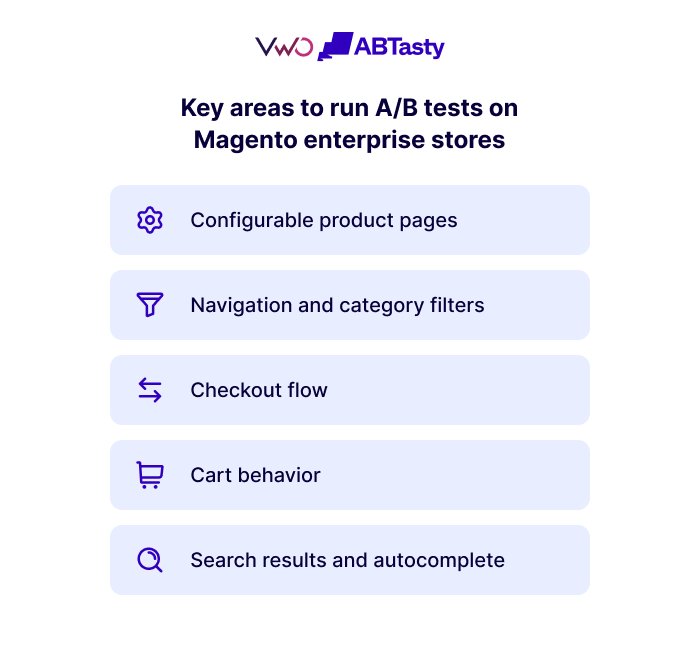
3. Layered Navigation and Category Filters
For stores with vast catalogs, the ability to find a product is as important as the product itself. Magento’s layered navigation is a powerful tool, but it can often become cluttered. A/B testing can determine whether filters should be expanded by default or collapsed into a "mobile-first" drawer. Data shows that optimizing the "sort by" defaults—such as testing "Best Sellers" against "Newest Arrivals"—can fundamentally change how users discover products and navigate the catalog.
4. Search and Autocomplete Logic
Internal site search is a high-intent channel. Users who search are often 2-3 times more likely to convert than those who simply browse. Testing the autocomplete suggestions in the search bar, the layout of the search results page, and the "no results found" experience can prevent potential customers from bouncing. Enterprise stores often experiment with "promoted" search results, where specific high-margin products are boosted in the results regardless of the exact keyword match.
Best Practices for Reliable Data Collection
To overcome the technical hurdles of the Magento environment, teams must adhere to a strict set of operational protocols. Failure to do so often results in "false positives" or "noise" that can lead to incorrect business decisions.

Quality Assurance with Active Caching: It is a common mistake to perform QA on a staging site where the full-page cache is disabled. This does not reflect the reality of the production environment. Tests must be validated with FPC and Varnish enabled to ensure that the "bucketing" logic holds up and that there is no variant "bleeding" between users.
The Use of Pre-hiding Snippets: To combat the "flicker effect," where the original content flashes before the variant appears, specialists use pre-hiding snippets. These are small blocks of code placed at the very top of the <head> tag that temporarily hide the page content until the testing script has finished modifying the DOM. While this adds a few milliseconds to the perceived load time, it is essential for maintaining a professional user experience.
Asynchronous Loading for Performance: Core Web Vitals are a critical factor for SEO and user retention. Testing scripts should be loaded asynchronously so they do not block the initial rendering of the page. Modern tools like VWO and Optimizely have optimized their "SmartCodes" to be as lightweight as possible, minimizing the impact on the site’s performance score.
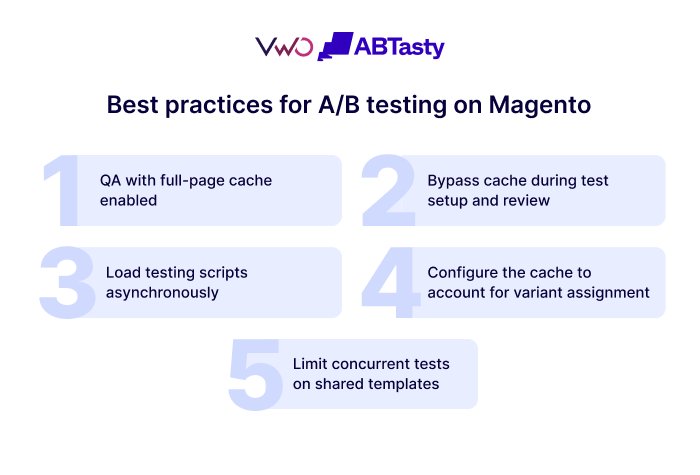
Bypassing Cache for Review: During the setup phase, developers often use IP-based bypasses or specific browser cookies to see the test variants without interference from the server cache. This allows for real-time adjustments before the experiment is rolled out to a wider audience.
Organizational Alignment and Resource Allocation
Successful experimentation is not just a technical challenge; it is a cultural one. Garret Cunningham, Director of Global Optimization at Columbus Global, emphasizes that testing velocity is often a byproduct of dedicated resources. Organizations that rely on "shared" design and development teams—those who are also responsible for day-to-day maintenance and bug fixes—rarely achieve the same results as those with a dedicated CRO unit.
In the enterprise space, alignment across departments is paramount. A change to the checkout flow might improve conversion rates but could inadvertently create a headache for the customer service team if it obscures shipping information. Similarly, a promotional banner test must be coordinated with the marketing team’s email and social media calendar. Building stakeholder trust through transparent reporting and "learning-focused" rather than "win-focused" testing is the foundation of a sustainable program.
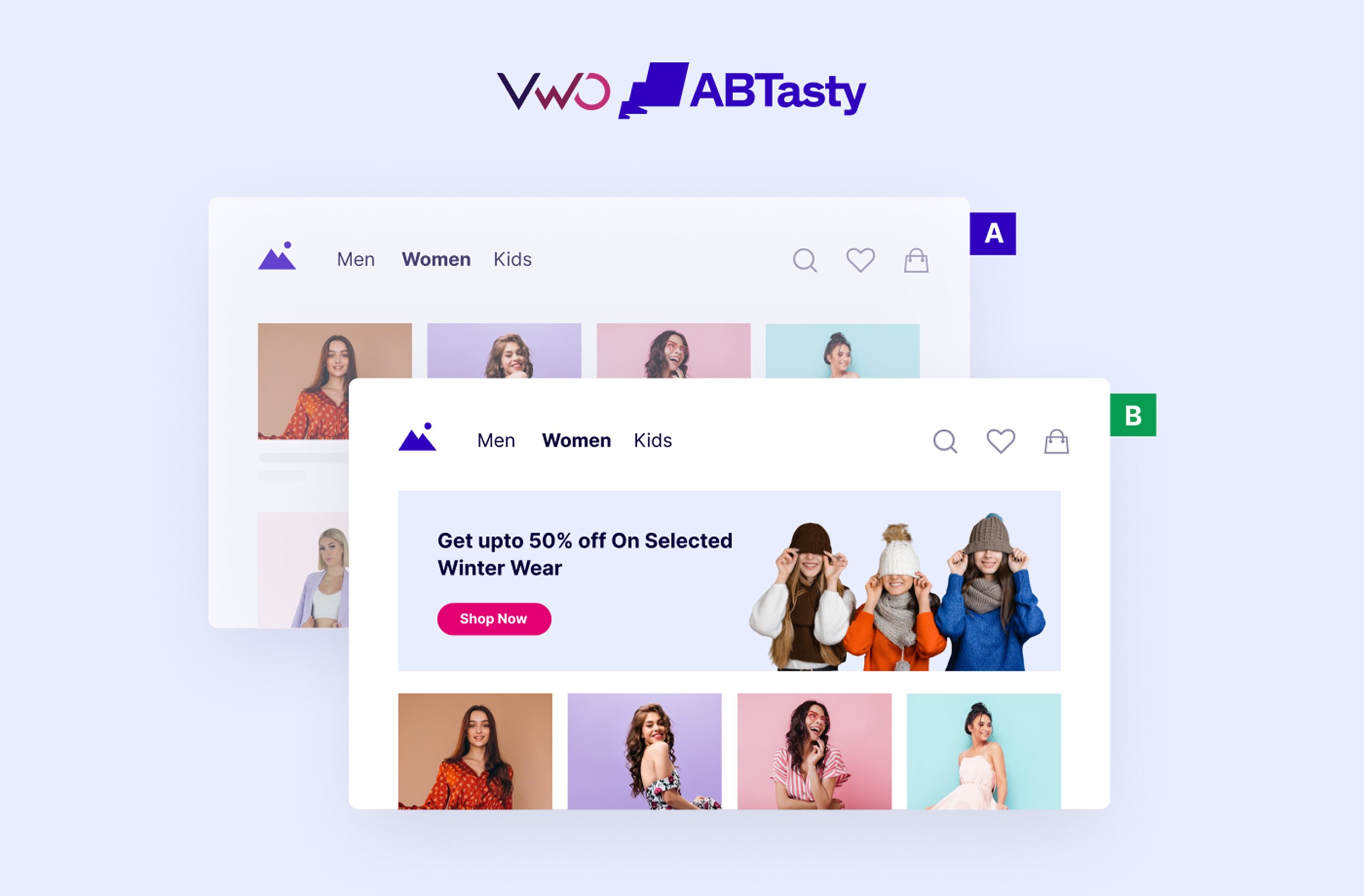
Strategic Impact and the Future of Magento Testing
The move toward "Headless" and PWA (Progressive Web App) architectures in the Adobe Commerce ecosystem is the next frontier for A/B testing. In a headless setup, the frontend is decoupled from the backend, communicating via APIs. This changes the testing landscape from modifying HTML templates to testing API responses and JavaScript-driven frontends.
For B2B organizations using Magento, the stakes are even higher. B2B buying flows, such as quote requests and requisition lists, are complex and involve multiple decision-makers. A/B testing these flows can uncover hidden bottlenecks in the procurement process, leading to larger contract values and higher customer lifetime value.
Ultimately, the goal of A/B testing on Magento Enterprise is to move beyond guesswork. By grounding changes in empirical data, brands can navigate the complexities of the platform to deliver a seamless, high-converting experience. As Ilan Hurwitz, an industry expert, notes, the biggest challenge for enterprise businesses is not a lack of data, but the ability to align that data with organizational goals and human resources.

Frequently Asked Questions
Does A/B testing slow down my Magento store?
If implemented incorrectly, yes. However, using asynchronous loading and optimizing your script placement ensures that the impact on Core Web Vitals is negligible. Most modern enterprise testing tools are designed specifically to minimize performance overhead.
Can I test B2B-specific features like "Request a Quote"?
Absolutely. Magento Enterprise’s B2B module is highly customizable. You can test the number of fields in the quote form, the placement of the "Add to Quote" button versus "Add to Cart," and even how shared catalogs are displayed to different customer groups.
How long should I run a test on a high-traffic Magento site?
While traffic volume allows for faster results, it is vital to run tests for at least one full business cycle (usually 7 to 14 days) to account for variations in user behavior between weekdays and weekends. You should always wait for a statistically significant sample size before declaring a winner.

Why am I seeing different results in Magento’s internal reports versus my testing tool?
This is often due to "attribution windows" or how different tools handle sessions. Magento’s reports are based on completed orders in the database, while testing tools track real-time user interactions. Ensuring that your testing tool is correctly integrated with your analytics platform (like Google Analytics 4) can help reconcile these discrepancies.







