The landscape of online search is undergoing a seismic shift, driven by the rapid integration of artificial intelligence. Data indicates a dramatic acceleration in consumer adoption of AI-powered search tools, compelling businesses and marketers to re-evaluate their strategies. What was once a niche area of interest is now a mainstream phenomenon, with profound implications for how information is discovered and consumed online. The question is no longer if AI search is relevant, but how profoundly it will reshape the digital ecosystem.
Explosive Growth in AI Search Adoption
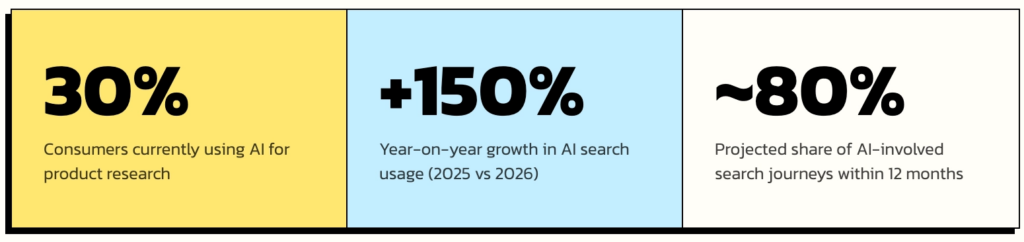
Recent data reveals a staggering increase in consumer reliance on AI for product research. A year ago, only 12% of consumers reported using AI for this purpose. Today, that figure has more than doubled to 30%. This surge is further amplified by the increasing prevalence of AI-generated content directly within traditional search results. Approximately 40% of Google search results now feature an "AI Overview," presenting users with synthesized answers without them actively seeking out AI platforms.
When these two trends are combined – direct AI platform usage and AI-generated content within traditional search – the proportion of search journeys involving AI in some capacity is now approaching 60%. Projections from industry analysts at Brainlabs suggest this figure could reach an astounding 80% within the next twelve months, assuming current growth rates are sustained. This trajectory fundamentally alters the established paradigms of organic search optimization.

Understanding the Evolving Searcher: Traditionalists, Augmenters, and Dissenters
Brainlabs’ research categorizes consumers into three distinct groups based on their search behaviors:
- Traditionalists (approximately 69%): This segment exclusively utilizes established search engines like Google. They represent the core user base of traditional search platforms.
- Augmenters (approximately 30%): This rapidly growing group employs a hybrid approach, using both traditional search engines and AI platforms at different stages of their research journeys. They are not abandoning existing tools but are integrating AI as an additional layer of intelligence, particularly for complex queries requiring nuanced answers. This "augmenter" segment is the primary driver of current AI search growth.
- Dissenters (fewer than 1%): This small but notable group exclusively relies on AI platforms for their search needs, indicating a complete migration away from traditional search engines for some users.
The emergence and expansion of the "Augmenter" category underscore a critical point: AI is not simply replacing traditional search but is being woven into the fabric of how users gather information, seeking to enhance and expedite their research processes.
The Divergence of AI SEO from Traditional SEO
The notion that AI search optimization is merely a rebranding of traditional Search Engine Optimization (SEO) is increasingly inaccurate. While there are immediate overlaps, the fundamental differences are widening at a pace that many marketing teams have yet to fully comprehend or adapt to. The AI search landscape is not monolithic; it comprises at least four major platforms, each with its own distinct algorithms, content guidelines, and varying degrees of integration with established search indexes like Google’s.
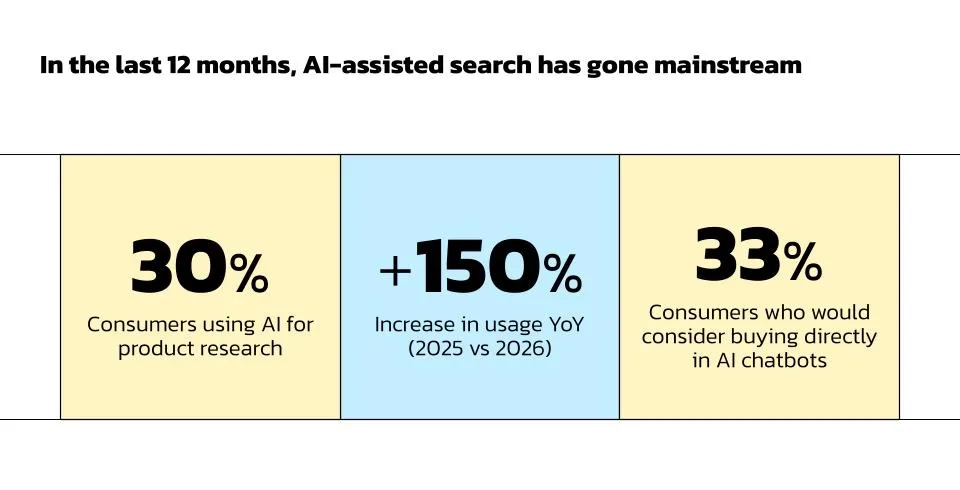
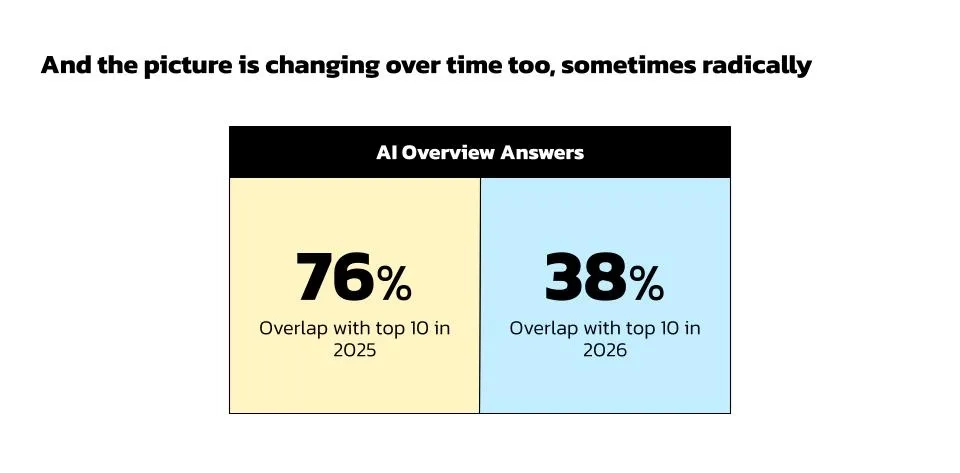
A particularly striking statistic highlights this divergence: Gemini, a Google product, cites pages from Google’s top 10 search results only 15% of the time. This contrasts sharply with the traditional SEO focus on achieving top-10 rankings. An SEO strategy built solely around this metric proves largely ineffective for AI search engines like Gemini or ChatGPT. Furthermore, the overlap between AI Overviews and Google’s top 10 results has significantly diminished, halving from an initial 76% to approximately 38% in 2026. This indicates that content ranking highly in traditional search may not automatically gain visibility within AI-generated summaries.
Deciphering LLM Content Selection: A New Paradigm for Visibility
Understanding how Large Language Models (LLMs) like those powering AI search tools decide which sources to cite is crucial for gaining visibility. This process differs significantly from Google’s traditional ranking algorithms. The key steps involved in LLM response generation include:
- Grounding: The LLM first determines whether external data is required to answer a prompt or if its existing training data is sufficient. For most product research queries, external data is essential.
- Query Fan-out: The LLM breaks down the original prompt into dozens of related micro-questions. For complex queries, numerous such micro-questions can be processed simultaneously.
- Deep Index Search: For each micro-query, the LLM scans Google’s search index, extending beyond the top 10 results to encompass the top 100 and beyond. This deep search capability is a significant departure from traditional SEO’s focus on the first page.
- Content Selection: The LLM prioritizes content that features direct answer blocks, headings that precisely match the micro-question, verifiable statistical data, and freshness signals such as a recent "last updated" date.
- Comparison and Validation: Sources are evaluated based on consensus. Pages that directly and concisely answer a specific micro-question can outperform higher-authority pages that bury their answers within broader editorial content.
What LLMs Prioritize for Citation:
LLMs are not simply looking for authority in the traditional sense. Instead, they are optimizing for directness, clarity, and recency. Content that is structured to provide immediate answers to specific, granular questions is more likely to be surfaced. This necessitates a shift in content creation, moving away from broad, article-style content towards more modular, question-and-answer formats.
Effective Optimization Strategies for AI Citations
Three primary optimization approaches have demonstrated consistent success in increasing AI citations:
- Query Fan-out Analysis: Understanding the specific micro-questions generated by LLMs for your target queries is paramount. Building FAQ sections and content directly addressing these granular questions has led to measurable increases in citations. This involves anticipating the "what," "how," and "why" behind a user’s broader search intent.
- Embedding Similarity Analysis: Measuring the semantic similarity between your content and content that is already being cited by LLMs can reveal gaps and opportunities. This analysis, which assesses how closely your content aligns with the language and concepts used in AI-generated summaries, has resulted in an average 140% increase in AI citations across client tests at Brainlabs.
- Content Freshness as a Technical Requirement: For time-sensitive topics or rapidly evolving product information, treating content freshness as a technical imperative is crucial. Monthly refreshes of high-demand pages are now considered a minimum standard to ensure content remains relevant and discoverable by LLMs. This emphasizes the need for dynamic content management strategies.
The Measurement Conundrum: Navigating the Data Void
Measuring AI search performance presents significant challenges due to a lack of comprehensive first-party data from major AI platforms. While Google and Bing have begun to provide limited data on AI performance through tools like Google Search Console’s Generative AI report, this data primarily offers impressions rather than the granular query and click data essential for informed optimization decisions.
Impressions and page performance are valuable for establishing baseline metrics and tracking directional trends, enabling rudimentary testing. However, critical questions remain unanswered: What are users actually searching for in these AI interfaces? What are their follow-up questions and conversational flows? And how does search behavior differ within standalone AI applications like Gemini? This data gap necessitates a continued reliance on third-party measurement solutions.
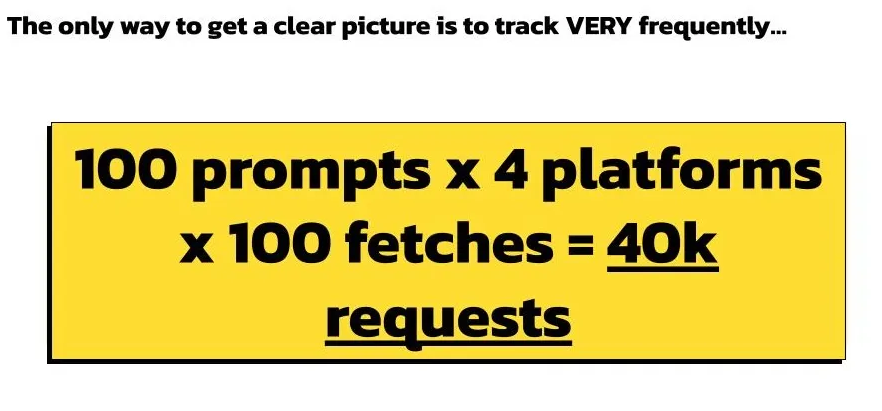
The current standard approach involves converting keyword data into probable prompts, tracking these prompts across numerous third-party AI tracking tools, and monitoring brand visibility as a proxy for real-world performance. However, this method is plagued by data noise. Across different LLM models, only about 23% of citations remain active after 14 days, indicating the ephemeral nature of AI-generated references. Furthermore, there is a low agreement rate between platforms regarding brand recommendations, with fewer than 5% of query sets showing perfect consensus across major AI platforms. This inconsistency makes it difficult to establish reliable benchmarks and attribute performance accurately.
Practical Measurement Approaches for Today’s Landscape
Despite the measurement challenges, several practical approaches can yield valuable insights:
- AI Referral Tracking in GA4: Implementing AI referral tracking within Google Analytics 4 allows for the identification of traffic originating from AI search engines. This provides a foundational understanding of AI-driven traffic volumes and user behavior post-click.
- Simulated Prompt Testing: Developing a robust library of simulated prompts based on keyword research and anticipated user queries allows for consistent testing across different AI platforms. Tracking the frequency and nature of brand mentions within these simulated AI responses provides a proxy for visibility.
- Brand Mentions and Sentiment Analysis: Monitoring brand mentions within AI-generated content, coupled with sentiment analysis, offers insights into how brands are being perceived and discussed by LLMs. This can help identify potential reputational risks or opportunities.
- Competitor Analysis of AI Citations: Analyzing which competitors are being cited by AI platforms for similar queries can provide valuable competitive intelligence. This helps identify best practices and potential areas for content improvement.
Agentic Search: The Impending Transformation
The current integration of AI into search can be characterized as an "AI layer" over existing search paradigms. However, the next significant evolutionary leap is the advent of "agentic search." Sundar Pichai, CEO of Google, has indicated that search is poised to transform into an "agent manager," where AI agents will autonomously conduct research, make decisions, and even facilitate transactions on behalf of consumers.

In this emerging agentic model, AI agents will perform research in seconds, filter information to provide recommendations, and seamlessly process transactions without direct consumer intervention. Platforms like ChatGPT are already introducing features such as "Instant Checkout," and Google is developing its Universal Commerce Protocol. These developments signal a future where AI agents act as intermediaries, streamlining the entire consumer journey from discovery to purchase.
The critical question for businesses and content creators in this agentic future is: what content and data sources will these AI agents trust enough to cite and act upon? The demand for reliable, accurate, and directly relevant information will only intensify.
Preparing for the Agentic Future: Proactive Strategies
Three key strategies can help businesses prepare for the rise of agentic search:
- Build for Directness and Verifiability: Content must be structured to provide clear, concise answers to specific questions. Prioritize factual accuracy, cite authoritative sources, and ensure data is easily verifiable. This aligns with the LLM’s need for grounded and trustworthy information.
- Develop Structured and Semantic Content: Employ structured data formats (like Schema.org) and focus on semantic relevance. This helps AI agents understand the context and meaning of your content, making it easier for them to extract and utilize specific information. Think of it as providing a clear roadmap for the AI.
- Establish Brand Authority and Trust: Cultivate a reputation for being a reliable and authoritative source of information within your industry. This involves consistent content creation, demonstrating expertise, and fostering positive brand sentiment. As AI agents become more discerning, their reliance on trusted sources will increase.
Where to Begin: A Phased Approach to AI Search Readiness
The transition to an AI-driven search environment requires a strategic and phased approach. The window of opportunity to get ahead of this trend, rather than merely react to it, is narrowing rapidly.
-
Prioritize Measurement: Begin by establishing a foundational measurement framework. Implement AI referral tracking within GA4, identify two to three priority categories for your business, and start tracking a focused set of 50 to 100 related prompts at a low frequency. While this data may not be perfect, it will provide essential directional insights into AI-driven traffic and user engagement.
-
Audit and Refresh Content: Conduct a thorough audit of your priority content against the key signals that LLMs prioritize. This includes examining freshness dates, the presence of direct-answer formatting, the implementation of structured data, and the relevance of headings to likely micro-questions. A targeted refresh of high-demand pages, applying these principles, will provide empirical evidence of their impact on citation rates before scaling these efforts across your entire content library.
-
Develop a Divergence Roadmap: Recognize that the overlap between traditional SEO and AI SEO is diminishing. The organizations best positioned to thrive in the evolving search landscape in the coming years are those that proactively build AI-specific capabilities now. This involves investing in new tools, training teams on LLM principles, and experimenting with novel content formats and optimization strategies. The future of search is not simply an evolution; it is a transformation, and strategic preparation today is crucial for sustained success tomorrow.