

In an increasingly digitized global economy, the ability to connect directly with an audience is paramount for any enterprise, regardless of its size or infrastructure. While a comprehensive website has long been considered the cornerstone of an online presence, a significant shift in digital strategy is empowering a new generation of entrepreneurs, content creators, and small businesses to build robust audience relationships without the overhead of a traditional web platform. This evolution is largely driven by the strategic deployment of hosted signup forms, a standalone solution that efficiently gathers critical subscriber data. As of June 10, 2026, industry leaders like AWeber are demonstrating how artificial intelligence is further democratizing this process, making direct audience engagement more accessible than ever before.
The Enduring Power of the Email List in a Fragmented Digital Landscape
The foundational concept underpinning this approach is the inherent power of an email list. In an era where social media algorithms frequently dictate reach and engagement, an email list represents a direct, owned channel of communication. It functions metaphorically as a dedicated room, where interested individuals voluntarily gather to receive updates, insights, and exclusive offers. These subscribers are not merely passive recipients; they are engaged participants. A portion will invariably engage in dialogue, ask questions, and eventually convert into customers or clients. Crucially, a committed subset will evolve into brand advocates, actively inviting new individuals into this digital "room," thereby fostering organic growth.
For decades, the conventional method for cultivating such a list involved embedding signup forms directly onto a business’s website. Visitors would navigate to the site, encounter the form, and input their email address to subscribe. This model, while effective, inherently presupposed the existence of a website—a significant barrier for many emerging businesses. The contemporary digital landscape, however, demands agility and cost-effectiveness, prompting the rise of solutions that circumvent this prerequisite.
The Genesis and Evolution of Hosted Signup Solutions
The journey towards accessible email list building has seen several transformative phases. In the early days of the internet, a website was an indispensable, albeit often complex and expensive, endeavor. Creating an online presence and collecting visitor information required significant technical expertise or investment. As the internet matured, the mid-2000s saw the emergence of basic email marketing services, which simplified the process of sending newsletters but still relied heavily on website integration for subscriber acquisition.
The advent of dedicated landing page builders and more sophisticated email service providers (ESPs) in the late 2000s and early 2010s marked a pivotal shift. These tools began to offer standalone pages designed specifically for lead generation, separate from a main website. This innovation acknowledged that not every business or campaign required a full website; sometimes, a single, focused conversion point was more effective.
By the mid-2010s, with the explosive growth of social media and mobile internet usage, the need for easily shareable, direct links became paramount. Platforms like Instagram, which famously restricted outbound links to a single "link in bio," highlighted the demand for concise, powerful digital assets. This environment fostered the perfect conditions for the widespread adoption of hosted signup forms—standalone web pages, each with a unique URL, designed with the singular purpose of collecting email addresses. These forms could be shared effortlessly across any digital channel, fulfilling the evolving needs of a mobile-first, social-media-driven audience.
The current trajectory, exemplified by developments in 2026, integrates artificial intelligence into this framework. AI-powered form builders represent the latest leap, drastically simplifying the design and content generation process. This technological advancement significantly reduces the time, effort, and specialized skills traditionally required, further democratizing access to professional-grade lead generation tools.
Understanding the Mechanics of a Hosted Signup Form
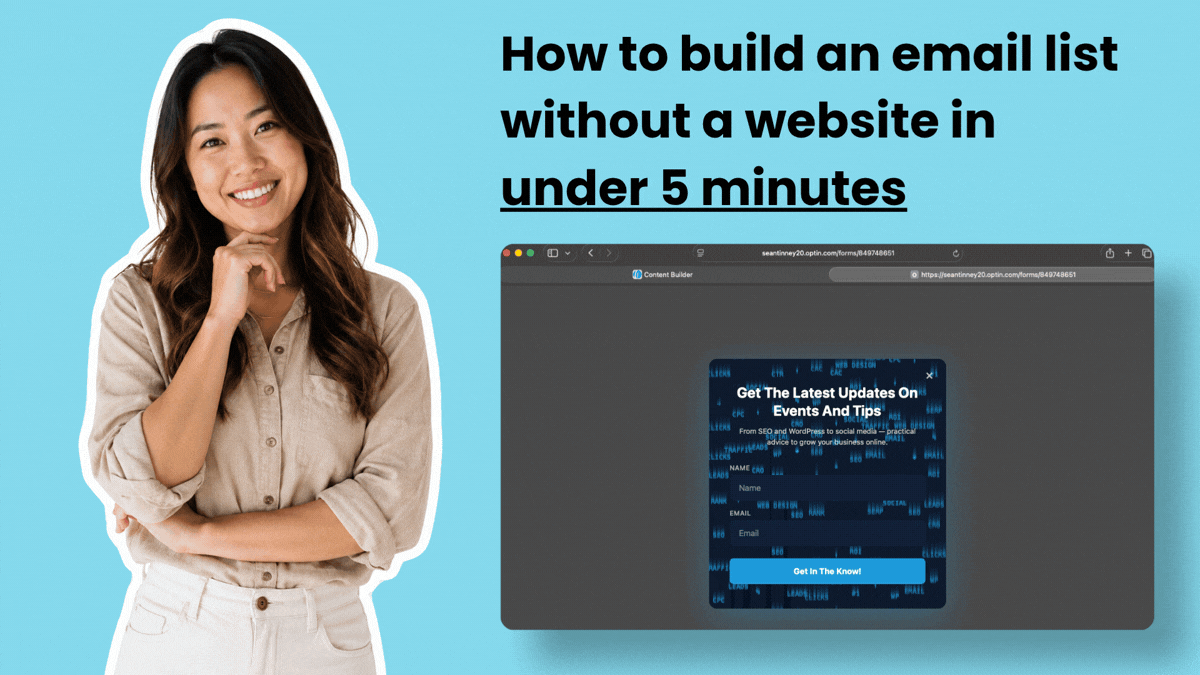
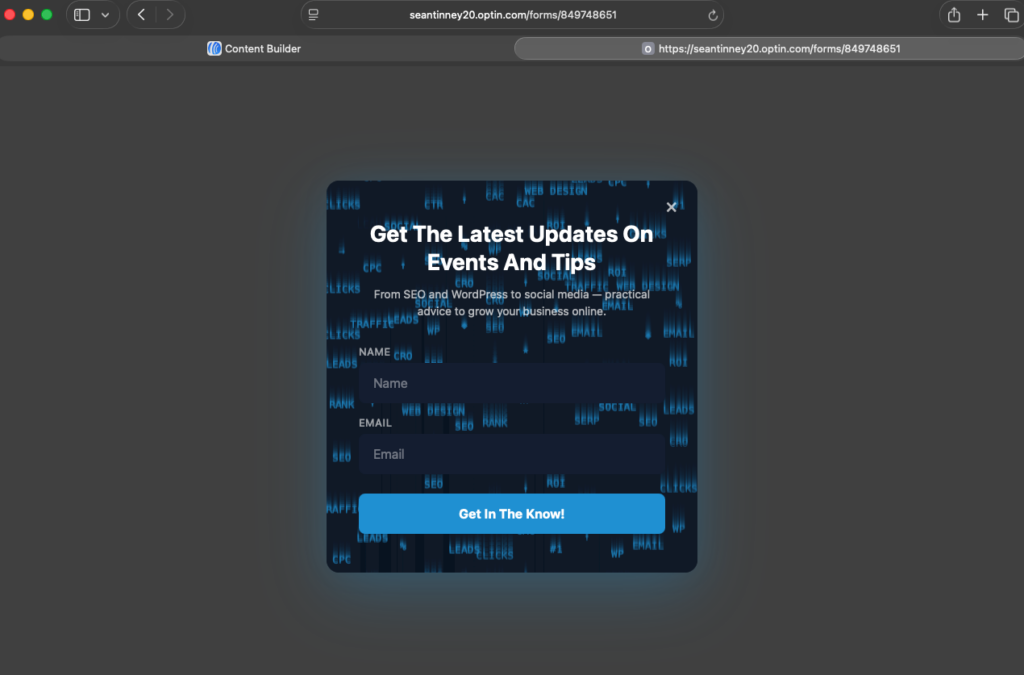
A hosted signup form is a dedicated web page that exists independently of a business’s primary website. It possesses its own unique URL, making it a self-contained digital asset that can be shared across various platforms. Its design is intentionally minimalistic, focusing solely on the task of collecting email addresses and adding subscribers to a designated list. This singularity of purpose minimizes distractions and optimizes the conversion rate.
Beyond serving as a primary subscriber acquisition tool for businesses without a website, hosted signup forms offer substantial benefits even for those with an established online presence. They act as a crucial redundancy, ensuring that list building efforts can continue uninterrupted even if a main website experiences downtime or technical issues. Furthermore, when the objective is to share a direct, uncluttered link to encourage subscriptions—devoid of navigation menus or other site elements that might divert attention—the hosted form is the ideal solution. It provides a streamlined path to subscription, optimizing the user experience for conversion.
From a technical perspective, hosted forms are typically managed by email service providers (ESPs). These providers handle the hosting infrastructure, ensuring reliability and scalability. They also manage the backend integrations necessary to funnel collected email addresses directly into the user’s email list, often triggering automated welcome sequences or lead magnet delivery. Security and data privacy are paramount, with reputable ESPs implementing robust measures to protect subscriber data and adhere to regulations such as GDPR and CCPA, thereby building trust and ensuring compliance.
The AWeber AI Signup Form Builder: A Paradigm of Simplicity and Efficiency
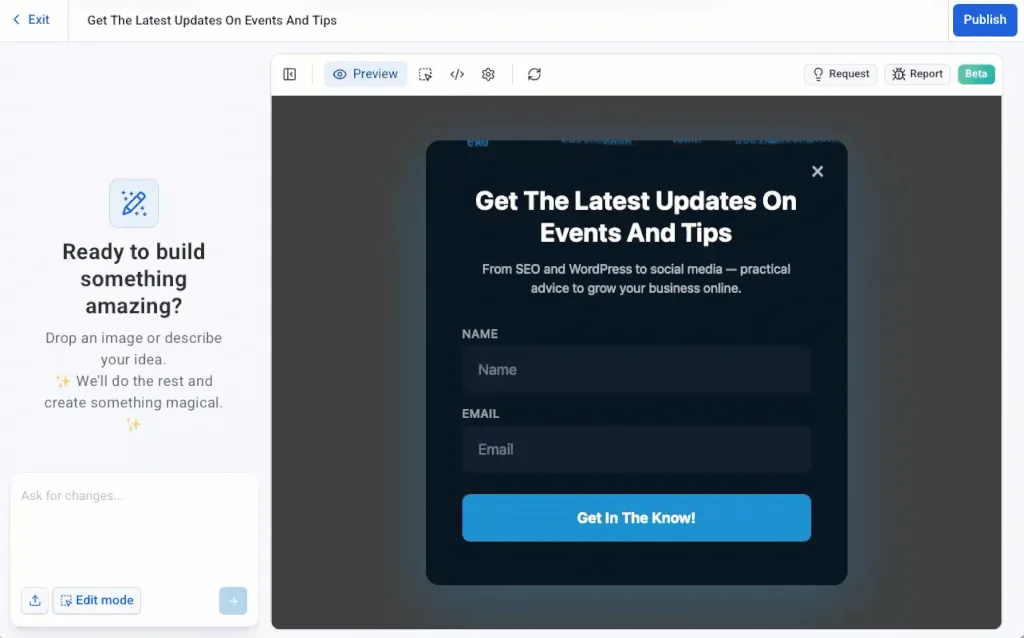
The process of creating a sophisticated, branded hosted signup form has been dramatically simplified through innovations like the AI Signup Form Builder offered by AWeber. This tool exemplifies how artificial intelligence can transform complex digital marketing tasks into intuitive, user-friendly experiences. Instead of requiring extensive design knowledge or coding skills, the builder generates a complete, professional-grade hosted signup form from a single, concise prompt. Users simply describe their business, and the AI intelligently crafts a form complete with a compelling headline, an informative description, and a design aesthetic that aligns with the brand’s identity.
The creation process within AWeber’s AI Signup Form Builder is structured into a streamlined, four-step sequence, designed for rapid deployment:
-
Step 1: Open the AI Signup Form Builder: Users navigate to the "Pages & Forms" section within their AWeber account and select the "AI Signup Forms" option. This intuitive placement ensures accessibility for both new and experienced users.
-
Step 2: Describe Your Business: This is the core AI interaction. Users input a textual description of their business, its offerings, or the specific purpose of the signup form. The AI leverages this information to understand the brand’s essence and target audience, generating relevant content and design suggestions. For instance, a prompt like "a vegan bakery offering gluten-free treats and weekly recipe tips" would guide the AI to create a form tailored to this niche.
-
Step 3: Review and Customize: Upon receiving the AI-generated draft, users are presented with a fully functional form. While the AI provides a strong starting point, it also offers complete flexibility for refinement. Users can easily adjust the headline for greater impact, modify colors to precisely match brand guidelines, or tweak the layout for optimal user experience. This blend of AI efficiency and human control ensures both speed and brand fidelity. For those satisfied with the AI’s initial output, the option to publish immediately saves invaluable time.
-
Step 4: Grab Your Hosted URL: Once the form is published, AWeber automatically generates a unique, shareable URL. This link is the gateway to the new hosted signup form and can be disseminated across any digital channel where an audience can click. The entire process, from initial description to live, shareable form, typically takes less than five minutes, marking a significant departure from traditional web development timelines. This speed allows businesses to react quickly to market opportunities and launch campaigns without delay, focusing their energy on content creation and audience engagement rather than technical setup.
Strategic Deployment: Maximizing Reach Without a Website
The availability of a hosted signup form is merely the first step; strategic deployment is crucial for its effectiveness. The objective is to place the unique URL where the target audience naturally congregates, converting their interest into subscriptions.
-
Leveraging Social Media Platforms:
- Direct Posting and Pinned Content: The hosted form link can be posted directly on platforms like Facebook, Instagram, X (formerly Twitter), LinkedIn, and TikTok. However, merely dropping a link is insufficient. Effective deployment involves crafting compelling calls to action (CTAs) that clearly articulate the value proposition for signing up. For example, a chef might post: "I send one exclusive email every Tuesday with a new recipe and a grocery list. No spam, just deliciousness delivered. Sign up here: [Your Hosted Form Link]."
- "Link in Bio" and Stories: On visually driven platforms like Instagram and TikTok, the "link in bio" feature is invaluable. Regularly updating this link to point to the hosted signup form ensures that all profile visitors have a direct path to subscribe. Mentioning the link in daily stories, often with interactive elements like swipe-up links (if available), can significantly boost visibility and conversion rates.
- Preview Optimization: When shared on social media, the form’s designated name often appears as the preview text. Strategic naming of the form can enhance click-through rates, providing an immediate glimpse into what subscribers can expect.
-
Including in Guest Posts and Collaborations:
- Synergistic Audience Growth: Guest blogging and collaborative content creation offer powerful avenues for reaching new audiences. When contributing articles to another blog or participating in joint ventures, the hosted form link becomes a natural inclusion.
- Author Bios and Content Upgrades: Placing the link prominently within the author’s biography at the end of a guest post or as a "content upgrade" related to the article topic encourages readers interested in the author’s expertise to subscribe for more. This leverages the trust and engagement built on a partner’s platform to grow one’s own audience.
-
Collecting Emails In Person with QR Codes:
- Bridging Digital and Physical: For businesses with a physical presence or those engaging in offline events, QR codes provide a seamless bridge to online subscription. The hosted signup form’s URL can be easily converted into a QR code, which can then be printed on various physical materials.
- Ubiquitous Applications: Business cards, flyers, product packaging, event signage, and even physical storefronts become potential touchpoints. Imagine a vendor at a farmer’s market: a customer interested in weekly produce updates simply scans a QR code at the stall, fills out the form on their smartphone, and is instantly added to the list. This eliminates the need for manual data entry, paper sign-up sheets, and ensures immediate digital capture without requiring a website.
- Enhanced Engagement: QR codes offer an interactive, modern method for data collection, providing a smooth user experience that aligns with contemporary mobile usage patterns.
Broader Impact and Implications: Democratizing Digital Marketing
The proliferation of accessible tools like hosted signup forms has profound implications for the broader digital economy. It represents a significant step towards the democratization of digital marketing, lowering the barriers to entry for a diverse range of individuals and entities:
- Empowering Micro-Businesses and Solopreneurs: Individuals running side hustles, freelance services, artisanal crafts, or niche content creation can now establish a professional email list without the upfront investment and technical complexity of a full website. This enables them to cultivate direct relationships with their audience from day one.
- Focus on Core Value: By abstracting away the complexities of web development, these tools allow creators and entrepreneurs to concentrate their limited resources and time on what truly matters: developing high-quality products, services, or content.
- Agility and Experimentation: The ease of creating and deploying hosted forms facilitates rapid experimentation with different offers, lead magnets, and messaging. Businesses can quickly test what resonates with their audience without committing to significant development cycles.
- Scalability and Foundation: While simple in their inception, hosted signup forms lay a robust foundation for future growth. An email list built through these forms can scale with the business, eventually integrating into more complex marketing funnels and CRM systems. They serve as a vital "home base" for collecting leads, delivering valuable content (like lead magnets), and triggering automated email workflows, all essential elements for building a sustainable audience.
When to Transition to a Full Website: A Strategic Decision
While hosted signup forms and dedicated landing pages offer formidable capabilities, there comes a point in a business’s growth trajectory where a full, multi-page website becomes a strategic necessity. Recognizing this transition point is crucial for continued expansion:
- Extensive Content Hub: When a business begins to produce a high volume of long-form content, such as comprehensive blog posts, detailed guides, whitepapers, or multimedia galleries, a structured website provides the ideal repository. It allows for organized categorization, search functionality, and a seamless browsing experience that a single-page form cannot offer.
- Direct E-commerce Operations: For businesses focused on selling multiple products or services directly online, a full website with integrated e-commerce functionality is essential. This includes product catalogs, shopping carts, secure payment gateways, inventory management, and order fulfillment systems.
- Enhanced Brand Authority and Customization: A bespoke website offers unparalleled opportunities for highly customized branding, advanced design elements, interactive features, and deep integrations with various third-party services. It projects a higher level of professionalism and established authority.
- Multiple Information Pages: As a business matures, it often requires dedicated pages for "About Us," "Services," "Testimonials," "Portfolio," "Contact," and legal disclaimers. A website consolidates all this information into a cohesive, easily navigable structure.
- Advanced Search Engine Optimization (SEO): While hosted forms can be optimized for specific keywords, a full website allows for comprehensive SEO strategies, including granular control over site architecture, internal linking, meta-data, and content clusters, which are critical for long-term organic search visibility.
- Audience Expectation: As a business gains prominence, its audience will increasingly expect to find a dedicated, comprehensive website when searching for information about the brand. A lack of such a site can, at a certain point, undermine credibility.
Until these advanced needs manifest, the combination of a hosted signup form and potentially a few focused landing pages provides a powerful, cost-effective, and efficient foundation for building and nurturing an audience. They are more than just a temporary workaround; they are strategic tools that enable immediate action and sustained growth in the dynamic digital sphere.
In conclusion, the landscape of digital marketing continues to evolve, making direct audience engagement both critical and increasingly accessible. Hosted signup forms, particularly those powered by intelligent automation like AWeber’s AI builder, have emerged as indispensable tools for anyone looking to cultivate an email list without the complexities of a full website. They streamline the process of subscriber acquisition, offer versatile deployment options, and significantly lower the barrier to entry for digital entrepreneurship. What are you waiting for? The pathway to building a powerful, engaged audience is clearer and more efficient than ever before. Log in to your AWeber account and create your hosted sign up form, or start your free trial today and harness the future of direct digital connection.








