Two years ago, a team of three managed three to four Google Ads accounts each. Today, that same team handles six to seven, generating more revenue, tackling greater complexity, and achieving superior client results, all while maintaining regular working hours. This significant increase in productivity, the article’s author notes, has been achieved without any new human hires. Instead, the team has integrated a new, non-human member into its operations: an AI assistant named Claude. This advanced AI, meticulously integrated over the past year, functions as a "second brain" for the agency, capable of processing client briefs in mere seconds and generating superior copy. However, the focus of this analysis shifts from Claude to a different, more pervasive non-human entity that has fundamentally reshaped the paid search landscape: Google itself.
The relationship between digital marketing professionals and Google’s advertising platform, once characterized by direct control and predictable outcomes, has evolved into a complex, ongoing negotiation. This dynamic is not a matter of choice but a necessity for survival in an industry marked by rapid technological advancement and algorithmic shifts. The author likens this relationship to that of roommates, sharing space and resources without always agreeing, but ultimately adapting to a shared environment. This perspective underscores the fundamental change in how paid search campaigns are managed, moving from direct operational tasks to a more strategic, managerial role.
Several concurrent shifts are driving this transformation, rendering traditional paid search playbooks obsolete. These include fundamental changes in user search behavior, the evolving nature of where answers appear, and a significant redistribution of decision-making power to algorithms. Understanding these forces is crucial for advertisers seeking to maintain effectiveness in the current digital ecosystem.
The Evolution of Search Queries: From Keywords to Contextual Situations
A significant driver of change is the way individuals interact with search engines. The article illustrates this evolution with a stark contrast: a search for "best ETF portfolio" in the past versus a complex, situation-based query today: "I’m 42, I have 50k in savings, I want to invest 1k a month at moderate risk and retire early. How should I allocate?" This shift signifies a move away from targeting discrete keywords towards understanding and addressing the entirety of a user’s intent and context. Users are no longer simply seeking information; they are articulating complex needs and scenarios.
This sophisticated user input is now processed by multiple AI-powered platforms simultaneously, including Google, ChatGPT, and Perplexity. This fragmentation of search intent means that advertisers must cater to a more nuanced understanding of user needs, moving beyond simple keyword matching to a more holistic approach that considers the broader context of a user’s situation. The implication for paid search is a demand for more sophisticated audience segmentation and messaging that resonates with specific user scenarios.
The Shifting Landscape of Search Results: The Rise of AI-Driven Answers
The very nature of where and how search answers are delivered has undergone a radical transformation, primarily due to the integration of Artificial Intelligence. AI Overviews, a prominent example, are now appearing not only for informational queries but also for transactional ones, such as "Best ETF for retirement" or "Compare business accounts." These AI-generated summaries often provide direct answers, potentially circumventing the need for a user to click through to a website.
This phenomenon has profound implications for paid search. When a click does occur, its value is significantly amplified. Advertisers can no longer rely on organic and paid search as entirely separate disciplines. Instead, they are increasingly viewed as integral components of a singular conversation about user value and website authority. Landing pages and website content must now carry an even greater burden, providing definitive answers and demonstrating the advertiser’s suitability to earn the click and convert the user. The competitive threshold has been raised, demanding a more seamless integration of paid and organic strategies.
The Redistribution of Control: Algorithmic Dominance in Ad Placement and Bidding
Perhaps the most impactful shift is the increasing autonomy granted to Google’s algorithms in decision-making processes. The introduction of features like Performance Max, Broad Match, and AI Max signifies a clear directive: to hand over campaign control to the algorithm. These product names, while distinct, all point towards a similar strategy of algorithmic optimization.
This algorithmic dominance means that key decisions regarding query matching, ad display, and the winning combination of placement, bid, and assets are now largely automated. Each quarter, advertisers find another lever of manual control disappearing, with recommended settings becoming the default. This trend creates an environment of reduced direct control and increased uncertainty for advertisers, even as their performance targets remain as ambitious as ever. The challenge, therefore, is not to resist this algorithmic shift but to learn to effectively manage it.
The New Paradigm: Managing the Machine, Not Operating It
The traditional role of the paid search professional, characterized by meticulous bid adjustments, ad copywriting, and keyword selection, is diminishing. The author argues that the focus must now shift from "doing the work" to "managing the worker." This new role positions Google’s algorithm as a high-performing, data-processing direct report. Like any team member, this algorithmic "worker" requires clear direction, well-defined goals, consistent oversight, and decisive intervention when necessary to prevent costly errors.
This management approach mirrors effective human resource management. The core competencies of a good manager—clear briefing, work verification, and pre-defined decision frameworks for success and failure—are directly transferable to the algorithmic context. The key difference is the nature of the "employee": a sophisticated algorithm rather than a human being.
Rule 1: The Art of Briefing the Machine

Effective management begins with a clear and comprehensive brief. A poorly defined brief does not simply lead to a suboptimal outcome; it results in a confidently executed, yet fundamentally flawed, campaign. The algorithm, much like a human employee, is only as effective as the signals it receives. A common pitfall observed in account audits is a foundational weakness in conversion tracking. This includes misconfigurations such as counting page visits as conversions, double-counting leads, or improperly valuing lead forms fired on any scroll.
Google’s algorithms require precise, actionable data to function optimally. Three critical pieces of information are essential:
- Accurate Conversion Tracking: This ensures that Google understands what constitutes a successful outcome. This involves correctly implementing conversion tags, distinguishing between macro and micro conversions, and assigning appropriate values.
- Valuable Conversion Data: Simply tracking conversions is insufficient. The algorithm needs to understand the value of each conversion. This often necessitates integrating offline conversion data, such as actual sales figures or deal closures, to provide Google with a clear picture of what constitutes a high-quality lead.
- Defined Business Goals: Beyond tracking, advertisers must clearly articulate their overarching business objectives. This includes defining target CPA (Cost Per Acquisition), ROAS (Return on Ad Spend), and lifetime customer value.
An illustrative example from the insurance sector highlights this principle. For an insurance client with a 90-day sales cycle, optimizing solely for lead form submissions, a readily trackable metric, resulted in a surge of leads but not necessarily more closed deals. Google, lacking insight into the quality of these leads, continued to chase the easiest-to-obtain form fills. By integrating offline conversion data—specifically, closed deal information with associated values—Google gained the intelligence to identify and prioritize leads that were more likely to convert into actual business. This demonstrates a critical lesson: without clear value attribution, Google will optimize for the cheapest conversion, not necessarily the most profitable. Therefore, rectifying measurement frameworks must precede any bid or budget adjustments.
Rule 2: Structured Testing in an Unpredictable Environment
The inherent opacity of certain Google Ads features, such as Performance Max, often leads to a chaotic testing methodology. Marketers may implement multiple changes simultaneously, rendering it impossible to isolate the impact of any single modification. Every campaign launch should be treated as a hypothesis, requiring a structured approach to validation.
Before initiating any test, four critical questions must be addressed:
- What is the hypothesis? This clearly defines the expected outcome of the test.
- What is the variable being tested? This identifies the specific element being modified.
- What is the success metric? This establishes the benchmark for evaluating the test’s performance.
- What is the kill condition? This pre-determines the threshold at which the test will be terminated if it fails to meet expectations.
The fourth question is frequently overlooked, turning tests into mere wishes. The author recounts a personal experience of testing Broad Match on a high-performing campaign, which resulted in a 30% CPA increase. The rational decision would have been to discontinue the test. However, a tendency to rationalize poor performance—attributing it to external market factors or algorithm learning curves—led to its continuation. Pre-committing to a kill condition removes the influence of future emotional bias, ensuring objective decision-making.
Testing should focus on the inputs—match types, audience signals, value rules, feed data, or AI Max settings—rather than solely on the outputs. Treating AI Max as a reach-expansion tool, rather than an efficiency driver, is crucial. Expecting the same CPA at higher volumes is often unrealistic and can lead to prematurely terminating a valuable growth opportunity. Therefore, a disciplined approach to testing involves one test per campaign, with a single variable at a time. Altering multiple elements simultaneously negates any meaningful learning.
Rule 3: Framework-Driven Decisions Over Emotional Reactions
The author admits to struggling most with this principle. The prevailing tendency is to react to incoming data, making adjustments based on weekly performance reports. While this approach can be effective in stable environments with experienced teams, it carries a cost: it encourages data explanation over decisive action.
Google’s algorithms now handle thousands of micro-decisions per second, leaving a select few, high-impact decisions for human oversight: scale, hold, or cut. A simple framework can guide these critical choices:
- Scale: Identify campaigns or strategies that consistently exceed performance targets and are poised for significant growth. This involves defining clear upward performance thresholds.
- Hold: Recognize campaigns that are meeting objectives but do not present immediate opportunities for substantial expansion. These require steady management to maintain their current performance levels.
- Cut: Establish definitive downward performance thresholds that trigger the termination of underperforming campaigns or strategies. This requires pre-defined metrics that signal a loss of efficiency or profitability.
Many professionals dedicate excessive time to managing "Hold" campaigns, neglecting the crucial task of discontinuing those that consistently fail to deliver. The solution, though unglamorous, is effective: establish the decision criteria before reviewing the data. On Monday morning, before opening any dashboards, define the conditions that would warrant scaling, holding, or cutting. Then, upon reviewing the data, adhere strictly to these pre-determined rules. Implementing these criteria within a workflow ensures that decisions are made proactively, removing the influence of pressure or fatigue that can cloud judgment in real-time.
The Architect of Performance: Redefining the Role of the Paid Search Professional
The operational responsibilities within paid search are shrinking, while the strategic, architectural role is expanding. The modern paid search professional must embody three distinct roles:
- Signal Architect: This involves meticulously defining the data inputs that the algorithm learns from, ensuring the accuracy and relevance of conversion tracking and business goal definitions.
- Test Designer: This requires crafting hypotheses and structured testing methodologies to probe the algorithm’s behavior and uncover opportunities that the platform’s automated reporting may not reveal.
- Decision Maker: This encompasses making the high-level strategic calls that algorithms are not equipped to handle, such as resource allocation, long-term strategy adjustments, and the decisive cutting of underperforming assets.
The automation of manual tasks—keyword expansion, bid adjustments, initial copy drafts, and routine reporting—has liberated valuable time. This freed capacity should be redirected towards activities that truly move the needle: deep dives into lead quality, in-depth landing page audits to maximize the value of each click, and strategic refinement of offers and messaging.
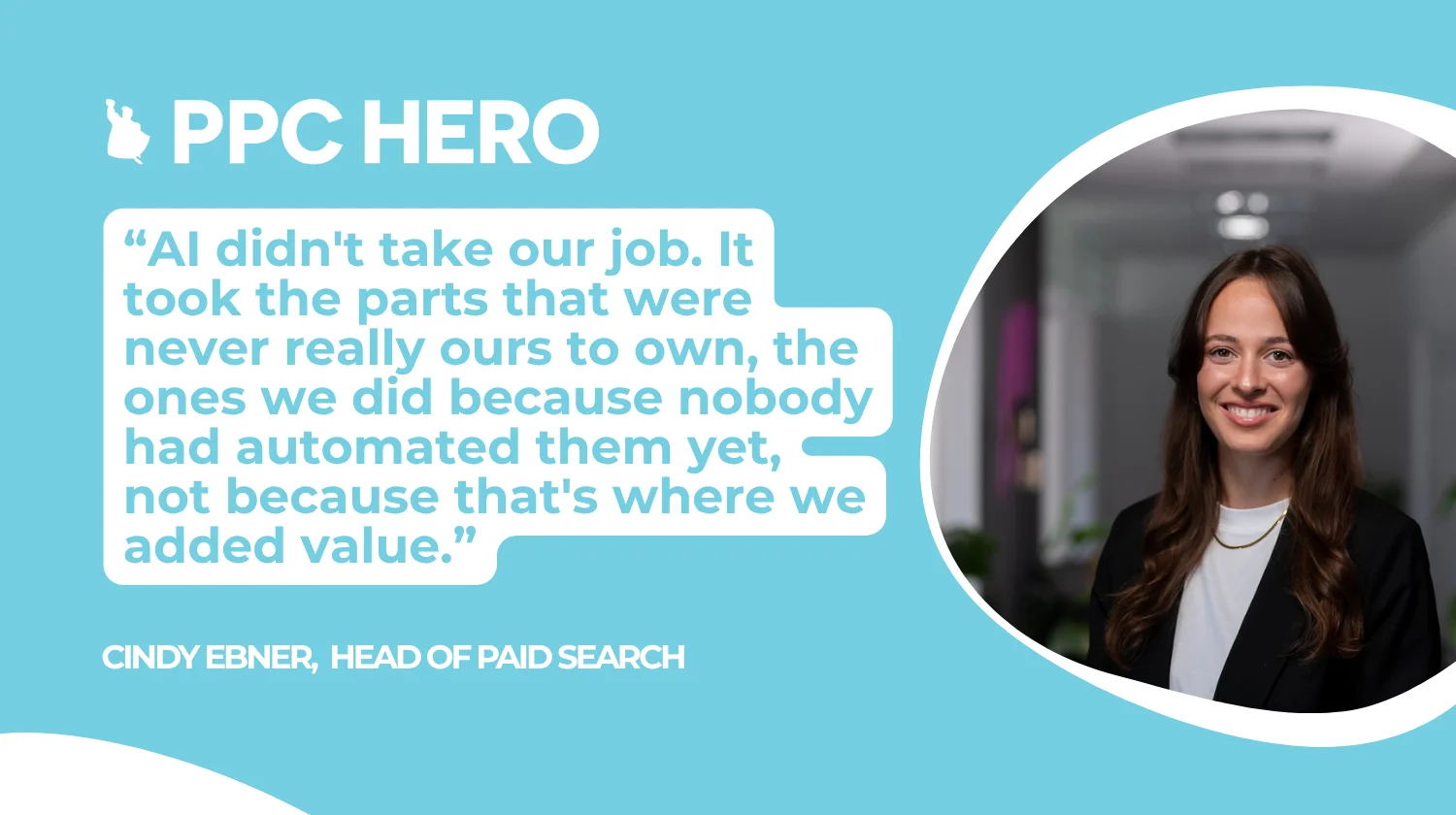
The advent of AI has not rendered paid search roles obsolete. Instead, it has liberated professionals from the parts of the job that were never truly theirs to own—those tasks that were merely automated out of necessity. The focus has shifted to where human value is irreplaceable: strategic thinking, nuanced understanding of business objectives, and the ability to manage complex, evolving algorithmic systems.
As the digital marketing landscape continues its rapid evolution, the imperative for paid search professionals is clear: embrace the role of the architect. This involves proactively fixing signals, shipping well-designed tests with defined kill dates, and establishing clear decision-making frameworks. The non-human members of our teams, particularly sophisticated algorithms like Google’s, require skilled management. That crucial management role is now yours to fill.