

The modern digital marketplace is characterized by a paradox of information where businesses possess exhaustive quantitative data regarding user behavior but often lack the qualitative insight necessary to explain it. While standard analytics platforms can pinpoint exactly where a shopper exits a website—whether it is a product page, a checkout funnel, or a trial onboarding sequence—they remain silent on the psychological barriers and friction points that drive those departures. As conversion rate optimization (CRO) matures into a more sophisticated discipline, industry leaders are increasingly turning to targeted customer feedback surveys to bridge this "intent-action gap." By capturing the voice of the customer at critical inflection points, organizations are moving beyond guesswork to diagnose specific systemic issues that impede revenue growth.
The Quantitative-Qualitative Divide in Conversion Optimization
The current landscape of e-commerce and Software as a Service (SaaS) is defined by razor-thin margins and rising customer acquisition costs. According to recent industry benchmarks, the average e-commerce conversion rate hovers between 2% and 3%, meaning the vast majority of site traffic fails to result in a transaction. Standard tracking tools show that a shopper may scroll through images, open a shipping tab, and then disappear, or that a trial user may sign up and never return. However, these data points do not distinguish between a user who left because of a high shipping price and one who left because they found the product description confusing.
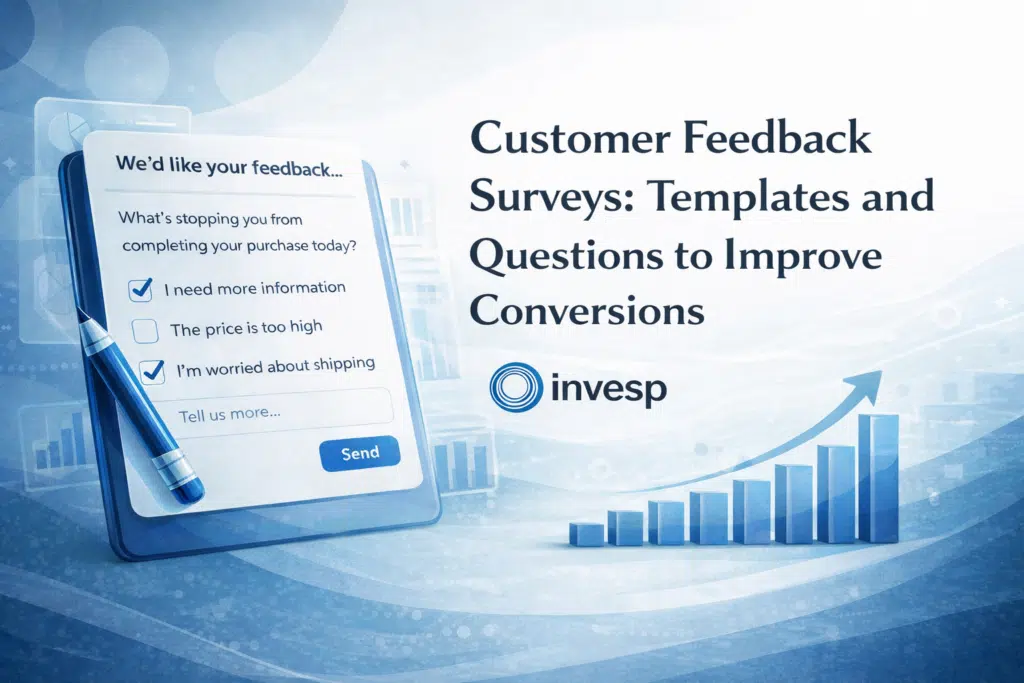
Customer feedback surveys, when executed with precision, serve as a diagnostic tool rather than a mere data collection exercise. Unlike broad annual satisfaction surveys, conversion-focused surveys are "in-the-moment" interventions designed to uncover the doubts, hesitations, and motivations of users at the exact stage where they affect the bottom line. This methodology allows brands to shift from reactive troubleshooting to proactive experience design.
Addressing the Product Page UX Gap
The product page represents the first major hurdle in the conversion funnel. Recent research from the Baymard Institute highlights a significant deficiency in this area: approximately 52% of desktop sites and 62% of mobile sites possess "mediocre" or worse product page user experience (UX). When a shopper fails to add an item to their cart, it is frequently due to unanswered questions rather than a lack of interest.
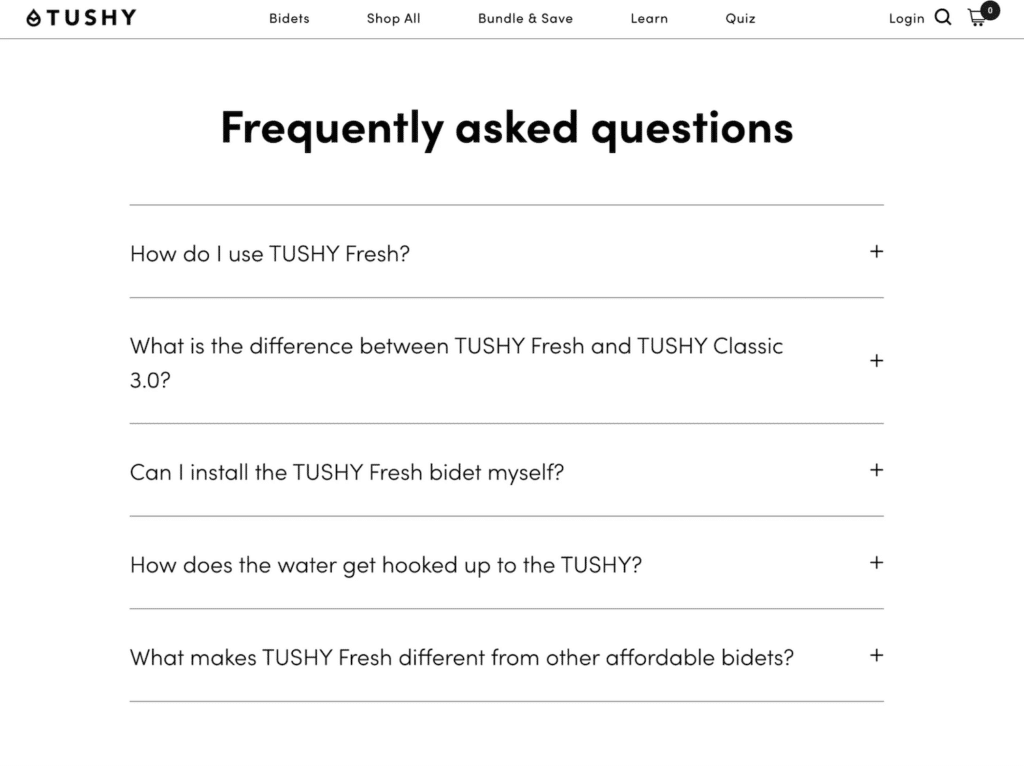
Market analysis suggests five primary drivers for product page abandonment: uncertainty regarding product fit or features, lack of clarity on shipping and return policies, price sensitivity compared to competitors, missing technical specifications, and general lack of brand trust. To combat this, brands like TUSHY have integrated comprehensive FAQ sections directly onto product pages, addressing installation and compatibility concerns before they become exit triggers.
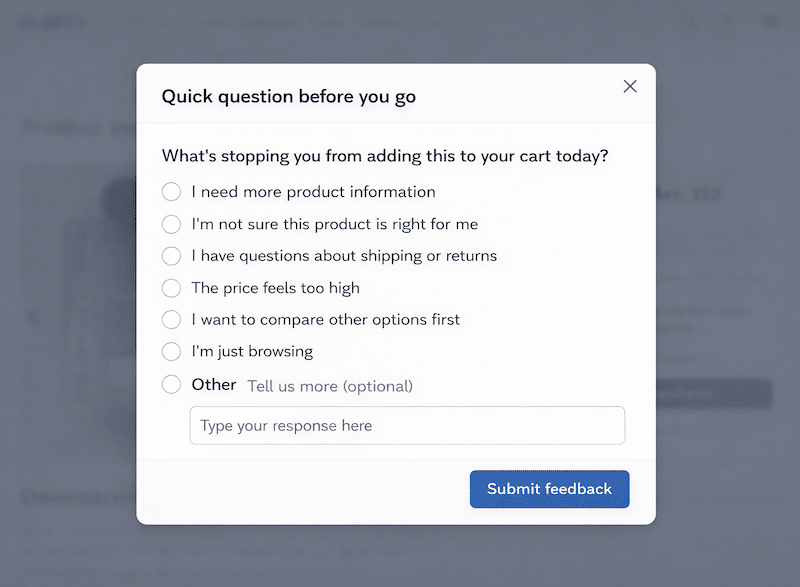
For organizations seeking to optimize this stage, the most effective intervention is the "pre-exit" survey. By asking, "What’s stopping you from adding this to your cart today?" businesses can categorize responses into actionable buckets. If a significant percentage of users cite "missing information," the solution is a content update. If the primary concern is "price," the brand may need to test promotional offers or better communicate value propositions.
The 70% Checkout Abandonment Challenge
If a user has initiated the checkout process, their intent is high, making abandonment at this stage particularly costly. The Baymard Institute’s latest aggregate data puts the average cart abandonment rate at 70.19%. At this juncture, the psychological state of the consumer shifts from exploration to risk assessment.
The drivers of checkout abandonment are often structural. Data indicates that 48% of users abandon checkout due to high extra costs (shipping, taxes, fees), while 26% leave because the site required them to create an account. Other significant friction points include overly complex checkout processes, concerns over payment security, and slow delivery timelines.
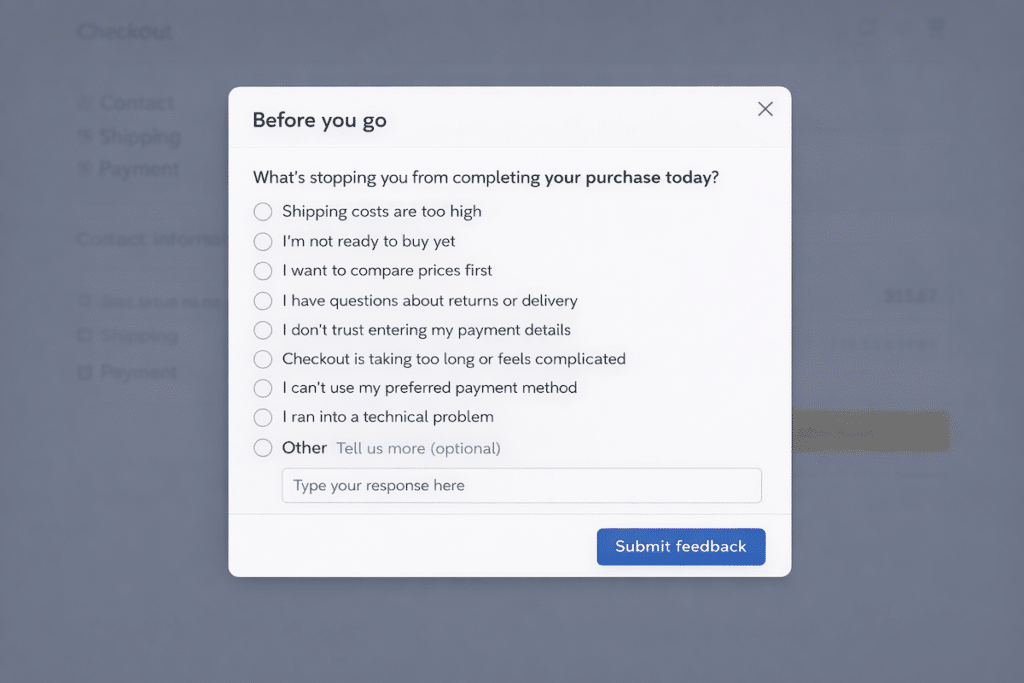
Strategic feedback surveys at this stage must be brief and direct to avoid adding further friction. By deploying a single-question survey—"What’s stopping you from completing your purchase today?"—brands can identify if the abandonment is due to a technical error, a lack of preferred payment methods, or "sticker shock" regarding the final total. This feedback often leads to immediate technical fixes or the implementation of "save for later" features that keep the lead warm.
Post-Purchase Attribution and the Dark Funnel
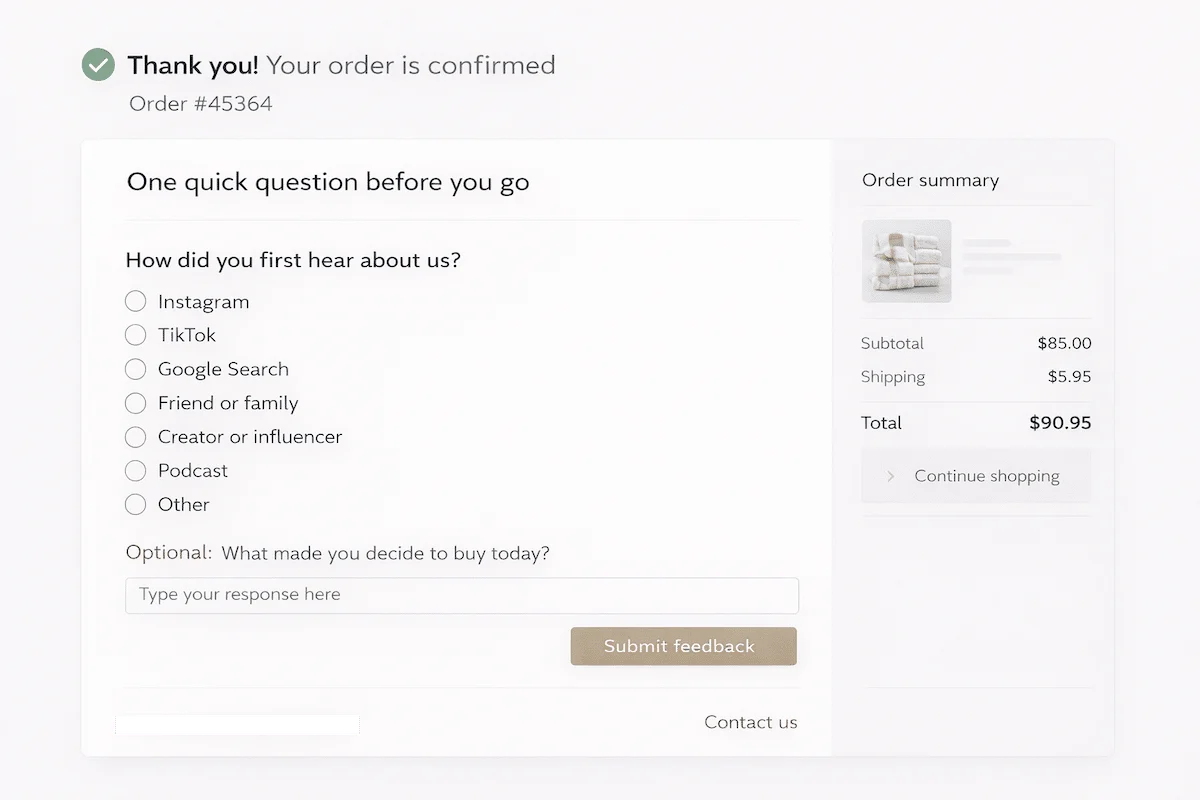
While much of CRO focuses on the "why not," understanding the "why" is equally vital. Post-purchase surveys provide a window into the customer’s motivation while it is still fresh. One of the most critical metrics in modern marketing is attribution, particularly as privacy changes like Apple’s iOS 14+ have made digital tracking less reliable.
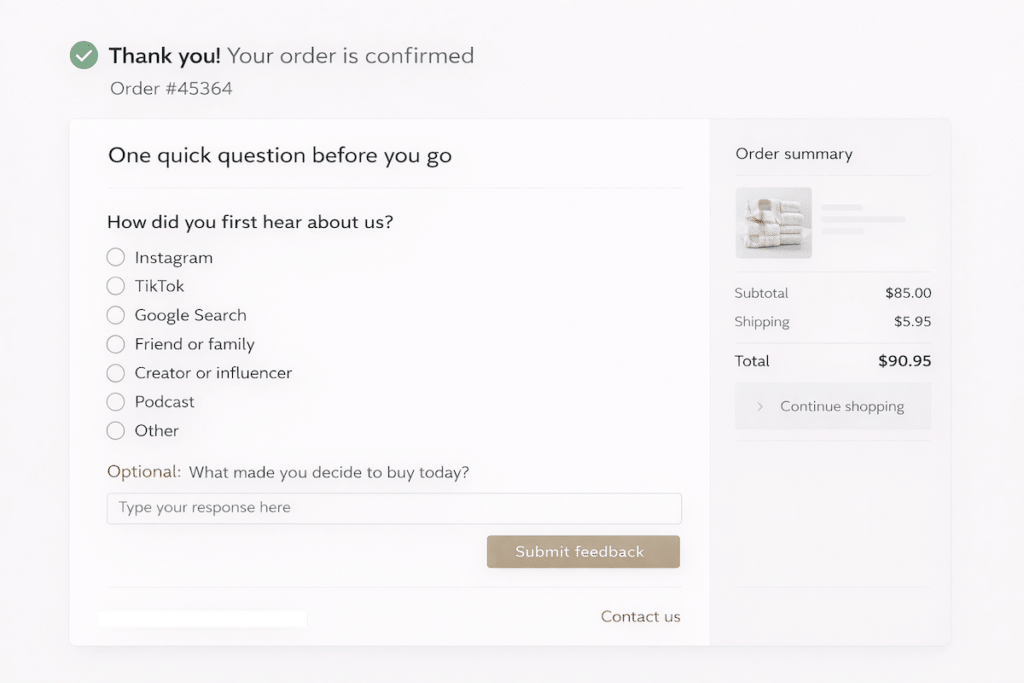
The "How Did You Hear About Us" (HDYHAU) survey has emerged as a cornerstone of zero-party data collection. This allows brands to capture influence from the "dark funnel"—channels like word-of-mouth, podcasts, and offline mentions that traditional analytics often miss. For example, the brand Weezie discovered through post-purchase surveys that 35% of its business originated from word-of-mouth, a signal that allowed the company to reallocate marketing budgets toward community-building rather than just paid performance ads.
Beyond attribution, post-purchase surveys can identify "near-misses"—factors that almost prevented the sale. Asking customers, "What almost stopped you from buying?" can reveal lingering anxieties that, if addressed, could convert more hesitant shoppers in the future.
The SaaS Activation Crisis and the 14-Day Retention Cliff
In the SaaS sector, the challenge is not just the sign-up, but the "activation"—the moment a user realizes the product’s value. Data from Amplitude’s product benchmark report reveals a stark reality: by day 14, the median product retains only about 2% of new users. Even top-tier products struggle to maintain more than 9% activity after two weeks.
This "activation gap" occurs when users find the setup too complex or fail to reach their "Aha! moment" quickly enough. Surveys targeting trial users who have not yet performed key actions are essential for refining the onboarding flow. By asking, "What’s stopping you from getting started today?" product teams can distinguish between users who lack the time to set up the software and those who find the interface confusing. This qualitative feedback is often the catalyst for creating better walkthroughs, templates, or "quick-start" guides that lower the barrier to entry.
The Economic Implications of Returns and Churn
The final stage of the customer lifecycle—retention—is where long-term profitability is secured. However, the modern retail environment is struggling with a "returns crisis." The National Retail Federation (NRF) projected that 16.9% of annual retail sales would be returned in 2024, with online return rates expected to hit 19.3% in 2025. These returns represent a massive drain on logistics and inventory.
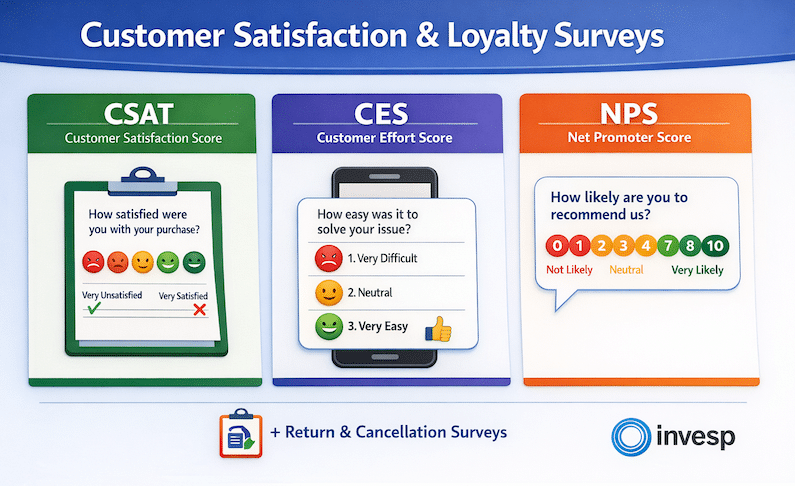
Surveys deployed during the return or cancellation process are critical for identifying "expectation mismatches." Analysis of return data often points to poor fit, product damage, or a discrepancy between the website imagery and the physical product. In the subscription space, the "main reason for cancellation" survey helps companies understand if they are losing customers to competitors, price sensitivity, or a lack of ongoing perceived value. Small improvements in retention, as noted by Bain & Company, can lead to a disproportionately large increase in profits, sometimes as much as 25% to 95% for a 5% increase in retention.
Methodological Best Practices for High-Utility Feedback
To ensure that customer feedback surveys yield actionable insights rather than "noise," organizations must adhere to several journalistic and scientific standards of inquiry:
- Contextual Timing: Surveys should be triggered by specific behaviors (e.g., three minutes of inactivity on a page or an exit-intent mouse movement) rather than appearing randomly.
- Low Friction Design: Utilizing multiple-choice questions with an optional "Other" text field maximizes response rates. This reduces the cognitive load on the user while still allowing for nuanced feedback.
- Specificity Over Breadth: Broad questions like "How was your experience?" rarely lead to specific optimizations. Questions should target the specific conversion step, such as "What is one thing we could change to make this checkout easier?"
- Incentivization Strategy: While not always necessary, offering a small incentive for post-purchase or churn surveys can increase the volume of data, though brands must be careful not to bias the results toward positive feedback.
Strategic Analysis and Future Implications
The shift toward qualitative feedback represents a broader trend in the digital economy: the move toward "zero-party data." As third-party cookies are phased out and privacy regulations tighten, the most valuable data a company can possess is the information volunteered directly by the customer.
The integration of AI and machine learning is further transforming this field. Natural Language Processing (NLP) tools can now analyze thousands of open-ended survey responses in real-time, identifying sentiment trends and emerging friction points that would take human analysts weeks to categorize. This allows for an "agile CRO" approach, where website changes can be tested and implemented based on feedback received just days prior.
In conclusion, customer feedback surveys are no longer just a "nice-to-have" feature for customer service teams; they are a strategic necessity for growth. By systematically diagnosing friction at the product page, checkout, onboarding, and retention stages, businesses can move beyond the "what" of their analytics to the "why" of their customers’ behavior. In an increasingly competitive landscape, the brands that listen most effectively to their customers are the ones most likely to convert them.







