A blog can significantly expand an audience and cultivate trust, yet its effectiveness hinges on strategic implementation, particularly in today’s evolving digital landscape. With artificial intelligence (AI) search platforms increasingly providing direct answers without requiring users to click through, content must transcend mere ranking to truly stand out. This guide delves into every facet of successful blogging, from generating compelling ideas and crafting high-quality posts to optimizing for AI-driven search, fostering audience engagement, and exploring monetization avenues.
The Evolving Landscape of Digital Content
The utility of a blog, regardless of whether it supports an e-commerce platform, a personal brand, or a professional portfolio, has become non-negotiable for modern digital presence. Beyond its intrinsic value as a creative outlet, blogging is a cornerstone of robust search engine optimization (SEO) and a potent marketing instrument. The advent of Google’s AI Overviews, also known as AI Mode, and similar AI search technologies has further amplified the importance of blogs that deliver clear, comprehensive, and authoritative answers to user queries. Neglecting a blogging strategy in this environment means forfeiting significant opportunities for search visibility and audience connection.
Historically, blogging began as a digital diary format, evolving into a critical component of content marketing in the 2000s. The 2010s saw a strong emphasis on keyword stuffing and link building, often at the expense of quality. However, Google’s continuous algorithm updates, including Panda, Hummingbird, RankBrain, BERT, and MUM, progressively shifted the focus towards user intent, natural language processing, and the E-E-A-T framework (Expertise, Experience, Authoritativeness, Trustworthiness). The current era, dominated by generative AI in search, demands content that not only ranks but also provides unique value and demonstrates genuine human insight to be featured in AI-generated summaries.
Blogging as a Pillar of Modern SEO Strategy
Consistent content addition is fundamental to any sustainable SEO strategy. Search engines, particularly Google, interpret regular updates as indicators of an active, relevant, and authoritative website. These signals are crucial for improving page rankings in both traditional search results and AI-powered snippets. For instance, data from various digital marketing studies often indicates that websites with active blogs receive significantly more inbound links and indexed pages, both strong ranking factors. A HubSpot report, for example, once highlighted that companies that blogged received 97% more links to their websites. Furthermore, regular blogging creates more opportunities for a site to appear in AI-generated snapshots, where complex questions are distilled into concise answers for users.
Blogging also facilitates ranking for new keywords and maintaining visibility for existing ones. As AI search systems prioritize fresh, well-structured information, consistent updates ensure a site remains competitive. Crucially, a blog allows for targeted engagement with diverse search intents – whether users are seeking information, comparing products, or looking for solutions. Understanding and addressing these nuanced intents is paramount for capturing organic traffic in the AI-driven search environment.
Beyond SEO: Blogging as a Strategic Marketing Asset

A well-executed blog transcends its SEO benefits to become one of the most effective marketing tools available. It enables readers to connect with a brand and its offerings beyond transactional pitches. Storytelling, rather than overt advertising, resonates deeply with audiences. Sharing behind-the-scenes narratives, industry insights, or genuine customer experiences builds a strong foundation of trust and relatability. Not every website visitor is immediately ready to commit to a purchase; by offering valuable, informative content through a blog, brands can establish credibility, foster positive recall, and increase the likelihood of future conversions. This authentic engagement is increasingly critical, as AI search algorithms are designed to favor brands that users already recognize and trust.
"A blog isn’t valuable just because it exists. It becomes valuable when it helps your audience solve problems, understand something better, or see your expertise in action," states Carolyn Shelby, Principal SEO at Yoast. "In today’s search landscape, the goal isn’t simply to publish, or even to publish more. It’s to create content worth being found, cited, and remembered." This expert perspective underscores the imperative for quality and utility in contemporary blogging.
Laying the Foundation: Strategic Blog Setup
Initiating a new blog demands meticulous preparation. Proactive planning can avert future complications, especially given AI search’s preference for organized, intent-driven content. The initial steps involve defining a clear niche and conducting thorough keyword research. This research should move beyond merely identifying high-volume keywords to understanding the actual questions and problems your target audience is trying to solve. Focusing on audience needs ensures content relevance and greater potential for AI search inclusion.
Establishing a clear and manageable blog structure is equally vital. A logical hierarchy of categories, subcategories, and tags aids both human readers and search engine crawlers in navigating content, thereby enhancing engagement and potentially improving rankings. This foundational work includes mapping out cornerstone topics – comprehensive, authoritative pieces that serve as central hubs for related content – and developing a robust internal linking strategy. A strong structural foundation allows a blog to adapt more readily to the evolving demands of AI search.
Generating Content Ideas in an AI-Dominated World
Sustaining a successful blog requires a continuous pipeline of compelling ideas. Whether blogging is a primary objective or a supportive marketing function, the careful selection of topics, aligned with audience needs, is paramount.
Advanced Keyword Research: The process of identifying target keywords has evolved. Beyond single terms, content creators must now consider phrases, questions, and conversational queries that users might pose to AI search tools. Integrating these exact terms into content signals relevance to both traditional search engines and AI-powered result generators. A study by SEMrush revealed that long-tail keywords (phrases of three or more words) convert 2.5 times higher than short-tail keywords, underscoring their value in targeting specific user intent. Keyword research remains the foundational step in SEO copywriting, even as search technology advances.
Targeting Search Intent: As part of keyword research, understanding the intent behind a user’s query is crucial. Search engines, and now AI tools like Google’s AI Overviews, prioritize content that directly matches what users are looking for – whether it’s to learn, compare, or purchase. Informational intent often leads users to blogs, making them ideal for attracting a broad audience early in their research journey. For an e-commerce site, while product pages target commercial intent, informational blog posts can significantly expand reach by addressing related queries and guiding users toward solutions. Aligning content with specific search intent is no longer optional; it is a fundamental requirement for visibility.

Inspiration Sources: Content ideas can stem from a multitude of sources. Current events offer timely hooks, while personal expertise and reader comments provide direct insight into audience needs. Frequently asked questions from customers are clear indicators of topics ripe for blog posts. Extensive reading – across industry publications, news outlets, and competitor blogs – can spark new angles and perspectives.
Furthermore, AI platforms and Large Language Models (LLMs) such as OpenAI’s ChatGPT, Google’s Gemini, Perplexity, and Anthropic’s Claude can serve as powerful brainstorming aids, generating outlines or initial drafts. Tools like Yoast AI Brand Insights can even help analyze how a brand is perceived in chatbot responses. Analyzing website analytics to identify top-performing posts or topics with high dwell times can reveal what resonates most with the audience, prompting deeper dives into successful themes. However, the goal is not to replicate existing content but to enhance it, offering a fresh perspective or more comprehensive solution. Maintaining a running list of ideas on a mobile device ensures that inspiration, whenever it strikes, is captured for future development.
Overcoming Writer’s Block with AI Assistance: Tools like the Yoast AI Content Planner, available to Yoast SEO Premium users, exemplify how AI can streamline content creation. This feature analyzes existing content, identifies gaps, and generates tailored post ideas, each accompanied by a draft framework including a title, outline, focus keyphrase, meta description, and section notes. This integration within the WordPress editor allows creators to move from a blank page to a structured first draft in minutes, significantly boosting productivity.
Crafting High-Quality Blog Posts for the Modern Web
The effectiveness of a blog post hinges on two critical attributes: originality and readability.
The Imperative of Original Content: In an era where AI can rapidly generate vast quantities of text, genuine originality is a powerful differentiator. Each blog post must offer fresh perspectives, unique insights, or novel solutions. Google’s recent warnings against "commodity content" – material that merely rehashes existing information without adding value – highlight this shift. AI-generated summaries and search results prioritize content that stands out. For a post to succeed, it must teach, solve a problem, or present an argument in a way others do not.
Google’s emphasis on human expertise and unique insights, particularly in light of its helpful content updates, means that blogs showcasing genuine E-E-A-T are increasingly favored. These human elements – personal experience, in-depth research, and distinct viewpoints – are precisely what AI cannot authentically replicate. Consequently, blogs that excel in these areas are better positioned to earn trust and authority.
The Power of Readable Content: After ensuring originality, readability becomes paramount. A well-structured, clearly written article ensures that the audience grasps the message efficiently. Readability is also a significant SEO factor, as Google’s AI tools are designed to favor content that is easy to scan and digest. Posts with a clear hierarchical structure, judicious use of subheadings, and logical paragraph flow are more likely to achieve higher rankings because they offer a superior user experience. Metrics like the Flesch-Kincaid readability test provide objective measures, aiming for a reading level accessible to a broad audience.
Practical Strategies for High-Quality Posts:

- Pre-Writing Planning: Before typing, define the target audience, the core message, and the desired outcome for the reader. Outline key topics and their logical sequence. This structured approach ensures focus and efficiency.
- Clear Paragraphs: Each paragraph should begin with its most important sentence, followed by explanations or expansions. This "inverted pyramid" style allows readers and AI systems to quickly grasp main points. Paragraphs should be concise, ideally seven to eight sentences, and the language should prioritize clarity over complexity, avoiding unnecessary jargon.
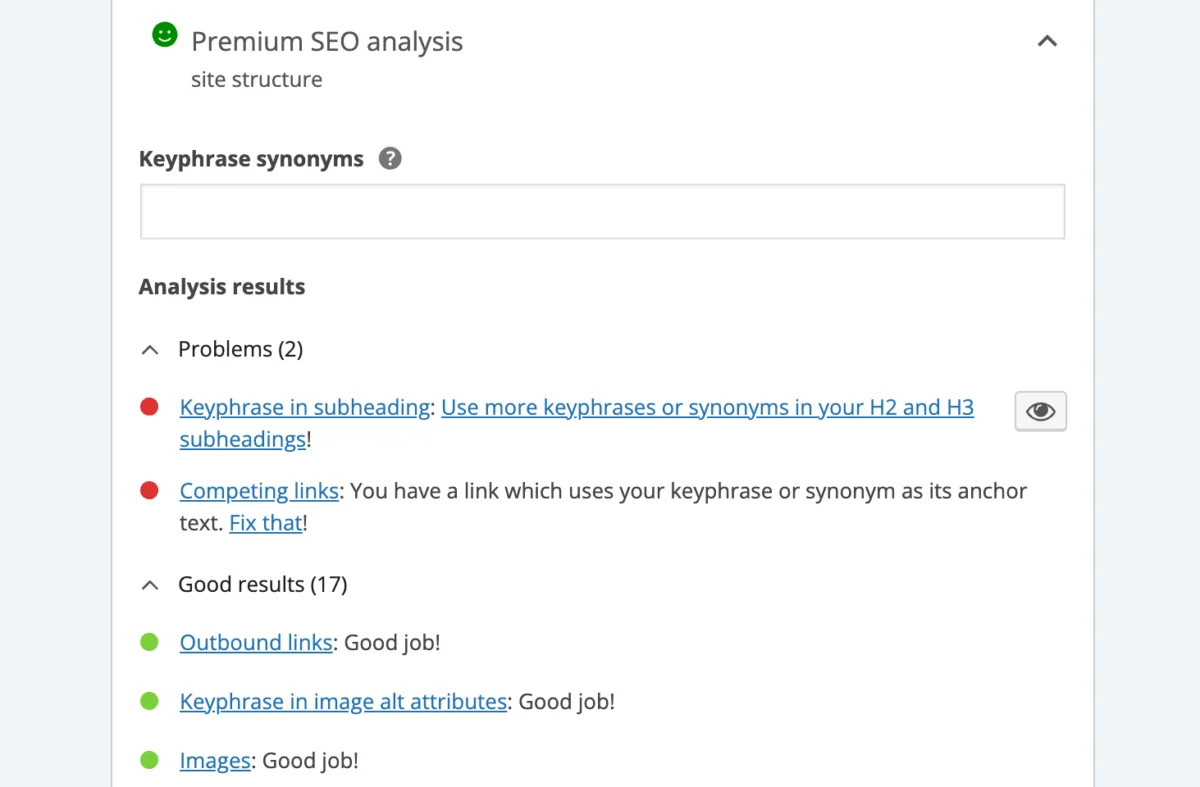
- Leveraging Tools and Feedback: Tools like the Yoast SEO plugin offer real-time readability analysis, identifying long sentences and suggesting transition words – features that are particularly valuable for optimizing content for AI search. Yoast SEO Premium further includes AI features like Yoast AI Optimize to refine writing for clarity and impact. Beyond tools, external proofreading is indispensable. A fresh pair of eyes can catch errors and confirm message clarity, ensuring the content resonates as intended.
Optimizing for Search Engines: The Final Polish
Once a blog post is original and readable, the final step involves optimizing it for search engines without compromising content integrity. This means maximizing its discoverability without resorting to manipulative tactics.
The Role of Yoast SEO: Yoast SEO provides a comprehensive toolkit for fine-tuning posts. This "Yoasting" process involves making strategic adjustments to enhance visibility. The plugin offers analyses for keyword usage, readability, internal linking suggestions, and technical SEO aspects like meta descriptions and title tags. These features guide content creators in implementing best practices, ensuring the article is genuinely valuable for both search engines and human readers. It’s a continuous process of improvement, not a one-time setup.
Beyond Yoast: Effective SEO extends to technical elements like page load speed, mobile responsiveness, and secure connections (HTTPS). Furthermore, strategic internal and external linking builds authority and relevance. By consciously integrating these elements, a blog post is given its best opportunity to be discovered and valued.
Fostering Blog Engagement and Community
Blog engagement is an increasingly important, albeit indirect, SEO factor. Active comments sections, where authors respond to reader queries and participate in discussions, signal to search engines that a blog is dynamic and authoritative. Social media shares and online discussions around a post further drive traffic and enhance perceived credibility. Engagement, in its broadest sense, also includes citations from other websites and mentions, even without direct links, which contribute to E-E-A-T.
Managing Comments: Replying to comments builds rapport and demonstrates that the audience is valued, encouraging further interaction. While positive feedback is straightforward, negative comments require a professional, constructive approach to maintain brand reputation.
Marketing Your Blog: Reaching a Wider Audience
A well-crafted blog requires an audience. While flawless SEO is crucial for organic discovery, supplementary marketing efforts are essential for maximizing reach.
Social Media and Newsletters: Social media platforms offer powerful avenues for audience connection and traffic generation. Strategic use of platforms like Facebook, X (formerly Twitter), Reddit, Instagram, and TikTok – tailoring content to each platform’s unique audience and format – can significantly extend reach. Short-form video content, such as Instagram Reels or TikTok videos, is particularly effective for driving engagement and attracting younger demographics.
Newsletters create a direct communication channel, fostering reader loyalty independent of algorithm changes. Collecting email subscribers and sending regular updates with new posts, exclusive content, or special offers builds a committed audience base. Data often shows that email marketing yields a significant return on investment, making newsletters a critical component of a comprehensive marketing strategy.
Monetizing Your Blog: For those aiming to generate income, several effective monetization strategies exist:
- Advertising: Display ads (e.g., Google AdSense), native advertising.
- Affiliate Marketing: Promoting relevant products or services from other companies and earning a commission.
- Selling Products/Services: Directly selling digital products (eBooks, online courses), physical goods, or consulting services.
- Sponsored Content: Collaborating with brands to create sponsored posts or reviews, maintaining transparency.
- Donations/Memberships: Offering exclusive content or benefits to paying subscribers.
- For online shops, a blog can significantly boost rankings by attracting organic traffic and strategically linking to product pages, creating a symbiotic relationship between content and commerce.
Maintaining a Blog for Long-Term Success
While starting a blog may seem daunting, sustaining it presents its own set of challenges. Consistency is key: establishing a realistic publishing frequency and adhering to it builds reader trust and loyalty.
Addressing Common Challenges:
- Content Freshness: Regularly auditing and updating older content is vital. Google favors fresh, relevant information, so refreshing outdated posts can significantly boost their performance.
- Managing Authors: For larger blogs, clear editorial guidelines, style guides, and workflow processes are essential for maintaining a consistent brand voice and content quality across multiple contributors.
- Traffic Declines: Proactive SEO audits are necessary to diagnose issues such as keyword cannibalization, technical problems, or algorithm penalties.
- Site Structure Evolution: As a blog grows, its structure will naturally evolve. Regular analysis and reorganization of categories, subcategories, and tags are crucial. Implementing topic clusters – grouping related posts around pillar pages – enhances both user navigation and SEO. Updating internal links consistently, especially when publishing new content, reinforces the site’s authority and relevance. Content pruning, the judicious deletion or redirection of low-value, outdated content, helps maintain a lean, SEO-friendly site.
- Content Planning: Strategic content planning moves beyond spontaneous posting to a structured approach. Editorial calendars, topic cluster frameworks, and AI-powered content planners streamline the process, preventing topic overlap and ensuring alignment with strategic goals.
- Avoiding Content Cannibalization: This occurs when multiple articles on a site compete for the same keywords, confusing search engines and diluting ranking potential. Regular SEO audits are critical for identifying and resolving such issues, often by merging, redirecting, or re-optimizing competing posts.
Conclusion
Blogging remains one of the most powerful tools for digital growth, whether for an online store or a personal brand. It significantly enhances search visibility, builds brand authority, and converts casual visitors into loyal followers. However, in the era of AI-driven search, success demands more than just good writing; it requires a sophisticated, adaptable strategy.
Starting with robust keyword research to precisely target audience queries, crafting original content that provides unique value, and structuring it for both human readability and AI comprehension are paramount. Google’s algorithms, increasingly powered by AI, reward clarity, depth, and genuine expertise. As a blog expands, consistent maintenance, strategic content planning, and active audience engagement become critical for sustained relevance. By embracing these principles, content creators can build blogs that not only rank but also deliver profound value, fostering enduring connections in an ever-evolving digital landscape. The time to write something truly great, and strategically optimized, is now.