The burgeoning landscape of artificial intelligence is fundamentally reshaping how consumers discover and interact with businesses. While many companies are diligently optimizing their websites—tweaking content, building extensive FAQ sections, and implementing schema markup—this approach addresses only a fraction of the complex algorithms that power generative AI search. Experts now emphasize that true visibility in AI-generated answers hinges on a broader understanding of a business’s digital footprint, encompassing a wider array of trust signals that AI systems meticulously evaluate.
Generative AI doesn’t solely rely on a company’s owned web pages. Instead, it constructs a comprehensive picture by analyzing the entirety of the web’s perception of a business. This includes where its name has been mentioned, the consensus of what other sources have reported, how the business has presented itself across various platforms, and crucially, the consistency of these self-descriptions. A well-optimized website is undoubtedly a vital component, but for many small and medium-sized businesses (SMBs), it represents the single, often insufficient, input they consider. The businesses that consistently appear in AI-generated answers typically maintain active profiles on platforms frequented by their target audience, possess names that are frequently cited in third-party content, and exhibit a remarkable degree of information consistency across all digital touchpoints. This unified and corroborated data provides AI systems with the confidence needed to attribute information and cite these businesses.
This article delves into five critical AI search trust signals that many business owners overlook or underinvest in when it comes to Generative Engine Optimization (GEO). By understanding and actively managing these often-neglected areas, businesses can significantly enhance their visibility and ensure they are discovered in the evolving world of AI-powered search.
The 5 Critical AI Search Trust Signals Businesses Often Ignore
1. Earned Media: Beyond Traditional PR
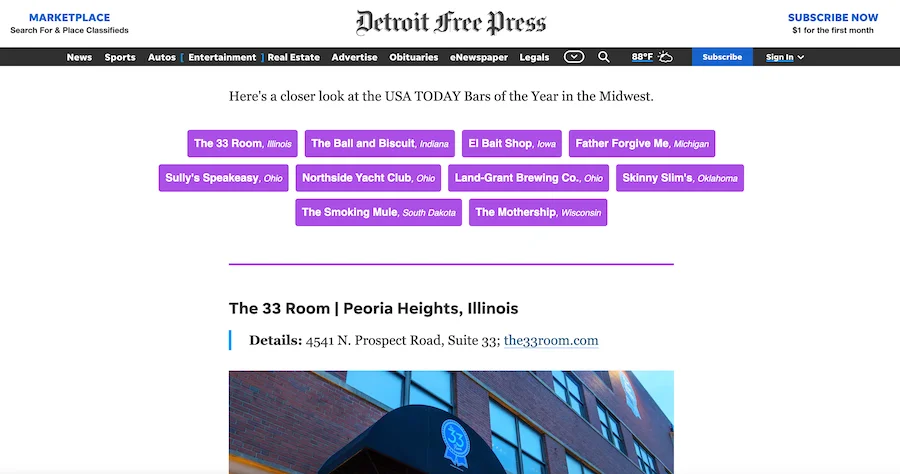
In the context of AI search, "earned media" transcends the traditional notion of securing features in prestigious publications like Forbes or engaging expensive PR firms. For small businesses, it fundamentally refers to any instance where the business’s name, expertise, or opinions appear on platforms or properties not owned by the company itself. This can range from mentions in local news articles and industry-specific blogs to inclusions in "best of" lists or expert roundups.

The underlying principle here is corroboration. While a business asserting its specialization on its own website is a self-reported claim, having that same specialization mentioned by multiple independent sources significantly strengthens the AI’s confidence. The more frequently a business’s name and its core competencies appear together in third-party content, the more likely an AI system is to surface that business in response to relevant queries.
Consider the example of a dental practice owner in Austin who is interviewed by a local parenting blog about addressing children’s dental anxiety. If this article resides on a third-party domain, mentions her by name and specialty, and includes a link back to her practice, it serves as a powerful GEO signal. Such a piece of earned media can contribute more to AI visibility than numerous optimized service pages on her own website. The accessibility of such opportunities is often lower than business owners assume. These can include:
- Guest blogging: Contributing articles to relevant industry websites or local publications.
- Expert quotes: Offering insights to journalists or bloggers working on stories related to your industry.
- Podcast appearances: Participating in interviews on podcasts that reach your target audience.
- Online directory listings: Ensuring your business is accurately and comprehensively listed in relevant online directories.
- Community forums: Engaging in discussions on platforms where your expertise can be valuable.
Crucially, none of these require a substantial PR budget or extensive media connections. They demand a proactive approach and a willingness to share knowledge and expertise.
What to do:
- Identify relevant third-party platforms: Research blogs, news sites, podcasts, and forums frequented by your target audience and those that cover your industry.
- Proactively offer your expertise: Reach out to content creators with relevant insights or pitch guest post ideas.
- Monitor mentions: Set up Google Alerts or use other monitoring tools to track when your business name is mentioned online.
- Engage with earned media: If you are mentioned, acknowledge it, share it on your own platforms, and if appropriate, thank the source.
2. LinkedIn: The Professional Powerhouse
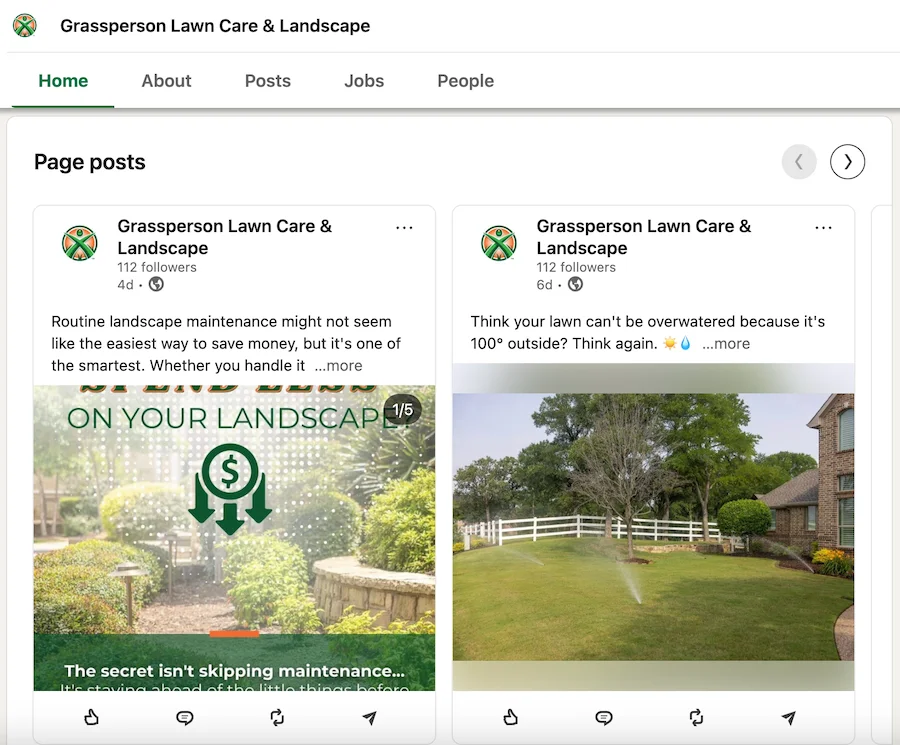
Many local businesses either completely disregard LinkedIn or treat their company pages as mere announcement boards, neither of which effectively generates GEO signals. However, recent analyses reveal LinkedIn’s significant role in AI search. An in-depth examination of hundreds of thousands of prompts across major AI platforms like ChatGPT, Google AI Mode, and Perplexity identified LinkedIn as the second-most cited domain, trailing only Reddit. AI systems referenced LinkedIn content in over 13% of their responses on average, often ranking first for professional and local service inquiries.
Two key aspects of LinkedIn contribute to its AI search value:
- Company Pages: A complete and regularly updated company page acts as a foundational element. This includes accurate business information, a compelling "About Us" section, and details about services offered.
- Employee Profiles: Individual employee profiles, especially those of subject matter experts within the company, are highly valuable. When employees share industry insights, company news, or their own expertise, it creates a rich tapestry of information that AI can leverage.
"Active" engagement on LinkedIn doesn’t necessitate daily posting or a pursuit of viral content. It involves maintaining a comprehensive and current profile, sharing a few posts per month that offer specific insights into your work, and providing genuine perspective rather than solely promotional copy. A Semrush analysis of LinkedIn URLs cited in AI search indicated that approximately 75% of authors whose content is frequently cited post at least five times within a four-week period. Importantly, follower count appears to be less influential than the consistency and demonstrated expertise within the content shared. A plumber with 300 followers consistently posting practical, job-specific advice is more likely to be cited by AI than a competitor with 3,000 followers who posts sporadically.
What to do:
- Optimize your LinkedIn Company Page: Ensure all fields are complete and accurate, including services, industry, and a clear description of your business.
- Encourage employee engagement: Empower employees to create and maintain robust personal profiles, sharing relevant company updates and their professional insights.
- Post consistently: Aim for a regular posting schedule, focusing on sharing valuable content, industry news, and behind-the-scenes glimpses of your work.
- Engage with your network: Respond to comments, participate in relevant discussions, and connect with industry peers.
3. Google Business Profile (GBP): Underutilized Potential
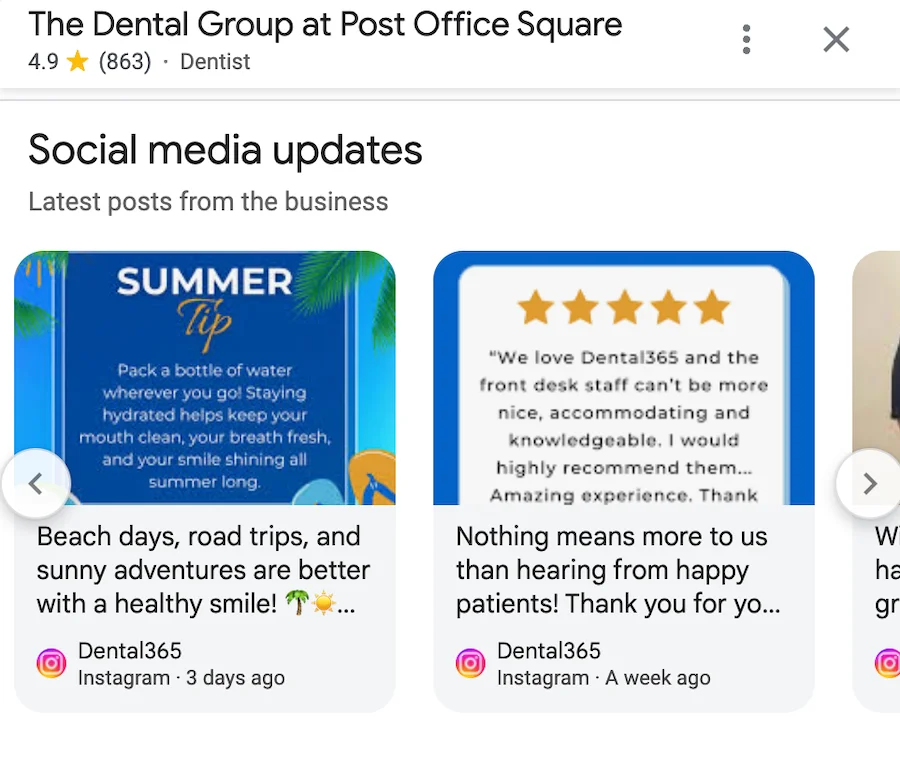
While most small and medium-sized businesses (SMBs) are aware of Google Business Profile (GBP), many stop at the initial claiming and verification stage, leaving significant potential untapped. Google Posts, short updates that appear directly on the profile, are often posted once at launch and then forgotten. Consistent posting, even as infrequently as once a week, signals to both users and AI systems that the business is active and provides a growing topical record of its offerings.
The recency and relevance of photos and videos on a GBP listing are more impactful than many owners realize. A profile showcasing current, relevant images communicates that the business is operational and engaged. For instance, an HVAC company uploading images from a recent installation job provides more valuable, up-to-date information than a competitor relying on three-year-old stock photos.
Furthermore, categories and service descriptions are frequently set during the initial setup and rarely revisited. A plumber listed solely as "Plumber" misses opportunities to be discovered for specific services like "Water Heater Installation," "Drain Cleaning," or "Emergency Plumbing." Each unselected or unoptimized category represents a missed citation opportunity.
Reviews and responses on GBP also serve as an underutilized vocabulary signal. The language customers use in their reviews expands the lexicon that AI associates with your business. Thoughtful responses that reference specific service details further enrich your GBP record with structured text. A dental practice that consistently responds to reviews by mentioning specific treatments, such as "so glad we could help with your Invisalign treatment," is actively building topic associations with every interaction.
What to do:
- Post regularly: Utilize Google Posts to share updates, offers, and relevant news at least weekly.
- Keep photos and videos current: Regularly upload high-quality images and videos showcasing your work, team, and facilities.
- Optimize categories and services: Thoroughly review and update your business categories and service descriptions to align with how customers search.
- Actively manage reviews: Encourage customers to leave reviews and respond promptly and thoughtfully to all feedback, referencing specific services or experiences.
4. YouTube: The Unsung Hero of GEO
YouTube is arguably the most underestimated GEO signal, often dismissed by small businesses due to perceived production demands. However, this assumption leads to a significant loss of visibility. As the second-largest search engine globally and a Google-owned platform, YouTube is cited by AI search platforms approximately 200 times more frequently than its closest video competitor. This dominance stems from more than just distribution; both OpenAI and Google have extensively trained their AI models on YouTube transcripts.
A video demonstrating how a business approaches a specific task generates a transcript, a title, a description, and a channel history—all of which are readable by AI. When a user asks an AI how to determine if they need a new roof, and a local roofing contractor has a concise video explaining exactly that, the video creates a direct citation opportunity that a static service page may not.
The businesses that most consistently appear in local and trade-related AI answers often employ the simplest production methods: phone footage, natural lighting, and minimal scripting. Their success lies in specificity. A lawn care company posting a video titled "Why Your Lawn Has Yellow Patches in July," filmed at an actual client’s property, carries far more trust signal weight than a polished brand video with generic messaging.
Consider what types of content are ideal for YouTube:
- How-to guides: Step-by-step instructions for common tasks related to your services.
- Product demonstrations: Showcasing how your products work or how your services are delivered.
- Problem/solution videos: Addressing common customer pain points and explaining how your business solves them.
- Behind-the-scenes looks: Offering a glimpse into your operations, team, or process.
- Customer testimonials: Featuring satisfied clients sharing their positive experiences.
What to do:
- Create relevant video content: Focus on answering common customer questions and demonstrating your expertise.
- Optimize video titles and descriptions: Use clear, keyword-rich titles and detailed descriptions that accurately reflect the video’s content.
- Utilize transcripts: Ensure your videos have accurate transcripts, which AI can easily process.
- Promote your YouTube channel: Link to your YouTube channel from your website and other social media platforms.
5. Consistency Across Platforms: The Digital Glue
The efficacy of all the aforementioned signals is significantly diminished if the information presented across various online platforms is contradictory. Consistency acts as the connective tissue, transforming a collection of disparate profiles into a cohesive and trustworthy digital presence that AI systems can confidently cite.
AI systems corroborate information before presenting a business as an answer. A Google Business Profile listing one city while a LinkedIn profile lists another creates immediate uncertainty for AI. A website phone number that doesn’t match the GBP listing is a discrepancy. In situations with conflicting data, an AI will be less inclined to cite a business compared to one whose information is uniform across all digital surfaces.
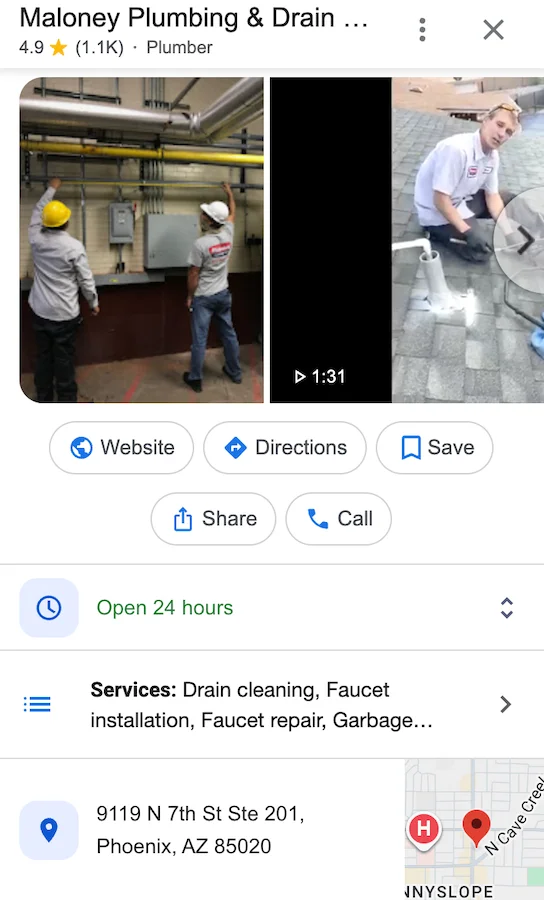
This consistency extends beyond the fundamental Name, Address, and Phone number (NAP), although these remain critical. It encompasses:
- Business descriptions: How you articulate what you do across different platforms.
- Categories and specialties: The services and expertise you claim on GBP, LinkedIn, Yelp, and industry directories.
- Business hours: Ensuring accuracy and timely updates.
- Visual branding: Maintaining a consistent logo and visual style across all profiles.
A quick audit of an online presence often reveals numerous inconsistencies that might seem minor individually but collectively introduce doubt into AI queries about a business. For example:
- Outdated business hours: A listing showing a business as open when it’s actually closed.
- Inconsistent service offerings: One platform listing a service that is no longer offered or is not prominently featured elsewhere.
- Varying business names: Minor variations in how the business name is spelled or formatted.
- Discrepant contact information: Mismatched phone numbers or email addresses across different directories.
What to do instead:
- Conduct a thorough online audit: Systematically review all your online listings and profiles for accuracy and consistency.
- Establish a single source of truth: Maintain a master document with all your business information (NAP, hours, services, descriptions) and use it as a reference for all updates.
- Utilize citation management tools: Employ services that help manage and update your business listings across multiple platforms simultaneously.
- Regularly monitor your online presence: Periodically check your listings to ensure information remains accurate and up-to-date.
Conclusion: Building Trust in the Age of AI Search
The principles of Generative Engine Optimization are not about complex technical jargon or massive marketing budgets. They are rooted in consistency, specificity, and a commitment to providing accurate and corroborated information across the digital landscape. Business owners, particularly those running SMBs, are uniquely positioned to leverage their deep understanding of their work to deliver this specificity.
The businesses that consistently appear in AI-generated answers are those that have equipped AI systems with sufficient coherent and specific data to feel confident in citing them. While a well-optimized website is a foundational element, the trust signals discussed here—earned media, robust LinkedIn activity, diligent GBP management, strategic YouTube presence, and unwavering platform consistency—form the essential remaining pillars of AI search visibility.
AI-generated answers are not a fleeting trend but a fundamental shift in how information is accessed. The signal footprint a business builds today across earned media, professional networks, local listings, video platforms, and a commitment to consistency will directly determine its confidence level for AI citation tomorrow. By proactively addressing these often-overlooked GEO signals, businesses can ensure they are not only discoverable but also reliably cited in the rapidly evolving world of AI-powered search.