

Email deliverability, a cornerstone of modern digital communication, hinges increasingly on a fundamental yet often misunderstood concept: email authentication. Far from being a mere technicality, authentication has become the digital security bedrock ensuring the legitimacy, integrity, and sender identity of every message traversing the global email infrastructure. In an era where email remains a primary channel for business, marketing, and personal communication, understanding and implementing robust authentication protocols is no longer optional but a critical imperative, especially in light of recent stringent mandates from major mailbox providers.
The Evolution of Email Security: A Historical Context
The internet’s early days saw email designed for simplicity and open communication, with little inherent security. This openness, while fostering rapid growth, also created vulnerabilities that were quickly exploited. Spam, unsolicited bulk email, emerged as a pervasive nuisance, overwhelming inboxes and consuming valuable bandwidth. More sinister threats, such as phishing, quickly followed, where malicious actors impersonated legitimate senders to trick recipients into divulging sensitive information or installing malware. These attacks eroded user trust and presented significant security risks for individuals and organizations alike.
To combat these escalating threats, the email industry, spearheaded by groups like the Internet Engineering Task Force (IETF) and its Anti-Spam Research Group (ASRG), began developing a suite of authentication standards. These standards aimed to provide a verifiable chain of trust, allowing receiving mail servers to confirm that an email genuinely originated from the claimed sender and had not been tampered with in transit. This journey of standardization has evolved over two decades, leading to the sophisticated ecosystem of protocols we rely on today, including Sender Policy Framework (SPF), DomainKeys Identified Mail (DKIM), Domain-based Message Authentication, Reporting & Conformance (DMARC), Authenticated Received Chain (ARC), and Brand Indicators for Message Identification (BIMI).
Mailbox Provider Mandates: The New Reality for Senders
The landscape of email deliverability underwent a seismic shift in late 2023 and early 2024, when industry giants Gmail, Yahoo, and subsequently Microsoft, announced and began enforcing rigorous new authentication requirements for all bulk senders. These mandates solidified proper authentication as a non-negotiable prerequisite for reaching the inbox, marking a decisive move to clean up the email ecosystem and protect users from fraud.
Specifically, as of February 2024, senders sending more than 5,000 emails per day to Gmail accounts, and similarly high volumes to Yahoo and Microsoft addresses, are now subject to strict compliance. Key requirements include:
- Implementing SPF and DKIM: All senders must have valid SPF and DKIM records configured for their sending domains. This ensures that the sending server is authorized and that the message content remains untampered.
- Enforcing DMARC: Senders must publish a DMARC policy for their sending domain, initially even at a
p=none(monitor-only) level, but with a clear expectation to move towardsp=quarantineorp=rejectfor full protection. - Aligned "From" Header: The domain in the email’s "From" header must align with the domains specified in the SPF and DKIM records. This alignment is a core component of DMARC and is crucial for preventing spoofing.
- Easy Unsubscribe: Senders must provide a one-click unsubscribe option and honor unsubscribe requests promptly, within two days. This enhances user experience and reduces spam complaints.
- Low Spam Complaint Rates: Senders must maintain a complaint rate below 0.1% (and ideally below 0.08% for Gmail) to avoid deliverability issues.
These mandates are not merely suggestions. Gmail began progressively rejecting non-compliant traffic in April 2024, with temporary and permanent rejections becoming more widespread by late 2025 for persistent non-compliance. Yahoo and Microsoft have adopted similarly firm stances, signaling a unified industry effort to elevate email security standards. For businesses relying on email for marketing, customer service, or operational communications, failing to comply means a direct path to the spam folder or outright rejection, severely impacting reach, engagement, and ultimately, revenue. Industry estimates suggest that the combined market share of Gmail, Yahoo, and Microsoft in major regions can exceed 70-80%, making compliance with these providers’ rules paramount for virtually any sender.
Understanding the Core Authentication Methods
To navigate these new requirements effectively, senders must gain a clear understanding of the five core authentication technologies: SPF, DKIM, DMARC, ARC, and BIMI.
1. Sender Policy Framework (SPF)
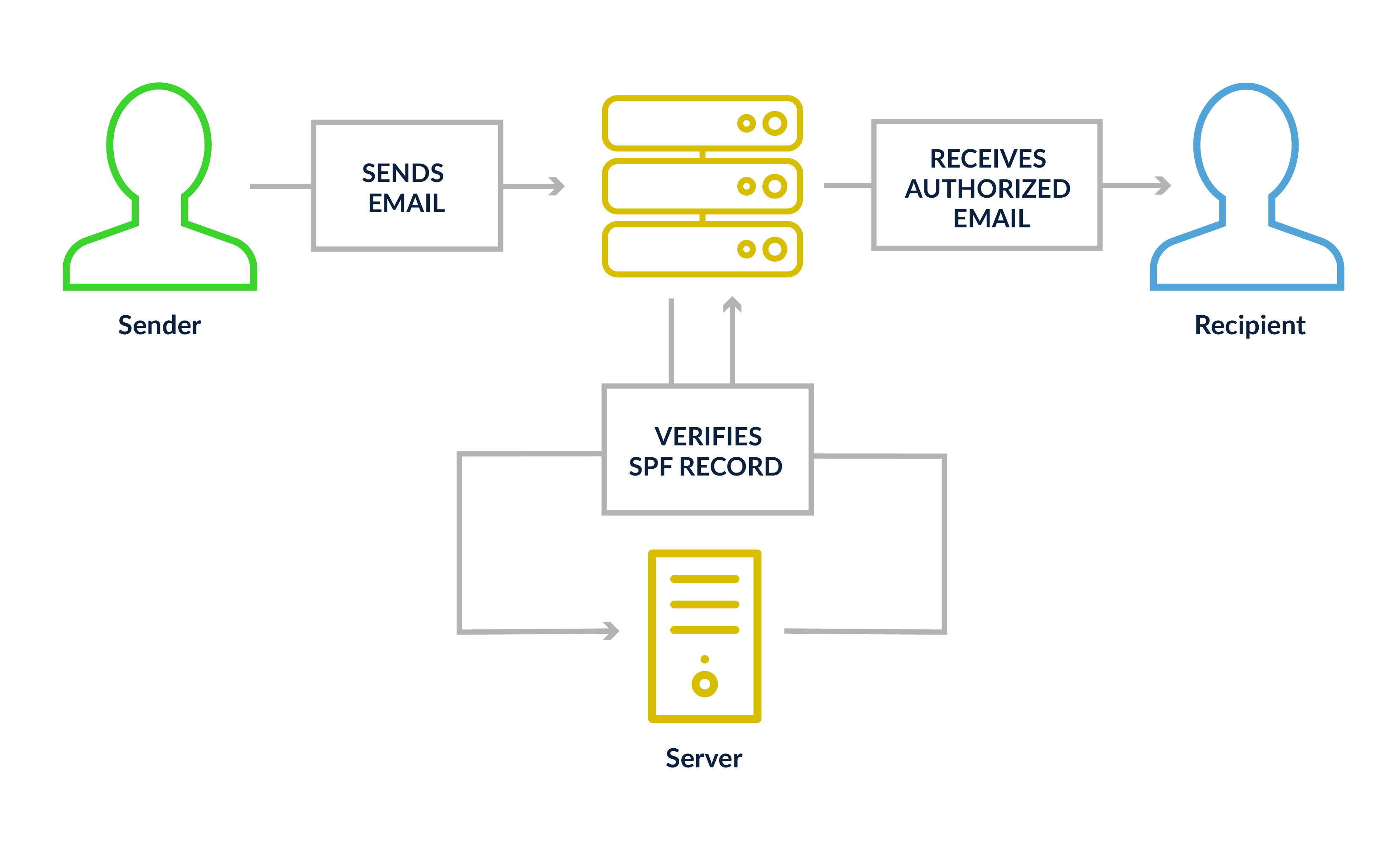
SPF acts as a digital guest list for your domain. When an email server sends a message, it includes the sender’s domain. The receiving mail server then checks the sender’s domain’s DNS records for an SPF entry. This record, published by the domain owner, explicitly lists all IP addresses or hostnames authorized to send email on behalf of that domain. If an email arrives from an IP address not on this approved list, the receiving server flags it as suspicious, indicating potential spoofing.

SPF records are configured as a TXT record in a domain’s DNS settings and can include individual IP addresses, IP ranges, or references to third-party email service providers (ESPs) using an include mechanism. Senders can also define enforcement levels: ~all (soft fail, suggesting the email might not be legitimate but not outright rejecting it) or -all (hard fail, instructing the receiving server to reject emails from unauthorized IPs). Most reputable senders opt for ~all or -all to ensure strong protection. A critical consideration for SPF is the "10-lookup limit." Each include statement or a or mx mechanism in an SPF record counts as a DNS lookup. Exceeding ten lookups can lead to a "permerror," causing SPF to fail entirely, regardless of the sending IP’s legitimacy. Careful management of included services is essential to avoid this pitfall.
2. DomainKeys Identified Mail (DKIM)
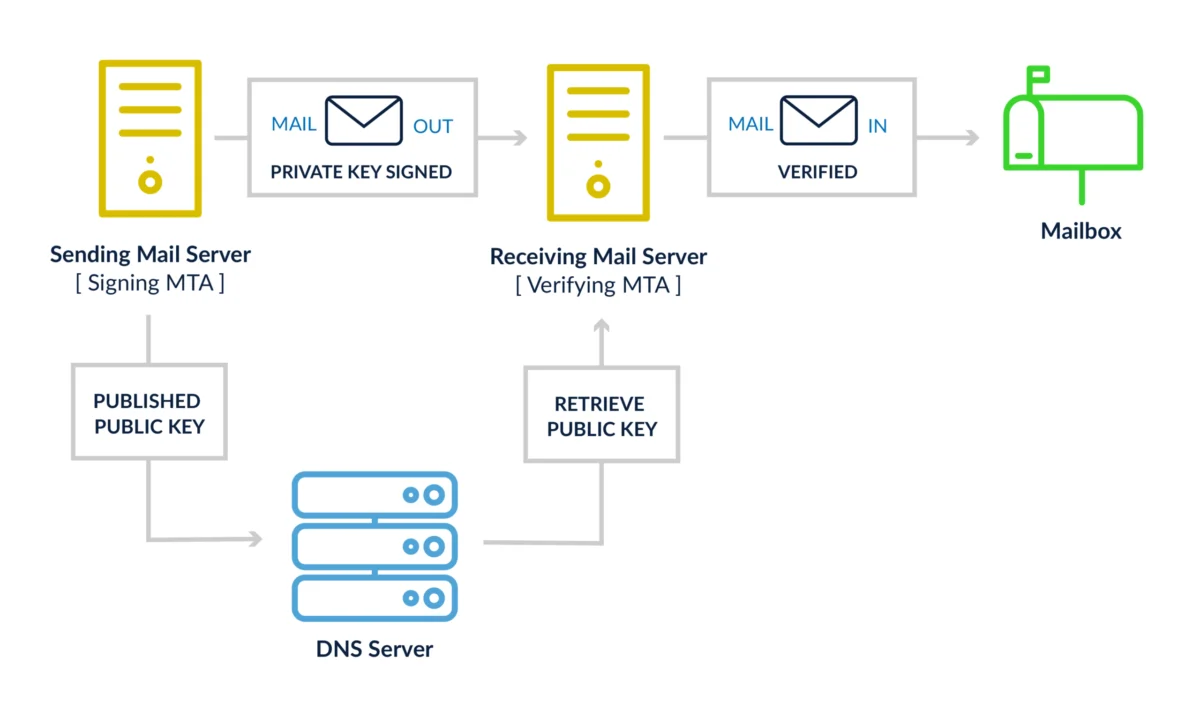
While SPF verifies the sender’s identity, DKIM ensures the integrity of the email content during transit. It functions much like a tamper-evident seal on a package. When an email server sends a message, it digitally "stamps" parts of the email (headers and body) with a cryptographic signature generated using a private key. This private key is kept secret by the sender. A corresponding public key is published in the sender’s DNS records.
Upon receiving the email, the recipient’s mail server retrieves the public key from the sender’s DNS and uses it to verify the digital signature. If the signature matches, it confirms that the email has not been altered since it left the authorized sender’s server. If any part of the signed email content or headers was changed (even slightly), the signature will not match, and DKIM verification will fail. For optimal security, email senders and ESPs are now advised to use a minimum key length of 2048 bits for DKIM, as older 1024-bit keys are considered less secure against modern cryptographic attacks.
3. Domain-based Message Authentication, Reporting & Conformance (DMARC)
DMARC is the policy layer that ties SPF and DKIM together, providing instructions to receiving mail servers on how to handle emails that fail authentication. More importantly, DMARC introduces the concept of "alignment." For DMARC to pass, the domain in the "From" address (the one users see) must align with the domain verified by SPF or DKIM. Without this crucial match, DMARC fails, even if SPF or DKIM technically passed their individual checks. This alignment prevents common spoofing techniques where a malicious actor might pass SPF or DKIM but use a different, deceptive "From" address.
DMARC policies are set in a DNS TXT record and dictate the action for failing messages:
p=none: Monitor mode. Receiving servers collect data on authentication failures but take no action. This is the minimum required for bulk senders by the new mandates and is an excellent starting point for deployment.p=quarantine: Instructs receiving servers to place failing messages into the recipient’s spam or junk folder.p=reject: Instructs receiving servers to block failing messages entirely, preventing them from reaching the inbox at all. Moving towardsp=quarantineorp=rejectis the ultimate goal for maximum protection against impersonation.
Beyond enforcement, DMARC offers an invaluable reporting mechanism. Mailbox providers send daily aggregate reports (RUA records) back to the domain owner, detailing which messages passed or failed authentication, the IP addresses involved, and whether alignment was achieved. These reports are a powerful early-warning system for detecting unauthorized sending or sophisticated phishing attempts targeting your domain, providing critical insights into your email ecosystem’s security posture.
4. Authenticated Received Chain (ARC)
ARC addresses a specific challenge in email forwarding and mailing list scenarios. When an email is forwarded or processed by an intermediate system (like a mailing list server, a security gateway, or a shared inbox), its headers or even parts of its body might be modified. These modifications, even if legitimate, can break the original DKIM signature, leading to a DMARC failure. This poses a problem for legitimate forwarded emails, which might then be incorrectly marked as spam or rejected.
ARC acts as a "paper trail" or "chain of custody" for email authentication results. Each intermediate server that processes and potentially modifies an email before forwarding it appends its own ARC signature, which cryptographically preserves the original authentication results and any subsequent changes. When the email finally reaches its destination, the receiving server can review the ARC chain. If the chain shows that the message was properly authenticated at its origin, even if subsequent modifications broke a DKIM signature, the receiving server can use ARC to override a DMARC failure and still deliver the message. ARC is typically implemented by intermediate mail servers, not directly by the original sender, but understanding its role is crucial for comprehending why forwarded emails might behave differently.
5. Brand Indicators for Message Identification (BIMI)
BIMI is the newest standard among the core five, focusing on visual brand recognition and trust. It allows brands to display their official logo directly in the recipient’s inbox, often next to the sender’s name, even before the email is opened. This provides an immediate, verifiable visual cue that helps subscribers quickly identify legitimate emails from a trusted brand, significantly enhancing brand recall and opening rates while reducing the risk of phishing.
To implement BIMI, a domain must first have robust SPF, DKIM, and DMARC in place, with the DMARC policy set to an enforcement level of either p=quarantine or p=reject. A p=none policy is insufficient for BIMI. Once these prerequisites are met, the brand publishes a BIMI DNS record pointing to a publicly accessible, properly formatted SVG (Scalable Vector Graphics) version of their logo.
BIMI implementation also involves a certificate:
- Verified Mark Certificate (VMC): This is the original and most secure option, requiring the brand to possess a registered trademark for its logo. VMCs are issued by authorized Certificate Authorities (e.g., DigiCert) and unlock full BIMI support, including logo display across major mailbox providers like Gmail and Apple Mail. Critically, VMCs are also associated with the distinctive "blue checkmark" in Gmail, a powerful visual trust signal indicating a verified sender.
- Common Mark Certificate (CMC): Introduced more recently, CMCs offer a more accessible pathway to BIMI for brands without registered trademarks. CMCs require proof that the logo has been publicly displayed for at least 12 months. While Google began accepting CMCs in 2024, enabling logo display in Gmail, the coveted blue checkmark remains exclusive to VMC holders.
BIMI represents the aesthetic and trust-building pinnacle of email authentication, transforming a technical security measure into a tangible brand asset visible to the end-user.
The Broader Landscape: Why Authentication Matters More Than Ever
The collective push for universal email authentication, driven by the mandates from leading mailbox providers, has profound implications across the entire digital ecosystem.
For Businesses:
- Enhanced Deliverability and ROI: Properly authenticated emails are significantly more likely to reach the inbox, directly boosting open rates, click-through rates, and ultimately, the return on investment (ROI) for email marketing campaigns. Industry data consistently shows a strong correlation between authentication and improved inbox placement.
- Brand Reputation and Trust: Authentication, especially DMARC and BIMI, acts as a powerful shield against brand impersonation and phishing. By preventing unauthorized entities from sending emails claiming to be from your brand, businesses protect their reputation, maintain customer trust, and safeguard against financial and data breaches. A customer receiving a phishing email disguised as a legitimate brand can severely damage that brand’s image.
- Competitive Advantage: As authentication becomes the norm, non-compliant senders will face severe deliverability penalties. Businesses that proactively embrace these standards will gain a competitive edge by ensuring their communications reliably reach their audience.
- Reduced Support Costs: Fewer emails ending up in spam or junk folders mean fewer customer support inquiries regarding missing emails, freeing up resources for other critical tasks.
For Consumers:
- Safer Inboxes: The primary goal of these mandates is to create a safer, more trustworthy email environment. Consumers will experience a significant reduction in spam, phishing attempts, and malicious emails, making their digital interactions more secure.
- Increased Trust in Brands: Seeing a verified logo (via BIMI) or knowing that an email has passed rigorous authentication checks fosters greater confidence when interacting with brands, leading to more positive user experiences.
- Clarity and Simplicity: The visual cues provided by BIMI, coupled with the underlying security, make it easier for users to quickly identify legitimate communications from their trusted contacts and brands.
For the Email Ecosystem:
- Higher Quality Communication: By weeding out illegitimate traffic, the overall quality and reliability of email as a communication channel improve, reinforcing its status as an indispensable tool.
- Collaborative Security: The widespread adoption of these standards fosters a more collaborative security environment, where mailbox providers, email service providers, and senders work in concert to combat online fraud.
Challenges and the Path Forward for Senders
While the benefits are clear, the journey to full authentication can present challenges, particularly for organizations with complex email infrastructures or limited technical resources. The initial setup of SPF, DKIM, and DMARC involves configuring DNS records, which can be daunting for those unfamiliar with domain management. Managing the 10-lookup limit for SPF, ensuring correct DKIM key lengths, and interpreting DMARC aggregate reports require specific expertise. Moving DMARC policies from p=none to p=quarantine or p=reject requires careful monitoring and analysis of reports to avoid inadvertently blocking legitimate email. Finally, implementing BIMI adds another layer of technical and potentially legal complexity (e.g., trademark registration for VMCs).
However, these challenges are surmountable. The widespread availability of tools, expert consultants, and dedicated features within email service platforms (like Litmus’s infrastructure checks mentioned in the original article) can greatly assist senders. The recommended path involves a phased approach:
- Foundation First: Begin by correctly configuring SPF and DKIM for all sending domains.
- DMARC Implementation (Monitor Mode): Publish a DMARC record with
p=noneto start collecting invaluable aggregate reports. This allows senders to understand their email traffic patterns and identify any unauthorized sending without impacting deliverability. - Iterative Enforcement: Gradually move the DMARC policy to
p=quarantineand thenp=reject, carefully monitoring reports at each stage to ensure legitimate emails are not affected. This process can take several weeks or months, depending on the complexity of the sending environment. - BIMI Adoption: Once DMARC is at an enforcement policy, consider implementing BIMI to enhance brand visibility and trust. Evaluate whether a VMC or CMC is appropriate for your brand’s specific situation.
- Continuous Monitoring: Email authentication is not a one-time setup. Regular review of DMARC reports, updating SPF records as sending services change, and staying abreast of evolving industry standards are crucial for long-term success.
Conclusion
Email authentication has transitioned from a best practice to an undeniable necessity. The recent mandates from Gmail, Yahoo, and Microsoft have irrevocably altered the landscape, making robust authentication the foundational requirement for any sender aiming to consistently reach the inbox. It is a strategic investment in deliverability, brand protection, and customer trust. While the technical intricacies might seem formidable, the payoff—a secure, reliable, and visually trustworthy email program—is unequivocally worth the effort. For businesses and individuals alike, embracing and mastering email authentication is not merely about compliance; it’s about securing the future of digital communication.








