The landscape of digital advertising is in constant flux, with platforms like YouTube increasingly relying on sophisticated automated strategies to optimize campaign effectiveness. As advertisers strive to achieve specific goals, from driving sales and leads to increasing brand awareness, understanding and strategically implementing Google Ads’ Smart Bidding features on YouTube has become paramount. This article delves into the intricacies of YouTube Smart Bidding, offering practical guidance and insights for advertisers aiming to maximize their return on investment.
At its core, Smart Bidding is a suite of automated bid strategies within Google Ads that uses machine learning to optimize for conversions or conversion value. On YouTube, its application is particularly powerful, leveraging the platform’s vast reach and sophisticated audience targeting capabilities. However, simply enabling Smart Bidding is not a guarantee of success. A deeper understanding of its nuances, coupled with meticulous campaign setup, is crucial for unlocking its full potential.
Understanding YouTube Smart Bidding Options
Google’s Smart Bidding strategies are designed to automate the bidding process, allowing advertisers to focus on campaign strategy and creative development. For YouTube campaigns, these strategies are primarily categorized by their objective: driving measurable actions or building brand awareness.
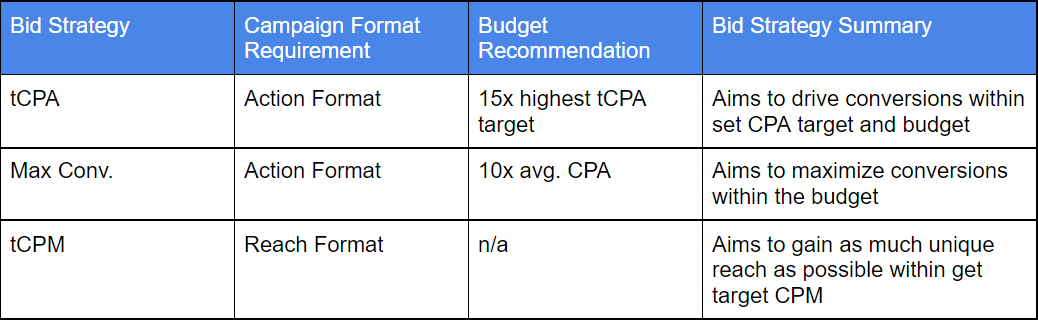
For campaigns focused on generating tangible outcomes such as sales, leads, or sign-ups, advertisers will typically leverage "Action Format" campaigns. Within this category, two primary Smart Bidding strategies are available:
-
Target CPA (tCPA): This strategy aims to get as many conversions as possible at or below the target cost-per-acquisition you set. Advertisers define their desired cost per conversion, and Google Ads’ algorithms work to achieve this target by adjusting bids in real-time. This is ideal for advertisers who have a clear understanding of their profitability and can define a specific acquisition cost that makes sense for their business.
-
Maximize Conversions: This strategy aims to get the most conversions possible within your set budget. You do not set a target CPA, allowing Google Ads to find the optimal bids to drive the highest number of conversions. This is often a good starting point for new campaigns or when an advertiser wants to gather data and establish a baseline CPA before setting a specific target.
While Action Format campaigns are central to driving conversions, Smart Bidding also extends to "Reach Formats" on YouTube, which are primarily designed to build brand awareness.

- For Reach Campaigns (e.g., Bumper Ads): While the primary goal here is awareness, certain Smart Bidding functionalities can still be employed to optimize for reach and frequency within budget constraints. This might involve optimizing for views or impressions to ensure the message reaches the intended audience effectively.
It’s important to note that the effectiveness of Smart Bidding is directly tied to the quality and quantity of conversion data available to Google’s algorithms. The more data the system has, the better it can learn and optimize.
Strategic Budgeting for Smart Bidding Success
A common pitfall for advertisers utilizing Smart Bidding on YouTube is an insufficient budget. Google Ads often provides recommendations for budget allocation that may seem substantial, but these are frequently based on data-driven insights to ensure the algorithm has enough room to operate effectively.
Google typically recommends setting daily budgets that are between 10 to 15 times the campaign’s average cost per acquisition (CPA) when using tCPA. For example, if a campaign’s average CPA is $85, a tCPA strategy would necessitate a daily budget of at least $1,275 to provide the algorithm with sufficient opportunity to find conversions at or below the target. Similarly, for a Maximize Conversions strategy with an estimated CPA of $85, a daily budget of at least $850 is recommended to allow the algorithm to explore bidding opportunities effectively.
While these figures can appear daunting, especially for smaller advertisers, adhering to these recommendations is often critical for enabling Smart Bidding to perform optimally. Campaigns that are "Limited by Budget" (LBB) cannot fully explore the bidding landscape, hindering the algorithm’s ability to identify and capture valuable conversions. This can lead to missed opportunities and suboptimal performance.
The "Maximize Conversions" to "Target CPA" Transition
A widely adopted and effective approach for launching new conversion-focused YouTube campaigns is to begin with the "Maximize Conversions" strategy. This allows the campaign to gather initial conversion data and establish a realistic baseline CPA. Once a stable CPA has been achieved over a sufficient period, advertisers can then consider transitioning to the "Target CPA" strategy. This transition allows for more controlled spending and predictable acquisition costs.
This phased approach is beneficial because it provides the machine learning models with a broader range of data to learn from initially, without the constraint of a specific CPA target. Once the system has a better understanding of what drives conversions and at what cost, it can then be guided by a tCPA to refine performance and optimize for specific cost efficiencies.
A Mini Case Study: The Impact of Budget Adjustment

To illustrate the importance of adequate budgeting for Smart Bidding, consider a hypothetical scenario involving a YouTube campaign employing the tCPA strategy.
Situation: A campaign was running on tCPA and was consistently flagged as "Limited by Budget" (LBB).
Initial Bid to Budget Ratio: The daily budget was set at approximately 10 times the current CPA. While this met the minimum recommendation, it was not providing enough flexibility.
Intervention: The advertising team decided to increase the daily budget to 15 times the current CPA.
Results: Following this budget adjustment, and after allowing for the typical two-week learning period of the Smart Bidding algorithm, the campaign experienced significant improvements. Both the volume of conversions and the efficiency of acquisition (measured by CPA) saw notable gains. This outcome underscores the principle that while Smart Bidding automates bidding, it still requires sufficient resources to function effectively. The increased budget allowed the algorithm to explore a wider array of bidding opportunities, identify more valuable audiences, and ultimately drive more cost-effective conversions.
Other Crucial Considerations for YouTube Smart Bidding
Beyond budget and strategy selection, several other factors play a crucial role in the success of YouTube Smart Bidding campaigns:
-
Conversion Tracking Accuracy: The foundation of any Smart Bidding strategy is accurate conversion tracking. Ensure that your conversion pixels are correctly implemented across your website or app and that you are tracking meaningful actions that align with your business objectives. Inaccurate or incomplete conversion data will lead to flawed optimization by the bidding algorithms.
-
Campaign Structure and Targeting: While Smart Bidding automates bids, it does not replace the need for robust campaign structure and intelligent targeting. Group similar audiences, ad creatives, and keywords together. Leverage YouTube’s extensive targeting options, including demographics, interests, custom intent, and remarketing lists, to provide the Smart Bidding algorithm with well-defined audiences to optimize for.
-
Creative Quality: High-quality, engaging video creatives are essential for capturing audience attention on YouTube. Smart Bidding can optimize for conversions, but it cannot force users to engage with poor-quality ads. Invest in compelling storytelling, clear calls to action, and creatives that resonate with your target audience.
-
Learning Period: It’s imperative to understand that Smart Bidding strategies, particularly tCPA and Maximize Conversions, have a learning period, typically lasting around two weeks. During this time, the algorithm gathers data and adjusts its bidding behavior. Avoid making significant changes to the campaign during this period, as it can reset the learning process and hinder optimization. Patience and consistent monitoring are key.
-
Seasonality and External Factors: Be mindful of external factors that can influence campaign performance, such as seasonality, promotional events, competitor activity, and economic trends. These can impact conversion rates and CPAs, and may require adjustments to your bidding strategies or budgets.
-
Audience Signals: For certain Smart Bidding strategies like Target ROAS (Return on Ad Spend), providing strong audience signals can further enhance performance. This involves leveraging your first-party data and insights into your most valuable customer segments.
The Evolving Role of Machine Learning in Advertising
The increasing reliance on Smart Bidding signifies a broader trend in digital advertising towards data-driven automation. Machine learning algorithms can process vast amounts of data in real-time, identifying patterns and making bidding decisions that would be impossible for human advertisers to achieve manually. This shift allows advertisers to move from granular, manual bid adjustments to a more strategic oversight role, focusing on high-level campaign planning, creative excellence, and understanding customer journeys.
For platforms like YouTube, with its immense scale and diverse user base, Smart Bidding offers a powerful mechanism to navigate the complexities of ad delivery and audience engagement. As Google continues to refine its machine learning models, advertisers who adapt and effectively integrate these automated strategies into their workflows are likely to gain a significant competitive advantage.
Conclusion
Mastering YouTube Smart Bidding is not merely about selecting the right strategy; it’s about a holistic approach that encompasses accurate tracking, strategic budgeting, intelligent targeting, and compelling creative. By understanding the mechanics of tCPA and Maximize Conversions, adhering to recommended budget allocations, and implementing best practices for campaign setup, advertisers can significantly enhance their YouTube campaign performance. The insights gained from initiatives like the budget adjustment case study highlight the critical need to empower these sophisticated algorithms with sufficient resources to drive meaningful results. As the digital advertising landscape continues its evolution, embracing and strategically leveraging tools like YouTube Smart Bidding will be crucial for achieving sustained success and driving measurable business outcomes. For those seeking further guidance on optimizing their YouTube advertising efforts, engaging with experienced digital marketing professionals can provide invaluable support and expertise.