In an era marked by rapid technological advancement, particularly the pervasive influence of Artificial Intelligence, the strategic role and efficacy of Search Engine Optimization (SEO) are undergoing intense scrutiny. Senior leaders across various industries are posing fundamental questions about the current purpose of SEO and its justification for agency investment. These are not merely tactical inquiries but rather strategic challenges that demand clear, data-driven answers. The following article aims to address these critical questions, offering insights grounded in a decade of SEO experience and an unwavering commitment to innovation.
The Persistent Relevance of SEO in a Shifting Digital Ecosystem
The notion that "SEO is dead" is a recurring narrative, often fueled by the perceived obsolescence of older methodologies in the face of evolving search engine algorithms and the advent of generative AI. However, a closer examination of industry data reveals a more nuanced reality. While the specific tactics and approaches that defined SEO five years ago may indeed be outdated, the core discipline remains vital.
Recent analyses of the top 40,000 websites in the United States indicate a modest 2.5% decline in organic traffic from Google in 2025 compared to the previous year. This marginal decrease, while notable, does not signify a collapse of the channel. Certain sectors, particularly publishers heavily reliant on informational queries, have experienced more substantial drops. This trend is directly attributable to the rise of AI Overviews, which now provide direct answers to many such queries, circumventing the need for users to click through to websites.
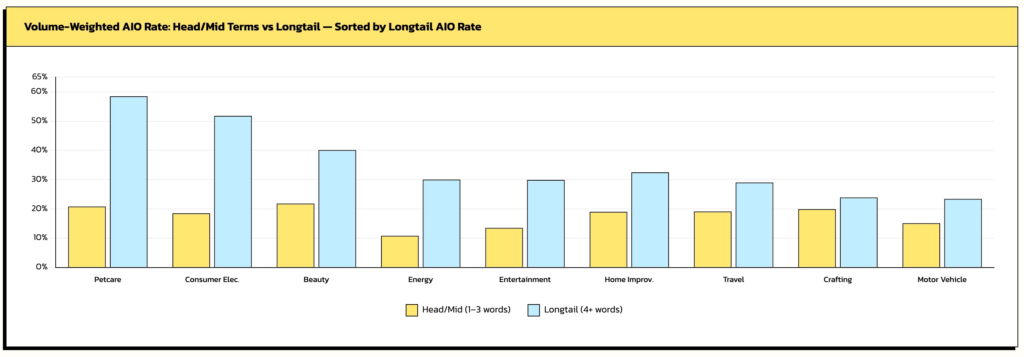
Conversely, the overall volume of Google searches continues to climb, with an observable shift towards longer-tail, conversational queries. This phenomenon is intrinsically linked to user adaptation to natural language search patterns, amplified by the increasing integration of AI within search experiences, such as Google’s own AI mode and Gemini. This increasing user reliance on conversational queries further exacerbates the "zero-click" challenge, where AI-generated answers, often triggered by these longer queries, reduce direct traffic to websites.
Despite these shifts, the fundamental principle of search as a primary discovery mechanism remains intact. If users are searching more, irrespective of the platform or query type, the business of SEO is not only alive but arguably more critical than ever. The pertinent question for businesses is not whether SEO is dead, but whether their current SEO strategies are effectively serving their specific business objectives.
The true value of SEO lies in its potential to deliver a superior return on investment over paid media when executed optimally. Moreover, it can be a cornerstone of a more cost-efficient, holistic search strategy. The channel itself is not broken; rather, certain established approaches require re-evaluation and adaptation.
Navigating the New Frontier: Answer Engine Optimization (AEO) and Generative Engine Optimization (GEO)
The emergence of AI-generated answers within search results has necessitated the evolution of SEO into new specializations, often termed Answer Engine Optimization (AEO) and Generative Engine Optimization (GEO). These terms represent the strategic imperative to ensure content visibility within AI-generated responses across platforms like Google AI Overviews, ChatGPT, and Perplexity.

Data from a Conductor survey of over 250 enterprise CMOs and digital leaders at the start of 2026 indicated a significant planned increase in AEO/GEO investment, with 94% of enterprises intending to bolster their spending in this area. Crucially, organizations that had already invested reported measurable business impact, including a notable conversion rate advantage. Visitors arriving from LLM-generated responses reportedly convert at approximately twice the rate of standard organic visitors, albeit in fewer sessions, suggesting a higher quality audience.
While traditional SEO practices still hold considerable sway in influencing AI Overviews – with top 10-20 Google results serving as a primary source – a discernible divergence is occurring. The overlap between AI Overviews and Google’s top 10 results has reportedly halved in a single year, dropping from 76% to 38%, according to Ahrefs data. Furthermore, platforms like Gemini exhibit even lower overlap with Google’s organic rankings, indicating that AI models are developing their own criteria for generating comprehensive answers, distinct from traditional ranking signals.
This divergence underscores the necessity for businesses to develop capabilities that can effectively navigate and test both traditional SEO and AI-driven optimization strategies. Organizations that proactively build this dual capability are positioning themselves for long-term success in an increasingly complex digital landscape.
The AI Content Conundrum: Quality Over Quantity
The rapid advancements in generative AI have spurred questions about its potential to automate content creation entirely. While it is technically feasible to generate vast quantities of content using AI, the critical consideration lies in the value of that content. Google’s official stance is that AI-generated content is not penalized simply for its origin. Instead, penalties are applied to content that is shallow, generic, mass-produced, and lacks substantive value.
The inherent challenge with most AI-generated content, when deployed without significant human oversight, is its tendency towards superficiality. This is not an indictment of AI itself, but rather a consequence of its unguided application. Rankability’s 2025 data suggests that while 17% of top 20 search results are AI-generated, these represent instances where AI was utilized to produce genuinely useful content, not to churn out low-value articles at scale.
Beyond search engine algorithms, the human audience possesses an innate ability to discern the quality and originality of content. Generic AI-generated text, while technically correct, often lacks proprietary insights, a distinct point of view, or information that cannot be readily found elsewhere.
Brainlabs’ own experiments with AI content production offer a compelling case study. By integrating AI into a content program that began with real client conversations and pain points, and with channel experts meticulously reviewing and shaping the output, AI Share of Voice grew by 35% and Mention Rate by 42% within three months. This success was not driven by volume but by the strategic infusion of human expertise and substance into the AI-driven production process.
As articulated by Will Akhurst, Chief Data Strategy Officer at Brainlabs, generative AI has effectively resolved the production bottleneck for creative assets. However, this shifts the fundamental challenge from creation to selection – discerning which content possesses the greatest potential for impact. In essence, AI can remove the production barrier, but it does not inherently dictate what is worth saying.

The most effective approach to AI in content creation is to leverage it as a sophisticated first drafter, augmented by substantial human expertise, including real-world data, insights, and business-specific opinions. This synergistic approach yields high-quality content efficiently, a stark contrast to the mere generation of words without purpose. While experimentation with AI-generated content is encouraged, it must be accompanied by rigorous measurement and a clear understanding of the inherent risks.
Measuring SEO ROI in an Evolving Attribution Landscape
A frequent impediment to understanding SEO’s value is the misapplication of measurement frameworks. Attributing ROI for SEO is inherently more complex than for paid search, due to longer lag times, multi-touch customer journeys, and value that extends beyond direct organic traffic, such as increased brand search volume and reduced branded keyword CPCs. Standard attribution models often fail to capture these nuances adequately.
In an environment where 59% of CMOs report insufficient budgets to execute their strategies, as indicated by the Gartner 2025 CMO Spend Survey, the pressure to demonstrate immediate and tangible returns is immense. This often leads to attempts to force SEO into a paid search-like performance model, which fundamentally misrepresents its compounding nature and long-term asset-building capabilities.
A critical fix lies in aligning SEO reporting with business outcomes. Instead of focusing solely on rankings and traffic, reports should detail assisted conversions from organic search, cost per acquisition relative to paid channels, and the proportion of qualified pipeline that engaged with organic search at any stage. These metrics offer a more holistic and accurate portrayal of SEO’s contribution.
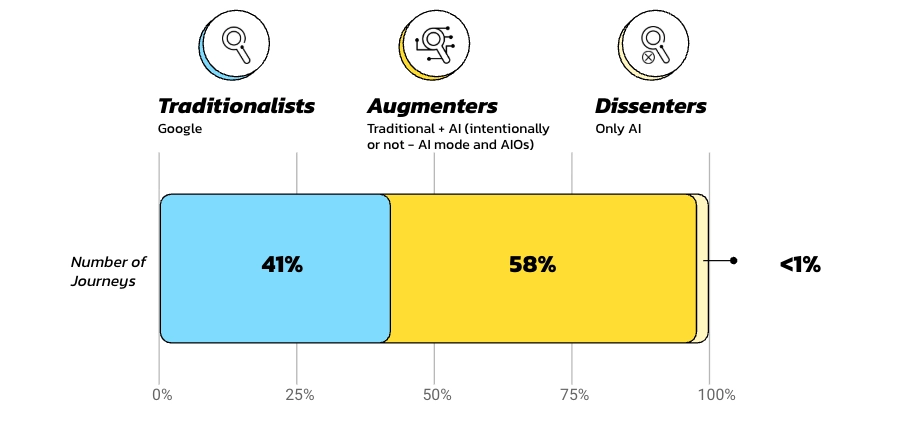
The rise of AI search further complicates measurement and attribution. The potential for discovery, consideration, and conversion to occur instantaneously within a single AI platform presents significant challenges for traditional attribution models. The absence of granular data on these "micro-actions" within the AI "dark funnel" necessitates a recalibration of our analytical approaches.
Historically, SEO has navigated data limitations by employing correlation analysis, incrementality testing, and other experimental methods. The advent of AI search demands a continuation and evolution of these techniques. The variability of AI responses necessitates more robust tracking of prompts, and strategies must be developed to connect impressions within AI answers to on-site actions, potentially through novel methods like holdout tests with AI crawlers.
The Long Game: Understanding SEO’s Time Horizon
The perception that SEO "takes too long" often stems from viewing it as a short-term tactic rather than a strategic asset-building endeavor. The typical lag between SEO investment and tangible revenue impact for a site with nascent authority can range from six to twelve months, a stark contrast to the immediate visibility offered by paid campaigns.
However, this extended timeline is precisely what enables SEO’s superior long-term return. A well-crafted piece of content, optimized for search engines and earning backlinks, can generate traffic for years without continuous spend, unlike paid campaigns that cease to deliver visibility the moment the budget is depleted. The time investment in SEO is analogous to building a durable asset versus renting temporary visibility.
Within an SEO program, certain elements can yield quicker results. Technical SEO fixes can provide near-instantaneous improvements, and optimizing existing content that already ranks can often deliver gains within weeks. A strategically prioritized SEO roadmap balances these "quick wins" with longer-term investments, using the former to build credibility and momentum for the latter.
The honest appraisal of SEO’s time horizon is that it requires sustained effort and realistic expectation setting. While external factors like Google algorithm updates can influence timelines, the core principle remains: SEO is about building enduring value, which inherently requires time and consistent investment.
Addressing Declining Organic Traffic: AI Overviews as a Primary Culprit
When organic traffic experiences a downturn, it is natural to question the efficacy of SEO efforts. However, the most prevalent cause of such declines in the current landscape is not necessarily a failure in SEO execution but rather the impact of AI Overviews.
As previously noted, AI Overviews, which began appearing on approximately 30% of queries in 2025, have demonstrably reduced click-through rates. Studies indicate CTR reductions ranging from 35% to as high as 61% for queries featuring these AI summaries. If rankings remain consistent while traffic declines, AI Overviews are almost certainly the primary contributing factor, especially when coupled with an increase in longer-tail queries that are more prone to triggering these AI responses.
Distinguishing between an SEO failure and the impact of AI Overviews is crucial, as the remedial strategies differ significantly. A decline due to technical issues or competitor actions necessitates direct SEO intervention. Conversely, traffic reduction caused by AI Overviews requires a strategic repositioning towards creating content that is likely to be cited within these AI answers, rather than solely optimizing for direct click-throughs.
A vital check before concluding that SEO is failing is to assess whether conversion rates have proportionally declined with traffic. Often, the traffic displaced by AI Overviews was of lower intent and informational value. If organic revenue has remained relatively stable despite traffic fluctuations, it suggests that the channel, while delivering less volume, is maintaining its value proposition. Integrating AI search traffic and conversions into this analysis can further refine the overall picture, potentially revealing a less alarming scenario than initially perceived.
The Synergistic Power of SEO and Paid Search
While the question of investing in SEO when paid search offers instant results is becoming less common, its underlying premise warrants attention. Paid search provides immediate visibility, but this visibility is contingent upon continuous expenditure. The moment the budget is exhausted or costs escalate, the visibility dissipates. SEO, conversely, aims to build a sustainable asset—content that ranks, attracts links, and earns trust over time.
Gartner’s 2025 CMO Spend Survey highlights this distinction, with paid search typically commanding a larger share of digital marketing budgets (approximately 14%) compared to SEO (around 8%). Sophisticated marketing organizations recognize that these channels are not mutually exclusive but complementary, serving different stages of the customer journey. Paid search excels at capturing high-intent demand rapidly and with precision, while organic search is instrumental in building brand authority, engaging users earlier in their decision-making process, and generating long-term, cost-effective returns.
The instinct to reduce SEO investment during budget constraints, while understandable, can be counterproductive. Diminished SEO investment leads to the erosion of existing assets: content rankings decay, competitors advance, and technical debt accumulates. Re-establishing SEO efforts after a hiatus requires starting from a weaker baseline, rather than simply resuming from a previous position.
The rationale for employing both SEO and paid search is rooted in a long-term strategic perspective. In three years, the enduring value of owning organic visibility and the assets built through SEO will likely outweigh the benefits of solely relying on rented visibility within platforms whose pricing structures are subject to change.
The Pillars of Effective SEO in the AI Era
The persistent questions surrounding SEO underscore its complexity, further amplified by the integration of AI into search. Misinterpretations can lead to either treating SEO as a short-term tactic with unrealistic return expectations or relegating it to a passive background function that requires minimal active management. Neither approach yields optimal results.
Organizations that are currently maximizing their SEO potential share common characteristics:
- Business Outcome Alignment: They have successfully connected SEO performance metrics to tangible business results, moving beyond mere traffic and ranking reports.
- Quality-Centric Content Strategy: Their content investment prioritizes genuine quality and value over sheer volume.
- Integrated AI Visibility Strategy: They are actively building for AI visibility alongside traditional ranking strategies, rather than viewing them as competing priorities.
- Consistent Investment: They maintain consistent investment in SEO, understanding that its compounding nature requires patience and a long-term outlook, even when short-term results are ambiguous.
While these principles are not esoteric, their execution, particularly within large, cross-functional organizations, can be challenging. The integration of content, development, and marketing teams often requires a unified vision and coordinated effort.
The act of questioning one’s SEO program is, in itself, a positive indicator of serious engagement with the discipline. The subsequent imperative is to ensure that the answers received are not merely dashboard updates but genuine, data-backed strategies that address the evolving realities of the digital landscape. The future of organic search, where AI answers are paramount, demands a forward-thinking and adaptable approach to SEO.