

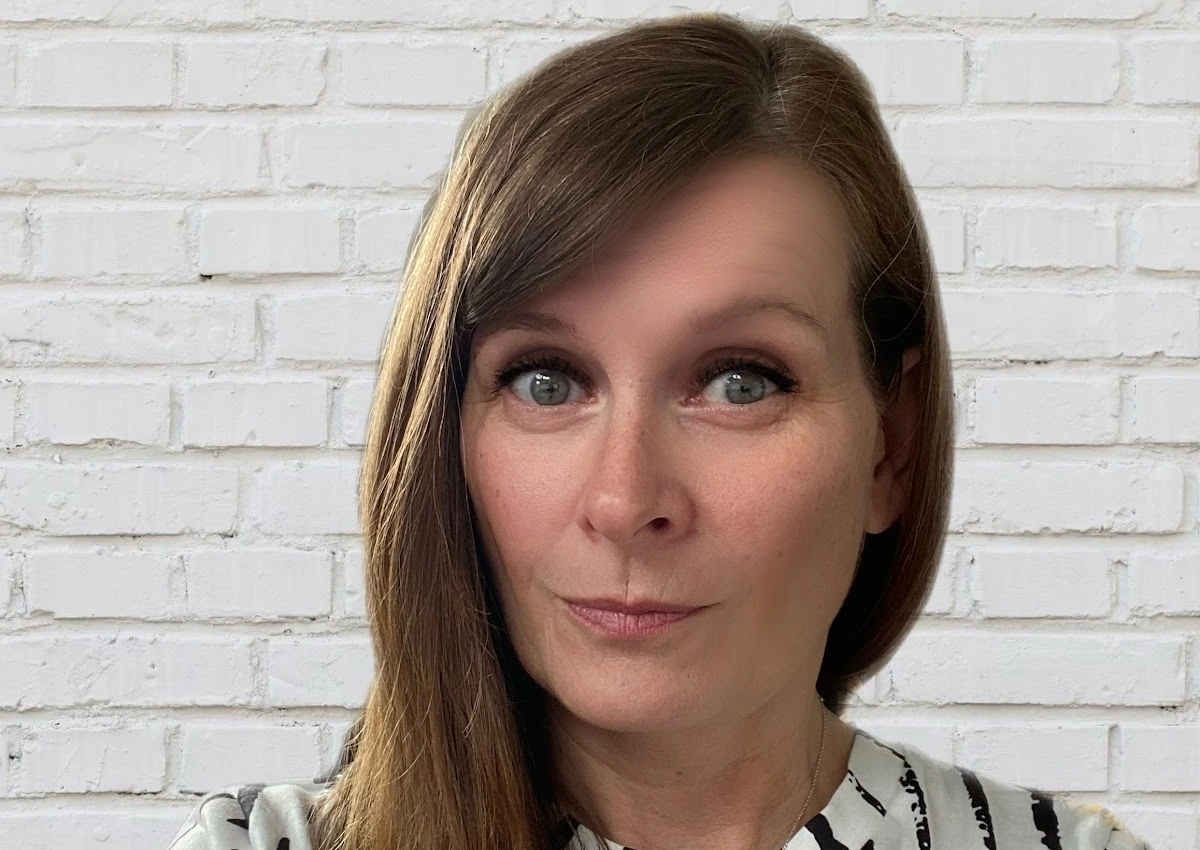
The global communications industry is witnessing a fundamental shift in how strategic frameworks are implemented, as Gini Dietrich, founder of Spin Sucks and creator of the PESO Model, announced a comprehensive overhaul of the PESO Model Certification. This transition marks the evolution of the methodology from a conceptual framework to a functional operating system (OS) designed to meet the rigorous demands of the 2026 media landscape. The rebuild, which involved a total deconstruction of the original curriculum, introduces advanced technological integrations, including proprietary artificial intelligence tools and a workflow-oriented pedagogical structure.
The PESO Model—an acronym for Paid, Earned, Shared, and Owned media—has served as the industry standard for integrated communications since its inception over a decade ago. With more than 1,400 practitioners across 15 countries and adoption by over 100 universities worldwide, the model has historically focused on helping professionals understand the intersection of various media types. However, the 2026 update signals a move away from theoretical understanding toward operational execution.
The Shift from Framework to Operating System
The primary driver behind the 2026 rebuild is the recognition that "understanding" media types is no longer a sufficient competitive advantage in the modern communications environment. In the early 2010s, the challenge for PR and marketing professionals was silos; the PESO Model provided a map to break those silos down. By 2026, the challenge has shifted to complexity and the need for compounding returns on content and campaign investments.
Under the new "Operating System" philosophy, the four media types are no longer viewed as separate buckets to be filled, but as a self-feeding loop. In this ecosystem, owned content serves as the foundation for citations, earned media provides third-party validation, shared media amplifies the reach, and paid media accelerates the performance of high-performing assets. Measurement acts as the continuous feedback loop that informs the next cycle of the system.
Industry analysts suggest that this shift reflects a broader trend in professional services where "knowledge-based" certifications are being replaced by "output-based" credentials. The goal is to bridge the gap between learning a concept and applying it to generate business results—a persistent pain point for corporate communications departments facing increased scrutiny from Chief Financial Officers (CFOs).
Structural Overhaul: The Workbook and Workflow Integration
A significant component of the rebuild is the introduction of a tangible, output-driven curriculum. Developed in collaboration with Shelly Verkamp, Chief Learning Officer at Spin Sucks, the new certification is structured around a comprehensive workbook designed to ensure that the "course is the work."
Historically, adult learners have struggled with the "application gap"—the space between acquiring knowledge and implementing it within their specific organizational context. To combat this, the 2026 certification replaces traditional passive learning modules with structured, timed exercises. For example, the "Owned Media" module alone includes 11 distinct worksheets that guide practitioners through the creation of a strategy within the learning environment.
This pedagogical shift ensures that participants do not leave the program with just a certificate, but with a completed, organization-specific PESO plan. The inclusion of "worked examples" alongside every exercise provides a benchmark for quality, reducing the friction often associated with starting complex strategic documents from scratch.
Integration of the PESO OS AI Tool
Perhaps the most significant technological advancement in the 2026 update is the inclusion of a licensed PESO OS AI. This tool is not a generic chatbot but a specialized generative AI trained specifically on the PESO Model methodology. The AI is embedded directly into the workflow, offering specific prompts within the worksheets to help practitioners pressure-test their strategies or accelerate the drafting process.
The inclusion of the PESO OS AI, valued at approximately $1,000 annually as a standalone tool, highlights the growing necessity for AI-augmented strategic planning. The tool is designed to assist with operational decisions, such as determining channel distribution for specific campaigns or optimizing owned content for maximum earned media potential. By bundling this technology with the certification, Spin Sucks is positioning the "Operating System" as a long-term utility rather than a one-time educational event.
Maintaining Academic Rigor through Syracuse University
Despite the radical changes to the delivery and tools, the certification maintains its longstanding partnership with the S.I. Newhouse School of Public Communications at Syracuse University. This academic credentialing remains a cornerstone of the program, distinguishing it from standard industry badges.
The Newhouse School is widely regarded as one of the premier communications institutions in the United States. Its endorsement serves as a third-party validation of the PESO Model’s efficacy and academic integrity. For practitioners, this credential provides the necessary "air cover" when presenting strategies to executive leadership, ensuring that the methodologies used are backed by a century of communications excellence.
Chronology of the PESO Model Evolution
To understand the significance of the 2026 update, it is necessary to look at the timeline of the model’s development:
- 2014: The PESO Model is officially introduced in Gini Dietrich’s book, Spin Sucks, providing the first visual and conceptual framework for integrated communications.
- 2017-2019: The model gains widespread adoption in higher education and global agencies, leading to the launch of the first official certification program in partnership with Syracuse University.
- 2020-2023: The "Measurement Trap" becomes a focus, as the model evolves to emphasize business outcomes (leads, sales, and SEO) over vanity metrics like impressions.
- 2024-2025: Development of the "PESO Model Diagnostic" tool allows organizations to assess their maturity level on a scale from "Foundation" to "Mastery."
- 2026: The full "Operating System" rebuild is launched, integrating AI and output-based learning to move practitioners toward the highest rungs of the maturity ladder.
Industry Implications and the "Maturity Ladder"
The redesign of the certification specifically targets professionals who find themselves stalled at the lower levels of the "PESO Model Maturity Ladder." Many organizations operate at the "Foundation" or "Pilot" stages, where they utilize some elements of the model but fail to achieve true integration or measurable ROI.
The 2026 Operating System is designed to move teams toward stages four and five—"Integration" and "Optimization." At these levels, communications functions are no longer viewed as cost centers but as revenue drivers. This is particularly relevant in an era where the "Visibility Gap"—the space between a brand’s existence and its discovery by potential customers—is increasingly difficult to close through traditional PR alone.
Analysis of the Target Demographic
Spin Sucks has taken a transparent approach to its target audience, explicitly defining who should—and should not—pursue the new certification. This objective-led marketing suggests a focus on quality of implementation over volume of enrollment.
The certification is positioned for:
- Professionals seeking to defend budgets through data-driven results.
- Team leaders who require a standardized operating system across their department.
- Strategic planners who have outgrown tactical "hacks" and require a holistic system.
The certification is discouraged for:
- Individuals seeking a "quick badge" without performing the underlying strategic work.
- Practitioners in organizations with no authority or budget to change existing processes.
- Those focused solely on tactical execution (e.g., "how to get a media hit") rather than systemic integration.
Conclusion: The Future of the "Machine"
The 2026 rebuild of the PESO Model Certification represents a significant moment in the professionalization of public relations and marketing. By treating a strategic framework as an operating system, Gini Dietrich and the Newhouse School are addressing the primary criticism of the PR industry: that it is often too "soft" or "tactical" to be taken seriously in the boardroom.
The integration of AI, the focus on tangible work outputs, and the rigorous academic backing suggest that the future of communications lies in the ability to build and run "machines"—systems that operate consistently, measure accurately, and compound in value over time. As the industry moves further into the late 2020s, the ability to operate such a system may become the baseline requirement for any senior communications role.
The updated certification is now available for enrollment, with a curriculum consisting of eight self-paced modules and a final evaluation. To maintain the "Operating System" status, the program will include biennial continuing education updates, ensuring that practitioners remain at the forefront of technological and methodological shifts in the landscape.









