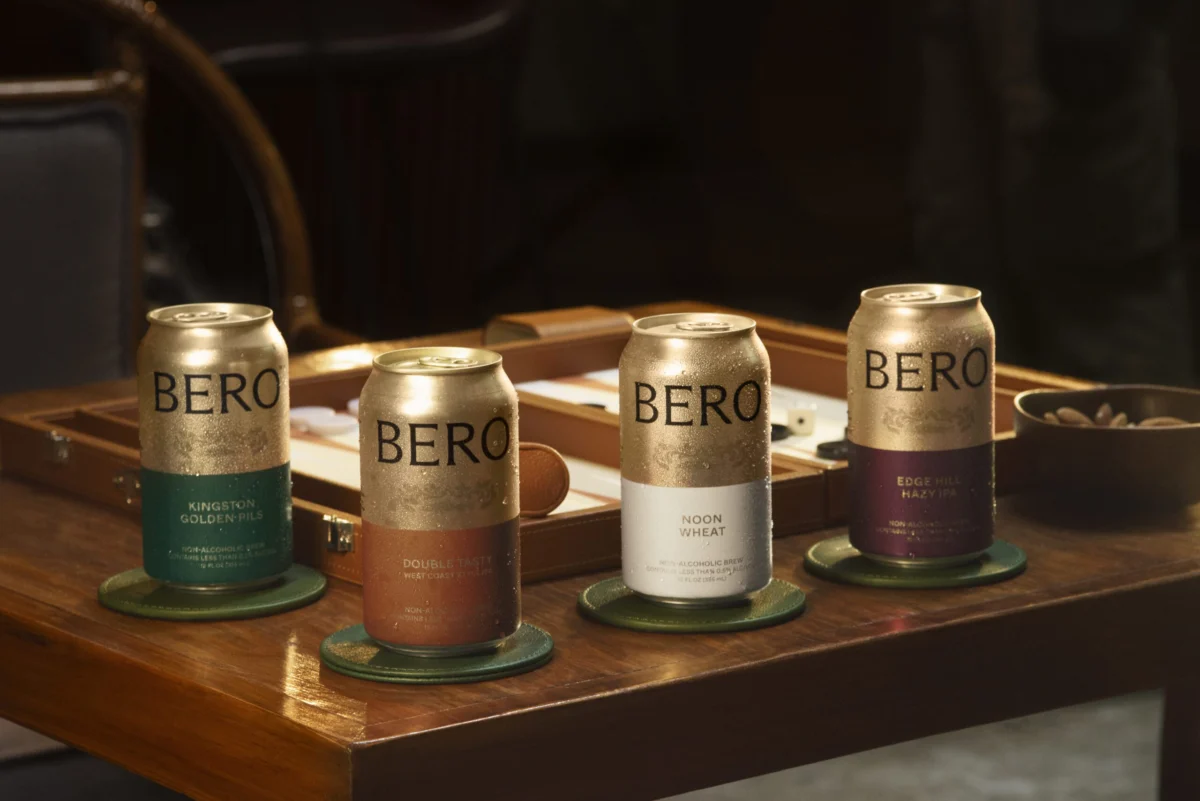
Bero, the non-alcoholic beer brand co-founded by actor Tom Holland and CEO John Herman, is experiencing a significant surge in its business-to-business (B2B) sales. This expansion is strategically driven by a dual approach: capitalizing on the extensive prior industry connections of its sales team and the simultaneous integration of sophisticated e-commerce and enterprise technology. This forward-thinking strategy has allowed Bero to navigate the complexities of beverage distribution with remarkable efficiency and scale.
The genesis of Bero’s B2B success can be traced back to a deliberate decision made at the company’s inception. Declan Duggan, Vice President of Sales, emphasized to Digital Commerce 360 the critical role of foundational technology in their growth trajectory. "We know right from the get-go, if you don’t — if you can’t — have a centralized place that you can bolt on to and grow, the issue is that everybody goes off and buys disparate tools in different departments, and then you have somebody stuck in the middle trying to pull them all together," Duggan explained. This proactive investment in an Enterprise Resource Planning (ERP) system was a direct response to lessons learned from previous ventures in the fast-moving consumer goods (FMCG) sector, particularly within the beverage industry.
Duggan articulated the significant challenges faced by companies that delay or forgo such integrated systems. "It becomes super tenuous," he stated. "Then, when the company has 200 or 300 people a few years later, it will have to start again from an enterprise technology standpoint. That would be a massive headache and super costly." The potential for operational inefficiencies, duplicated efforts, and the daunting task of retraining an entire workforce underscore the wisdom of Bero’s initial technological investment. The company recognized that the cost of implementing robust systems upfront would ultimately be far less than the cumulative expense and disruption of retrofitting or piecemeal solutions later. "Whether you spend it up front like we did, you’re going to spend it later," Duggan advised. "So if you believe you’re going to go somewhere, it’s the way to go because it helps you scale faster and it gives the tools and the access to all of your customers that they need quickly."
Leveraging Deep Industry Roots for Market Penetration
Bero’s entry into the market as a Direct-to-Consumer (DTC) e-commerce brand in October 2024, with Holland and Herman at the helm, laid the groundwork for its subsequent B2B ambitions. However, the accelerated growth in wholesale channels is significantly attributed to the team’s seasoned experience. Duggan described the process as "a lot of it is rinse and repeat. We’ve done this a few times. We’re going back to a lot of the same distributors that we’ve worked with in the past." This "repeat" advantage is not merely about re-establishing contact; it stems from a history of building trust and demonstrating value.
The Bero sales team’s prior success in driving revenue for other beverage brands has endowed them with a valuable currency: access. "And because he and others on his team have helped those distributors make money for other brands over the years, they at least get a meeting," Duggan noted. This immediately bypasses the often-arduous first hurdle of cold outreach. While a meeting is secured, Bero still faces the imperative of presenting a compelling product and a sound business proposition. Yet, the foundation of pre-existing credibility significantly de-risks the initial engagement. The presence of integrated enterprise technology from the outset further amplified their ability to scale rapidly once these relationships were activated.
The Power of the Direct Store Delivery (DSD) Network
Beyond legacy relationships, Bero’s B2B strategy is heavily reliant on a robust Direct Store Delivery (DSD) network across the United States. This network comprises approximately 200 distributors, a crucial component in reaching a fragmented retail landscape. Duggan highlighted a common challenge within this sector: the sheer volume of products that sales representatives are tasked with managing. "A lot of these salespeople just don’t have the time to get to every single brand and SKU that they have," he explained. "These are really good ways for us to get quicker distribution when that bar owner or that retailer, on or off premises, gets going in there and placing their order."
The DSD model offers Bero a distinct advantage by ensuring its products reach retailers efficiently, bypassing some of the logistical complexities and lead times associated with traditional warehousing and multi-tiered distribution. This approach is particularly beneficial for a product category like beverages, which can be bulky, heavy, and prone to shipping damage if not handled correctly.
Expanding Horizons: Reaching National Retailers
The establishment and cultivation of Bero’s distribution network have been instrumental in its ability to penetrate larger retail chains. Duggan acknowledged the demanding nature of building such a network, stating, "It’s quite arduous to put together, and it takes some time, but those guys have really embraced the digital side." This embrace of digital tools by distributors has facilitated Bero’s entry into a wider array of retail environments, including mass merchants and grocery operators.
Securing shelf space in major retailers such as Walmart, Kroger, and Safeway often comes with stringent requirements, including the ability to service a significant percentage of their store footprint. "Duggan noted that it’s difficult to get some of those larger retailers… if a brand can’t cover 30% of their stores," he elaborated. Bero’s expanding network now reportedly covers the entire U.S., as well as Puerto Rico and Guam, a feat that significantly bolsters its appeal to national accounts.
This expansion has already yielded tangible results, with Bero recently securing placement in Kroger and Walmart, alongside Publix. This follows its entry into the U.K. market through the grocery chain Morrisons, demonstrating a global ambition for its non-alcoholic beverage.
Navigating Beverage Distribution Complexities
The inherent nature of beverage distribution presents unique challenges that Bero is adept at addressing. "Beverage is messy," Duggan candidly stated. "It’s not a great product to ship in individual boxes. It’s fraught with all kinds of problems. That’s why it does make a lot of sense. It’s heavy; it leaks if you don’t get it right, so you have to get it to a centralized place and then do that last-mile piece for it to be efficient. That’s why we end up with a lot of those beer, wine and spirits distributors across the country."
Furthermore, Bero’s product, while non-alcoholic, contains less than 0.5% alcohol. This nuanced classification necessitates adherence to specific regulations in approximately 10 U.S. states, requiring sales through licensed beer distributors to licensed establishments. "You have to sell it through a beer distributor and go to a licensed establishment," Duggan explained. "So it does have some uniquities to it that maybe you’re not tied down with in some other products and categories." This regulatory landscape underscores the importance of Bero’s deep understanding of beverage distribution channels.
Pioneering Distributor Engagement with AI
In a move that further differentiates Bero in the B2B landscape, the company has developed an innovative, AI-driven portal for its distributors. This platform leverages Anthropic’s Claude AI model to streamline the purchasing process. Distributors are granted access to this intelligent tool to place their orders, a significant step towards digital efficiency.
Beyond order placement, the AI-powered portal integrates a sophisticated digital asset management system. Bero uploads its latest product imagery and branding materials, ensuring distributors have immediate access to approved and up-to-date marketing collateral. "If they want to put those on to some of these other tools, then at least we know what’s up there is the latest and greatest and approved," Duggan said. This feature is invaluable for distributors seeking to meet the rigorous branding and marketing requirements of large retail chains, particularly when responding to Requests for Proposals (RFPs). "And so they have access to pull those down and use them as they see fit or to submit for a chain’s RFP or something and they have all the information they need right there," he added.
Bero is also exploring the development of mutual finance tools within this integrated platform, aiming to consolidate billing and other financial operations into a single, streamlined interface. This holistic approach to distributor partnership is a key differentiator. "It’s quite advanced, quite edgy, and our distributors really like it," Duggan remarked. The success and appeal of this technology have even prompted inquiries from other suppliers interested in adopting similar solutions, hinting at a potential future expansion for Bero into the software solutions space.
The underlying philosophy driving Bero’s technological and relationship-building strategies is simple yet profound: "One of the things we always say is if you’re easy to do business with, you’ll do more business," Duggan concluded. This principle, combined with a deep understanding of the beverage industry’s intricacies and a forward-thinking embrace of technology, positions Bero for continued and accelerated growth in the competitive B2B market.
The company’s journey from a DTC e-commerce startup to a rapidly expanding B2B player, co-founded by actor Tom Holland and CEO John Herman, illustrates a powerful synergy. The initial investment in an ERP system, coupled with the strategic leveraging of seasoned sales professionals’ existing relationships, has created a scalable and efficient model. This approach not only facilitates rapid market penetration but also fosters strong partnerships within the complex beverage distribution ecosystem. The integration of advanced technologies like AI-powered portals further enhances this ease of doing business, a critical factor for success in today’s dynamic retail environment. As Bero continues to expand its product offerings and geographical reach, its foundational commitment to technology and relationships appears to be the key to unlocking future opportunities and solidifying its position in the non-alcoholic beverage market.